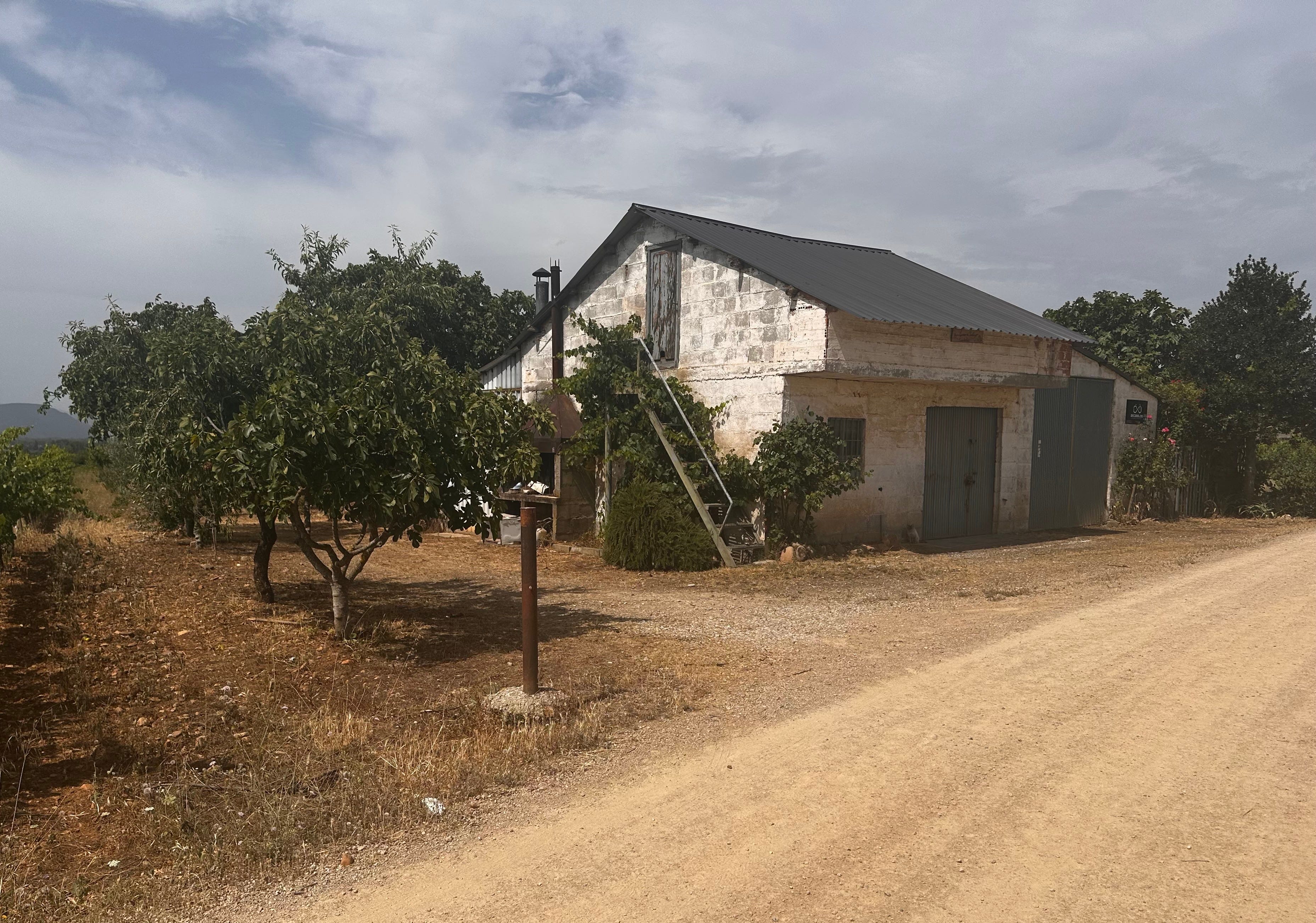
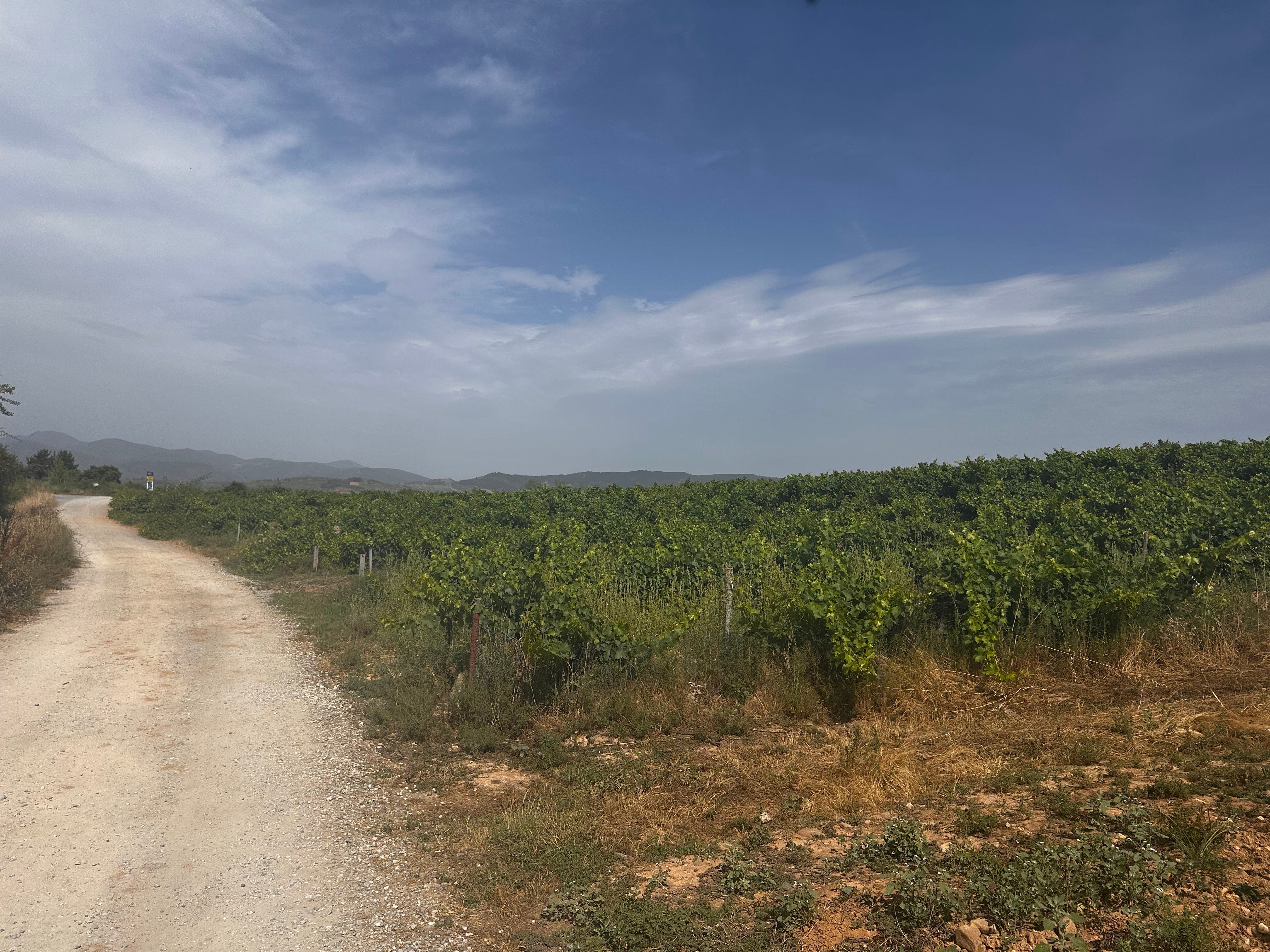
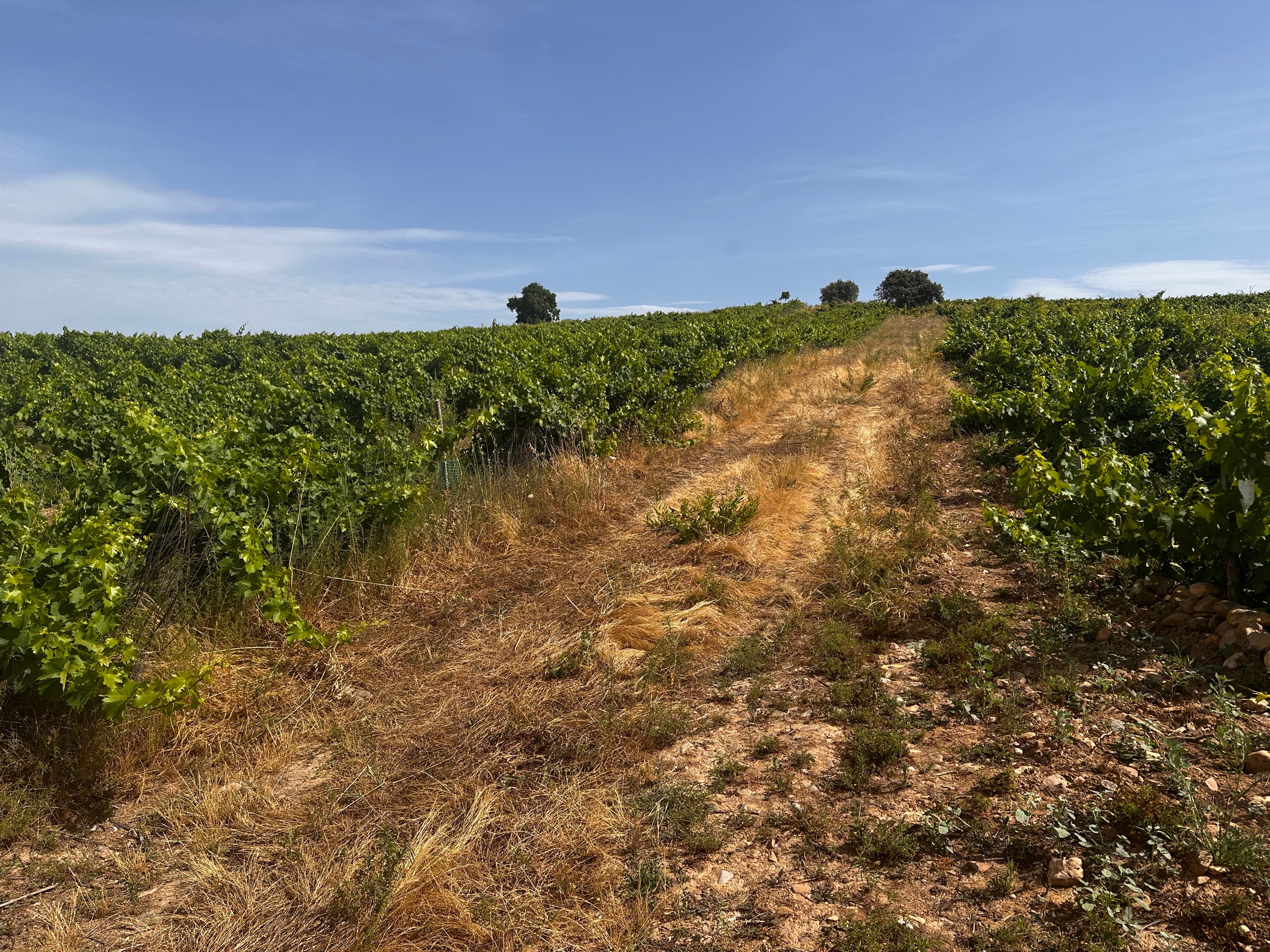
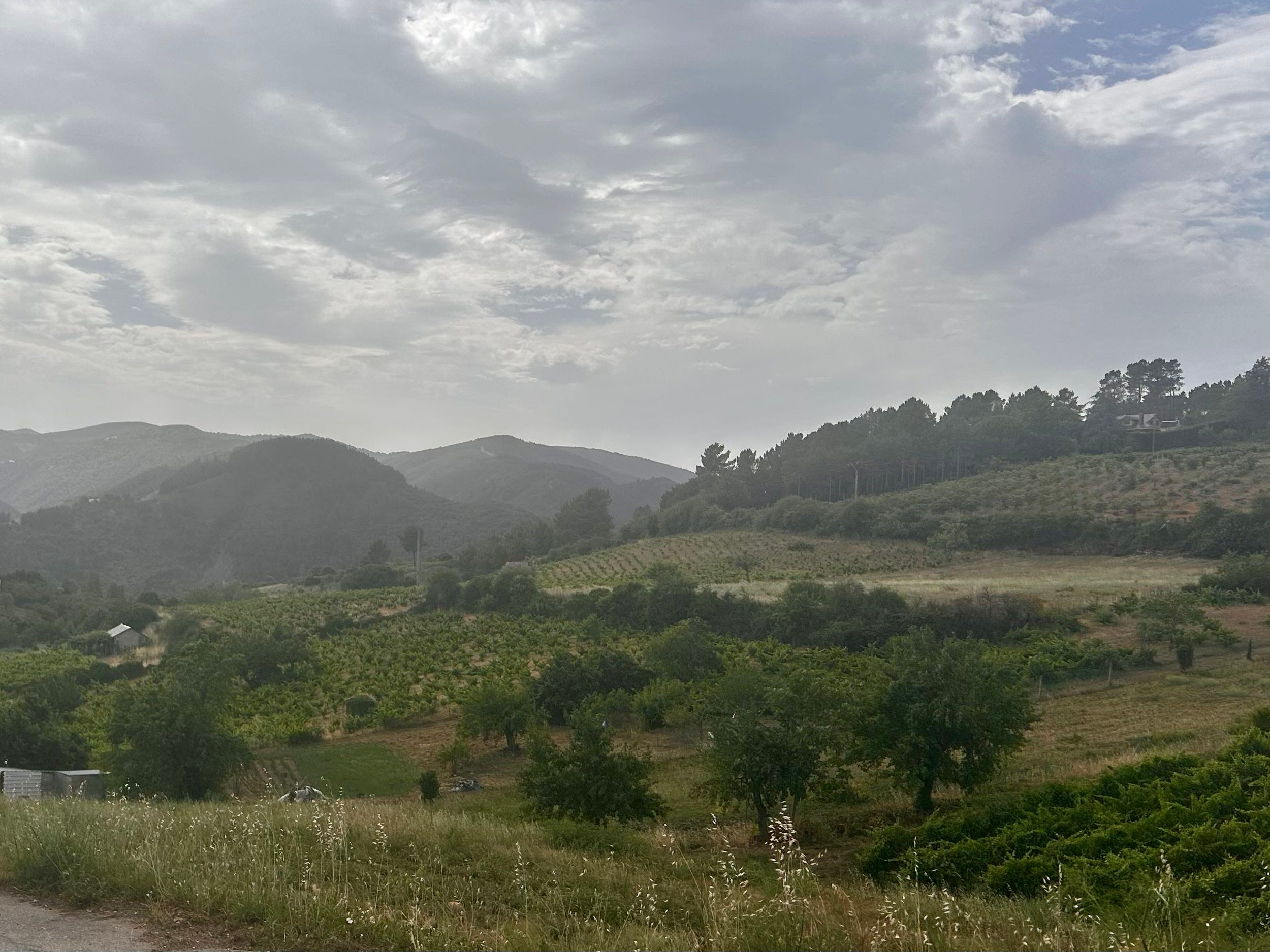
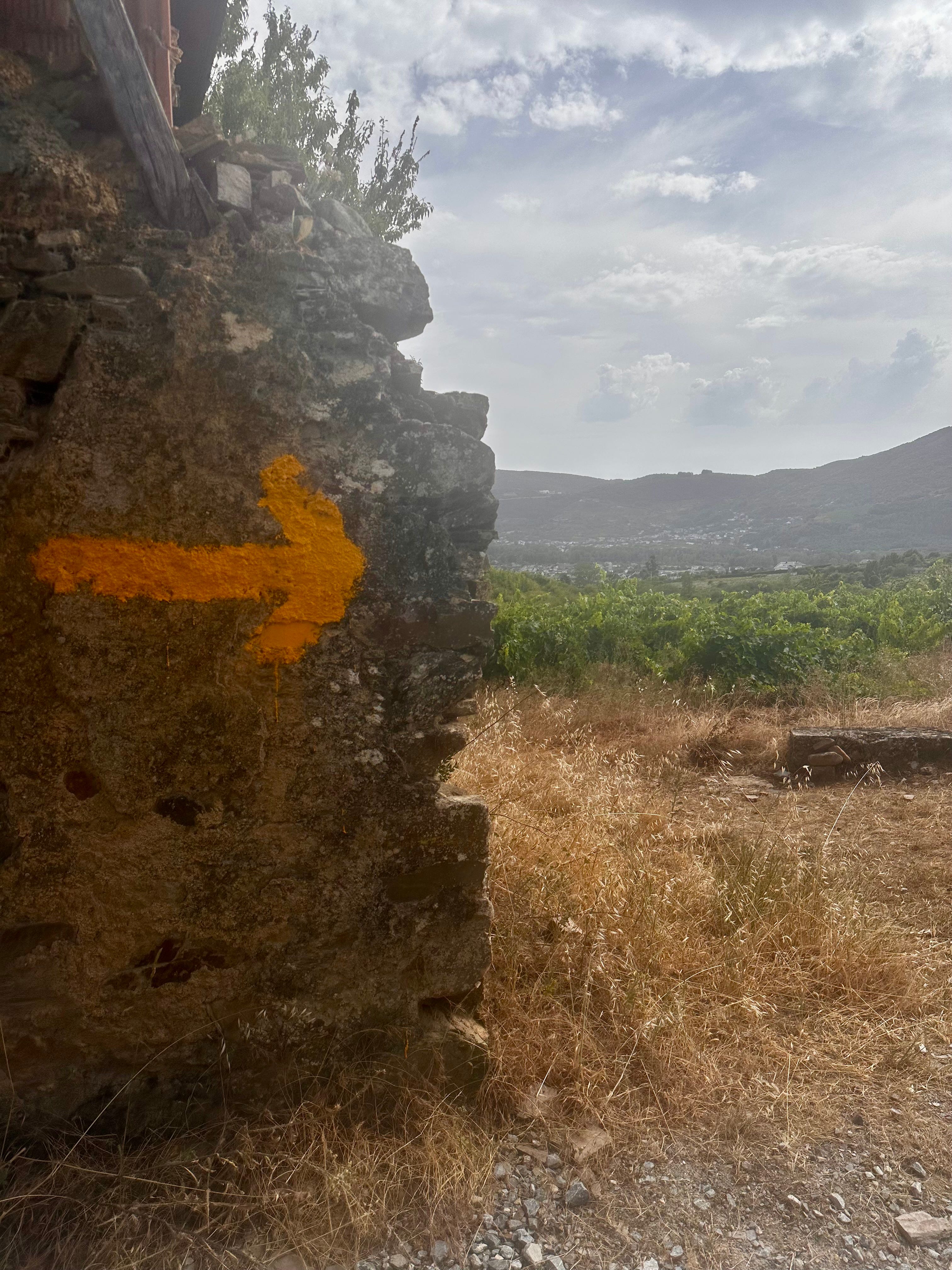
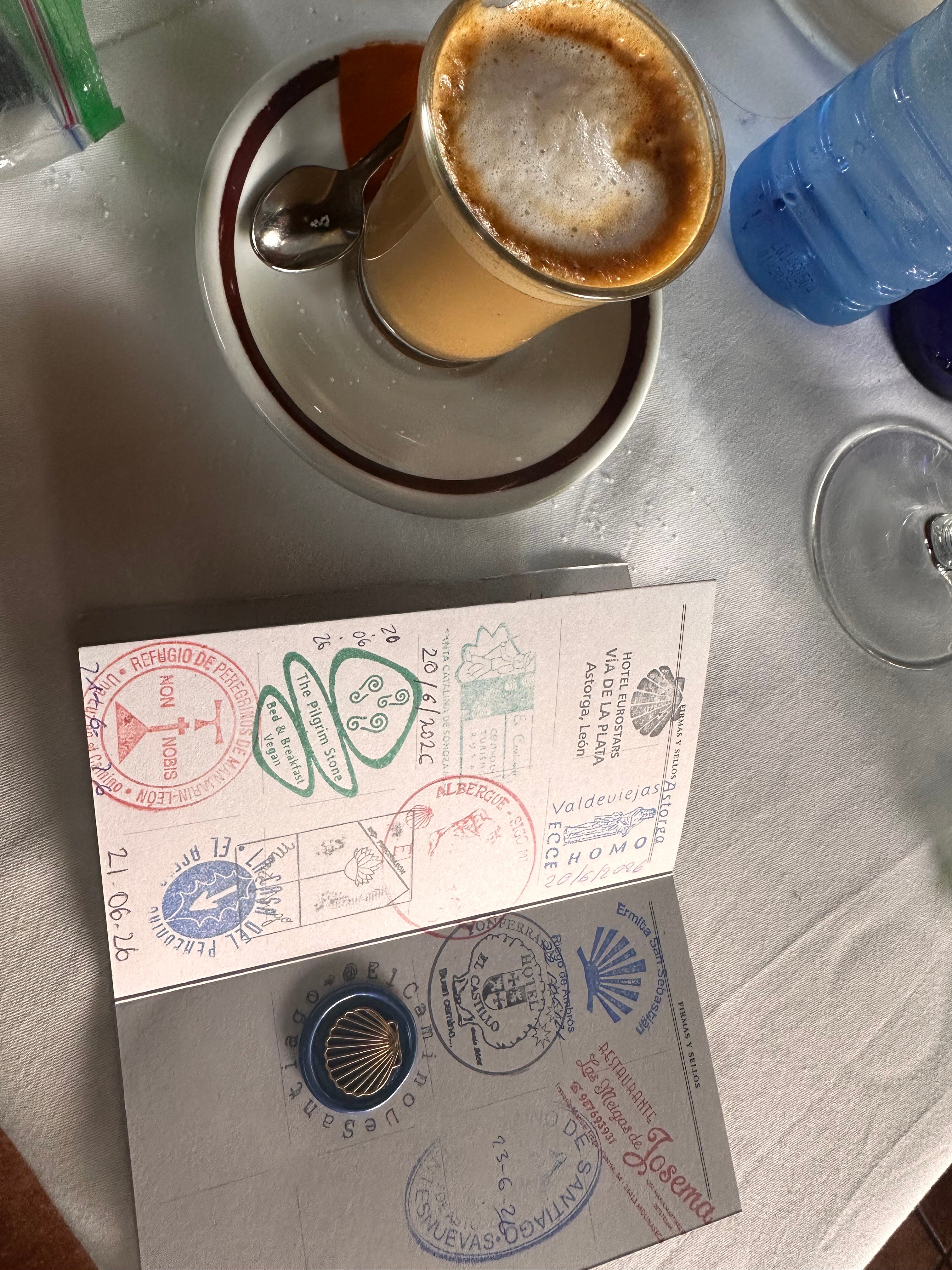
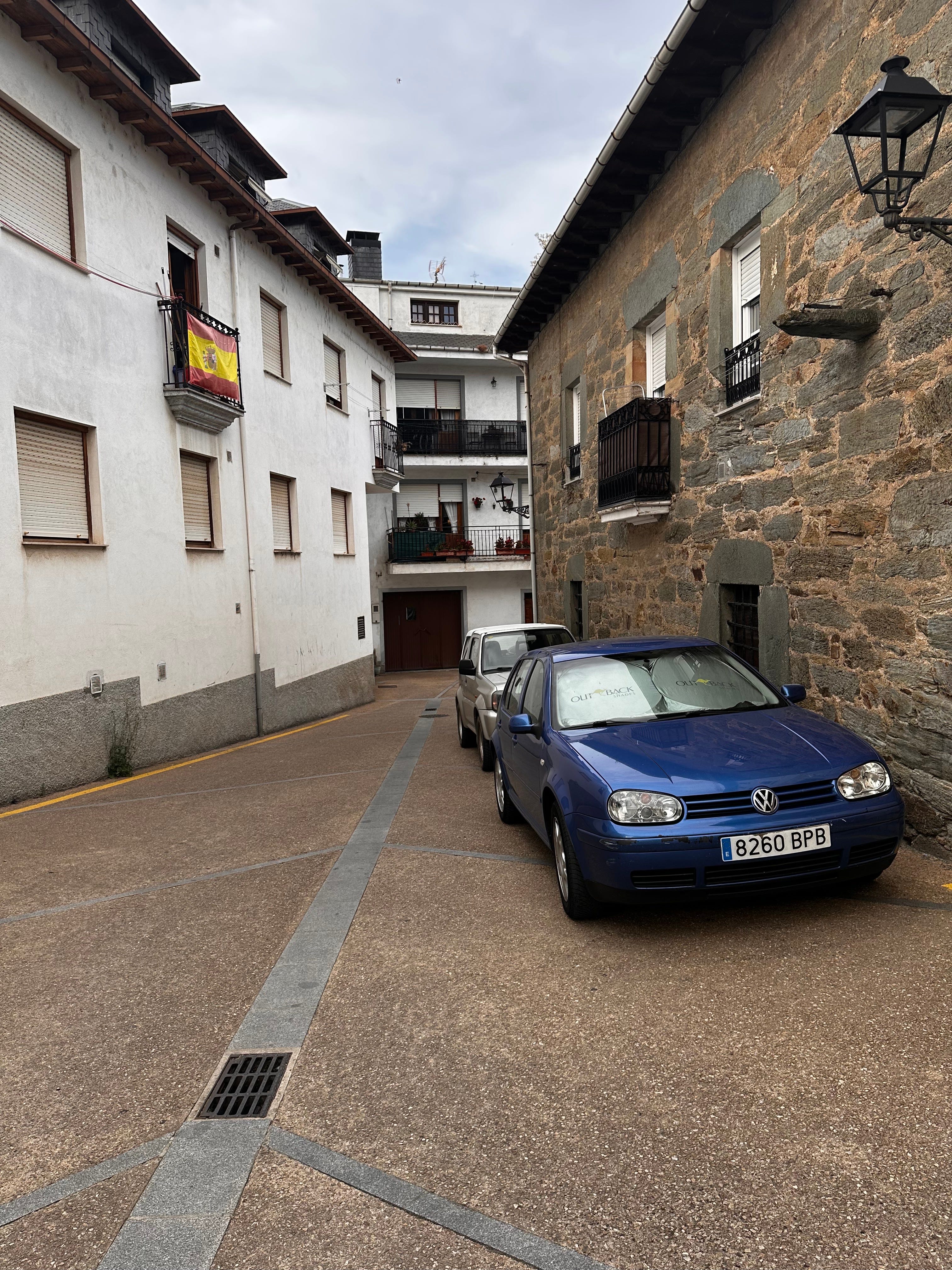
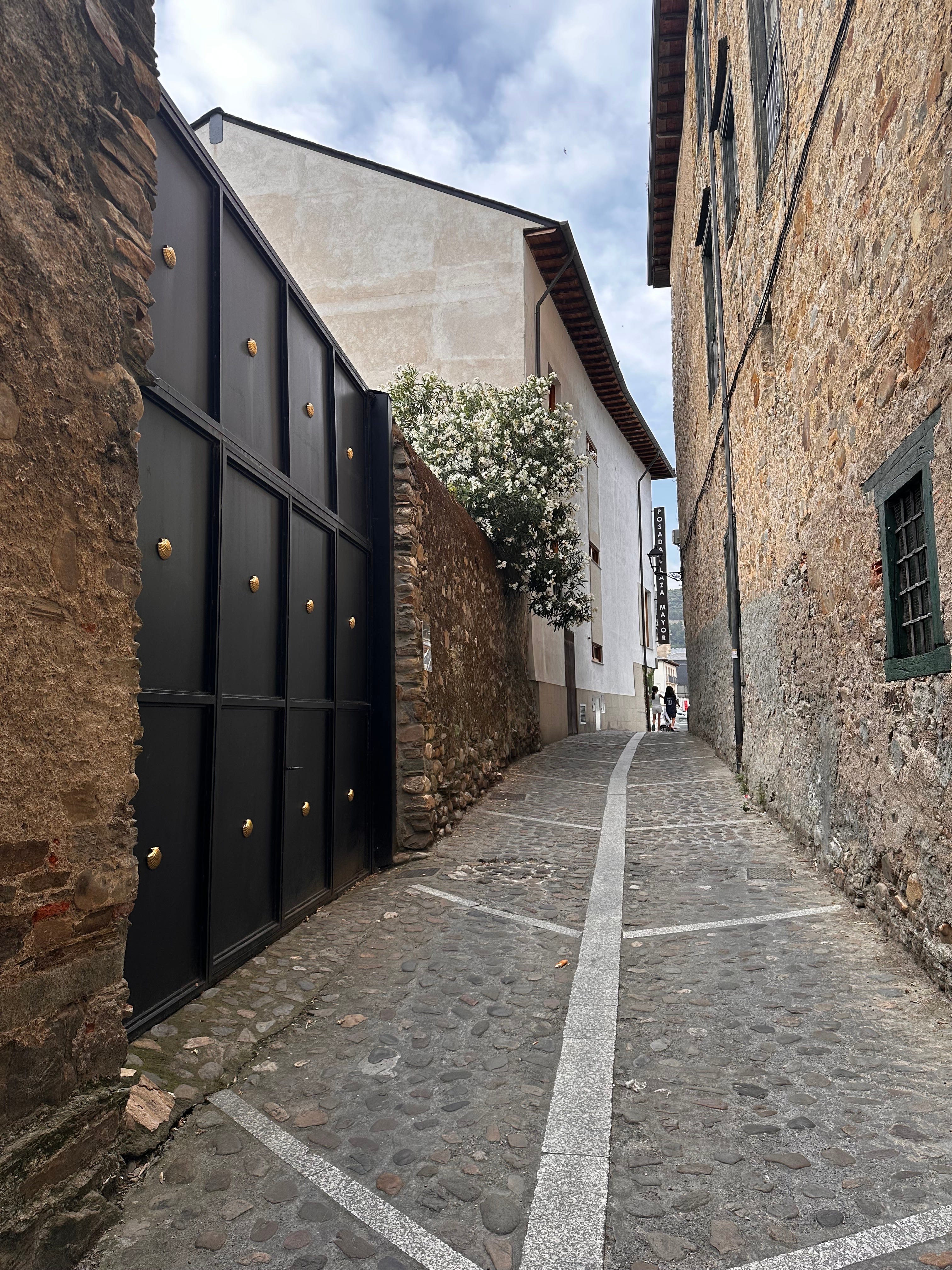
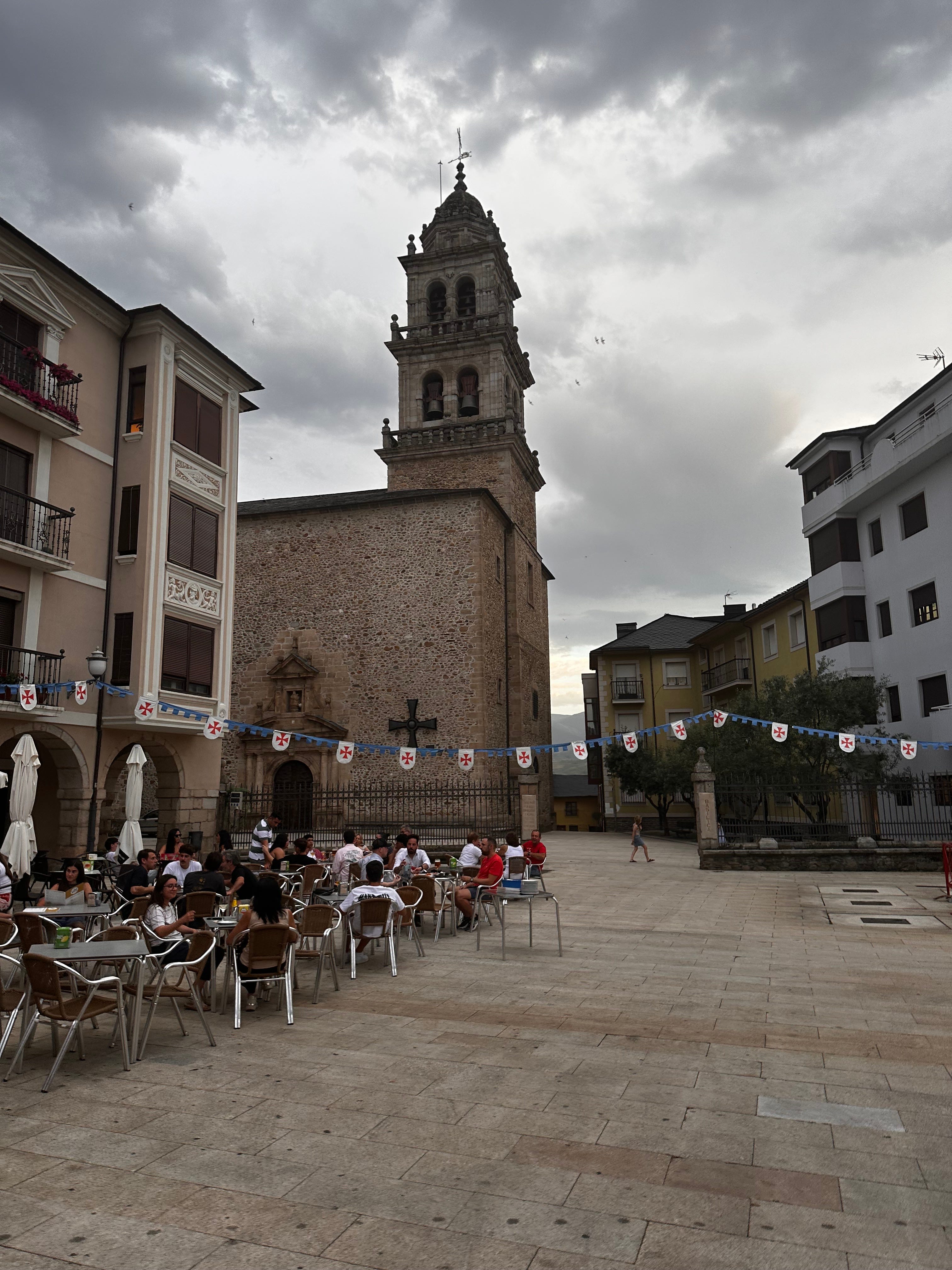
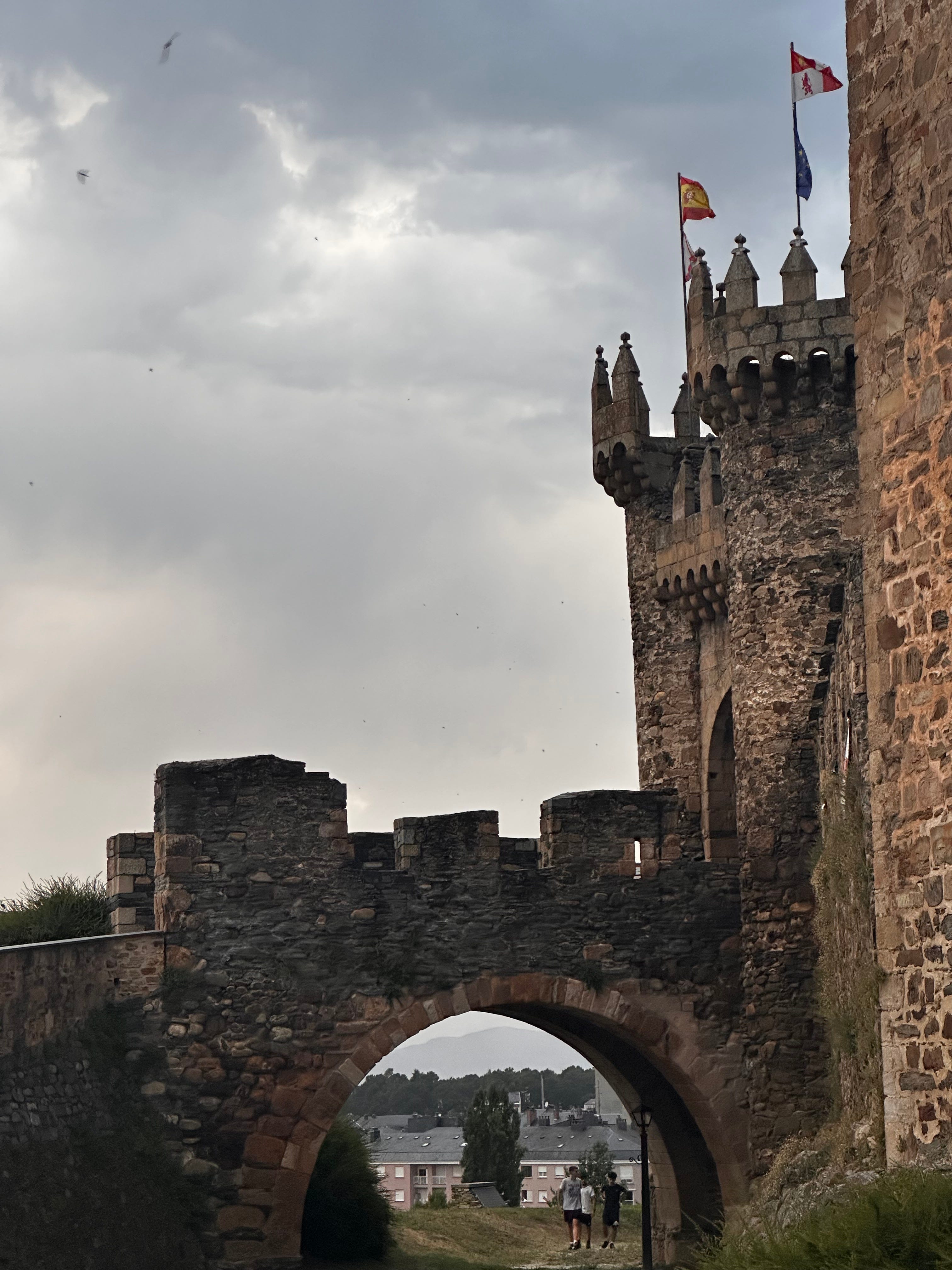
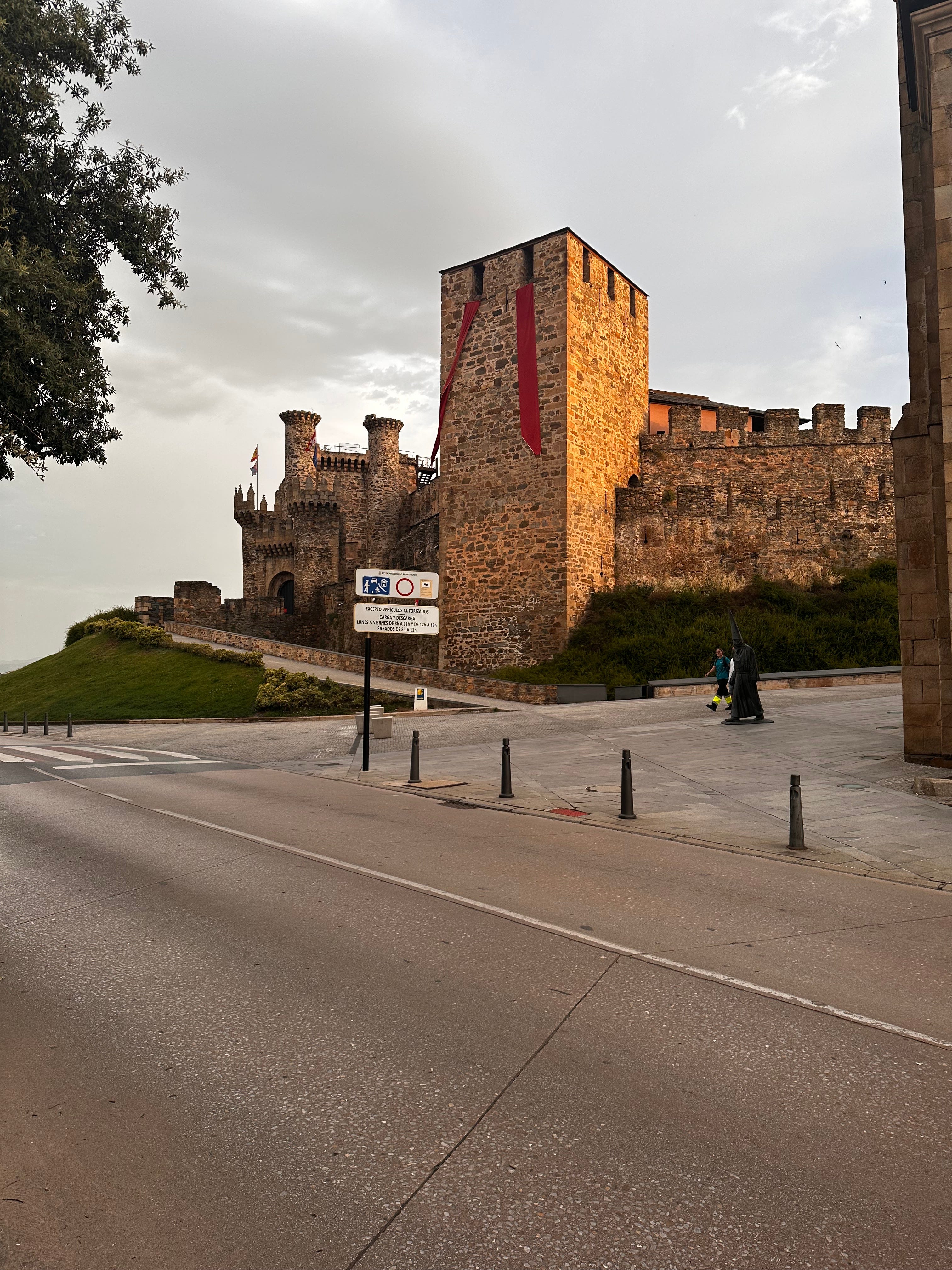
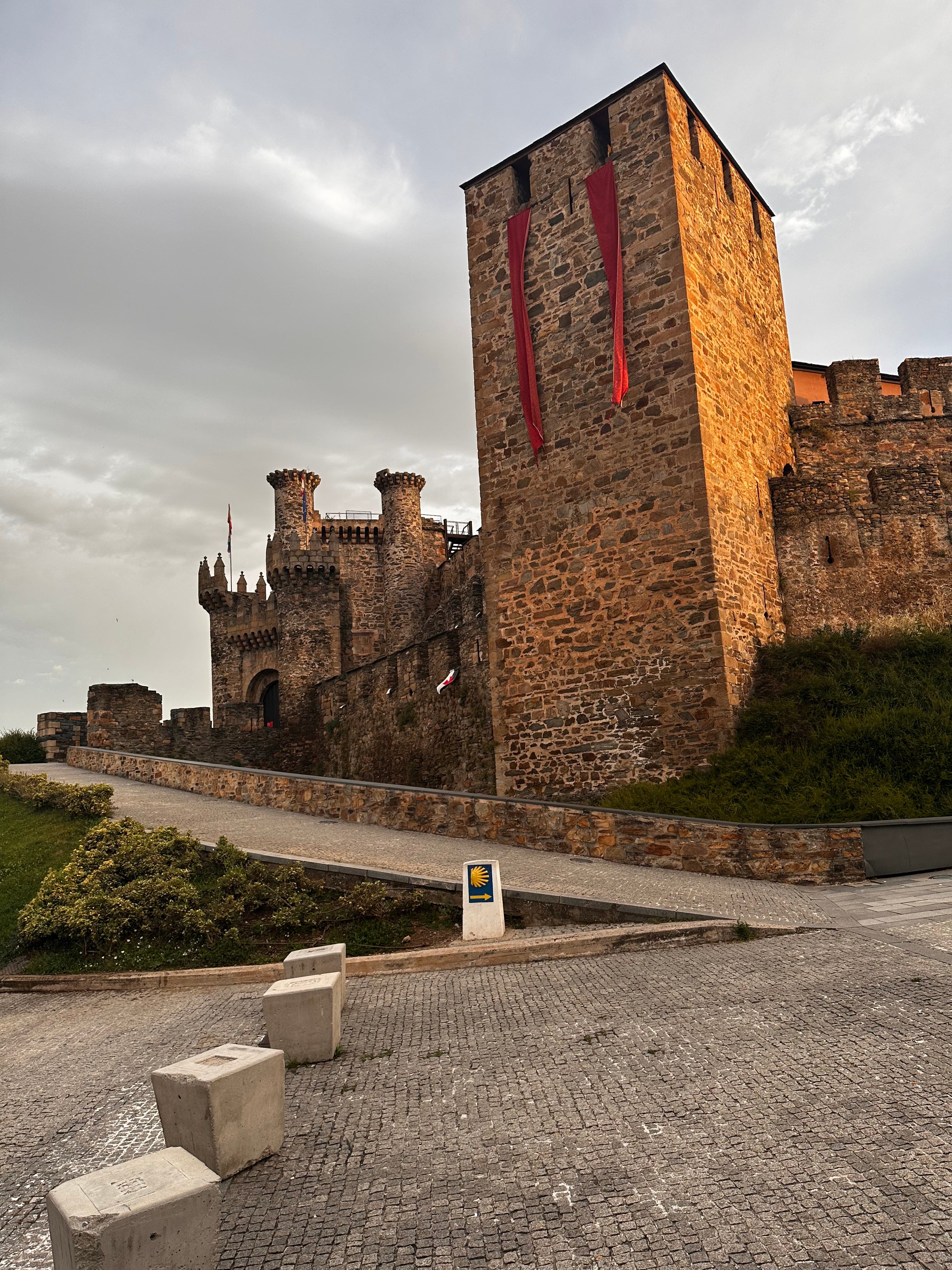
We were out by seven, into the soft early light. Ponferrada was just stirring as we passed the castle, the Templars’ fortress already catching the day along its high wall, red banners hung down the towers for the festival the town throws every summer in their memory, Noche Templaria, and the plaza below us quiet, strung with bunting beneath the clock. We ordered a tostada and a café con leche each at La Barbacana, the café across from the walls, and then continued out of Ponferrada into the morning.
Just past the square we fell into step with Johnny and Maia, who had come all the way from Florida to walk the Camino. We traded the usual things, where you started, what made us choose the Way, about slowing the world down, and then the easier things, and for a while there were four of us on the road instead of two. That is the small grace the Camino keeps handing you without being asked. You meet someone along the way and start chatting, walk an hour together, and part again, and it costs nothing and stays with you anyway.
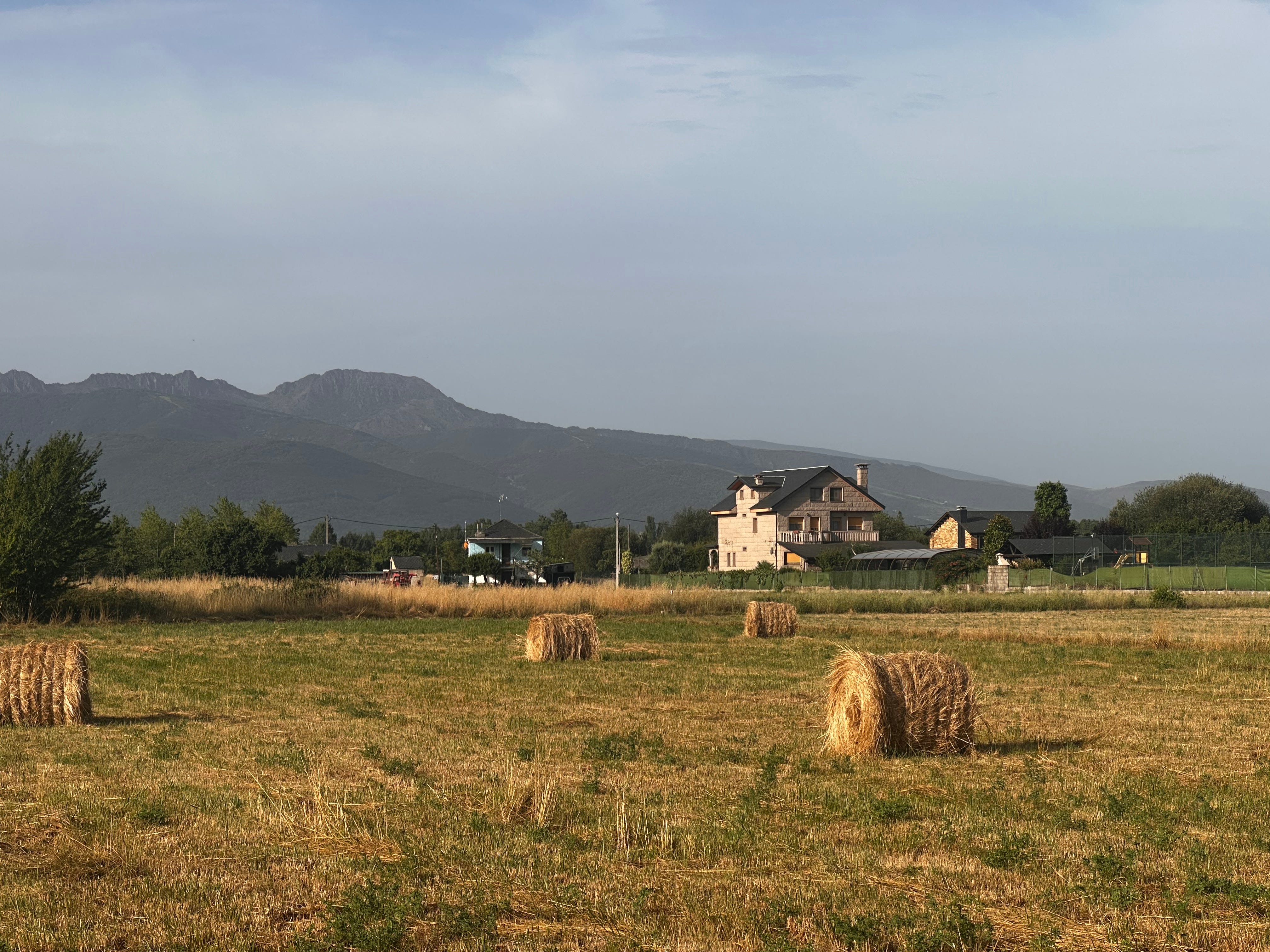
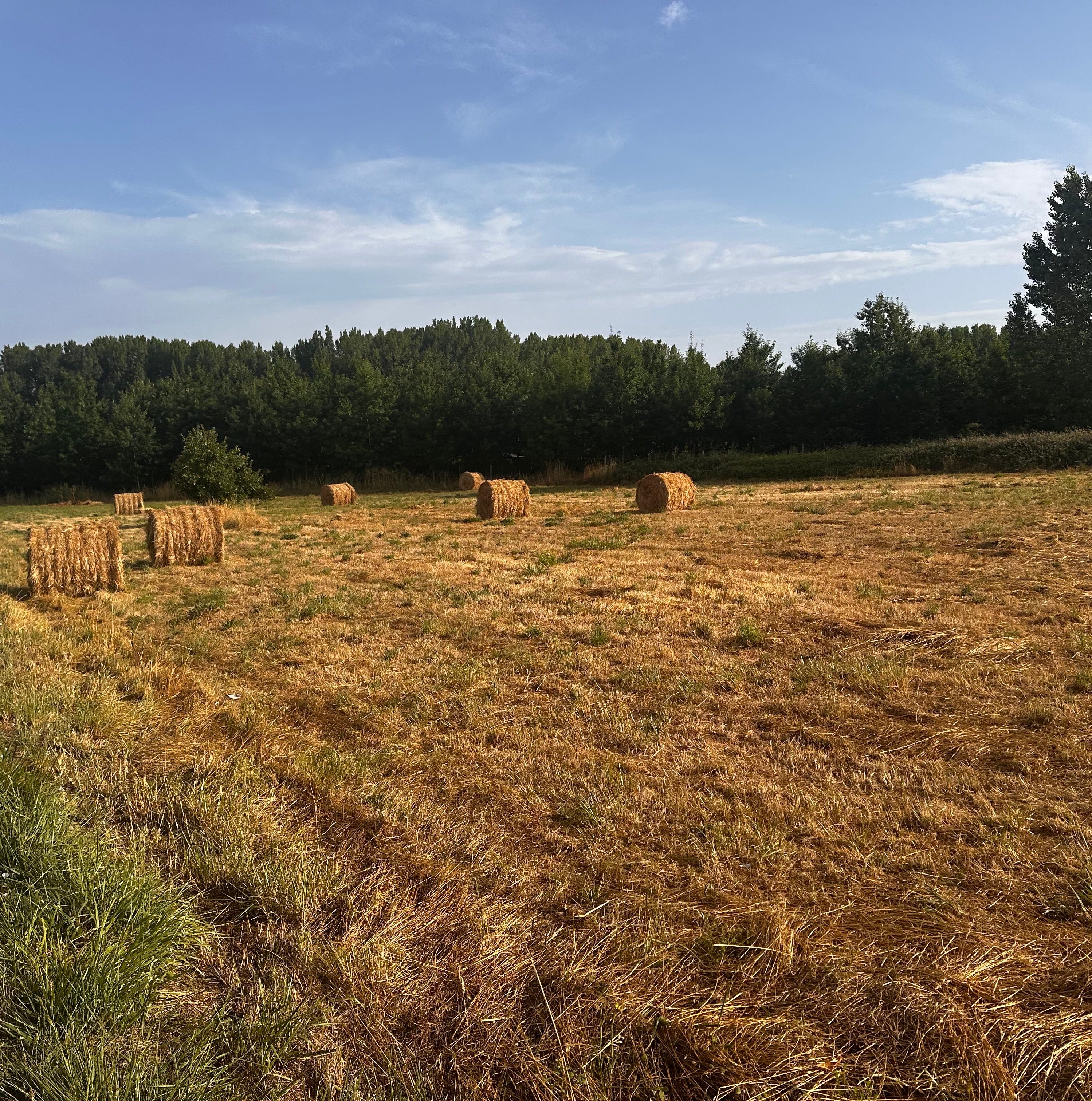
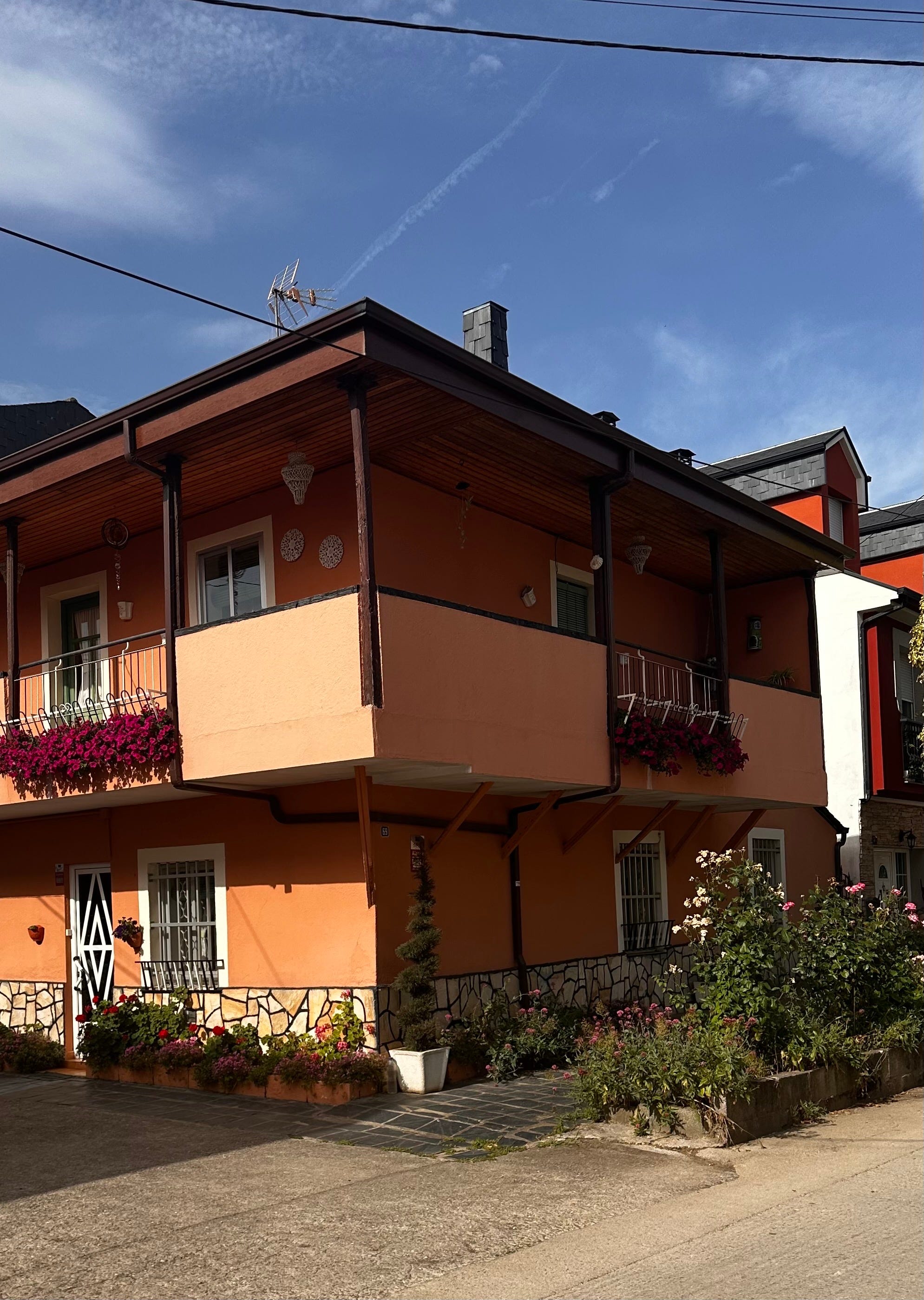
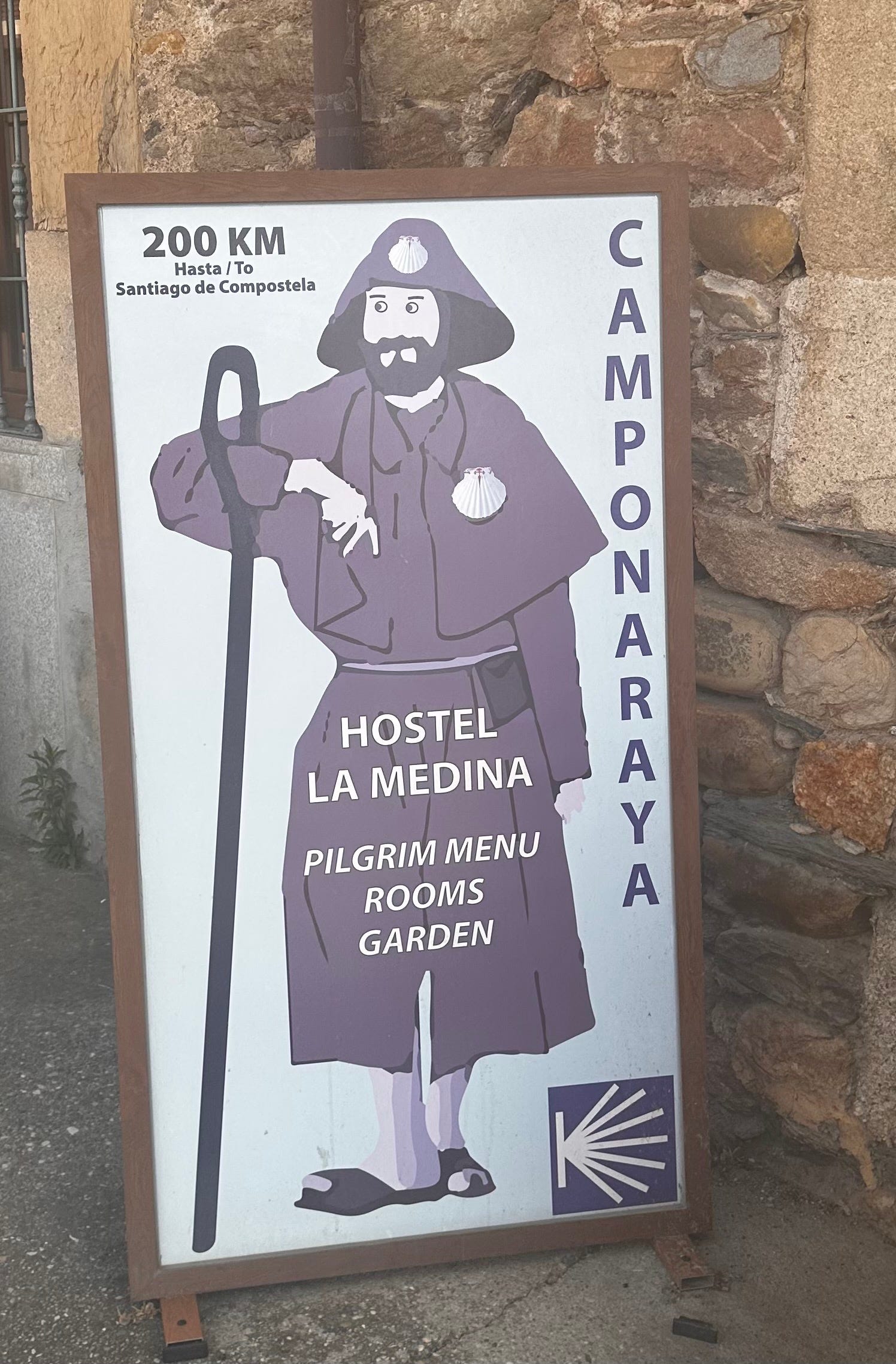
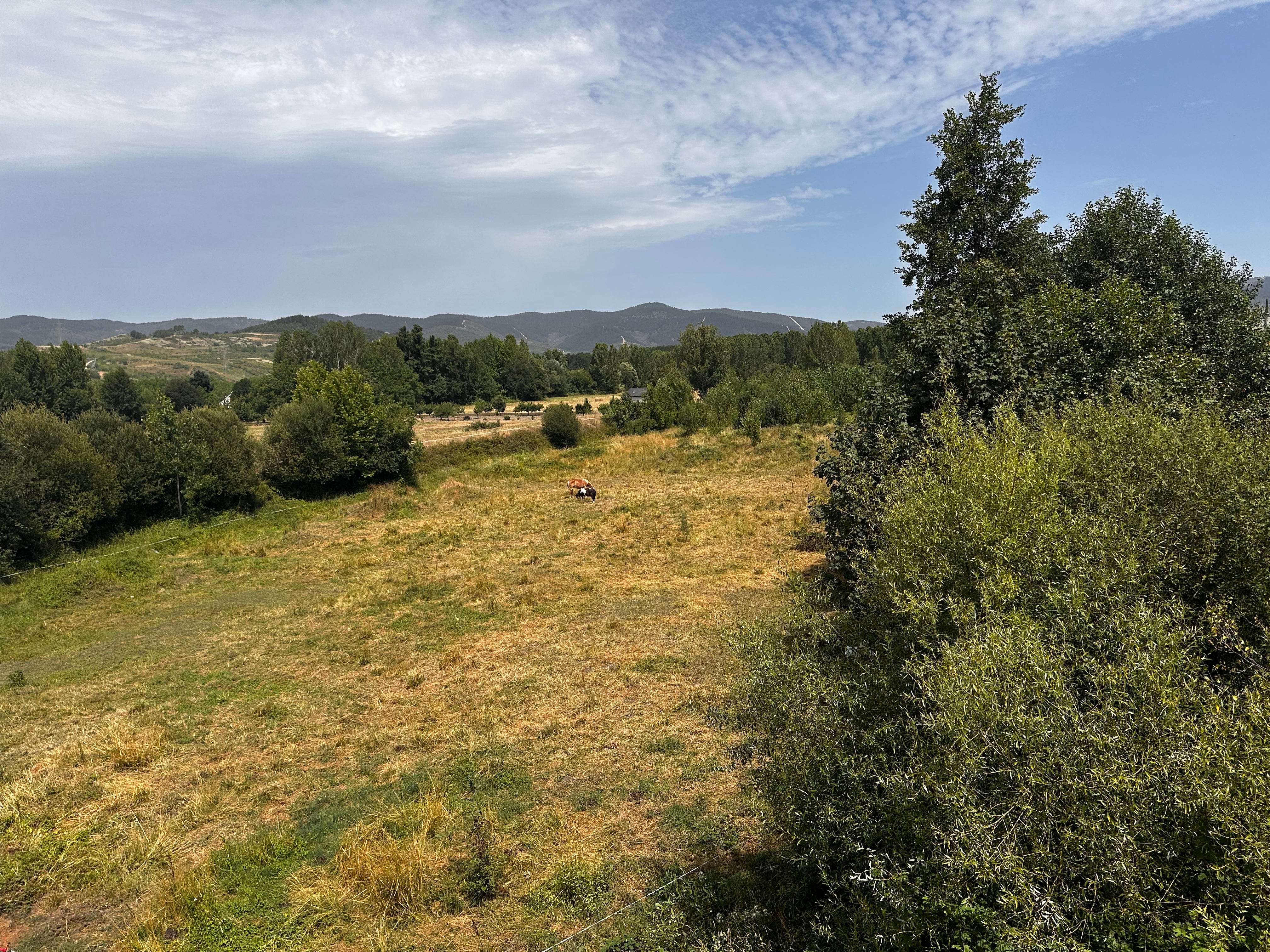
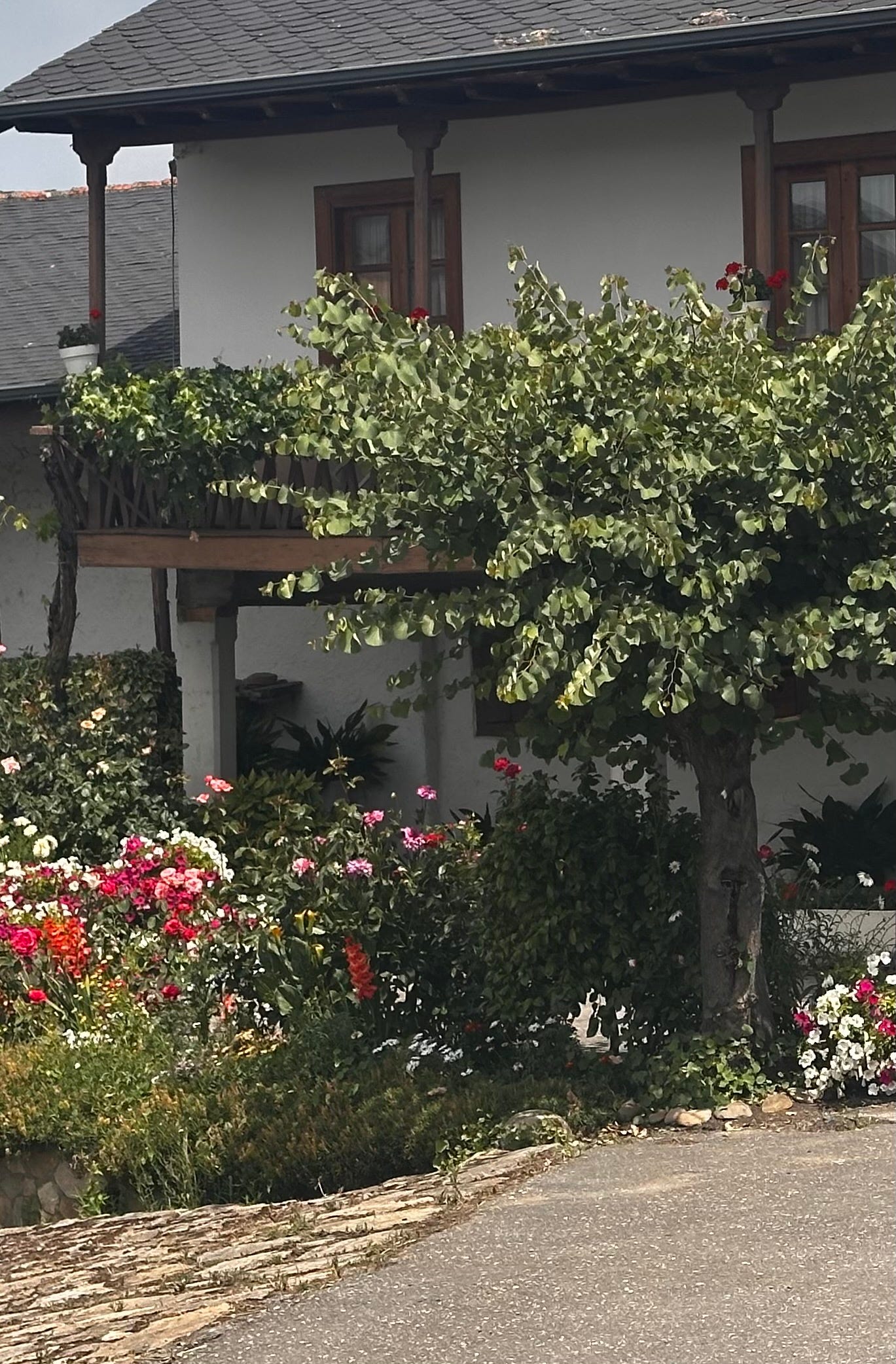
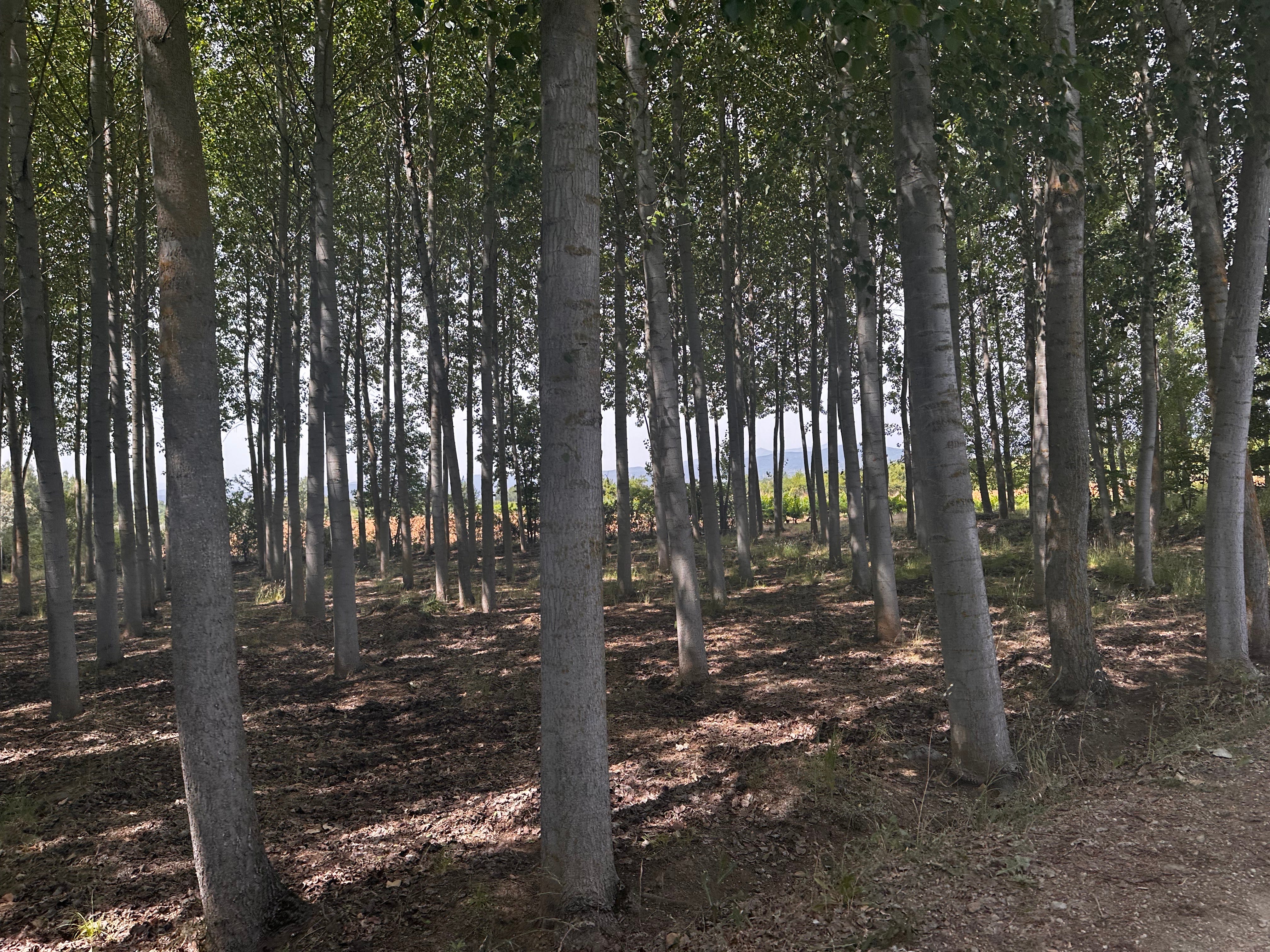
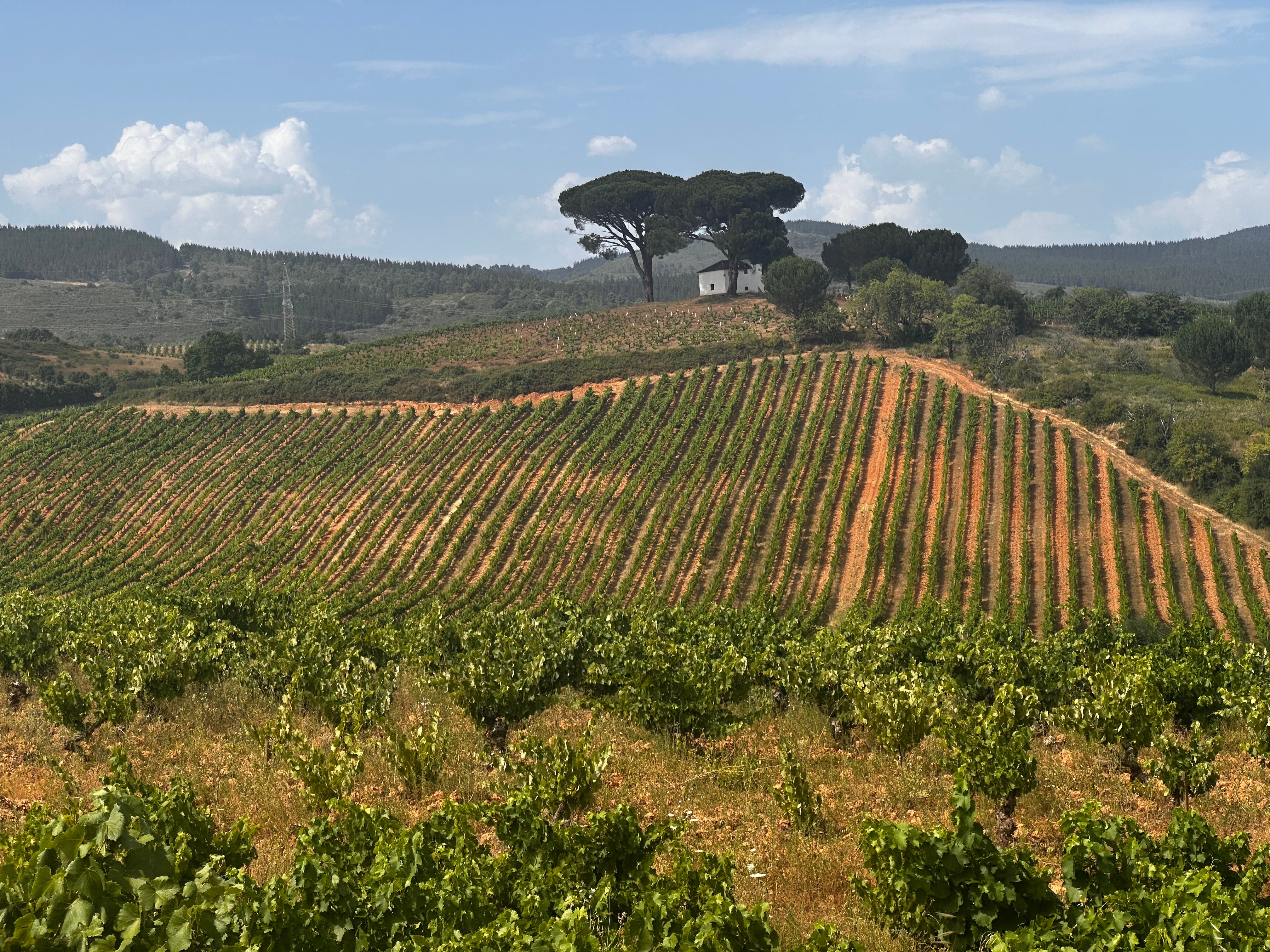
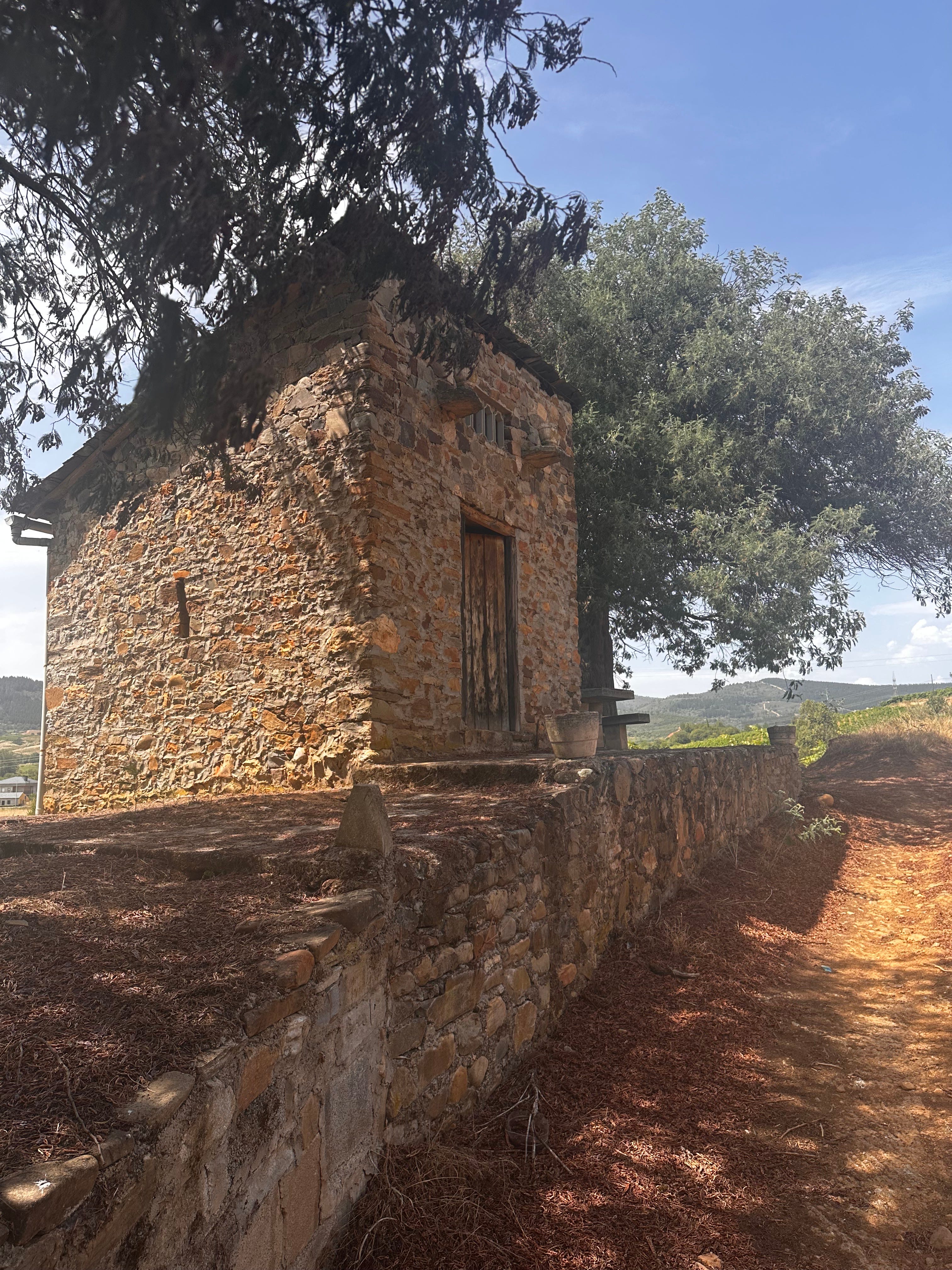
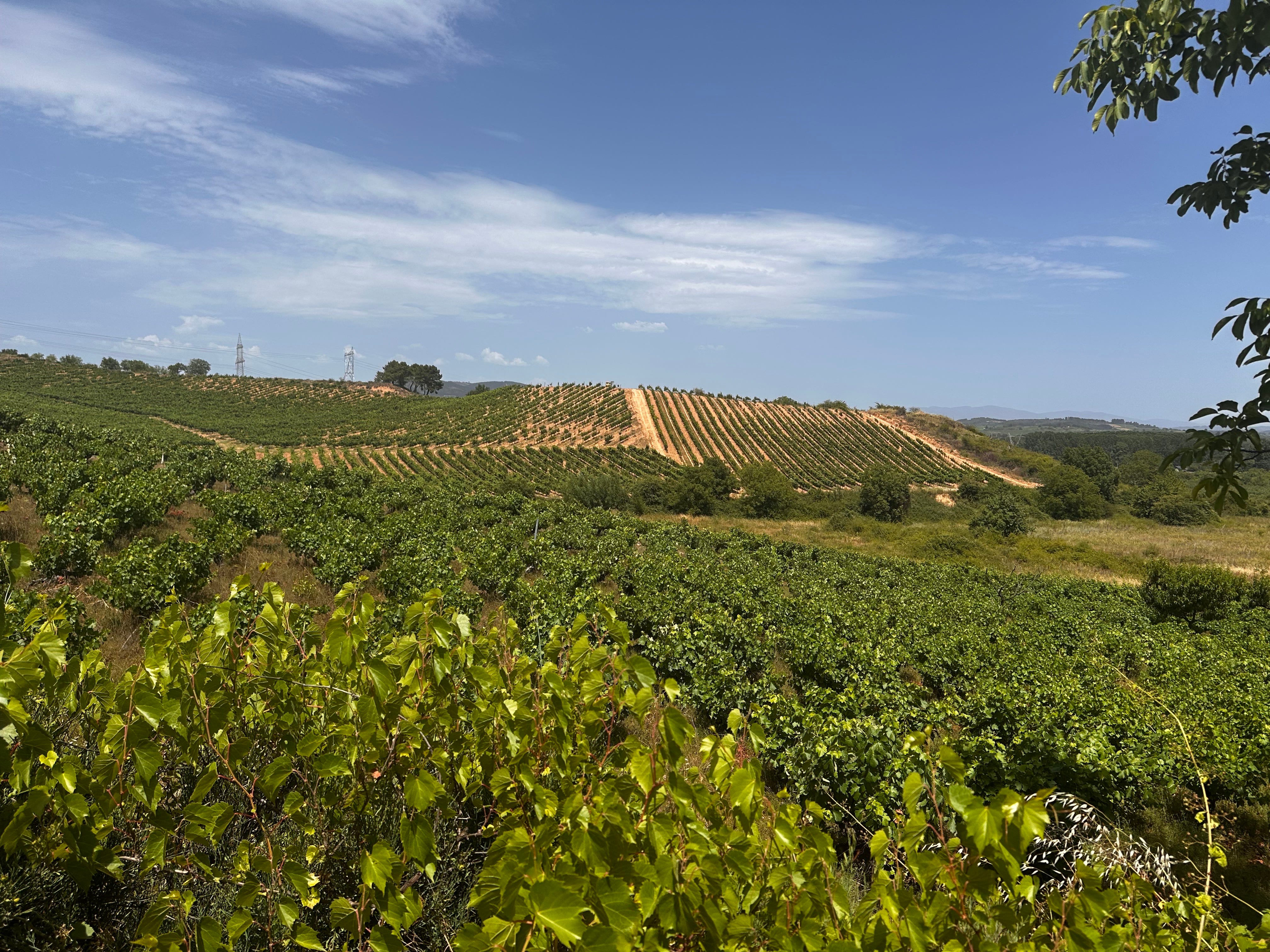
The villages came one after another through the flat green country of the Bierzo: Columbrianos, then Camponaraya, with Cacabelos further on, and Villafranca waiting at the end.
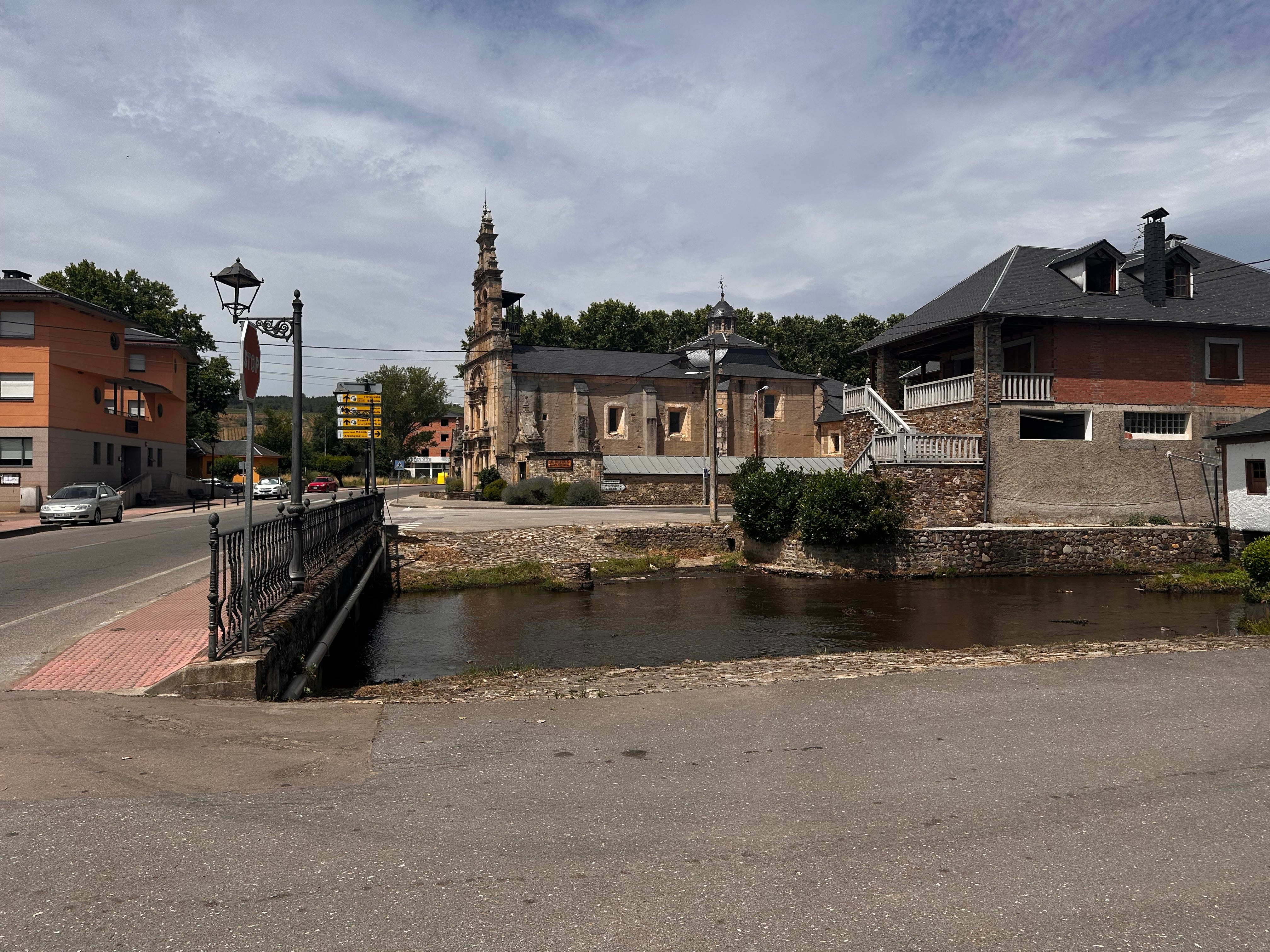
At Camponaraya we stopped for an orange juice, and the woman behind the bar set down a small wedge of tortilla beside it, unasked. A little favor, she said, for the pilgrims. The Spanish tortilla is the plainest sort of marvel, just eggs and potato, sometimes a little onion, cooked slowly in good oil until it sets into a thick gold round and then cut into wedges. But the giving of it is its own old custom. All along this road the bars and the hosts press small free things on the people walking it, a coffee, a piece of fruit, a slice of something warm, la casa invita. It is the living thread of the hospitality that built the Camino in the first place, the medieval hospices and the open doors, still running quietly under the modern one. You arrive a stranger and someone feeds you for no reason at all.
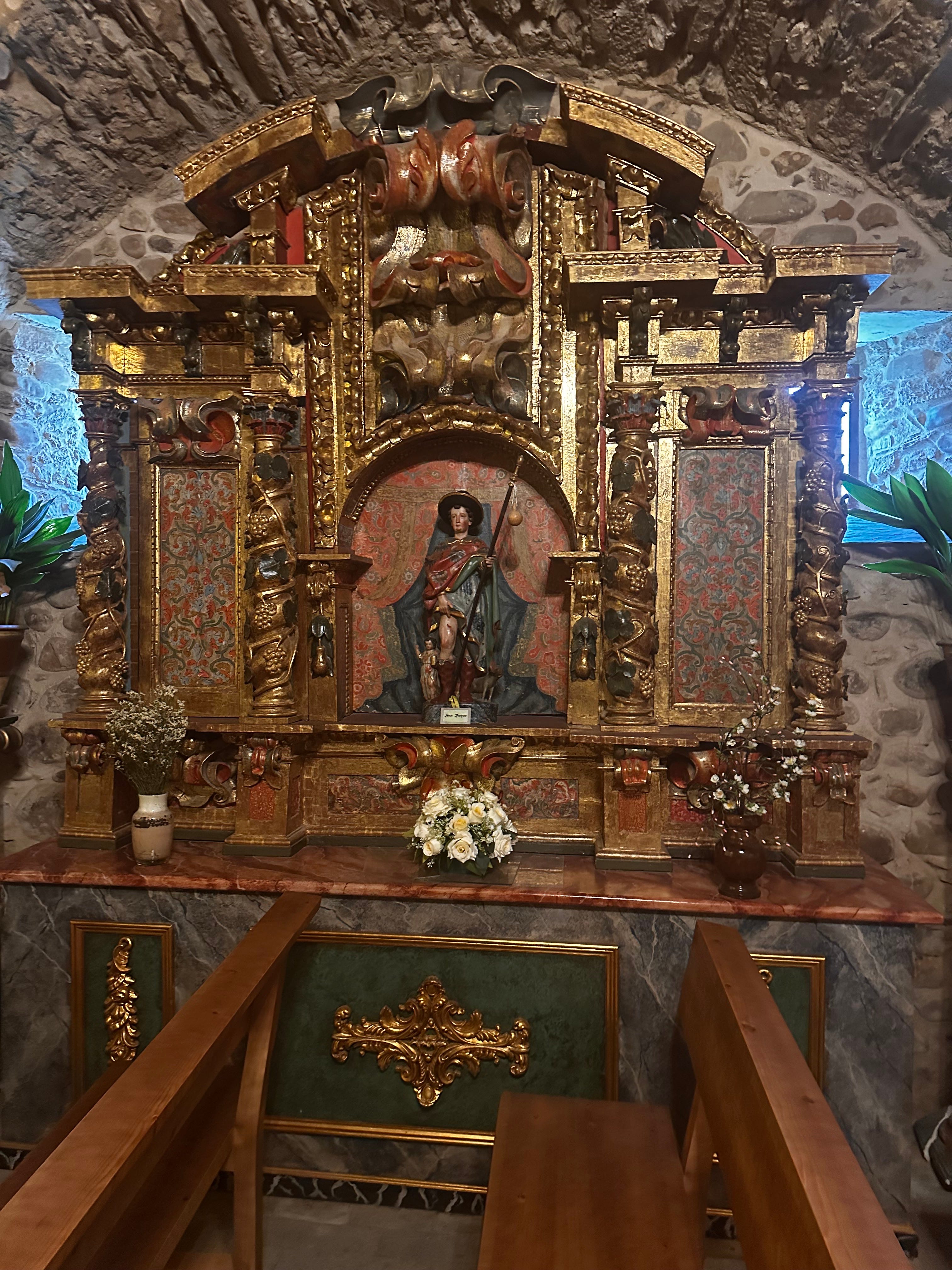
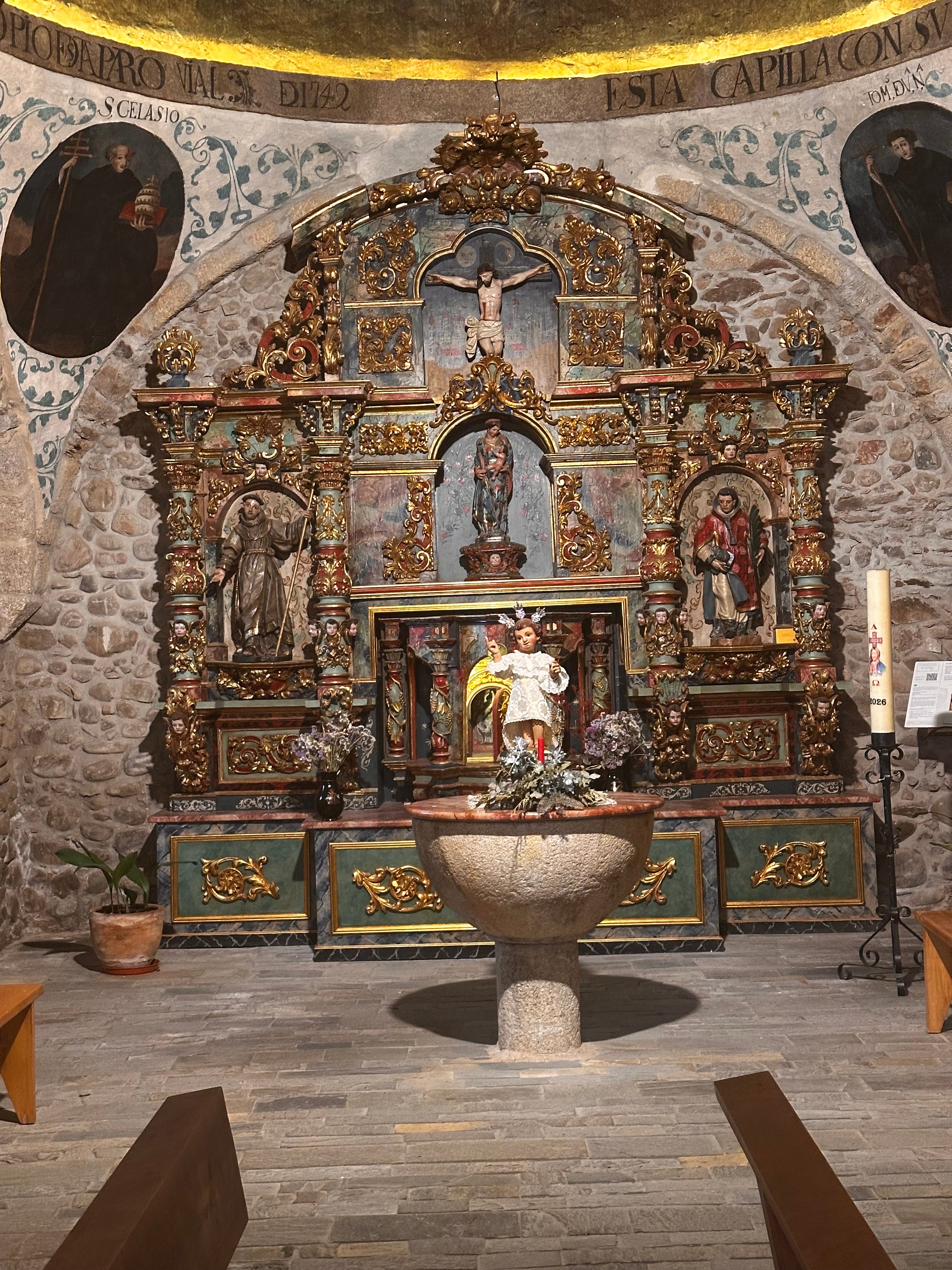
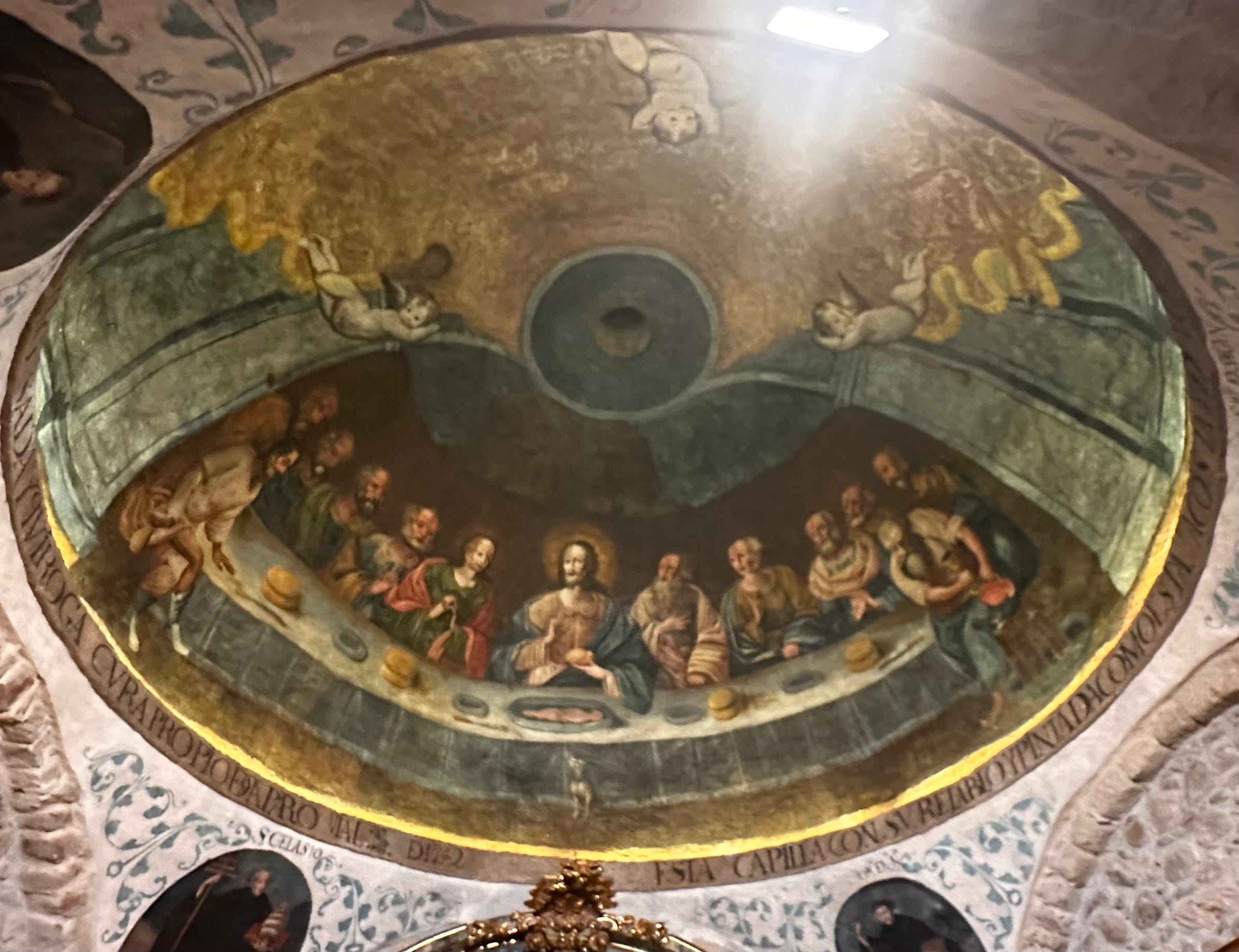
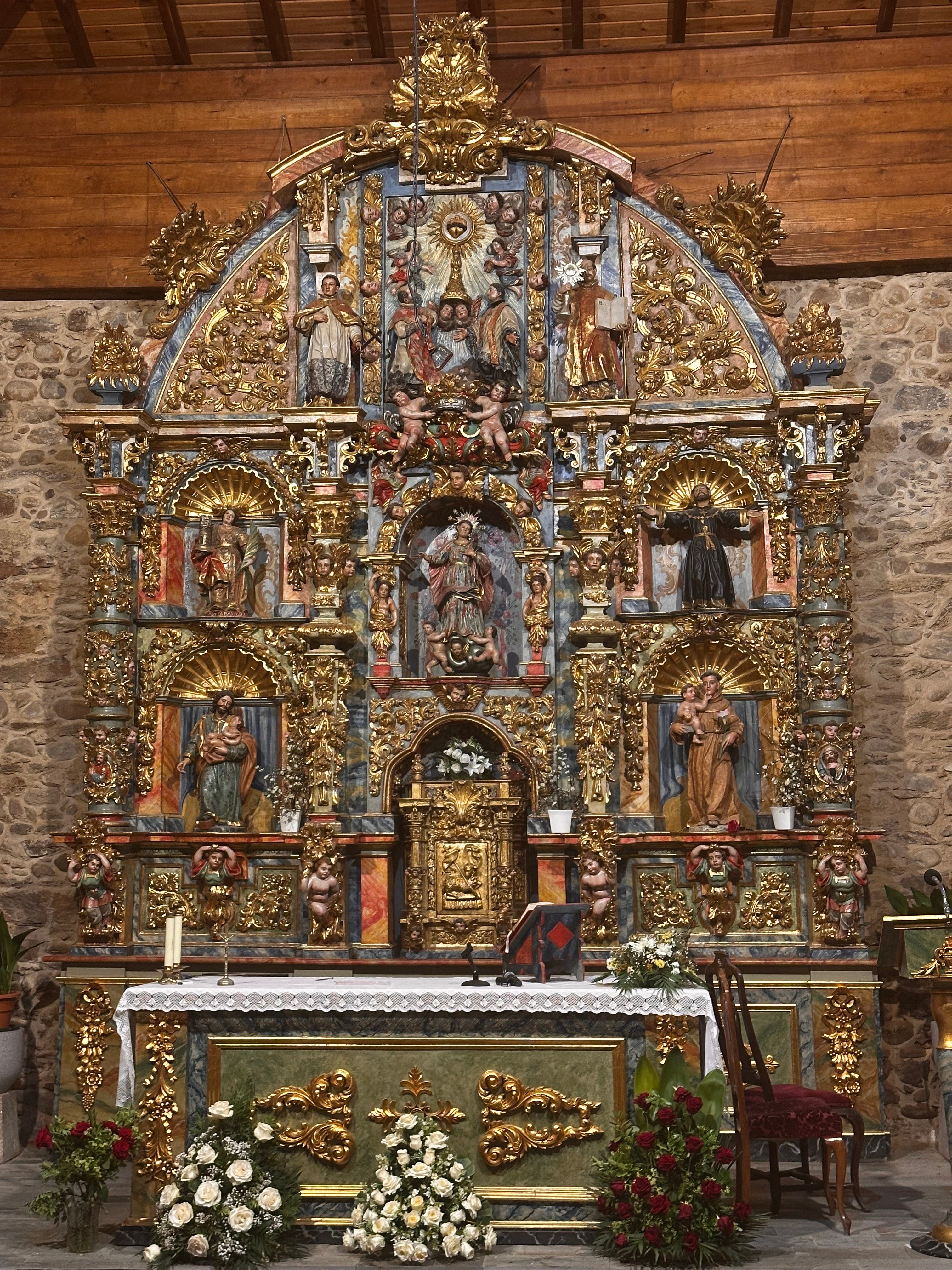
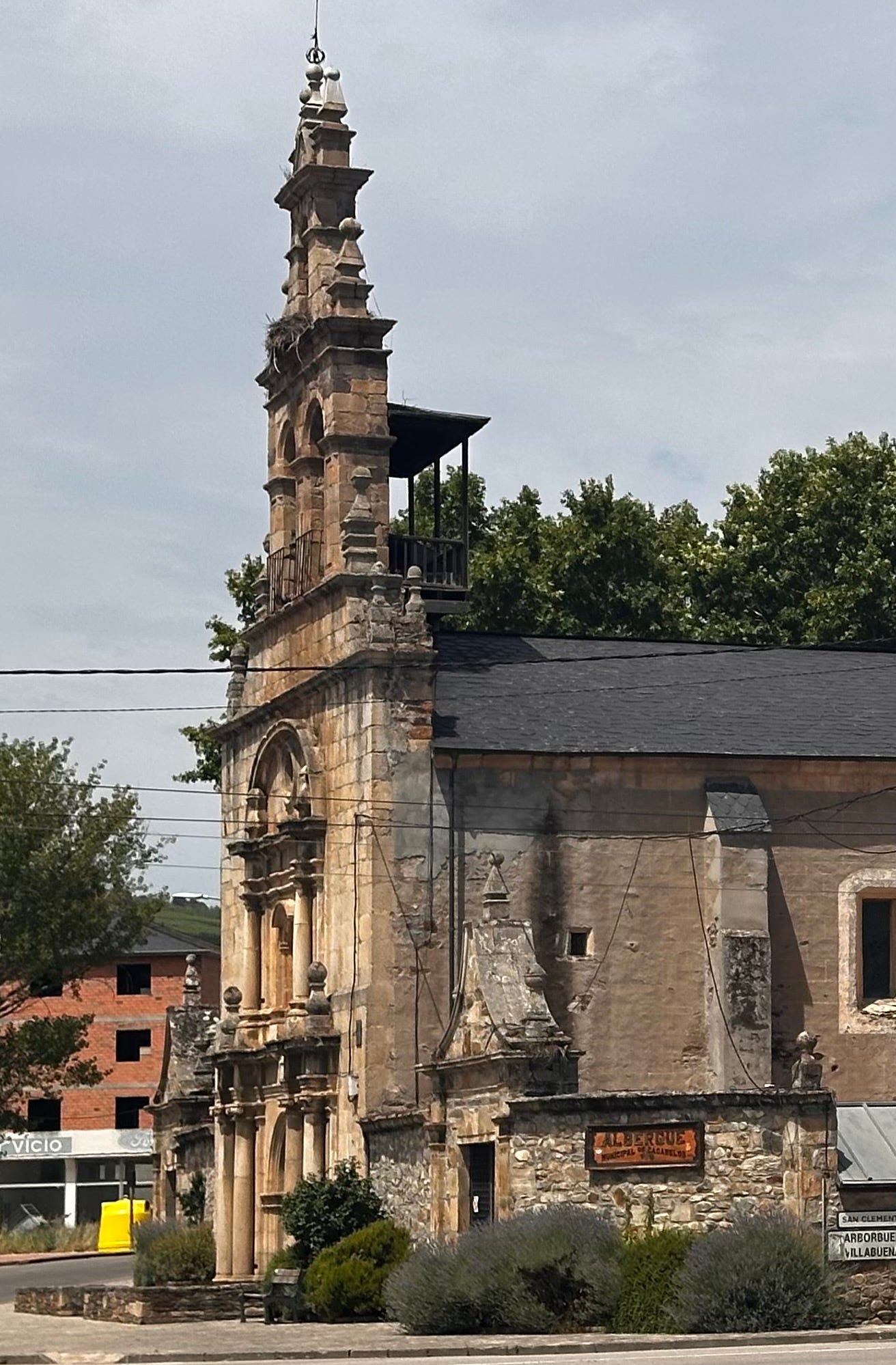
In the same village we stepped into the parish church, cool and dim after the glare. The main altarpiece was high baroque and gold from floor to vault, eighteenth century, with carved saints pressed into service as columns, holding the whole shining weight on their shoulders. In a side chapel, in 1700s someone painted the Last Supper across the inside of a small dome, the apostles curving away around the table and cherubs tumbling through the corners below.A stork’s nest sat on the roof outside, of course. There is always a stork.
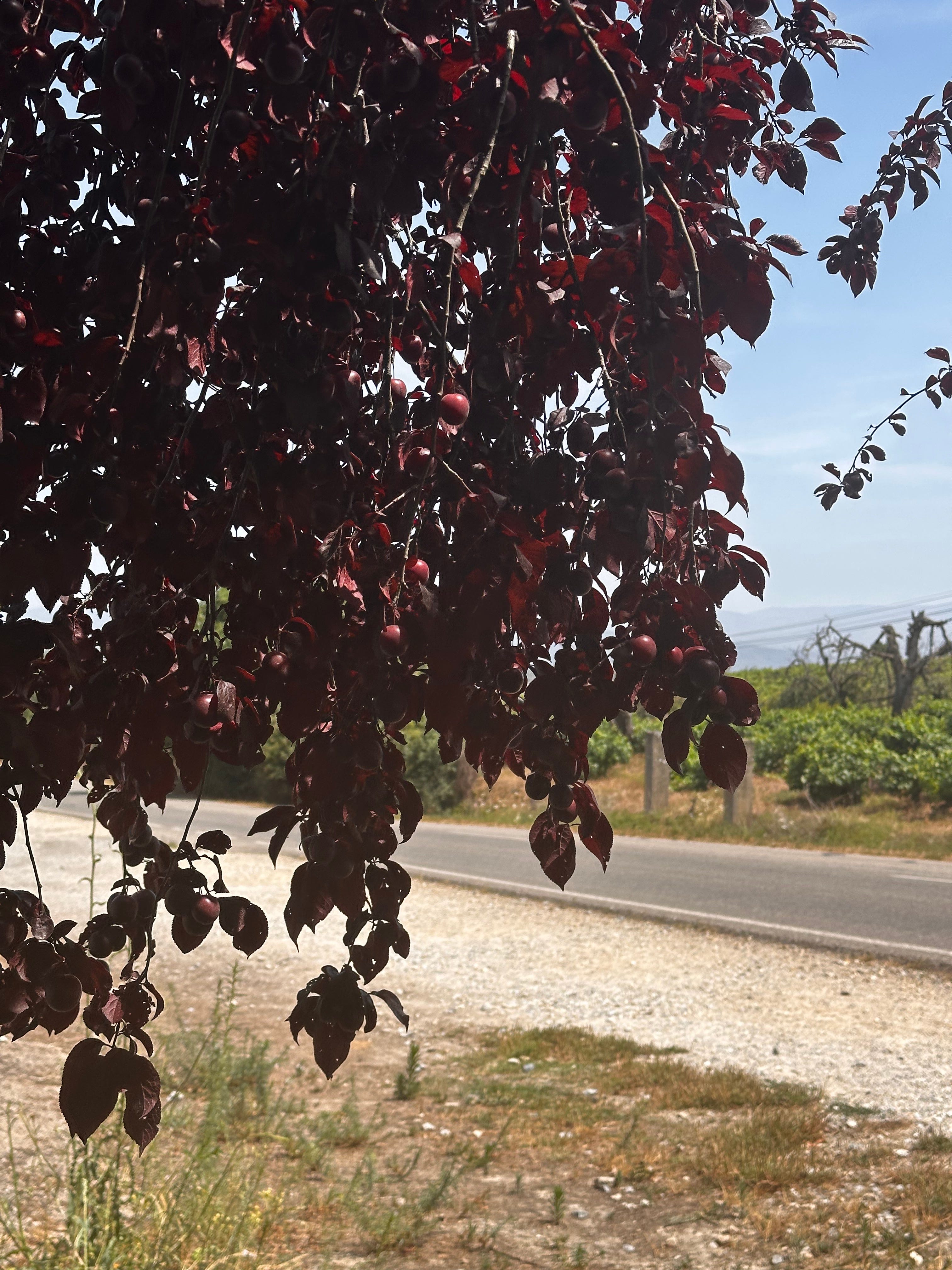
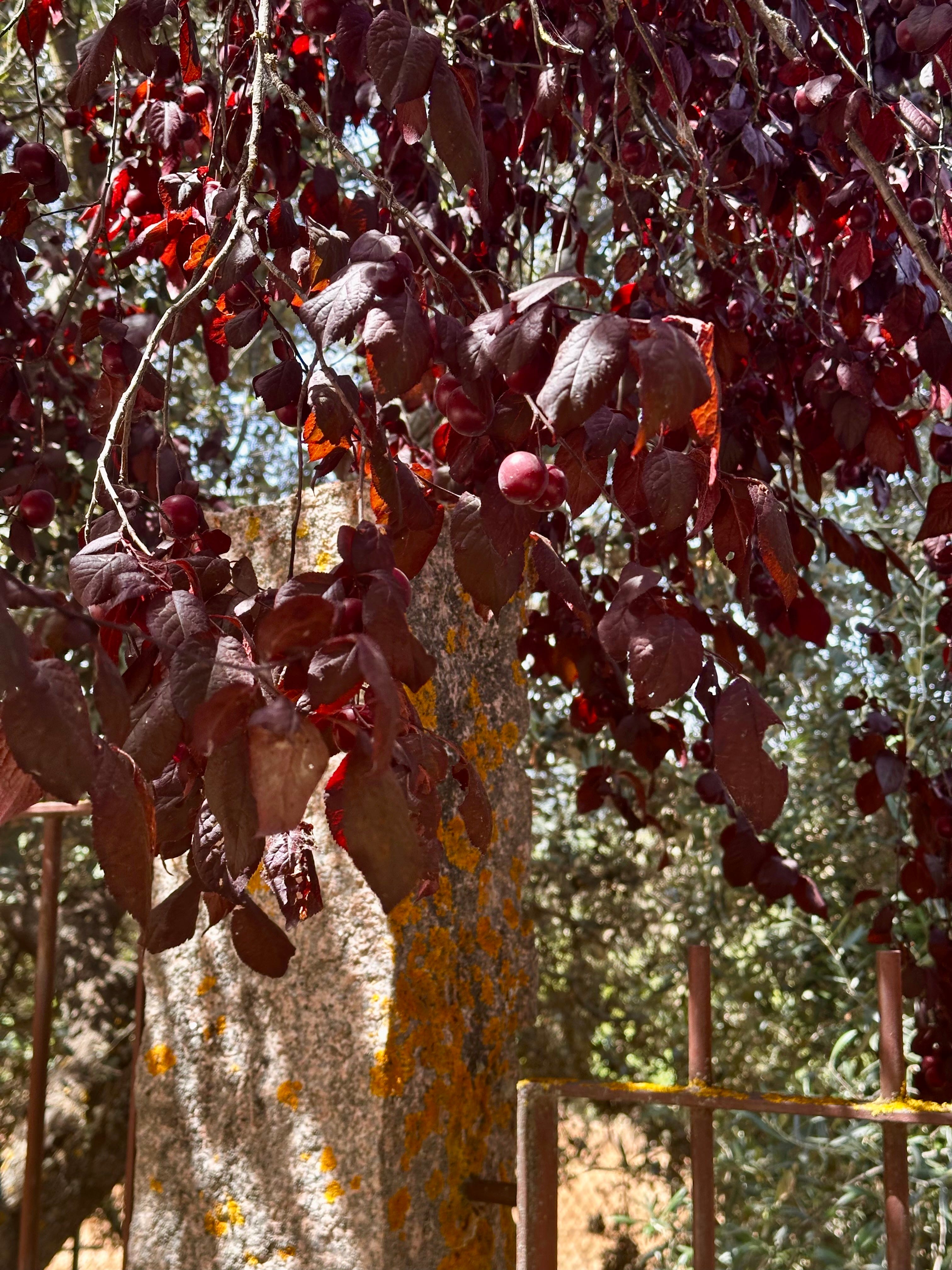
We bought cherries in Cacabelos and ate them on the way, dark and warm from the sun, the kind you do not bother to save. Lunch was at Casa Gato in Cacabelos, and I would send anyone there. There is no menu, you get whatever the kitchen chose to prepare today. You get a soup, an entree, and a dessert. We began with a fish soup with green peas, then a stew of shrimp and mussels and white beans, then turkey braised soft with vegetables in a mushroom cream, and a flan to finish. The kitchen also brought a plate of spiced sausage with chickpeas and cabbage, and a cinnamon rice pudding beside the flan. It was way too much food to finish, and we left very happy, which the owner appeared to regard as the only acceptable result.
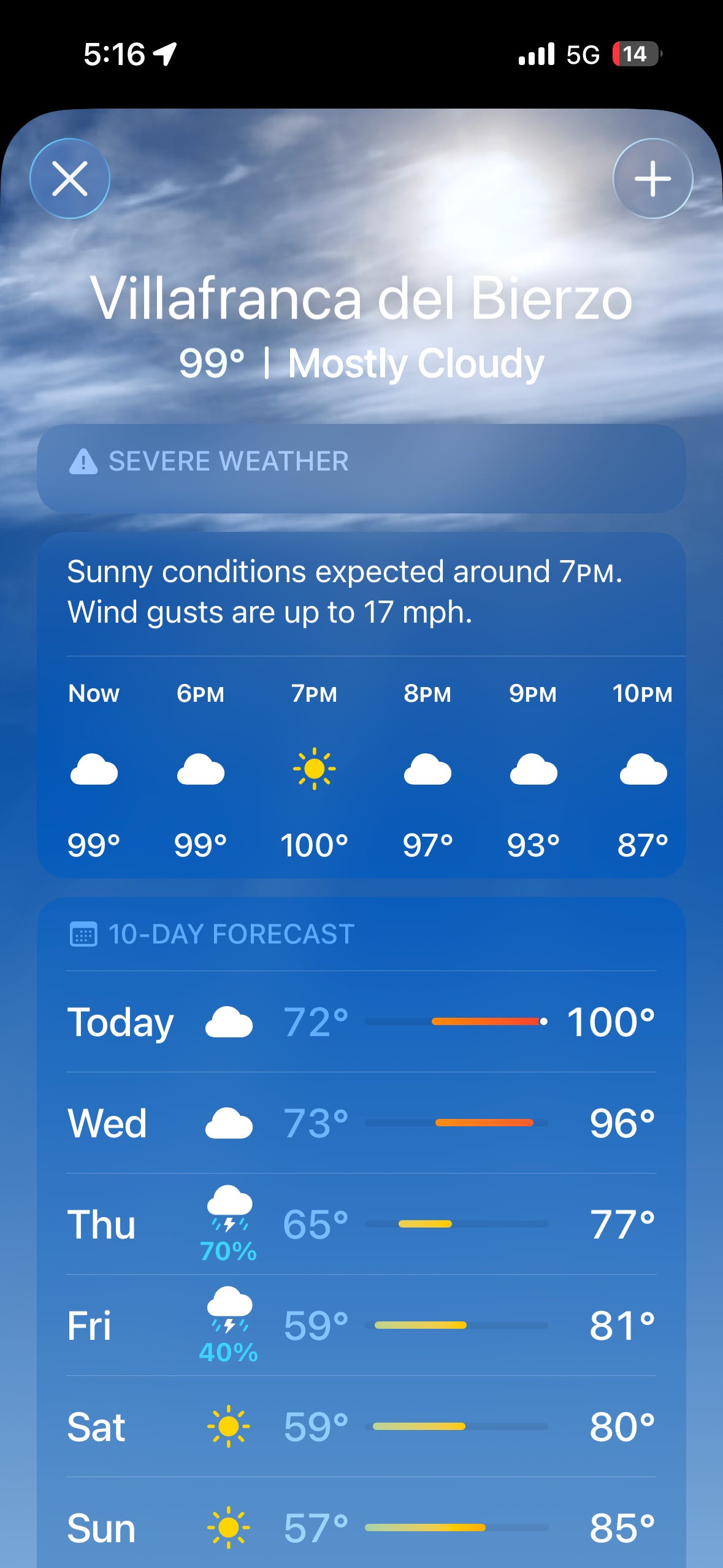
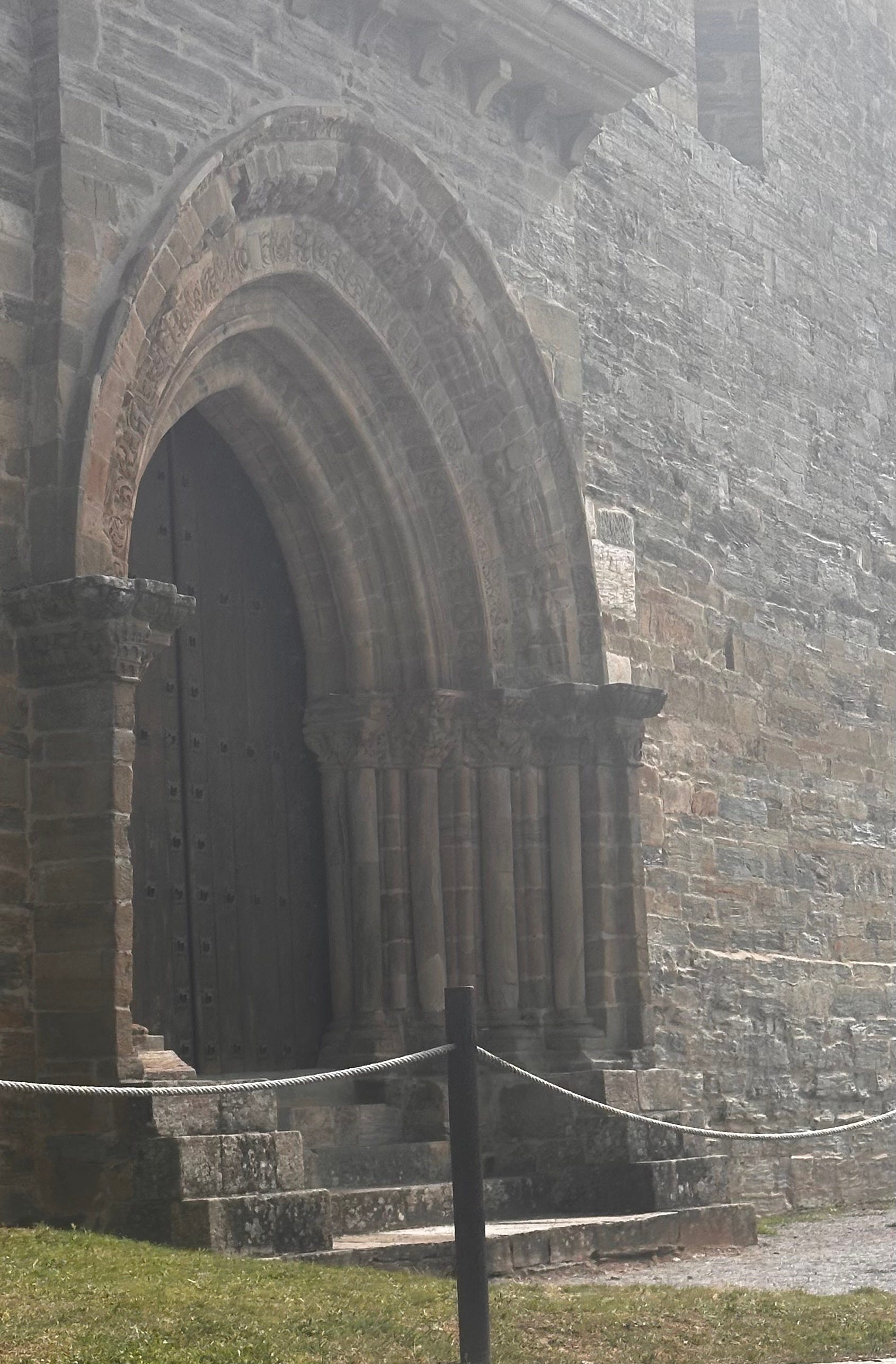
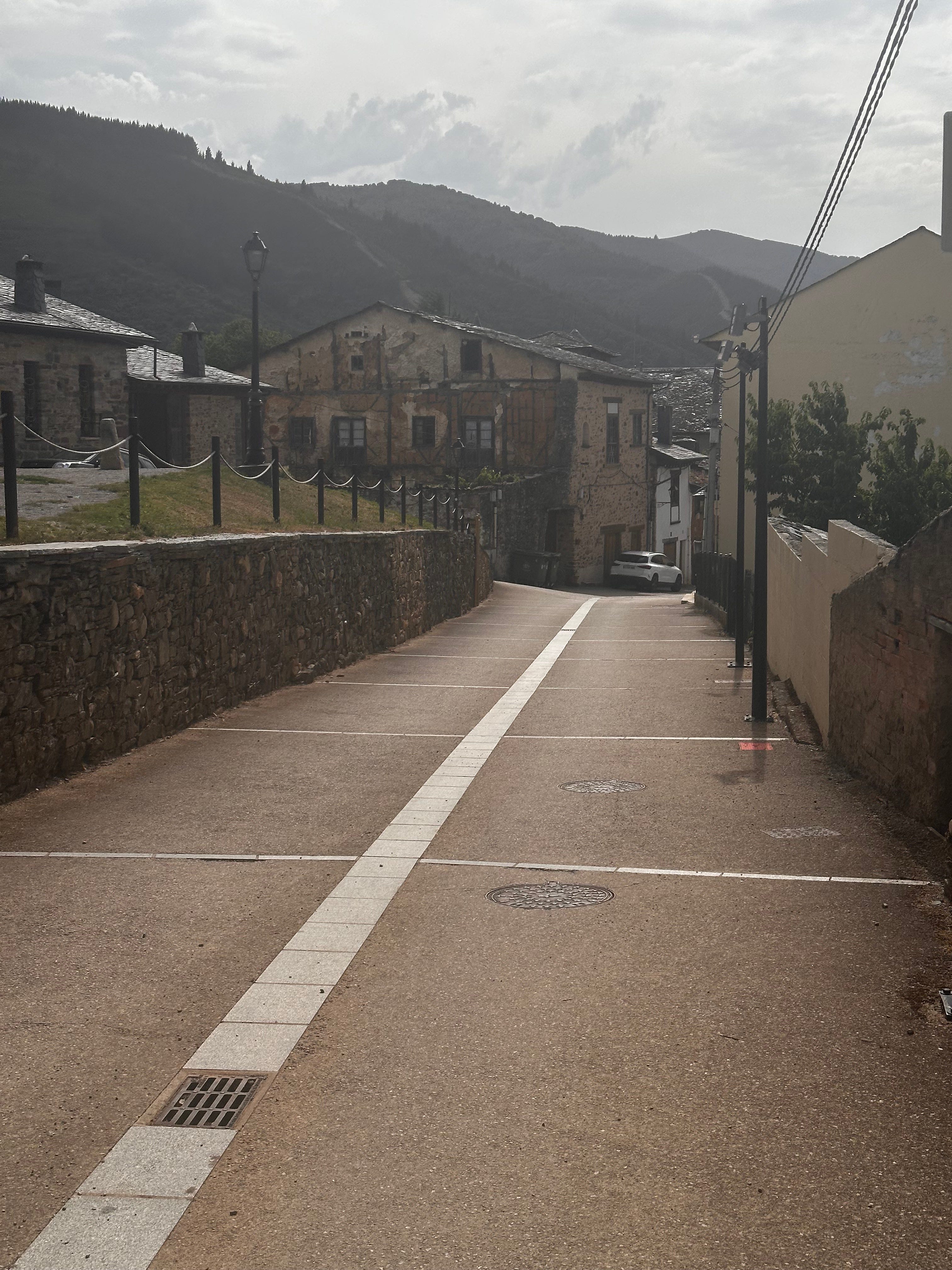
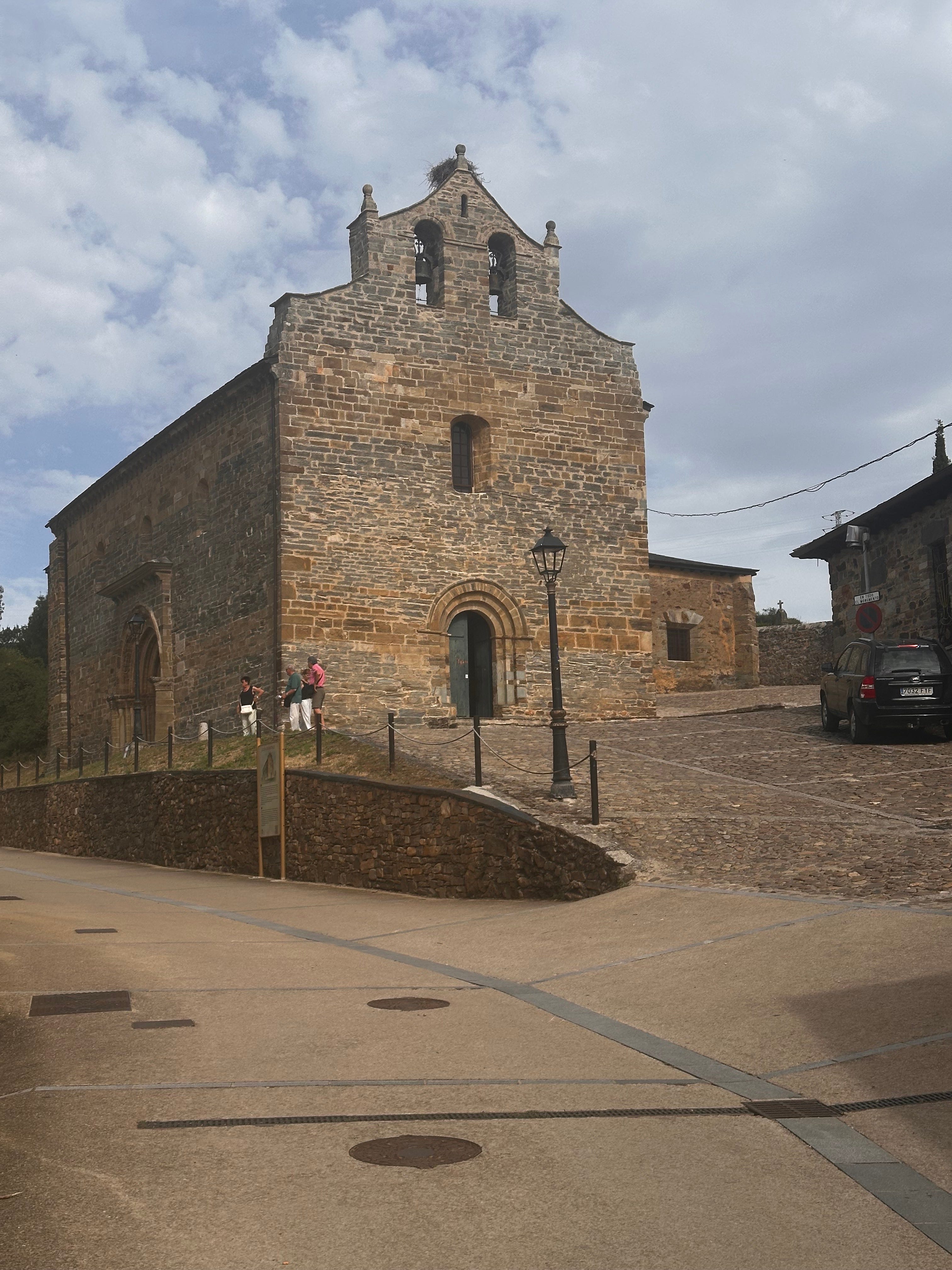
Villafranca del Bierzo finally appeared below, where two rivers meet, the Burbia and the Valcarce, at the foot of the mountains that climb into Galicia. The town grew from a settlement of francos, the French settlers who came for the Camino and left it their name, the town of the Franks. It was a great medieval waystation, its noble houses lining the Calle del Agua, the last real town before the hard climb into Galicia. At the church of Santiago, right where you enter, there is a door called the Puerta del Perdón. The story goes that a pilgrim too ill or too spent to walk the final stretch to Santiago could pass through it and be counted as having finished, as if they had reached the city itself. I thought about that, coming in late and barely able to finish the fifteen miles in the heat. I liked that the road had made a place for the ones who could not go the whole way.
We got in well after the others. I am writing this from the Plaza Mayor, at El Casino, a glass of Bierzo white at my elbow and the light going soft over the square. Tomorrow we climb toward Las Herrerías, and the mountains after that.