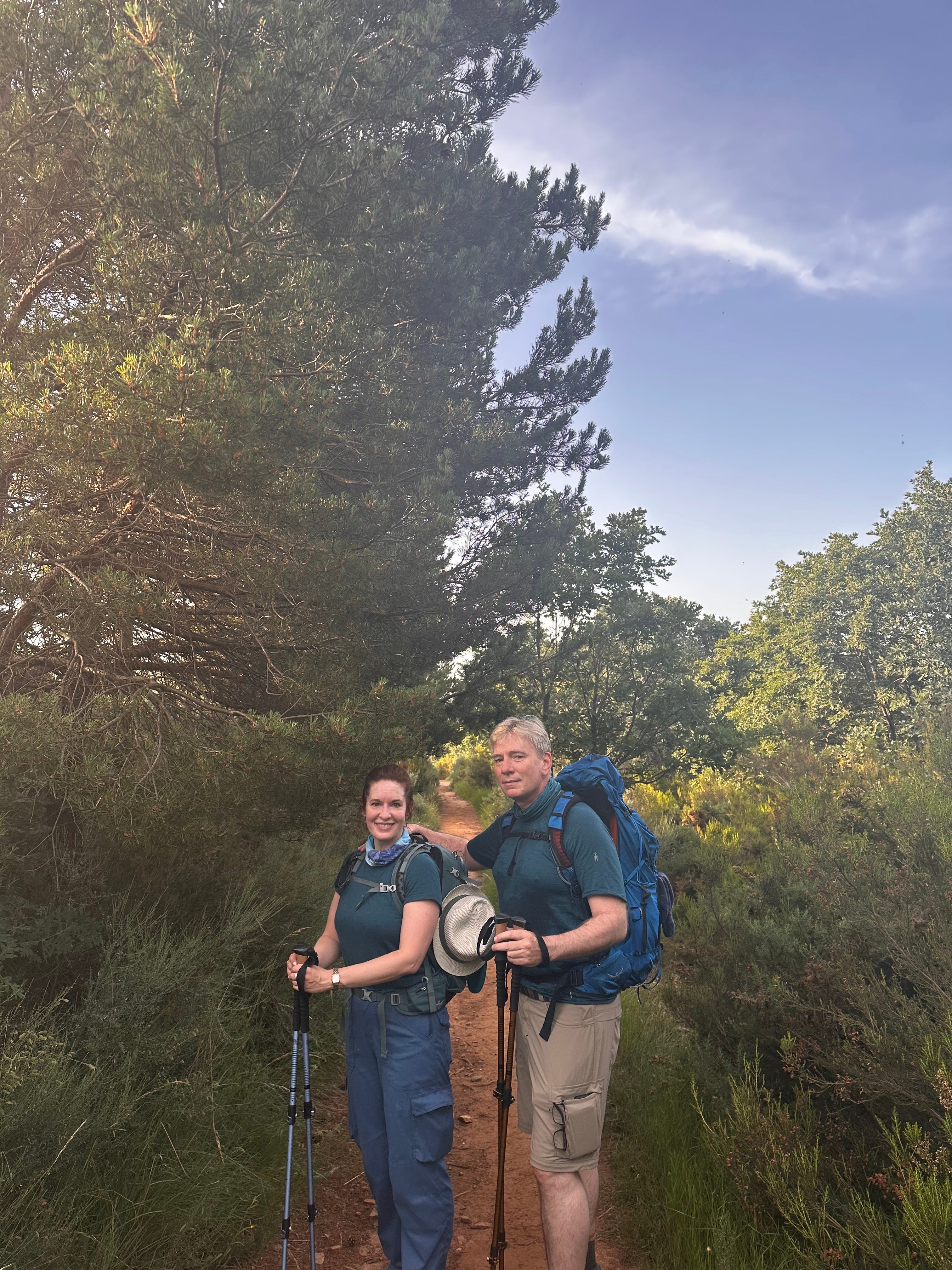
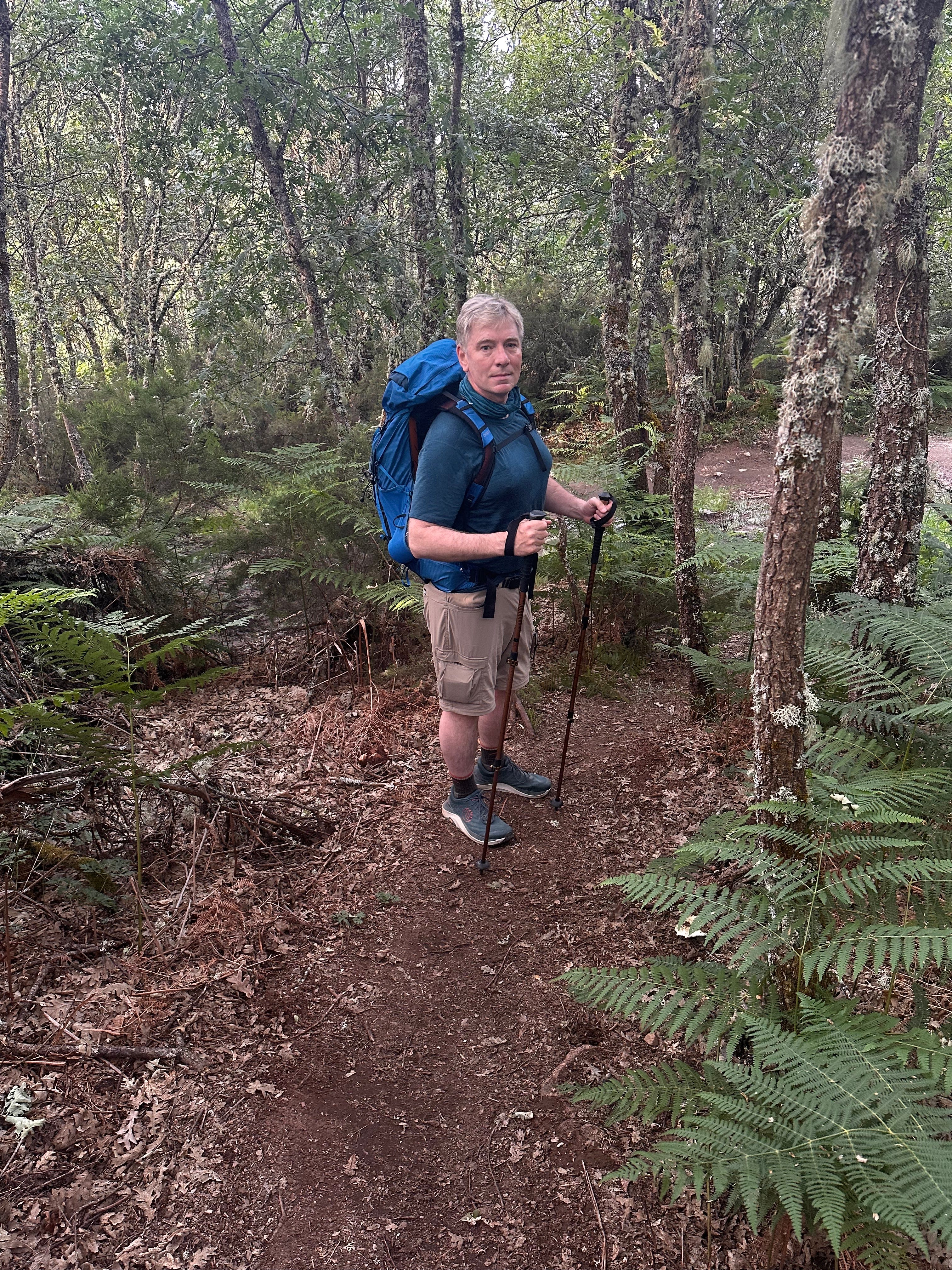
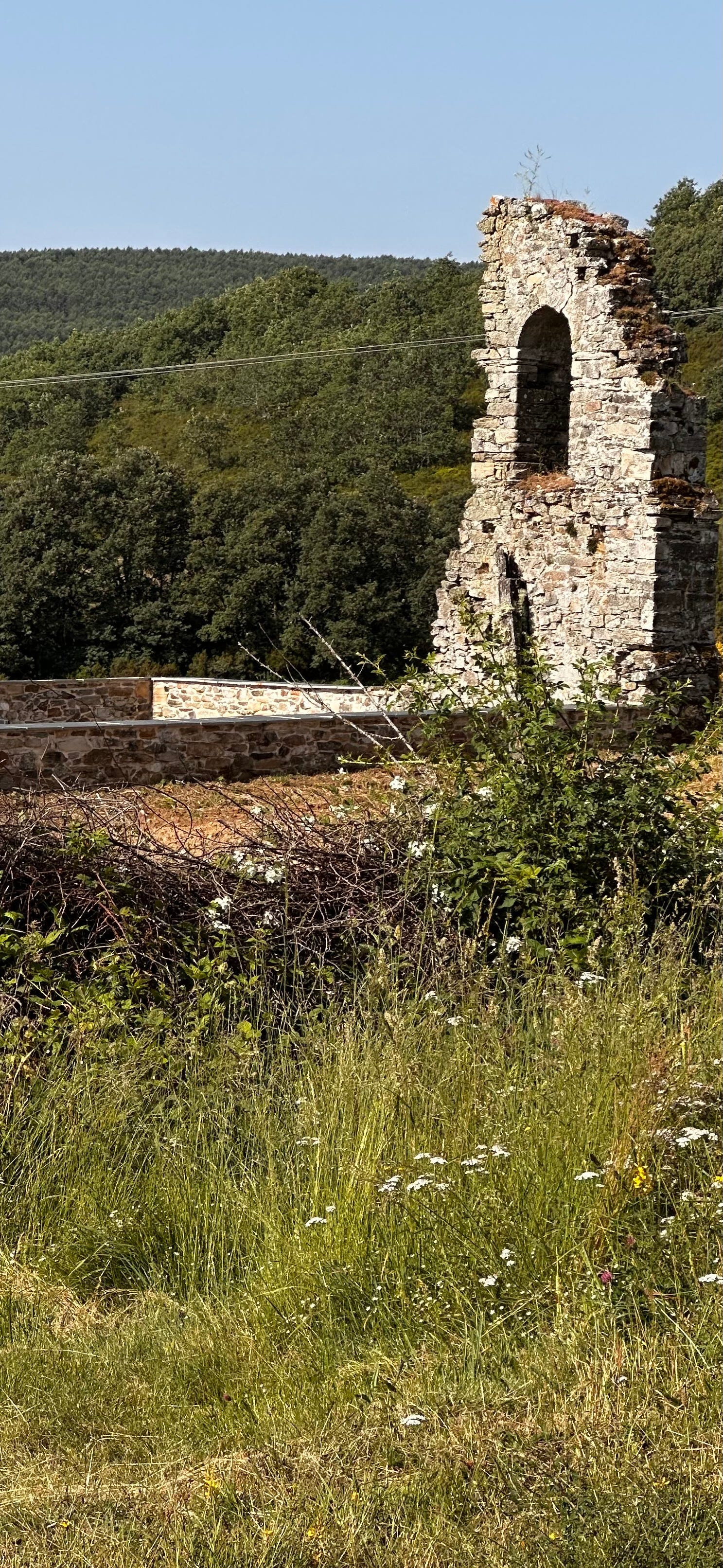
We left Rabanal at half past seven, while the stone of the village was still holding the night’s coolness and the church tower threw its long gold shadow down the lane.
Today is the mountain, the gentle climb to the Cruz de Ferro and the steep way down after, and the mountain does not reward hurry. It rewards patience and water and the willingness to be very slow for a while.
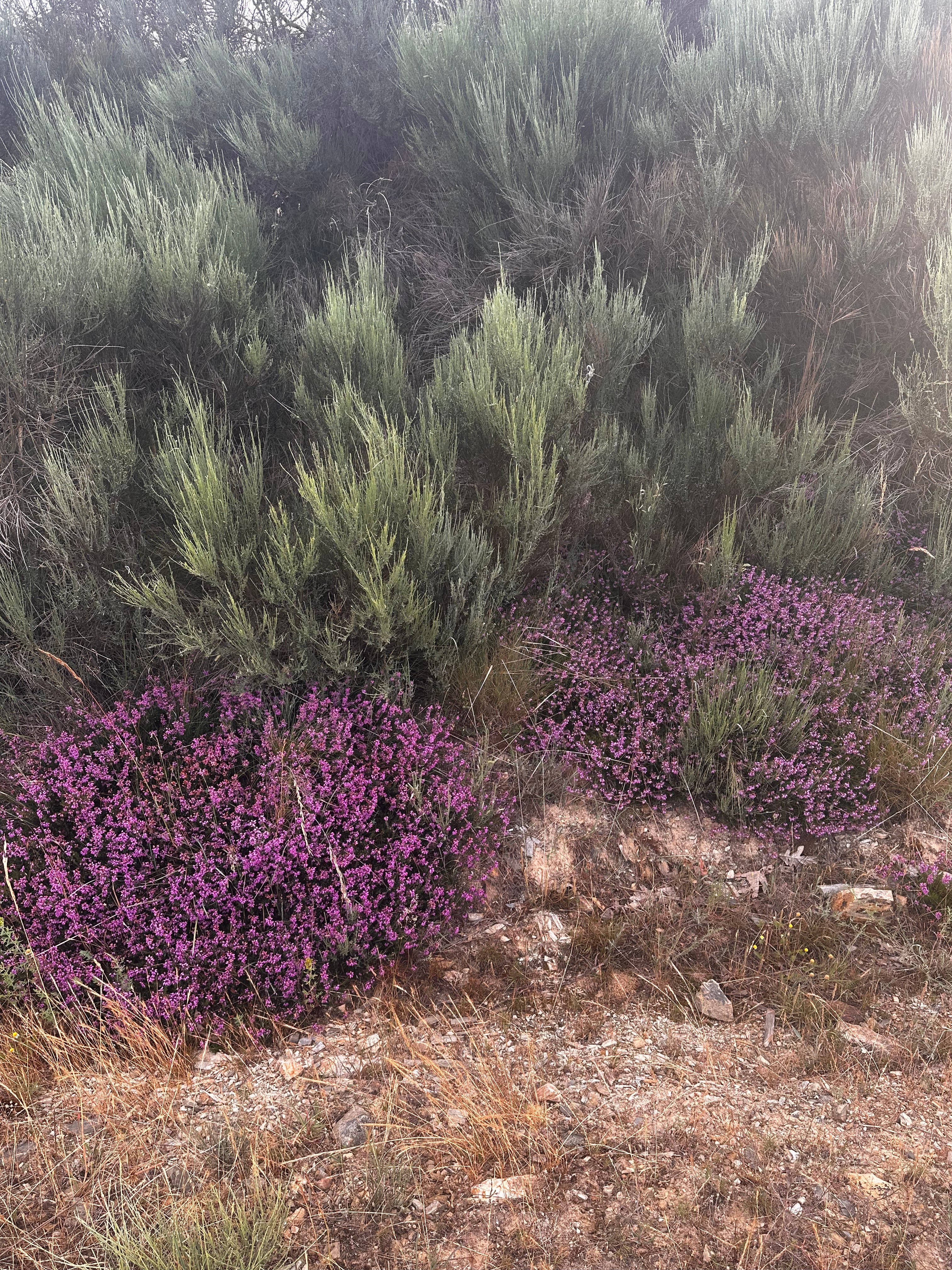
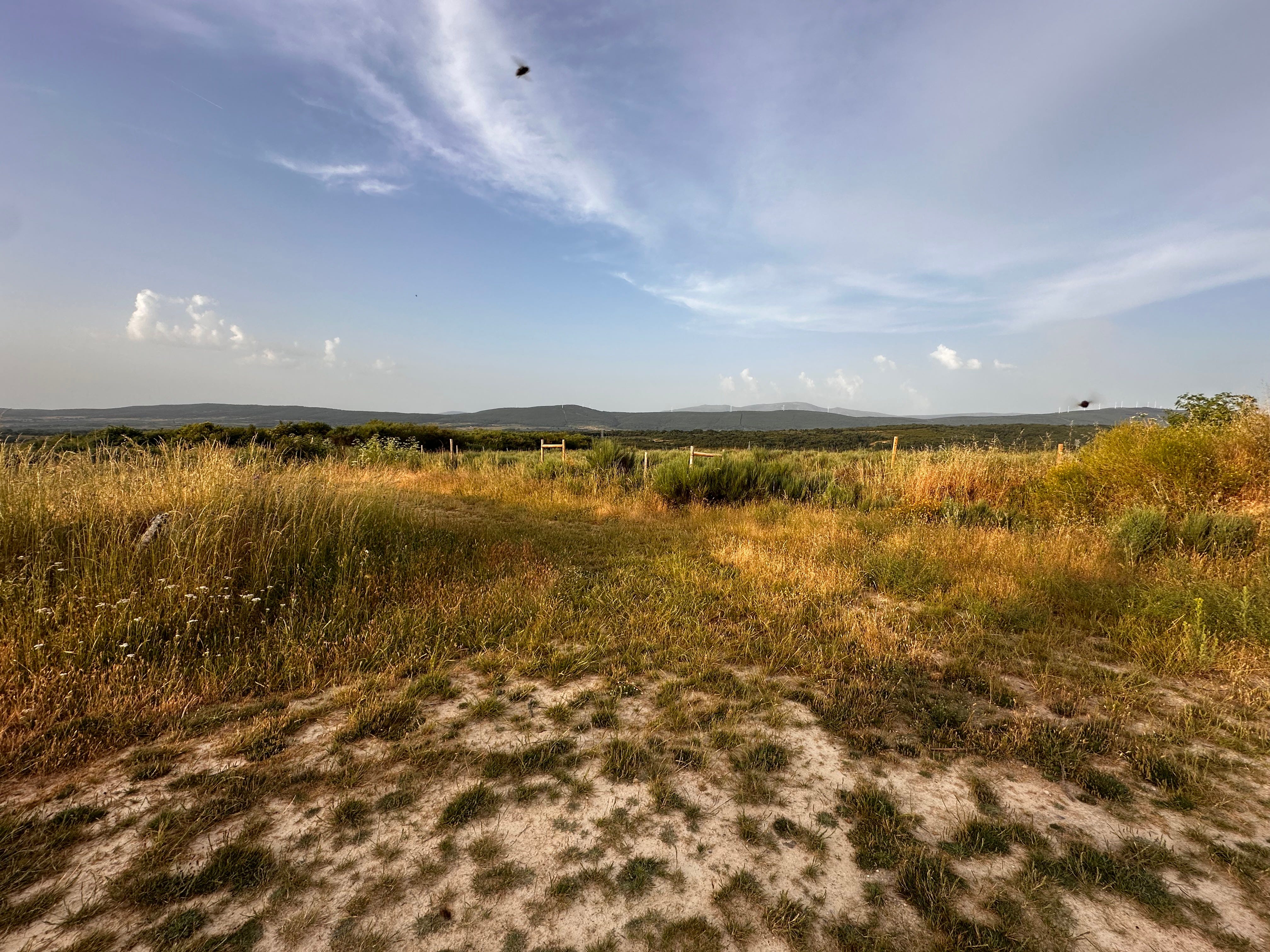
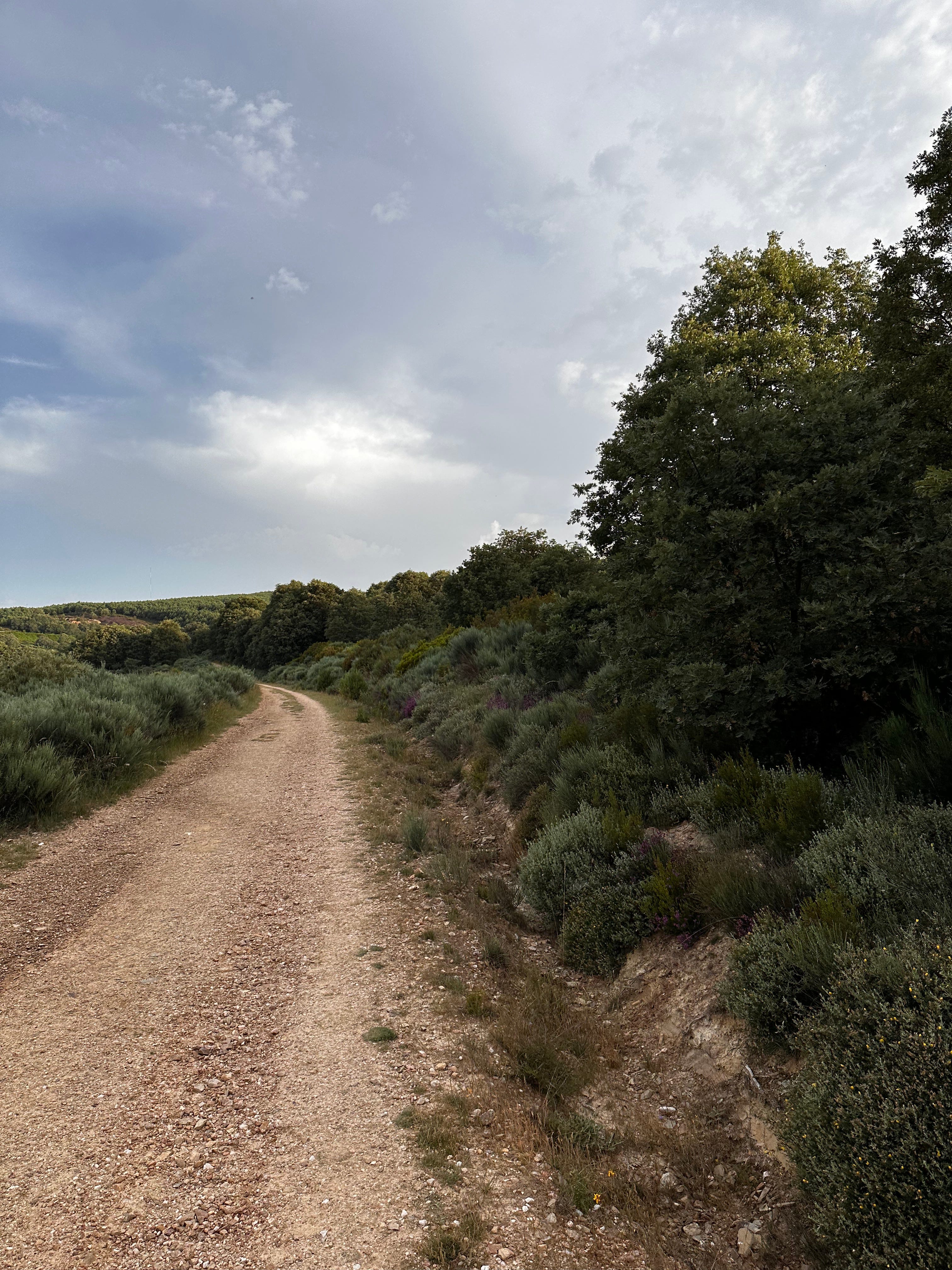
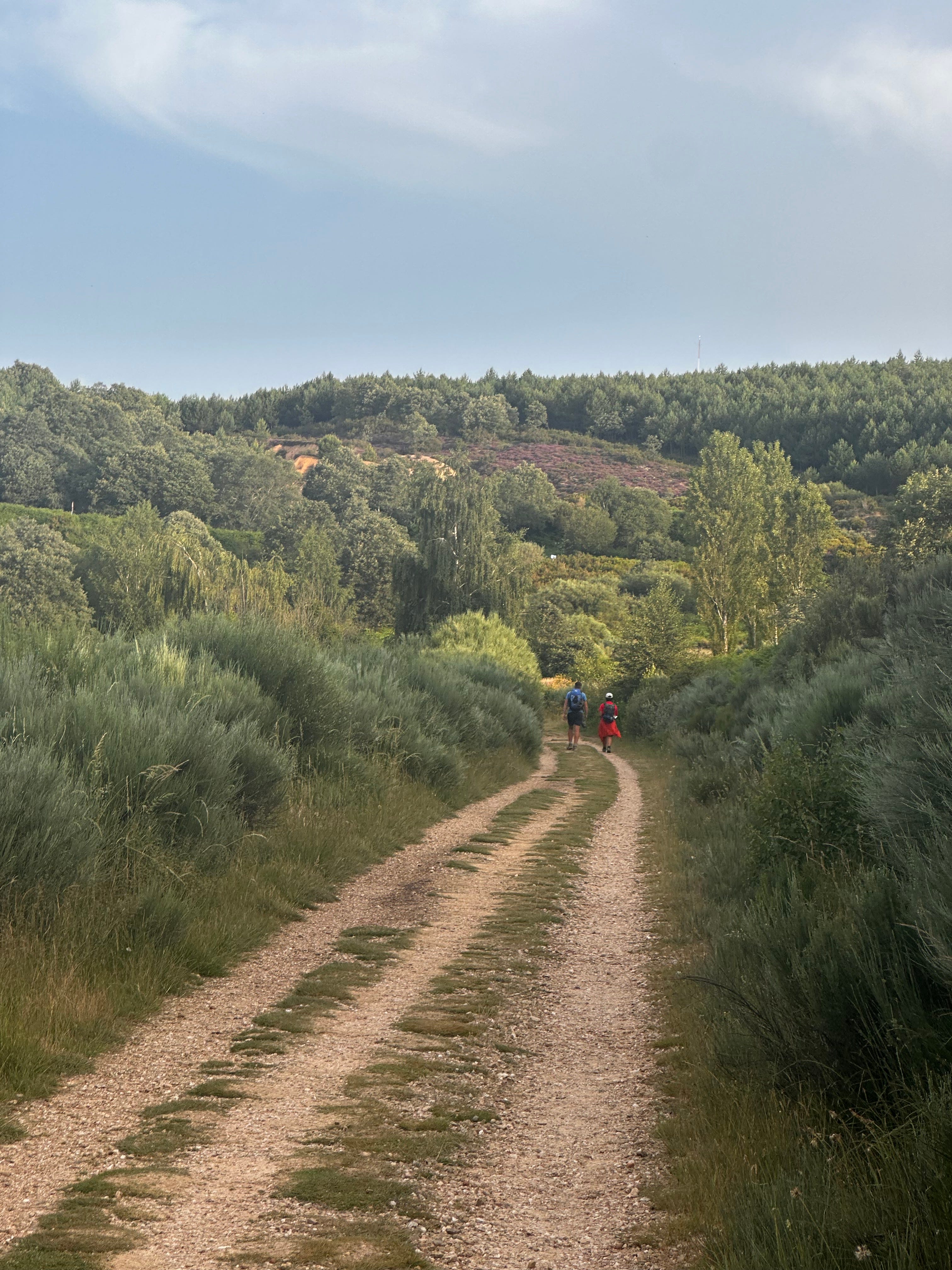
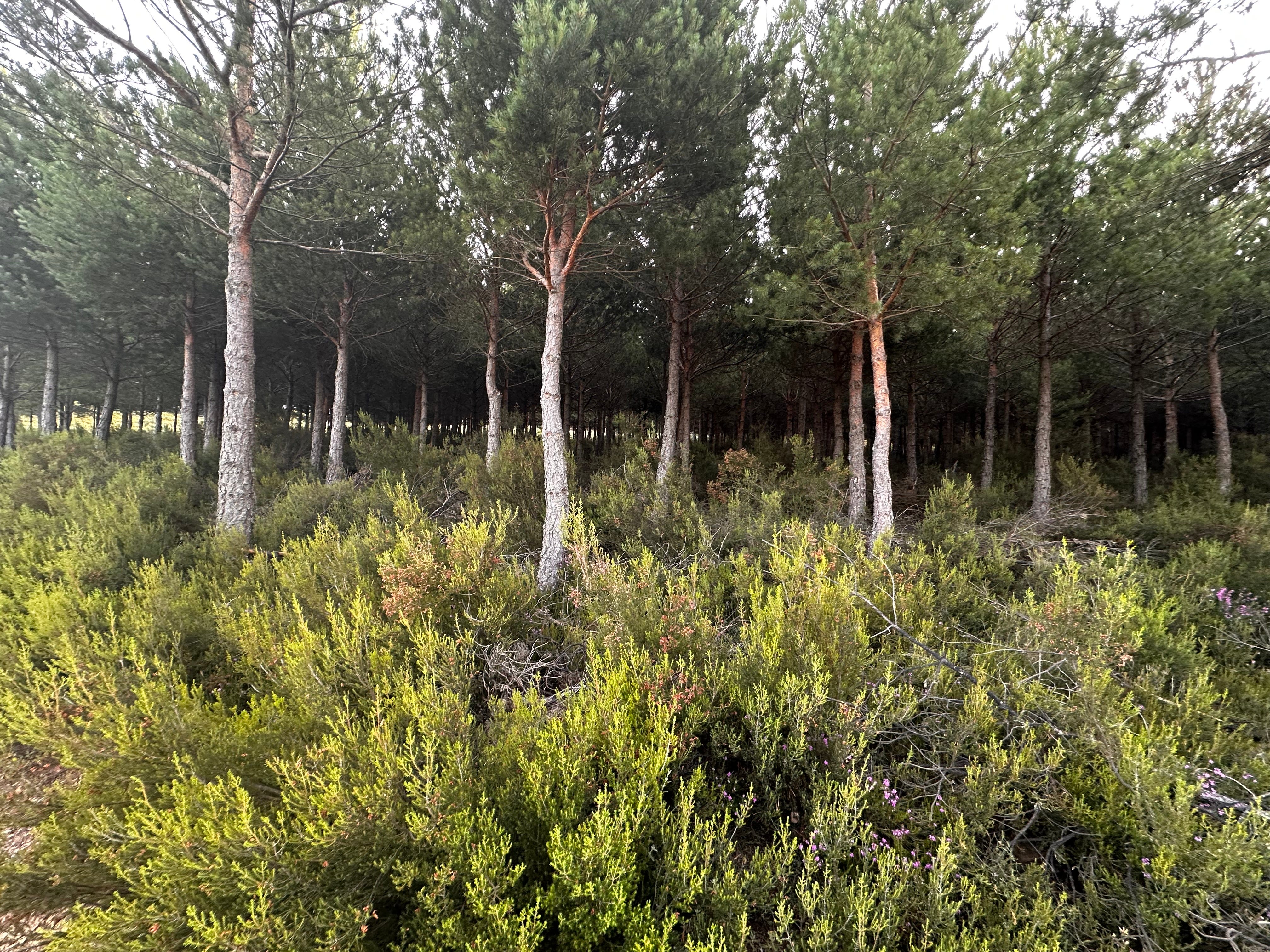
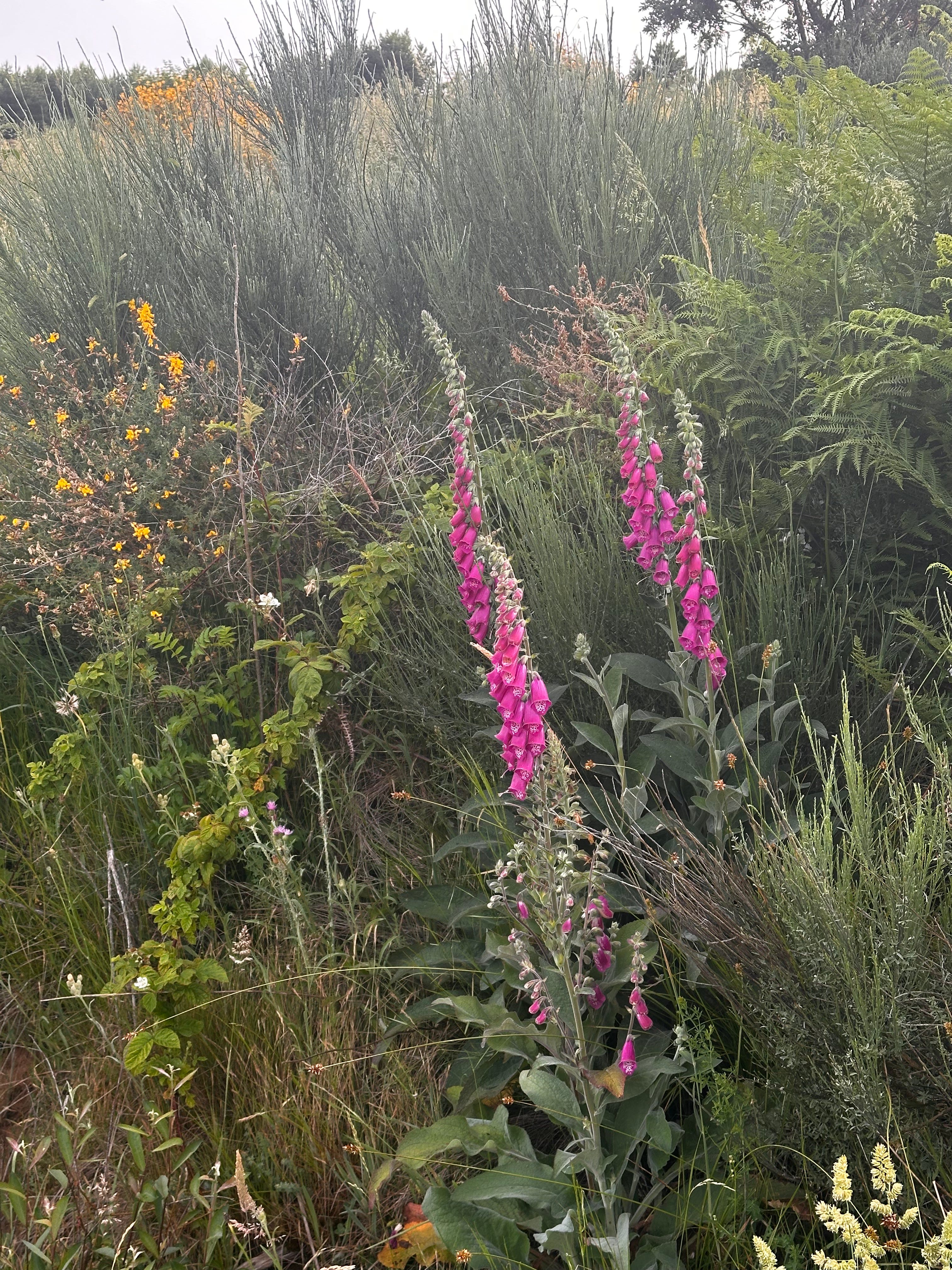
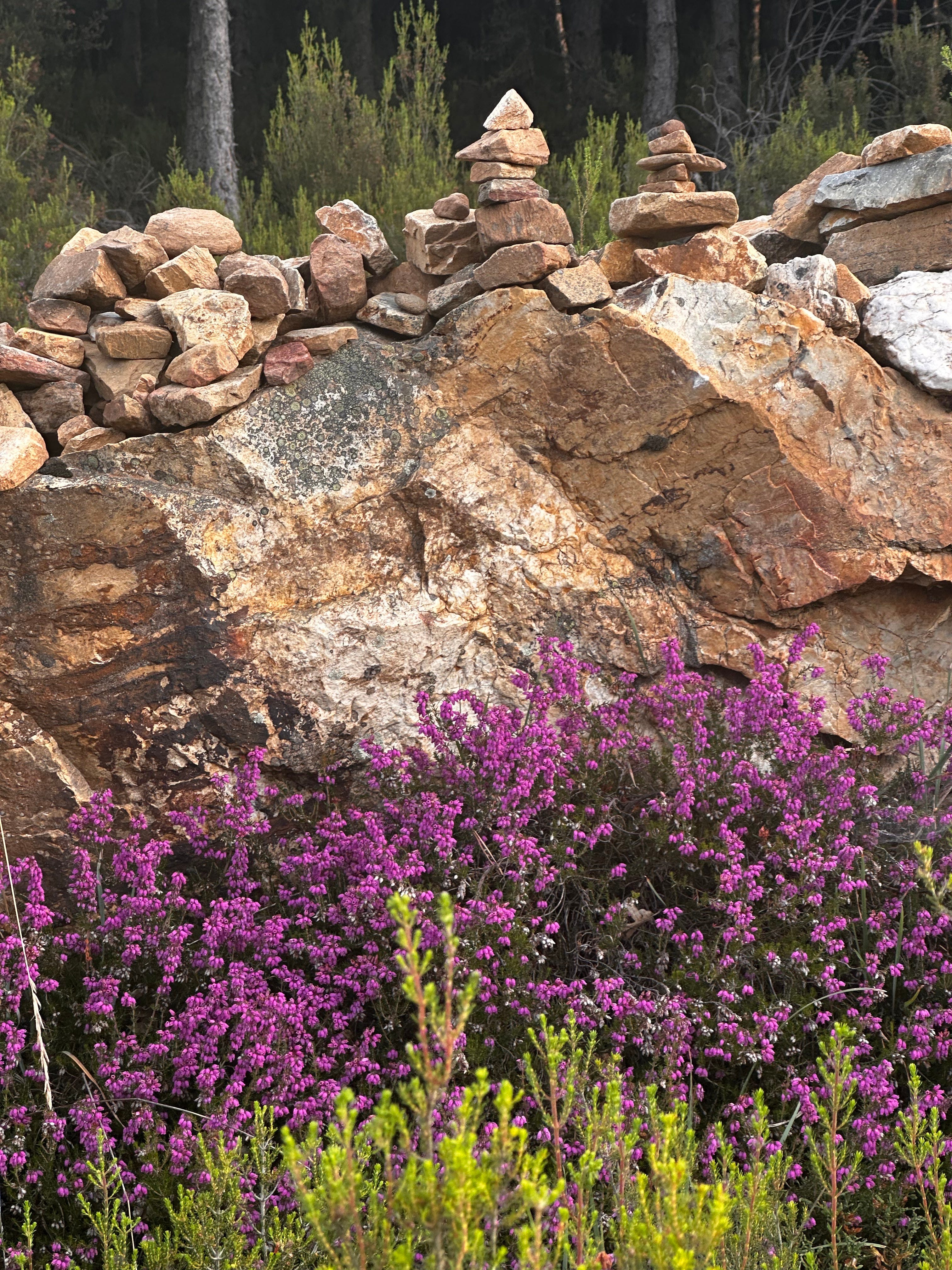
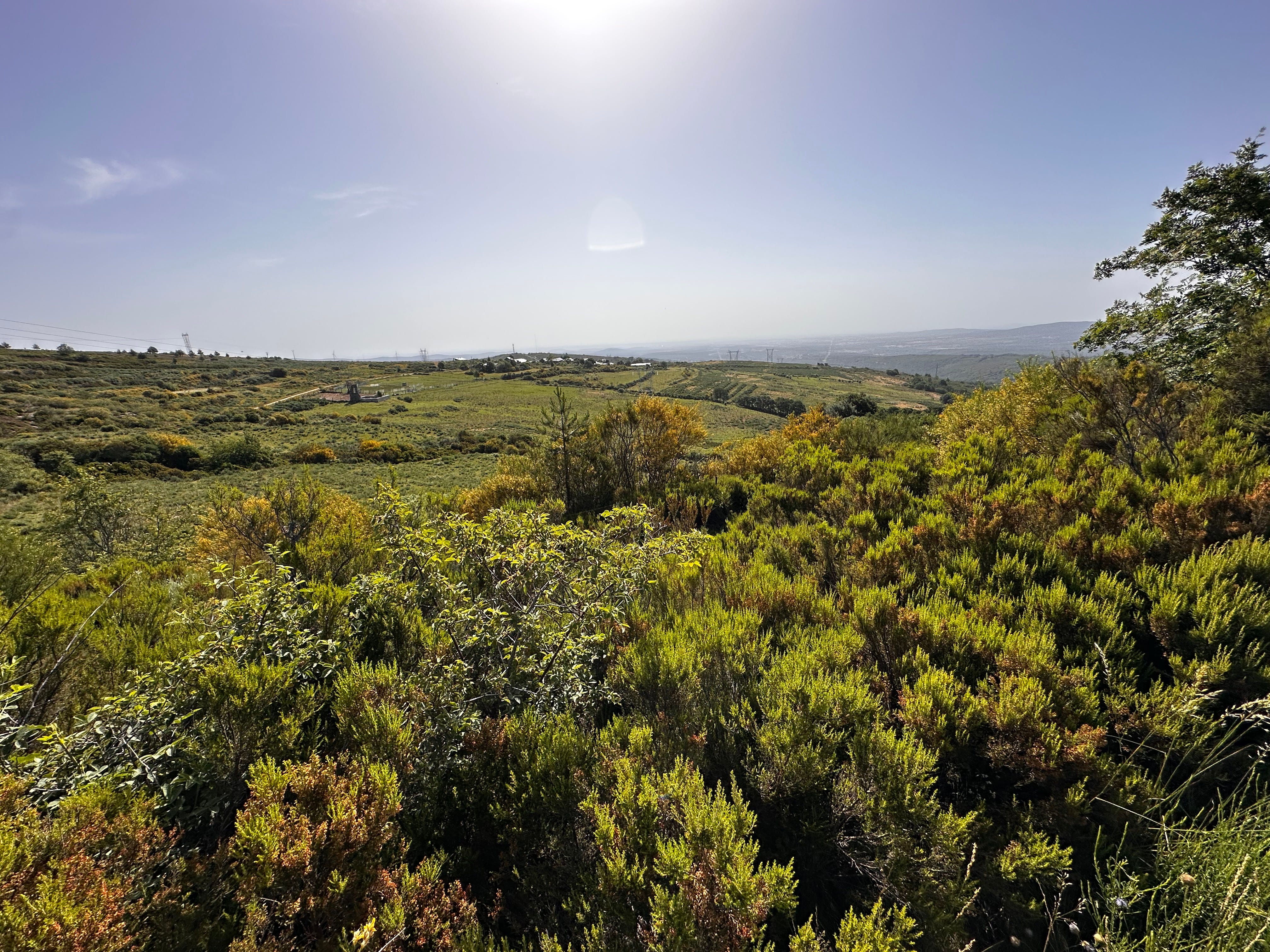
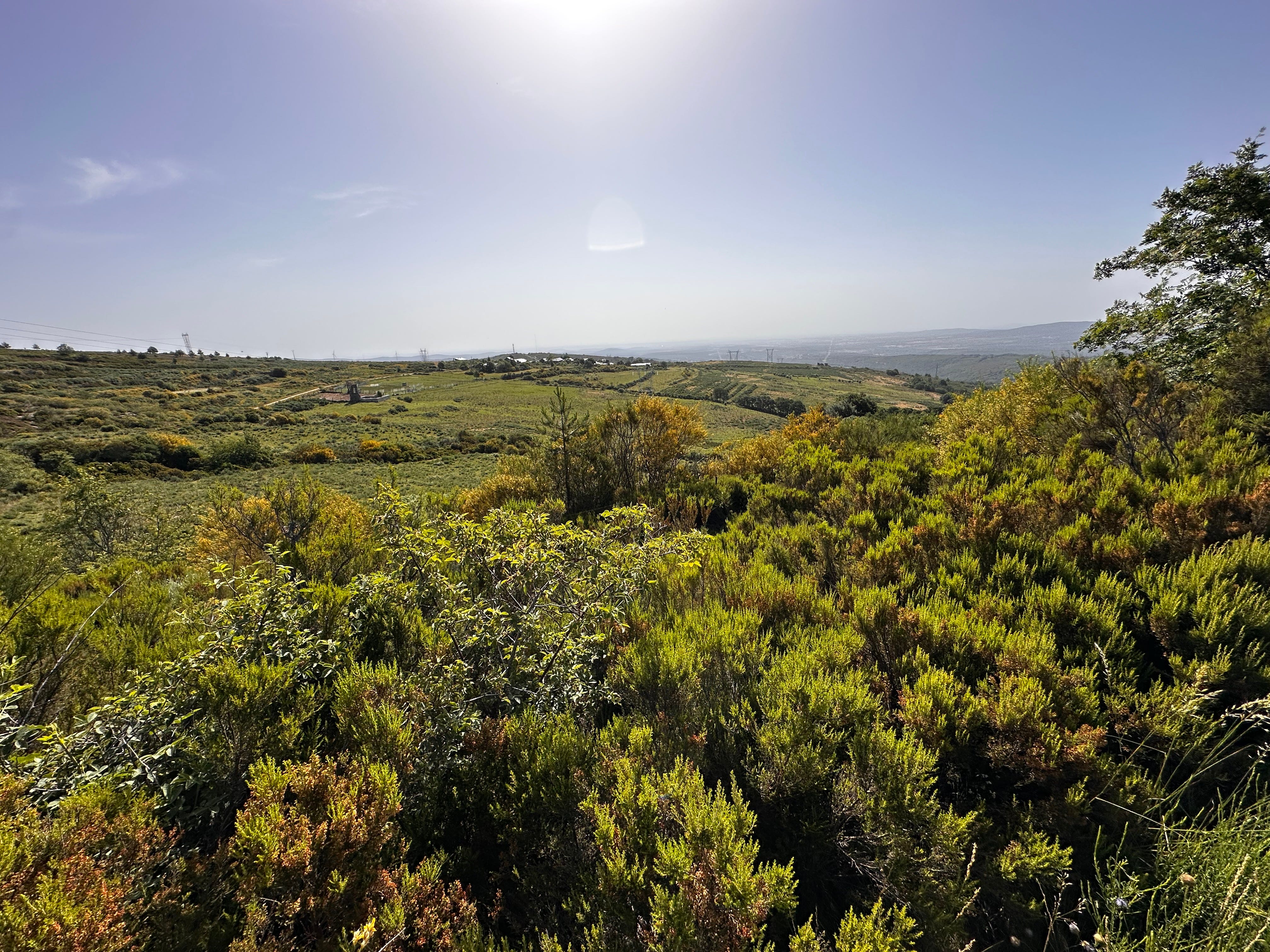
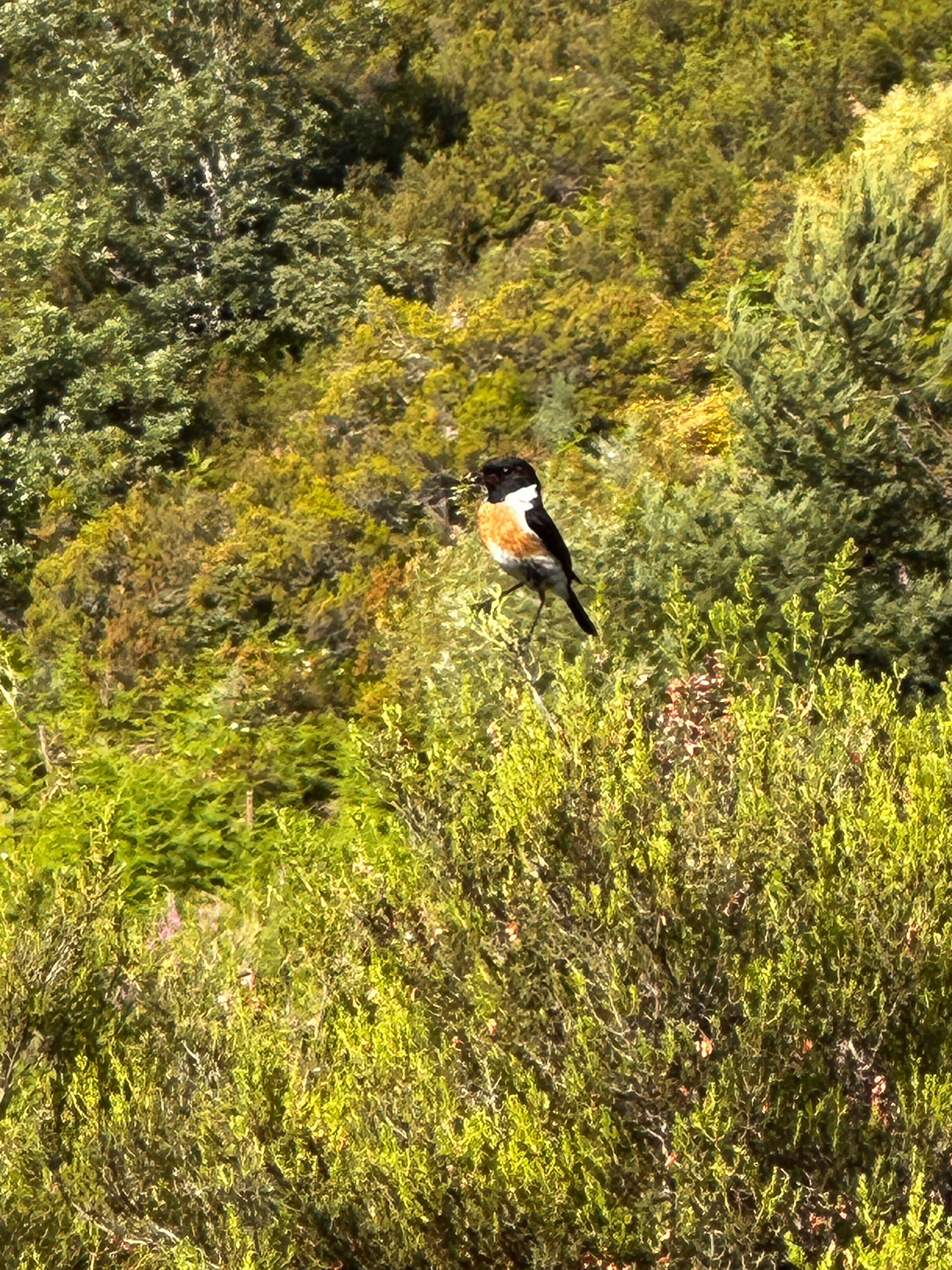
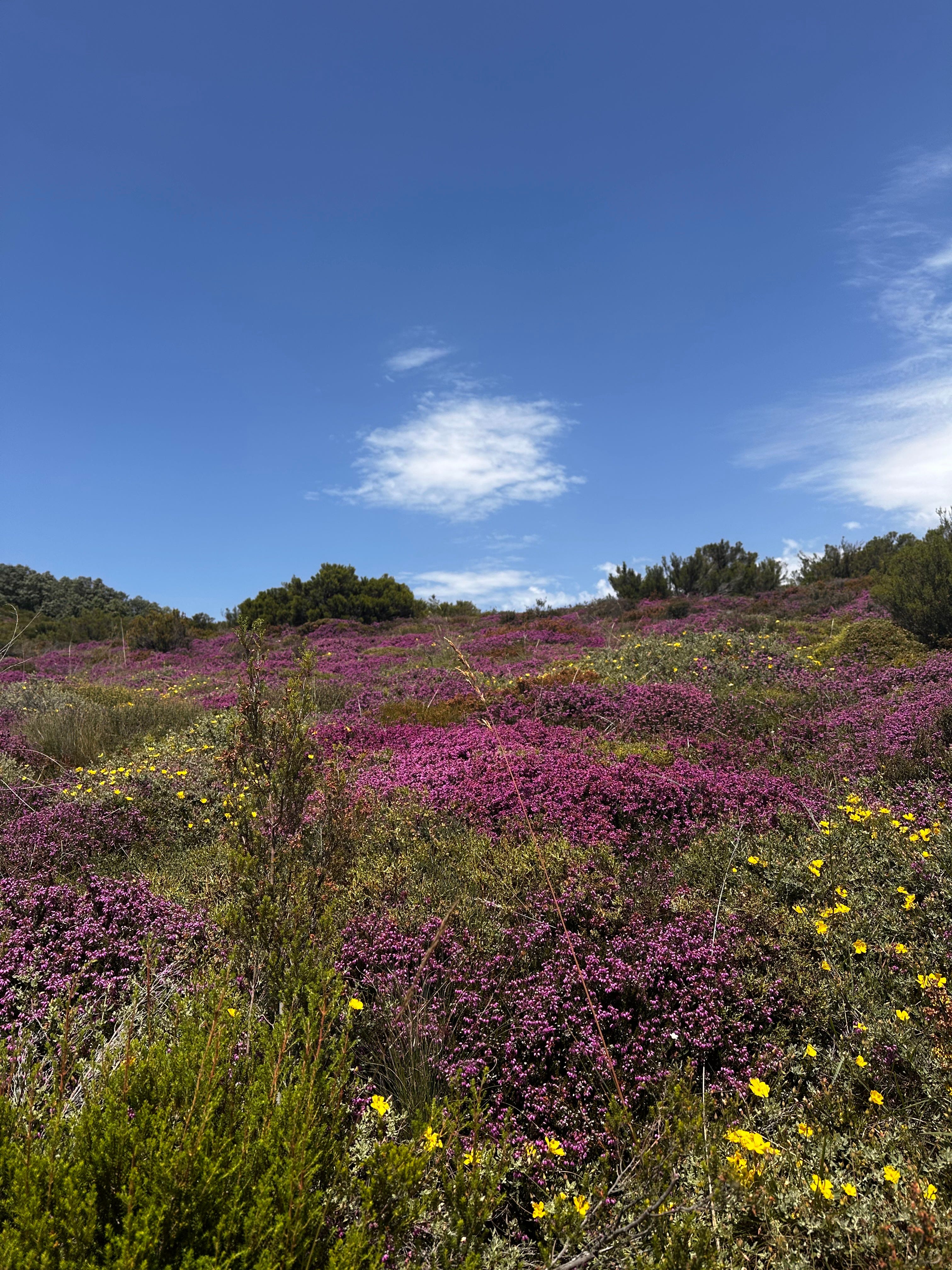
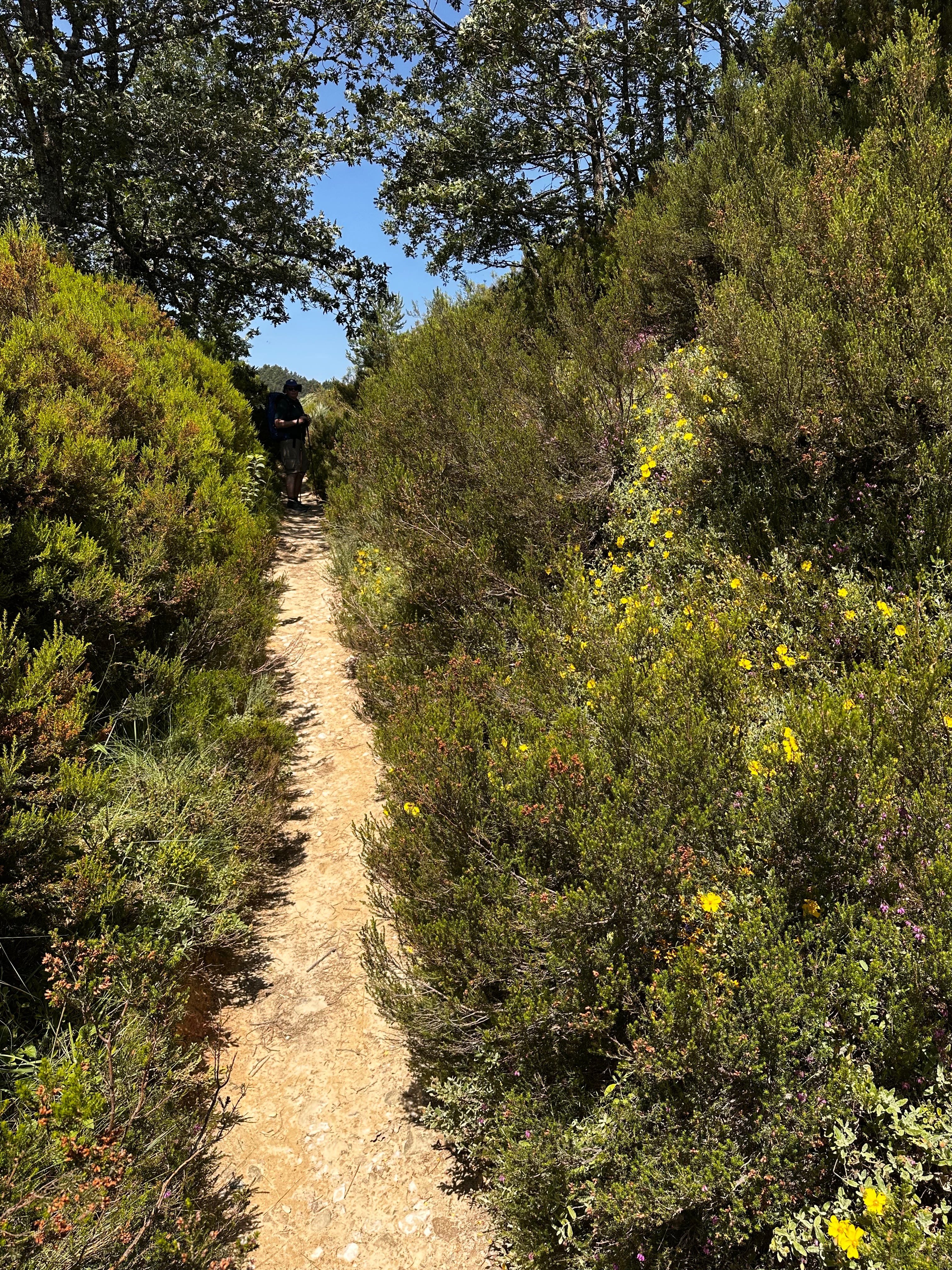
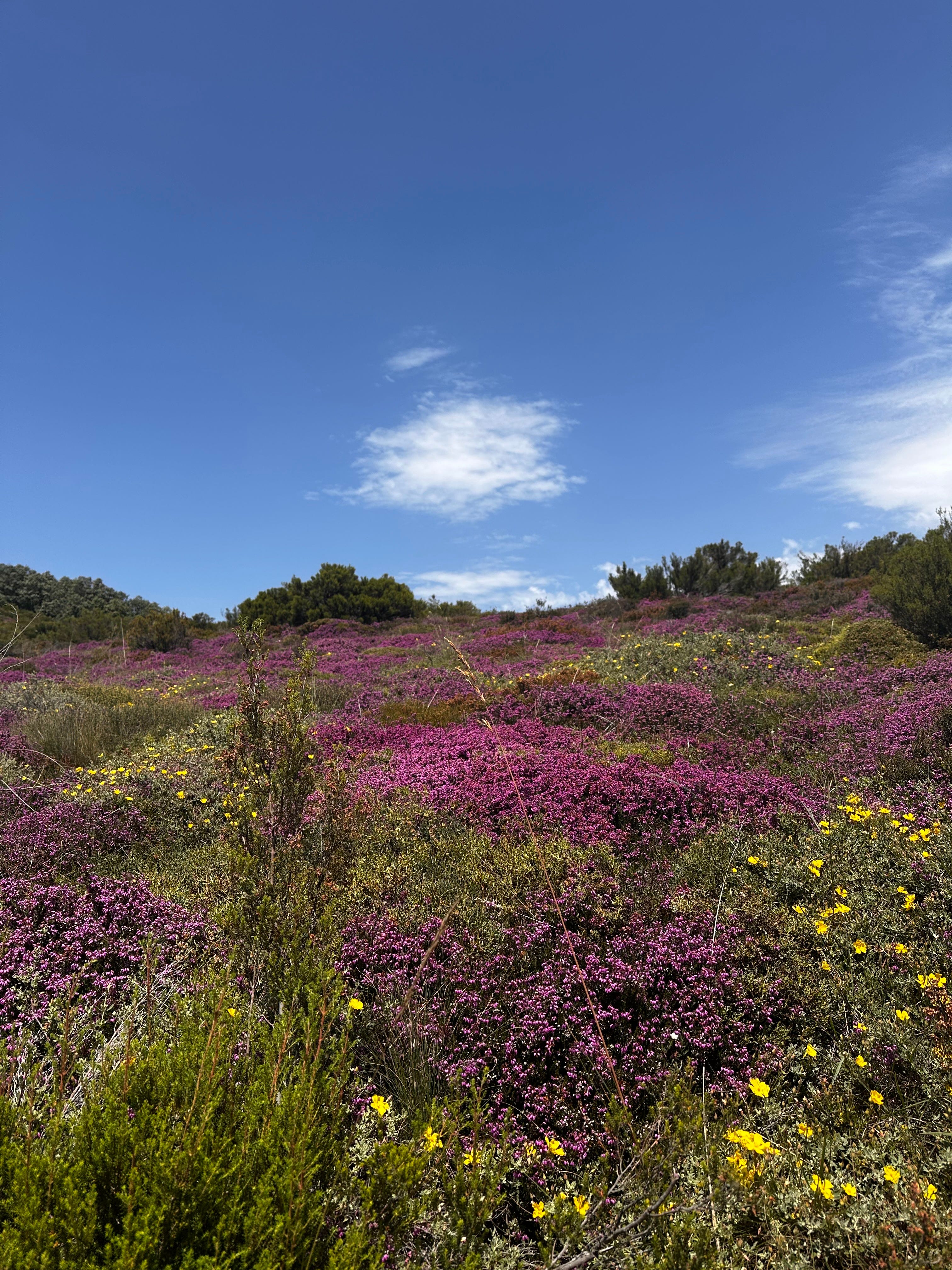
The heath was in full bloom. Heather spilling purple down the rocks, broom lit yellow along the track, and here and there a foxglove standing tall, pink and improbable, leaning out of the green like a question mark. The land up here is doing something tender and ferocious at once, all this softness growing straight out of the stone.
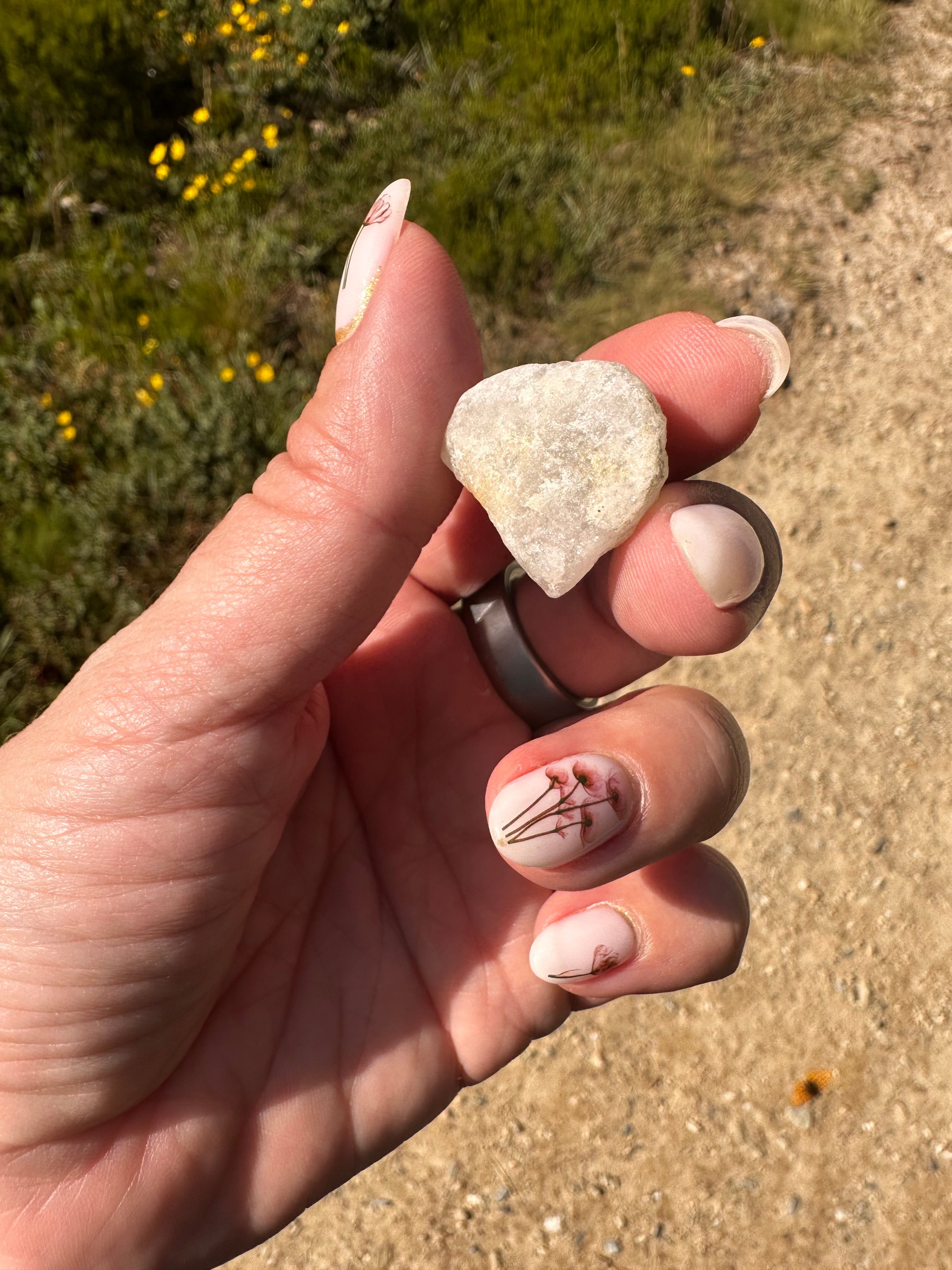
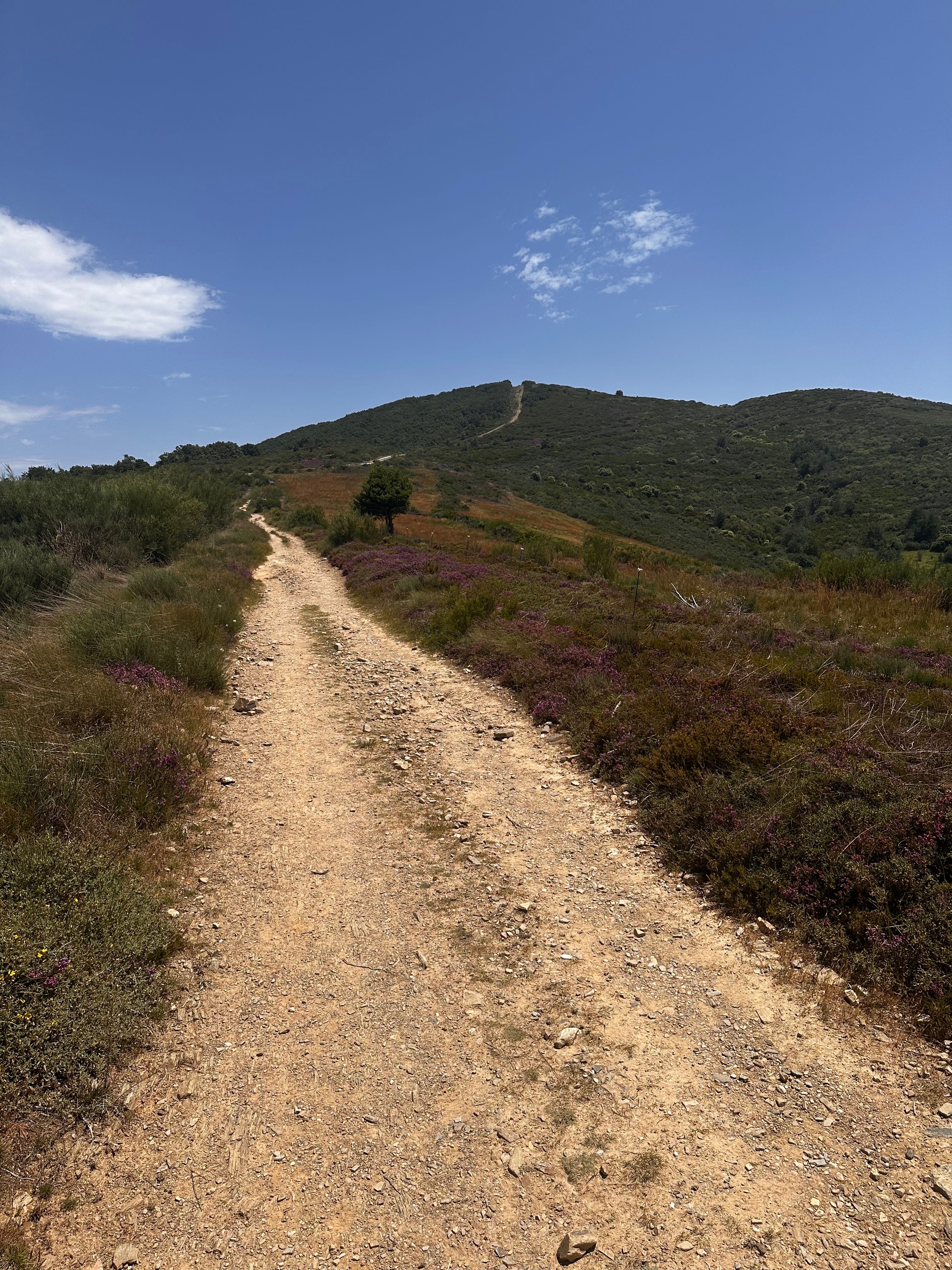
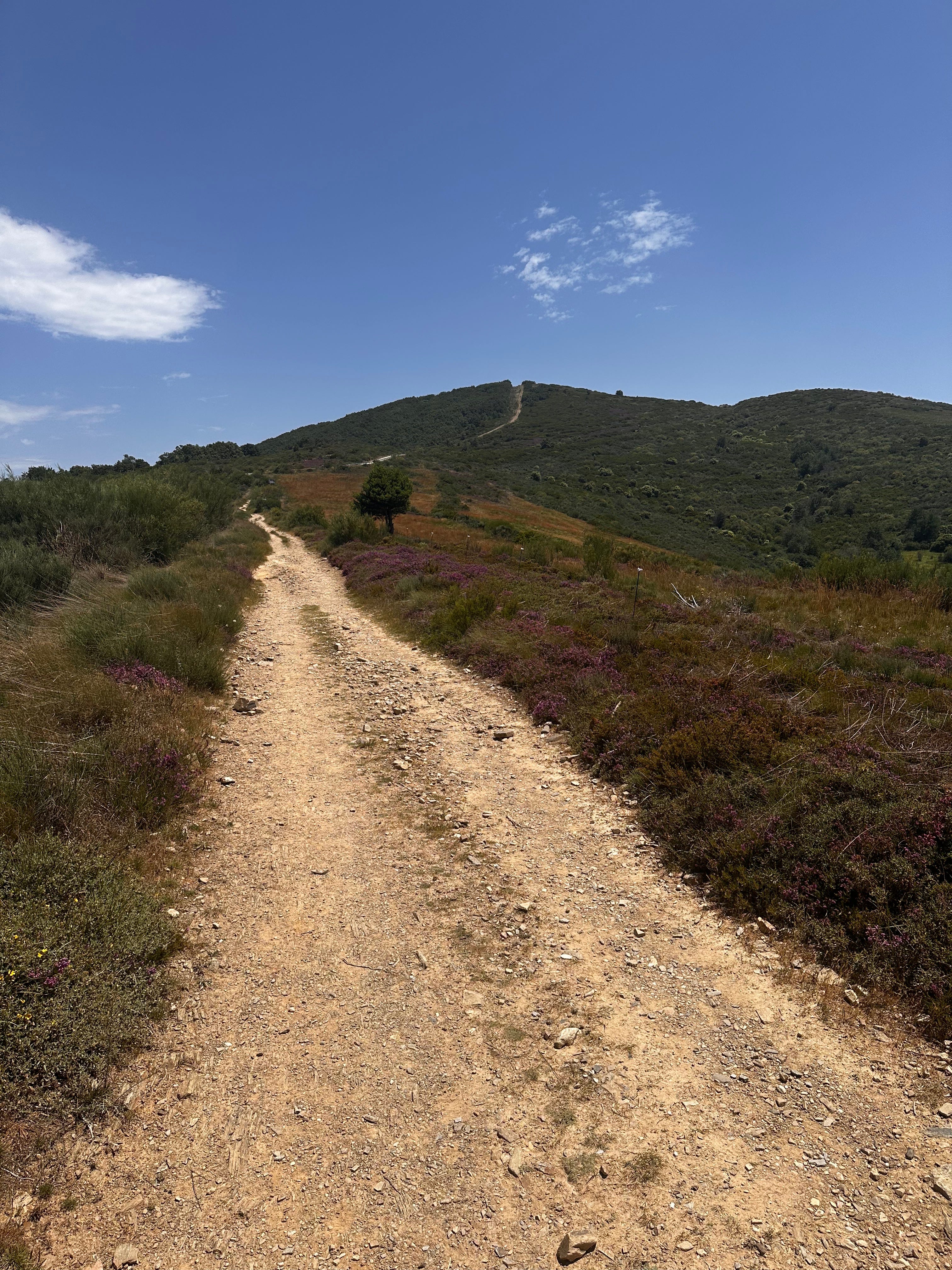
On the way up, small towers of balanced rock left by pilgrims who climbed here before us. Somewhere above us is Cruz de Ferro, the ultimate place where pilgrims set down the stone they have carried from home, and mine is in my pocket.
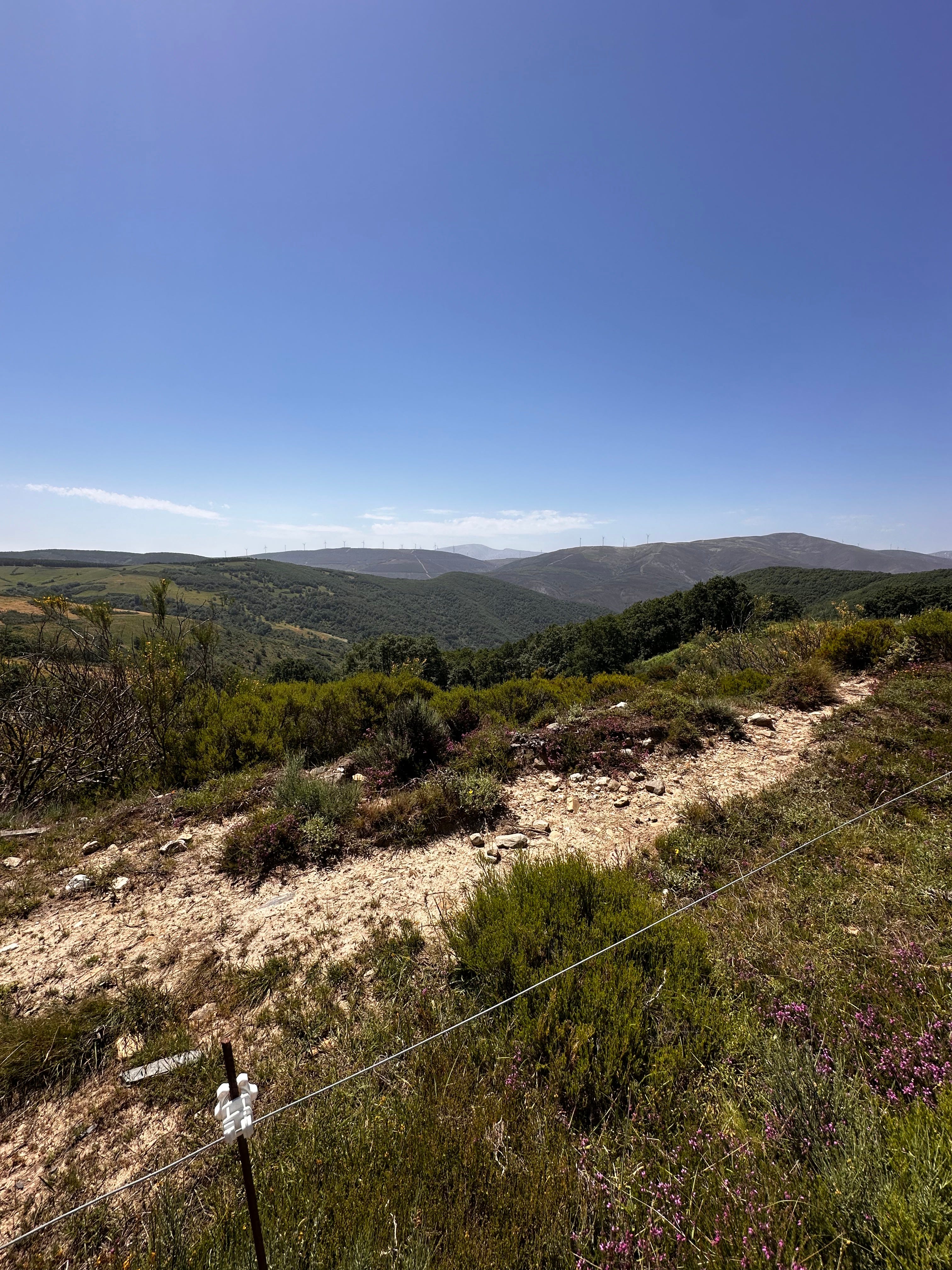
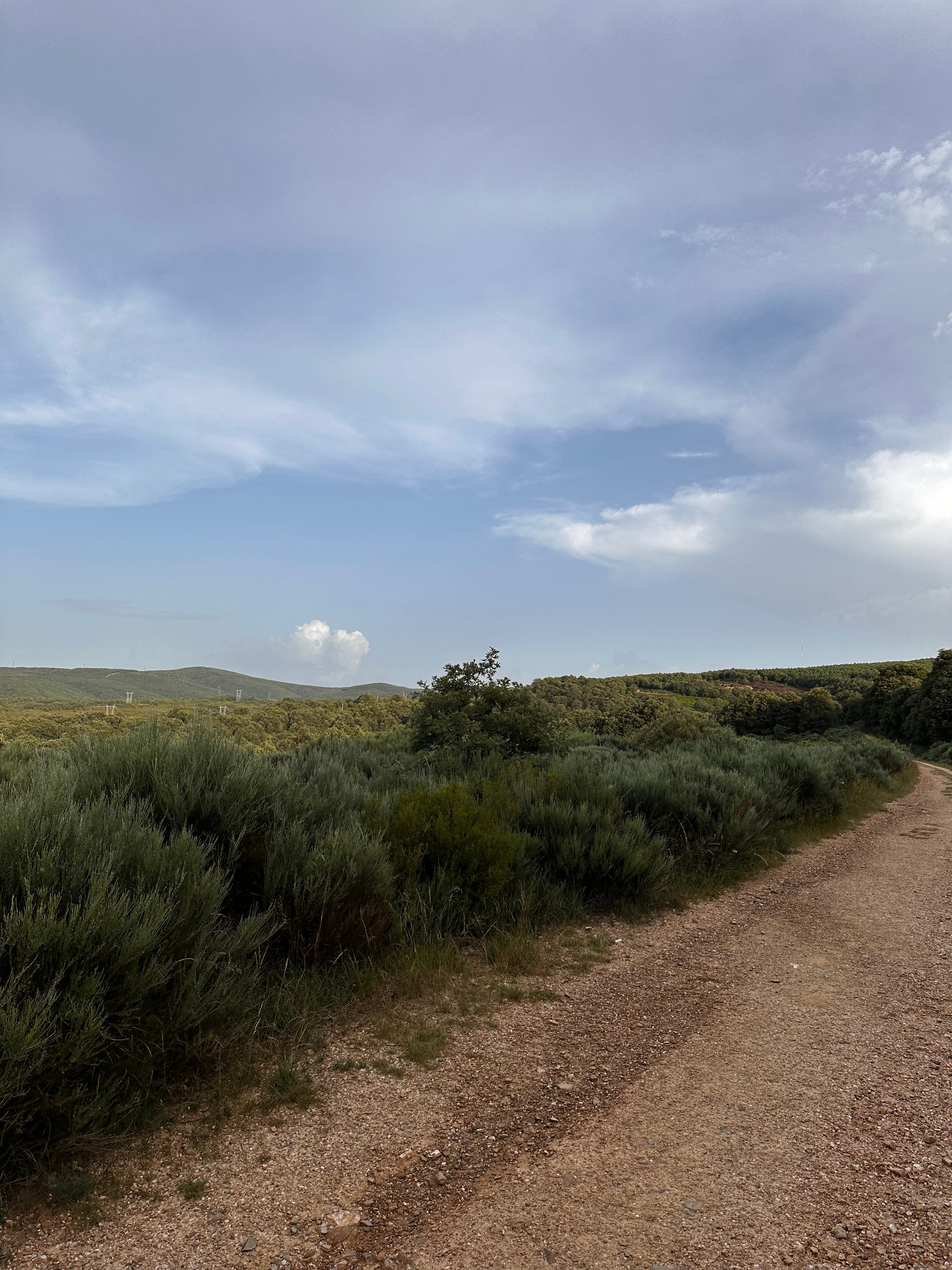
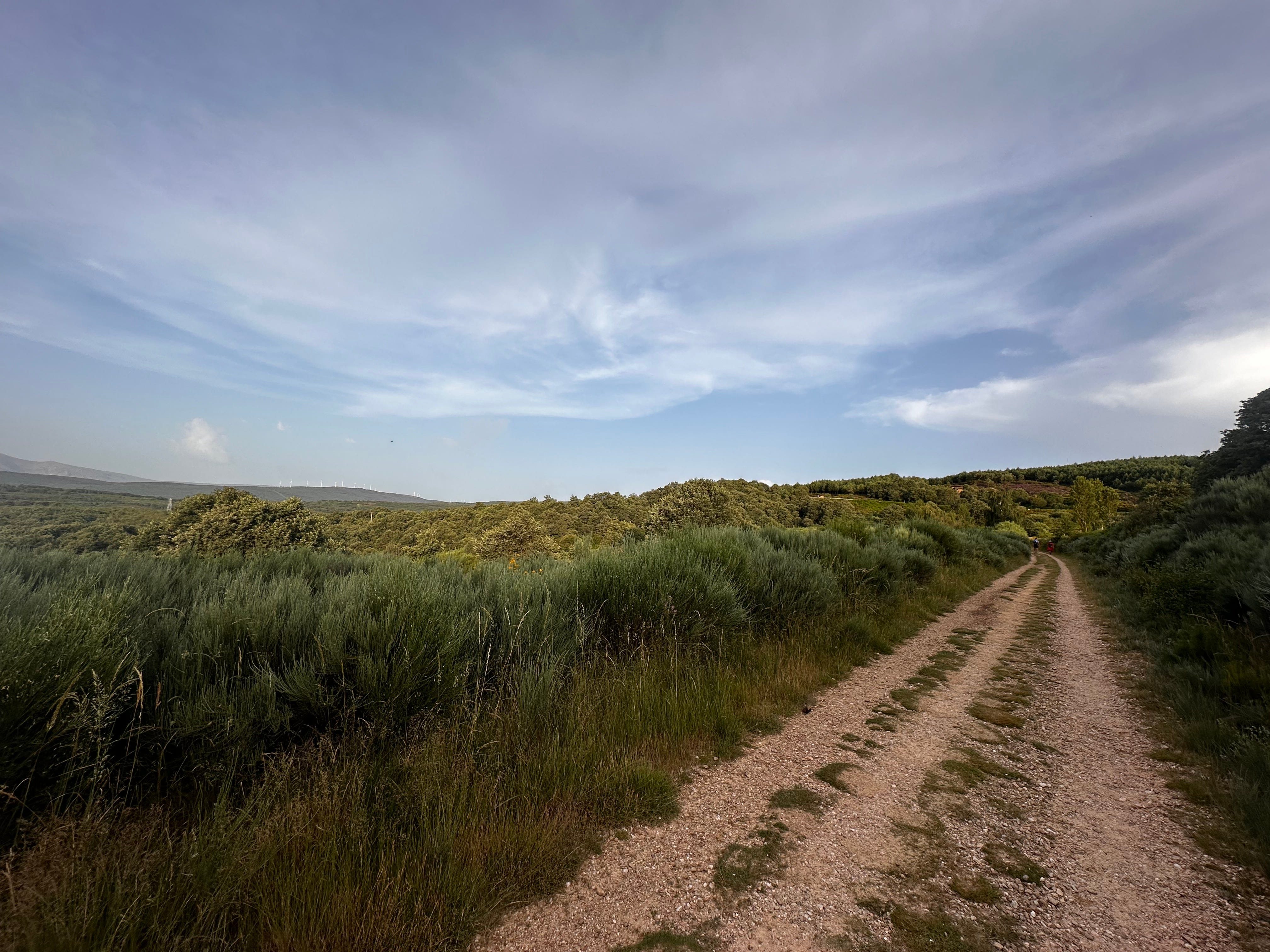
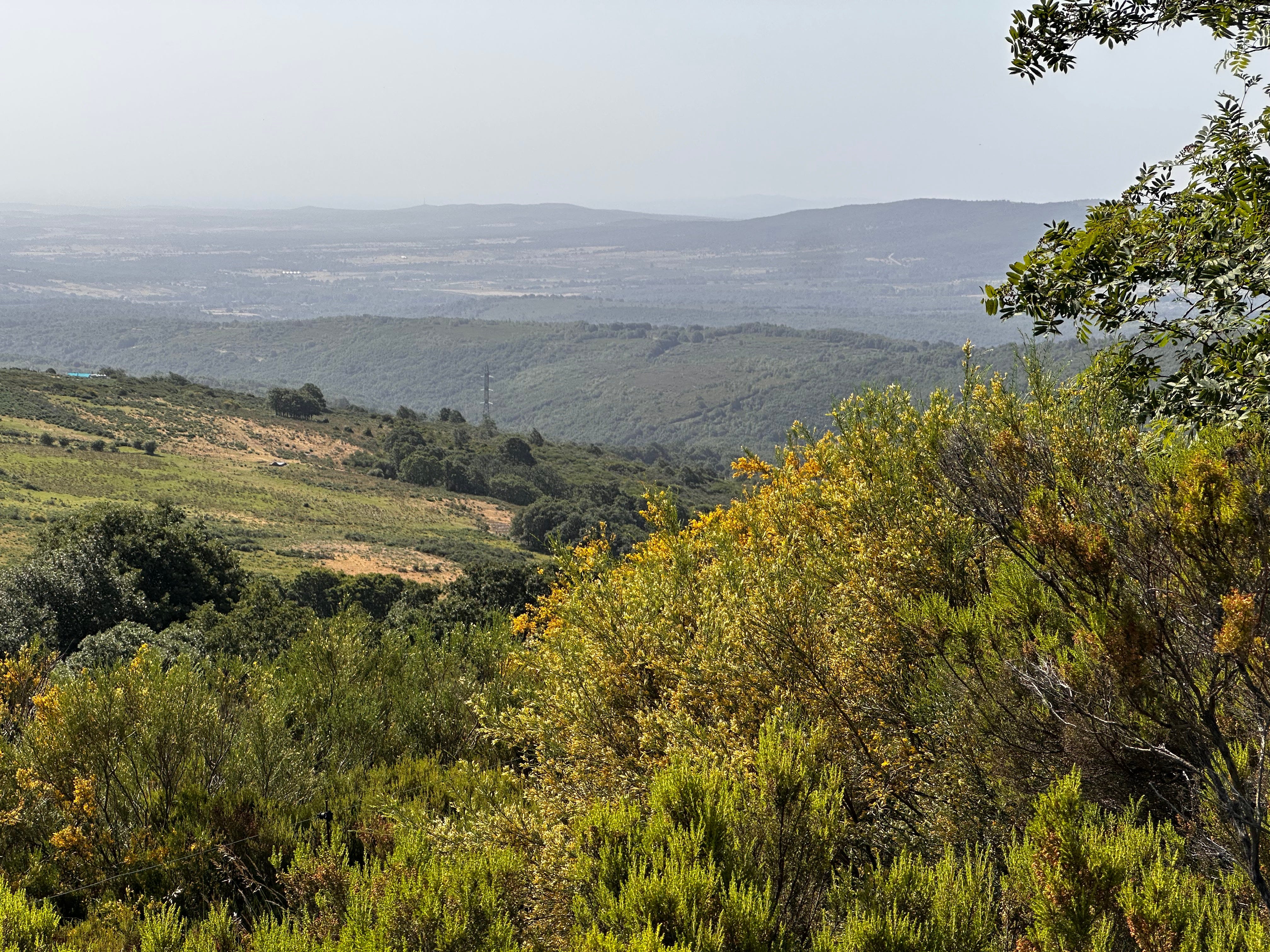
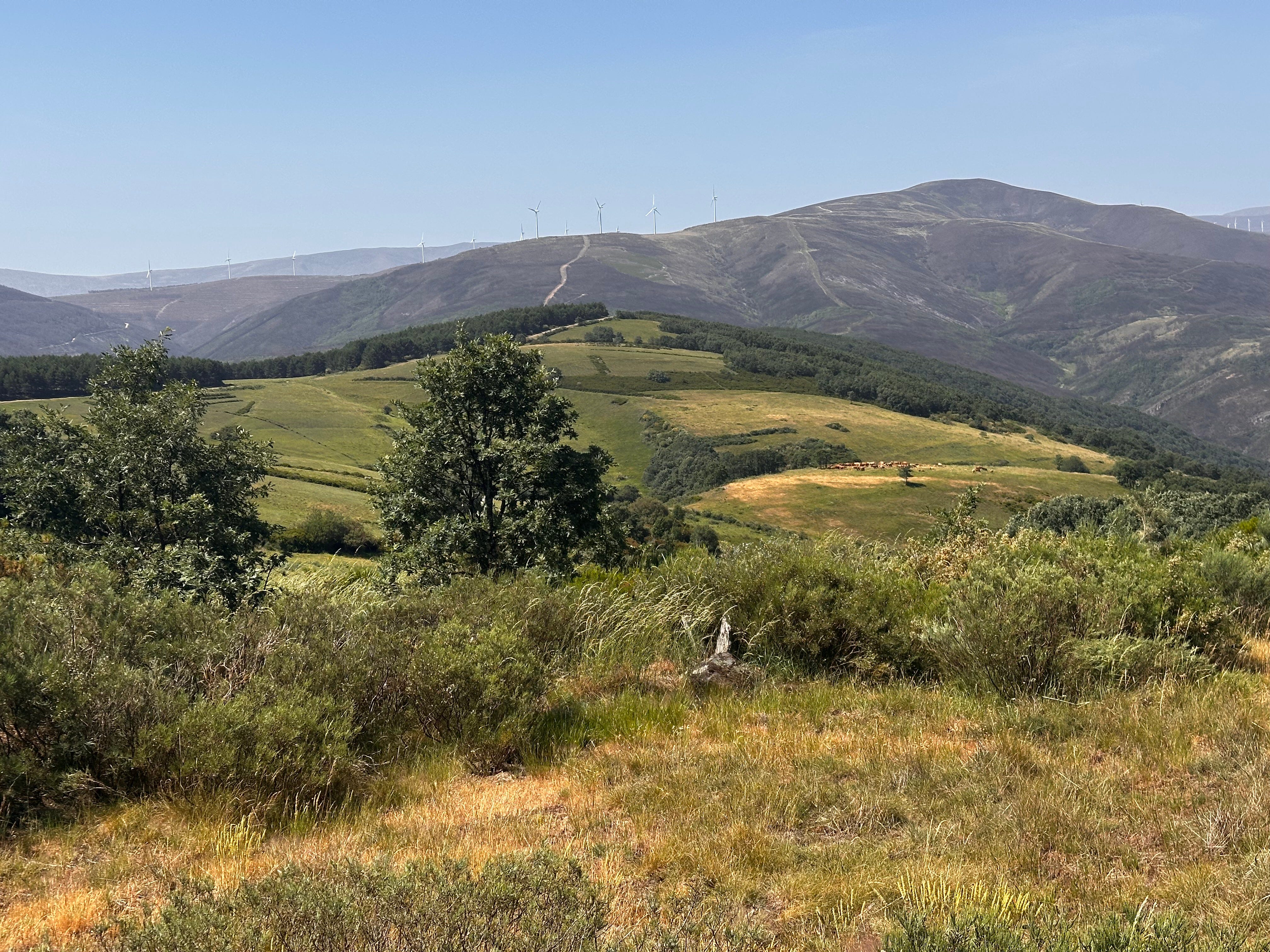
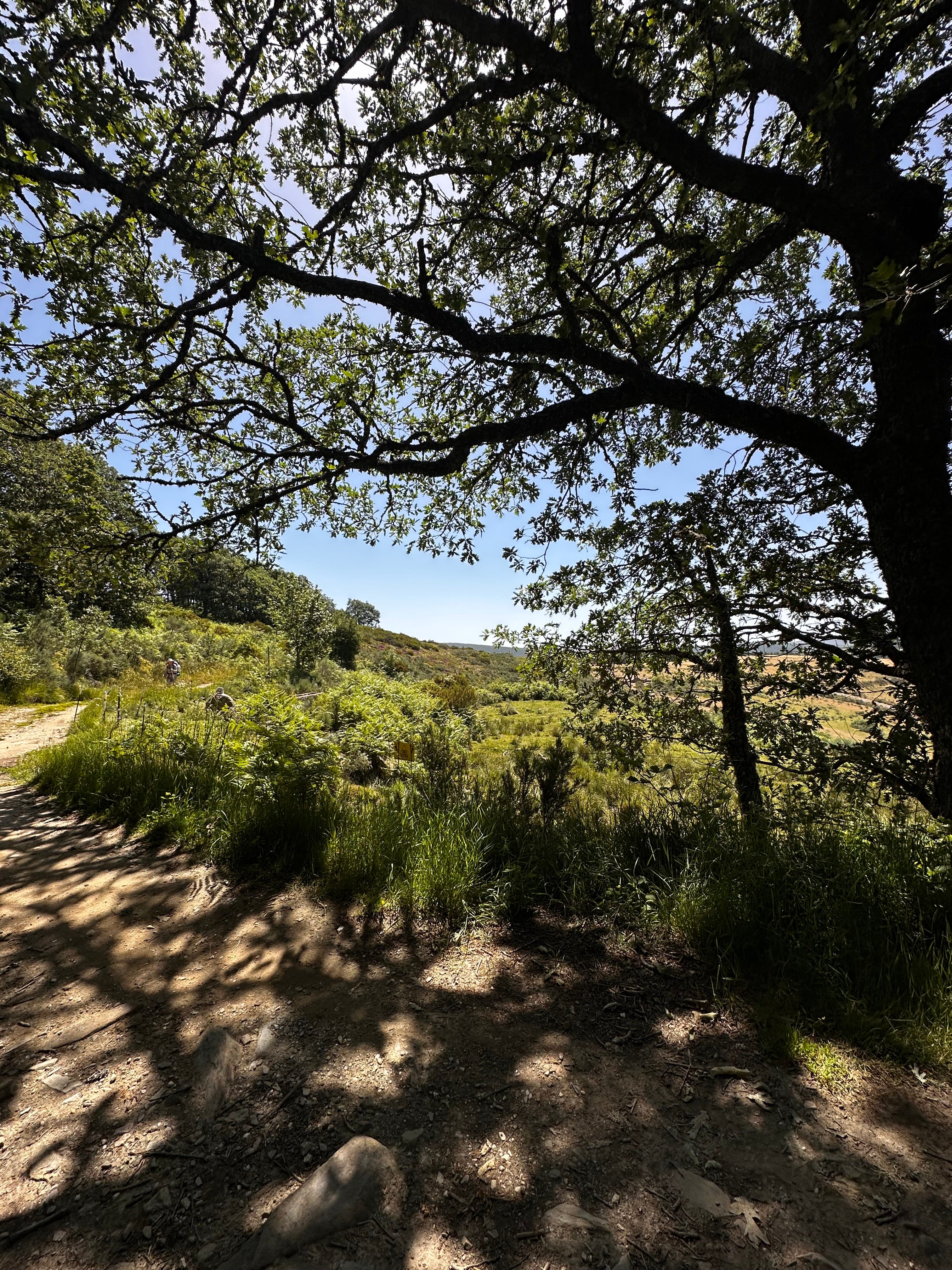
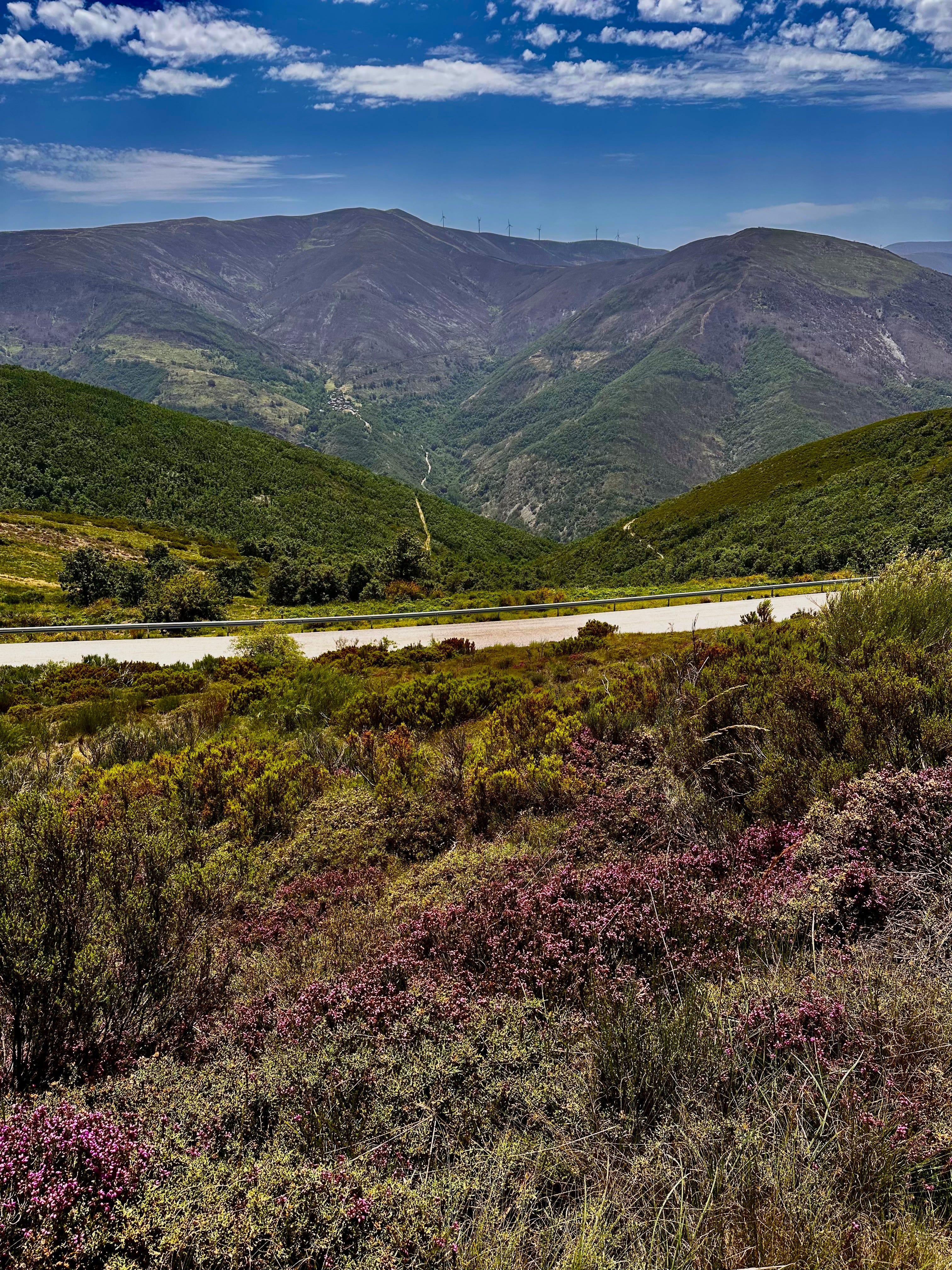
The valley opened behind us, hill folding back into hill into a blue distance, wind turbines turning slow on the far ridgelines like something patient keeping time.
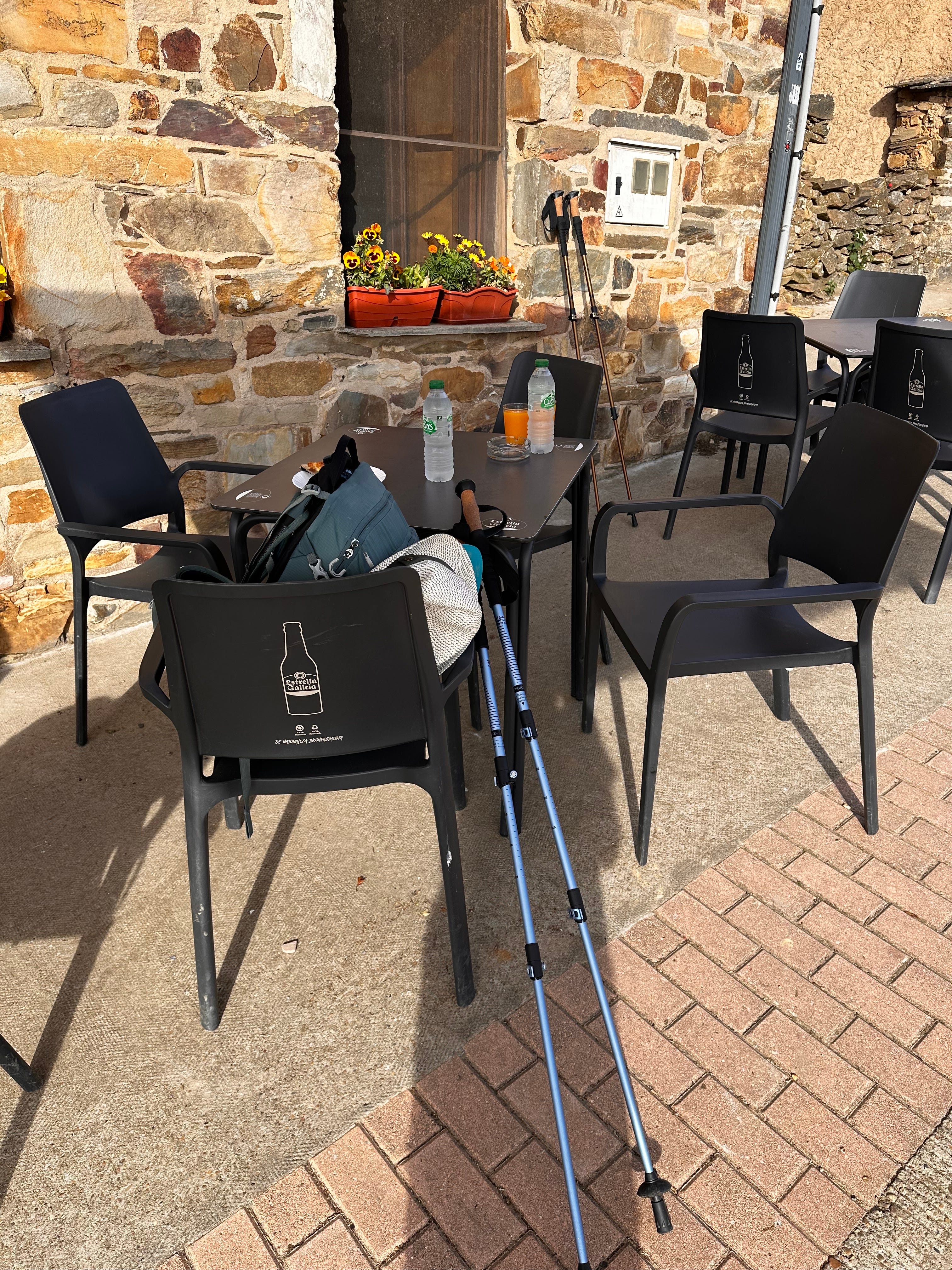
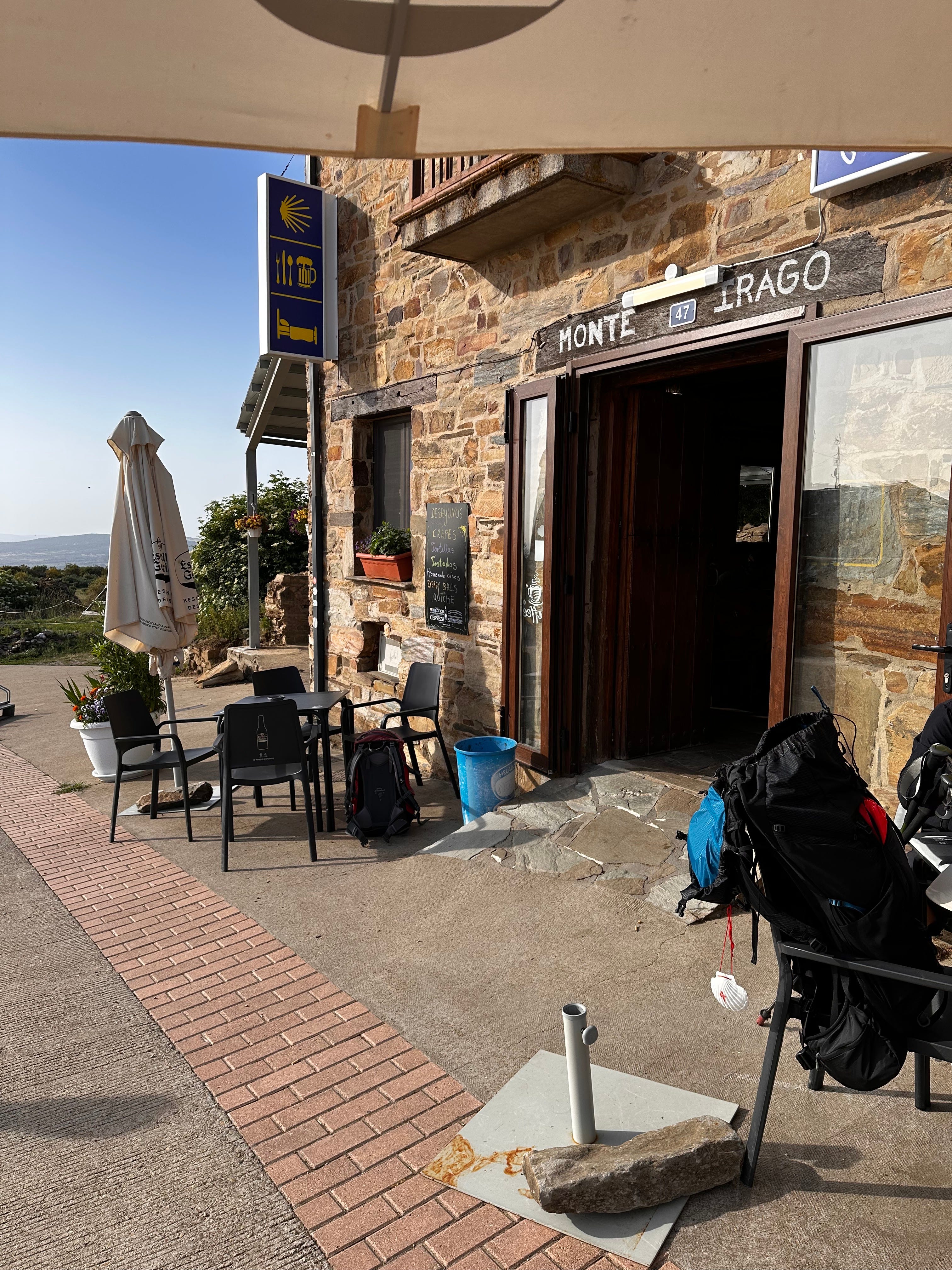
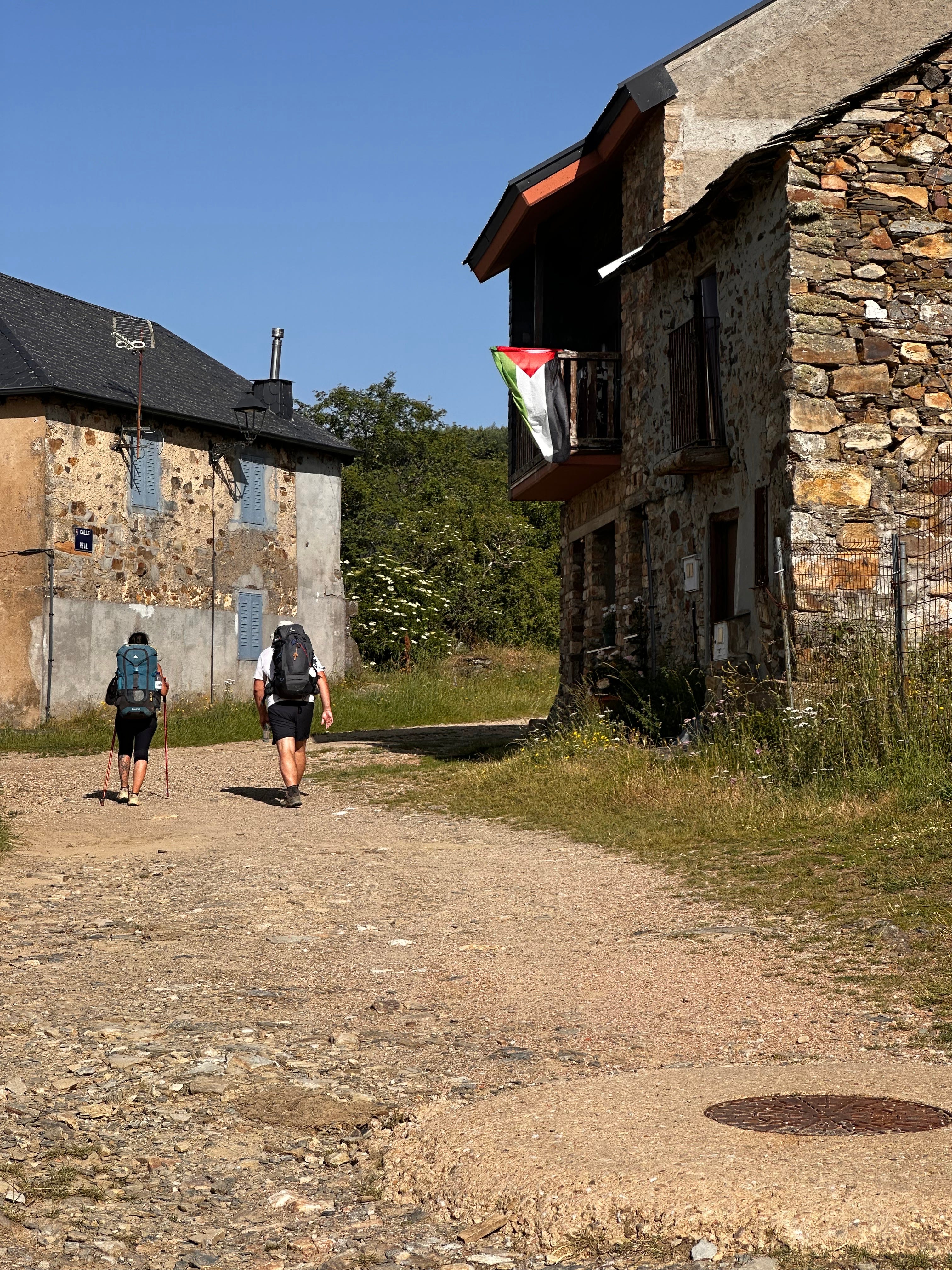
By the time we reached Foncebadón the sun had found us. We leaned our packs against the stone wall of a little café with a scallop shell glowing on its sign, and sat down in the shade with coffee and some breakfast, and let the morning catch up to us.
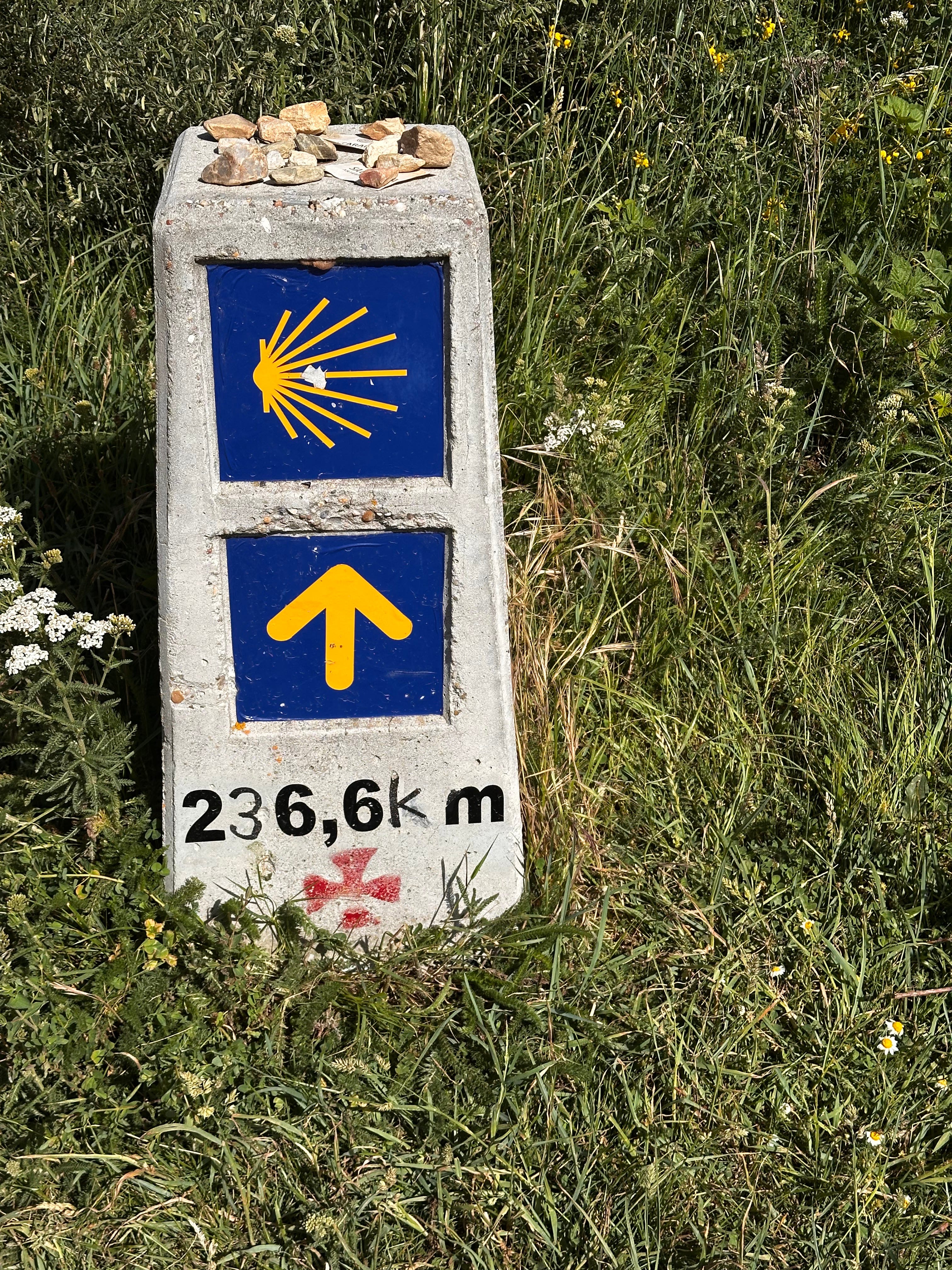
The coffee did its work, and we shouldered the packs again. Just past the last houses of Foncebadon a low stone marker counted down the kilometers to Santiago, two hundred and thirty-six and change, with a little heap of pebbles balanced on top. Getting closer.
And then the cross.
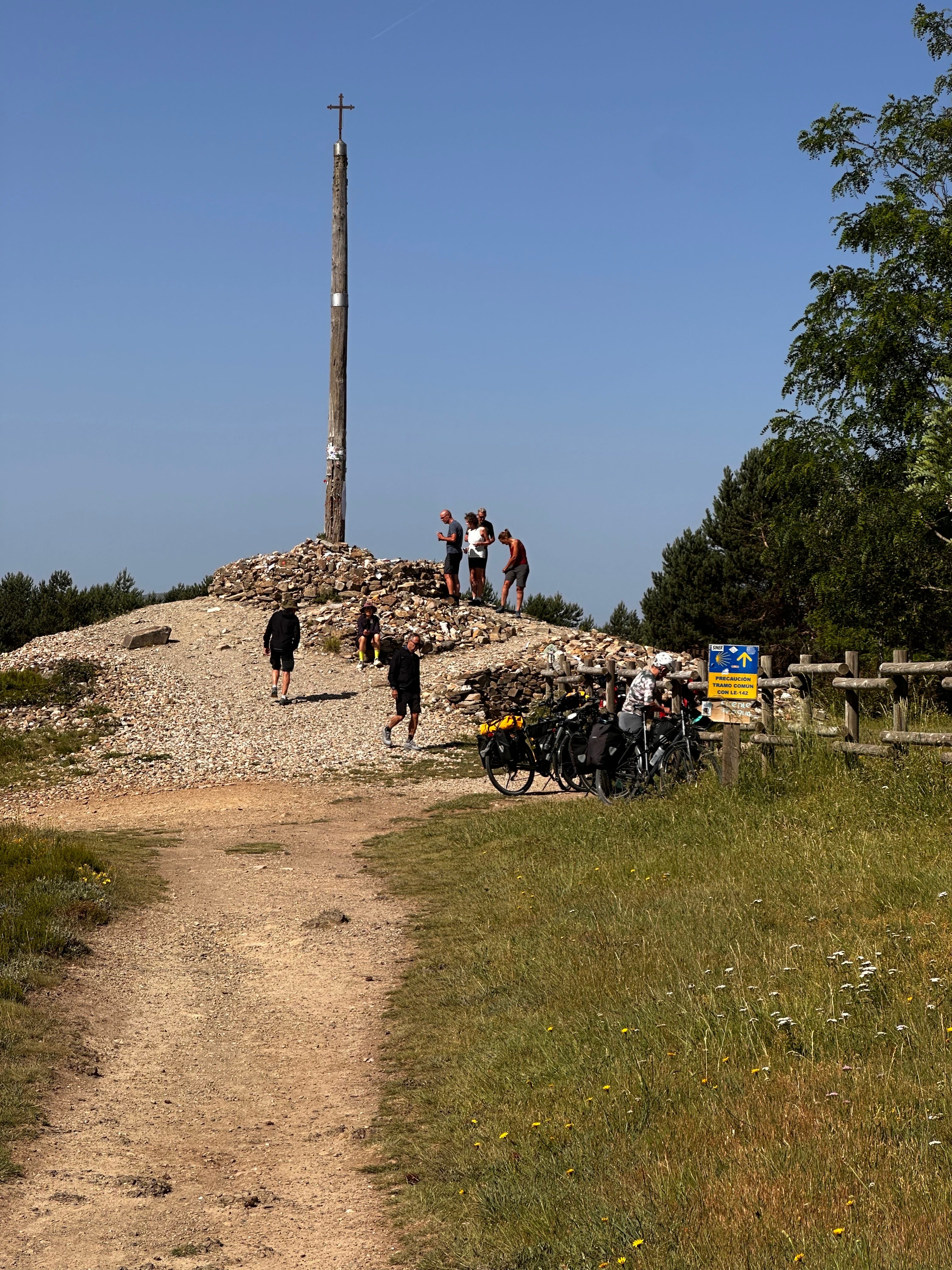
You see it before you reach it, a tall weathered pole rising off a hill of stones, the small iron cross at the very top catching the light. Cruz de Ferro. The highest point of the whole Camino Frances, and the place where, for centuries, pilgrims have climbed the mound to lay down a stone carried from home.
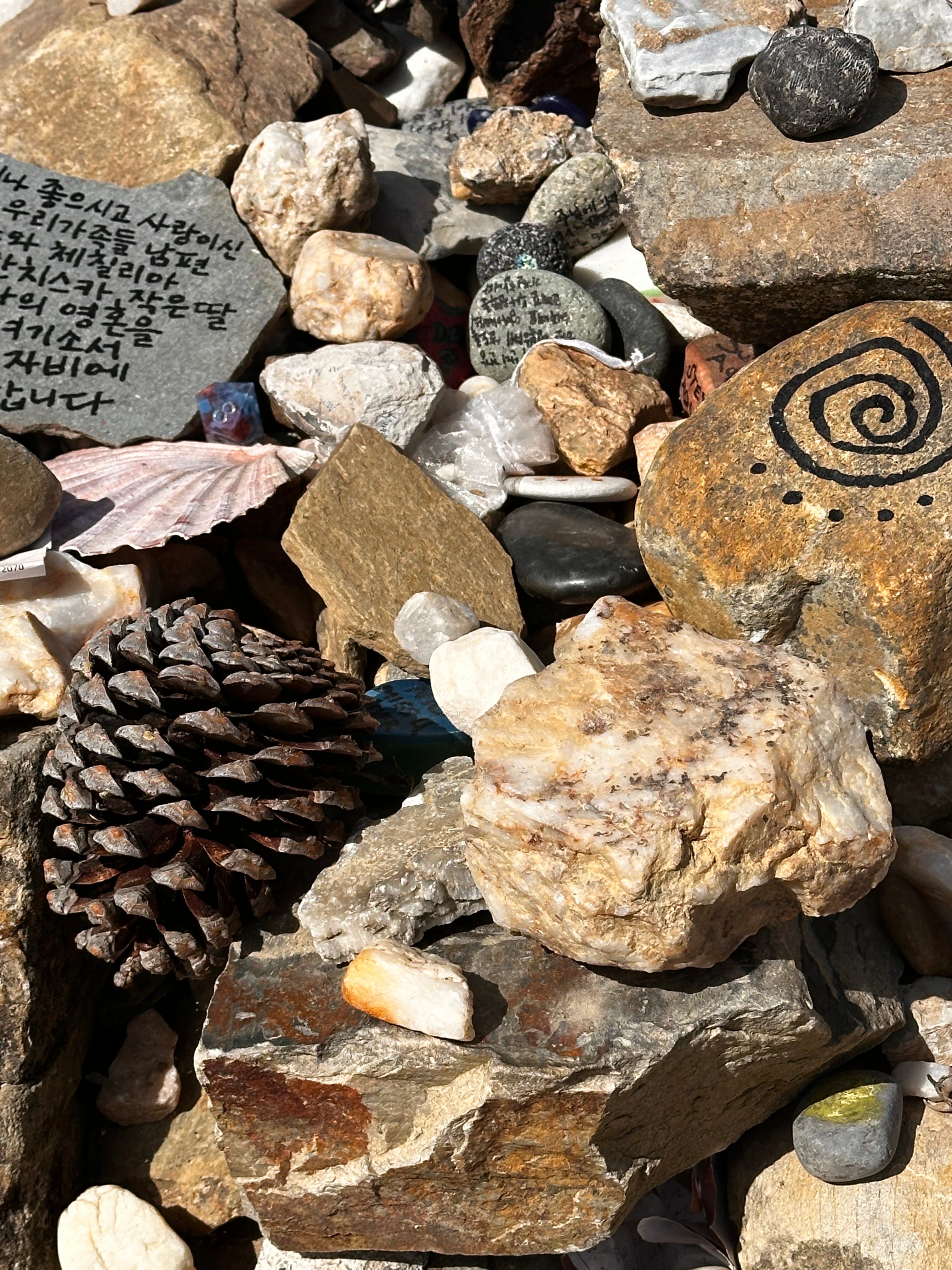
We had picked ours hiking at the Baxter preserve back home and I had carried it in my pocket since. I took it out at the base of the mound and held it for a while. The pile is enormous up close, thousands upon thousands of stones, and almost none of them are only stones. There are names in marker. Dates. Photographs gone soft from the weather. Messages in scripts I could not read, Korean and others. A gold stone with a black spiral painted on it. A scallop shell. A pinecone someone decided belonged there too. Every one set down by a person who climbed up carrying something and chose to climb back down without it.
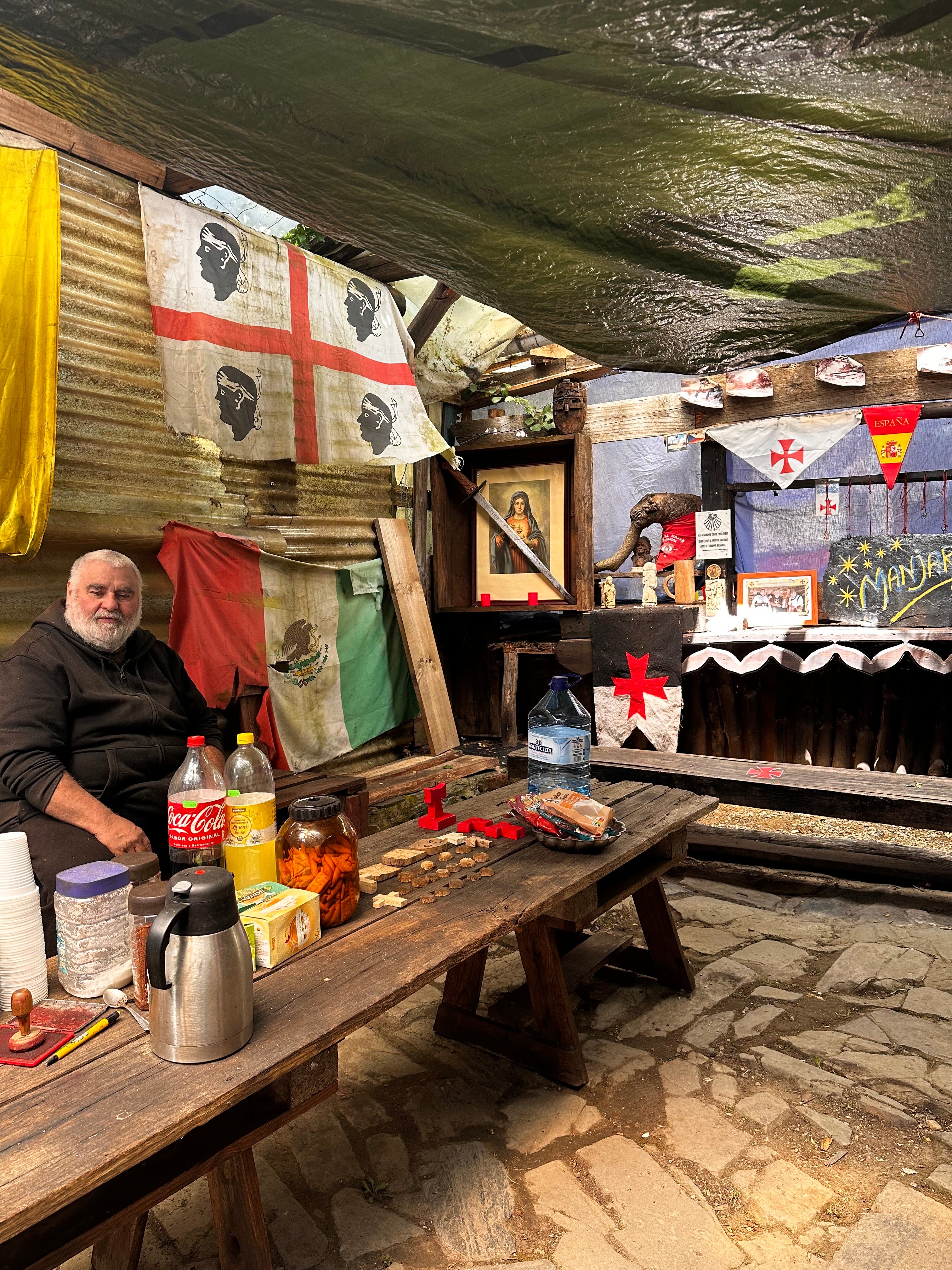
A little farther on we reached Manjarin, which is barely a place at all, a huddle of tin and tarp kept alive by a man who calls himself “Oso”, Bear, and tends to a shrine dedicated to Tomás Martínez de Paz. Tomás of Manjarin ran a pilgrim refuge here for many years, served coffee to the passing pilgrims, and styled himself the last of the Templars, keeping up the ethos. Tomás passed away this past January, a historic figure for the Camino, and now Bear is in the same spot, keeping up the tradition, serving coffee and refreshments. Flags everywhere, faded crosses, a sword laid across an image of the Virgin, a thermos of coffee, a stamp for the pilgrim’s passport. I loved the strangeness of it, this small kingdom of belief held together with rope and conviction at the top of a mountain.
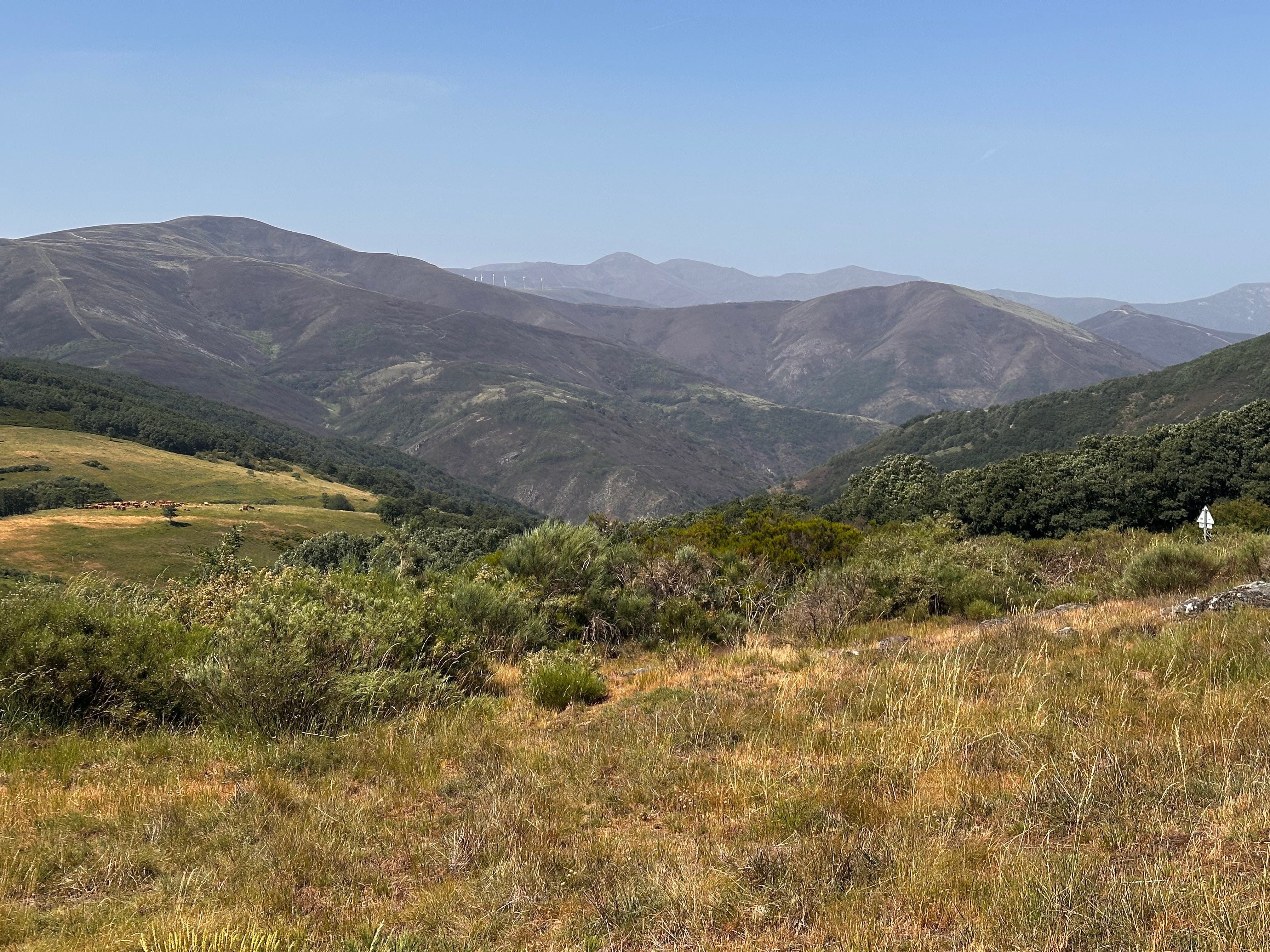
Then the land opened all the way out. Ridge after ridge rolling toward the haze, the slow white turbines turning on the far peaks, the valley we would spend the afternoon descending into laid green and enormous below. I had slowed to the pace of nearly one mile an hour, grateful for the trekking poles and finding my way gingerly between jagged rocks and a steep descent. The way down was much more challenging than the way up and then there is the heatwave, 100 degrees this afternoon. Slightly more than 10 miles today, nearly 7 hours.
Tonight we stayed in Albergue La Casa del Peregrino in El Acebo, and having a communal dinner with other walkers was definitely the highlight of the day. On to Ponferrada tomorrow.
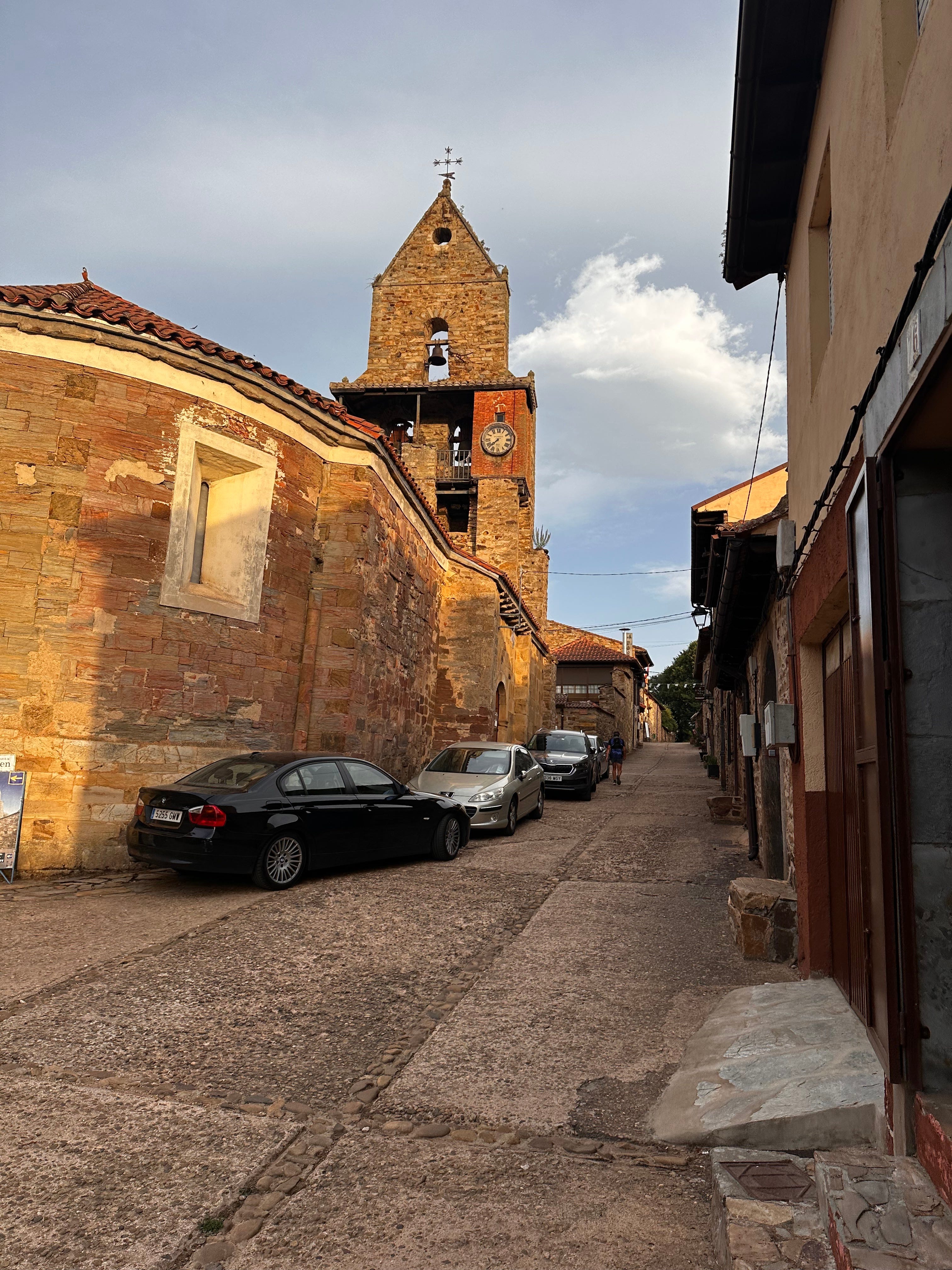
Leaving Rabanal
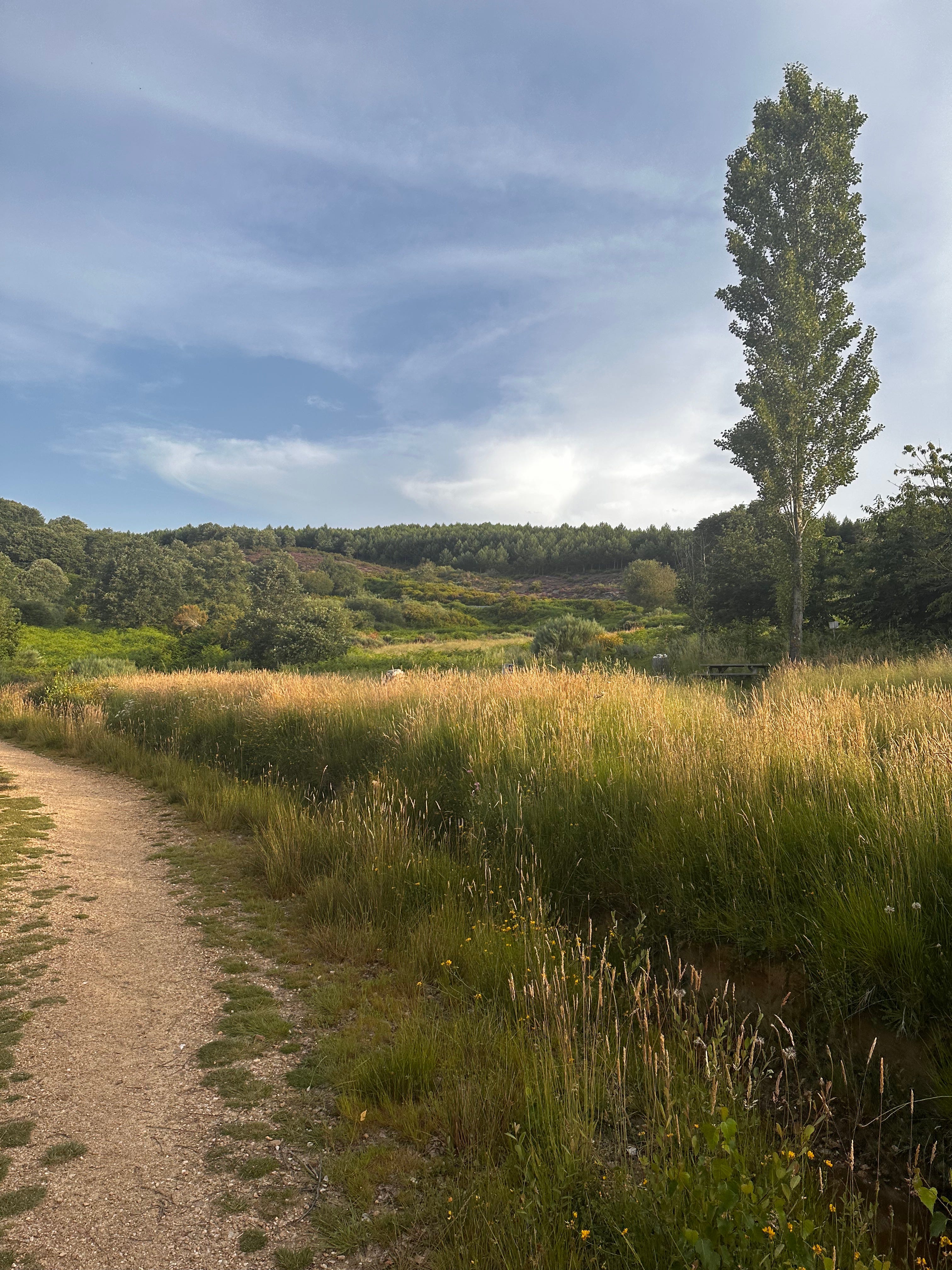
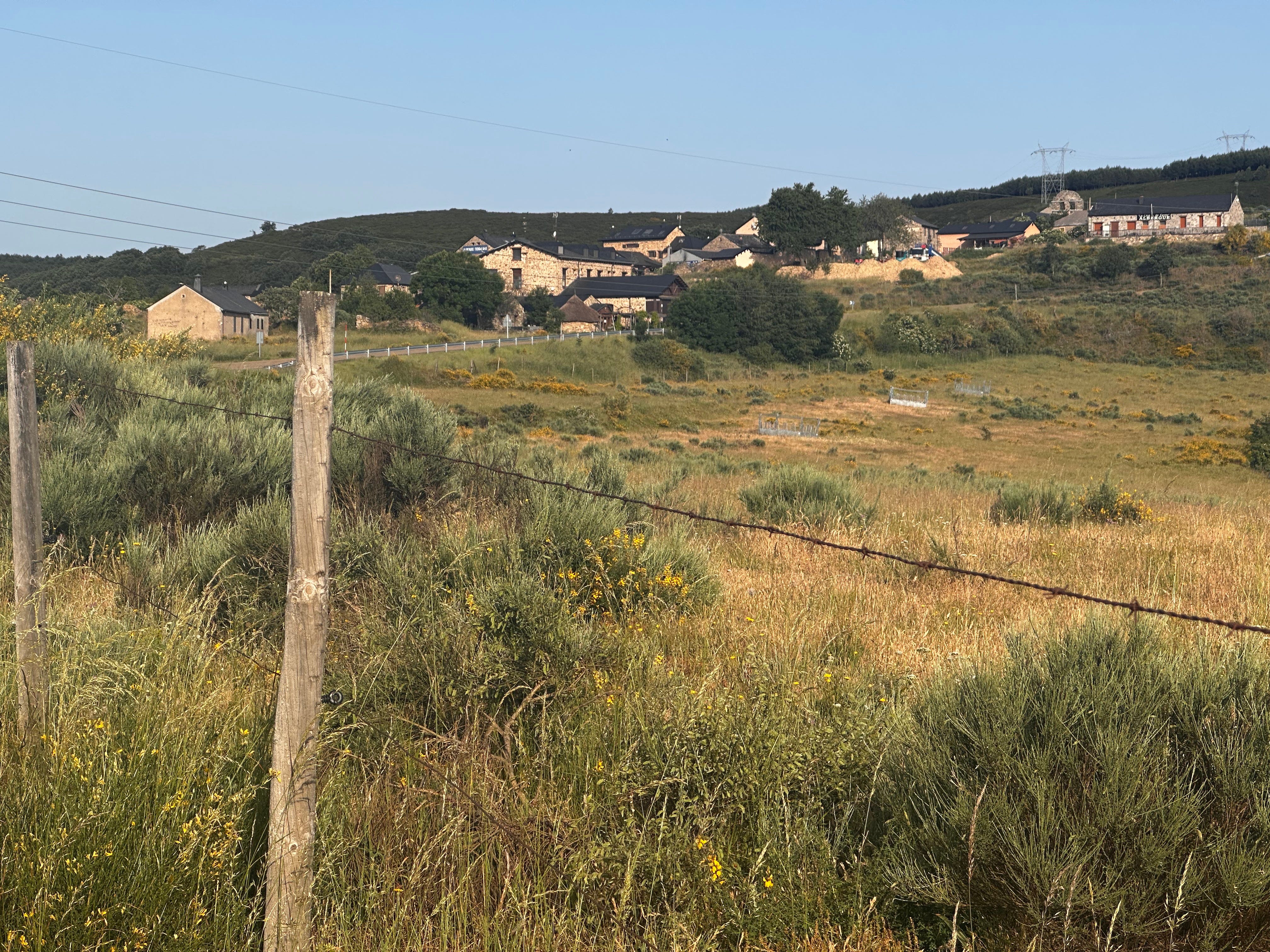
First glimpse of Foncebadon
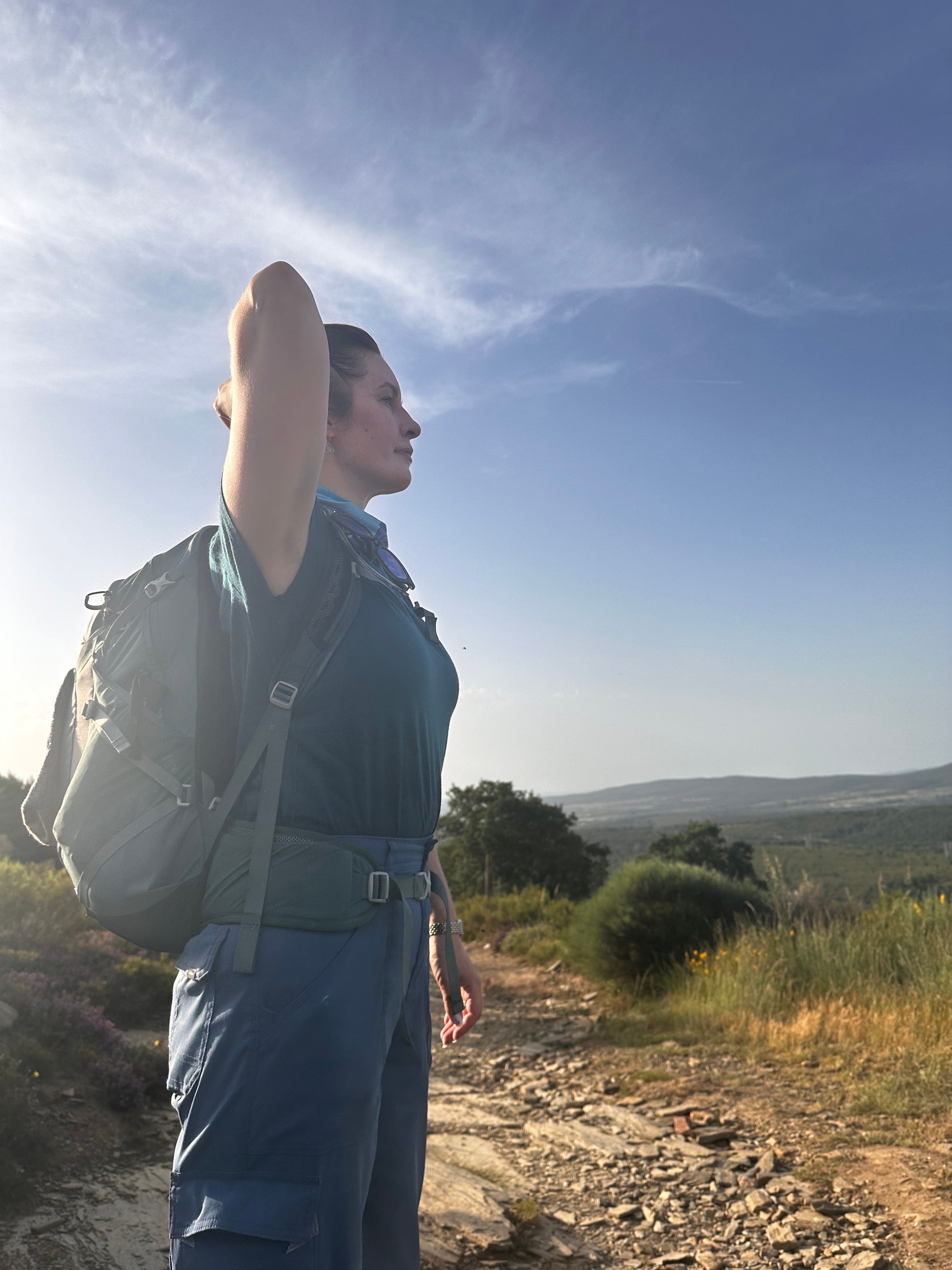
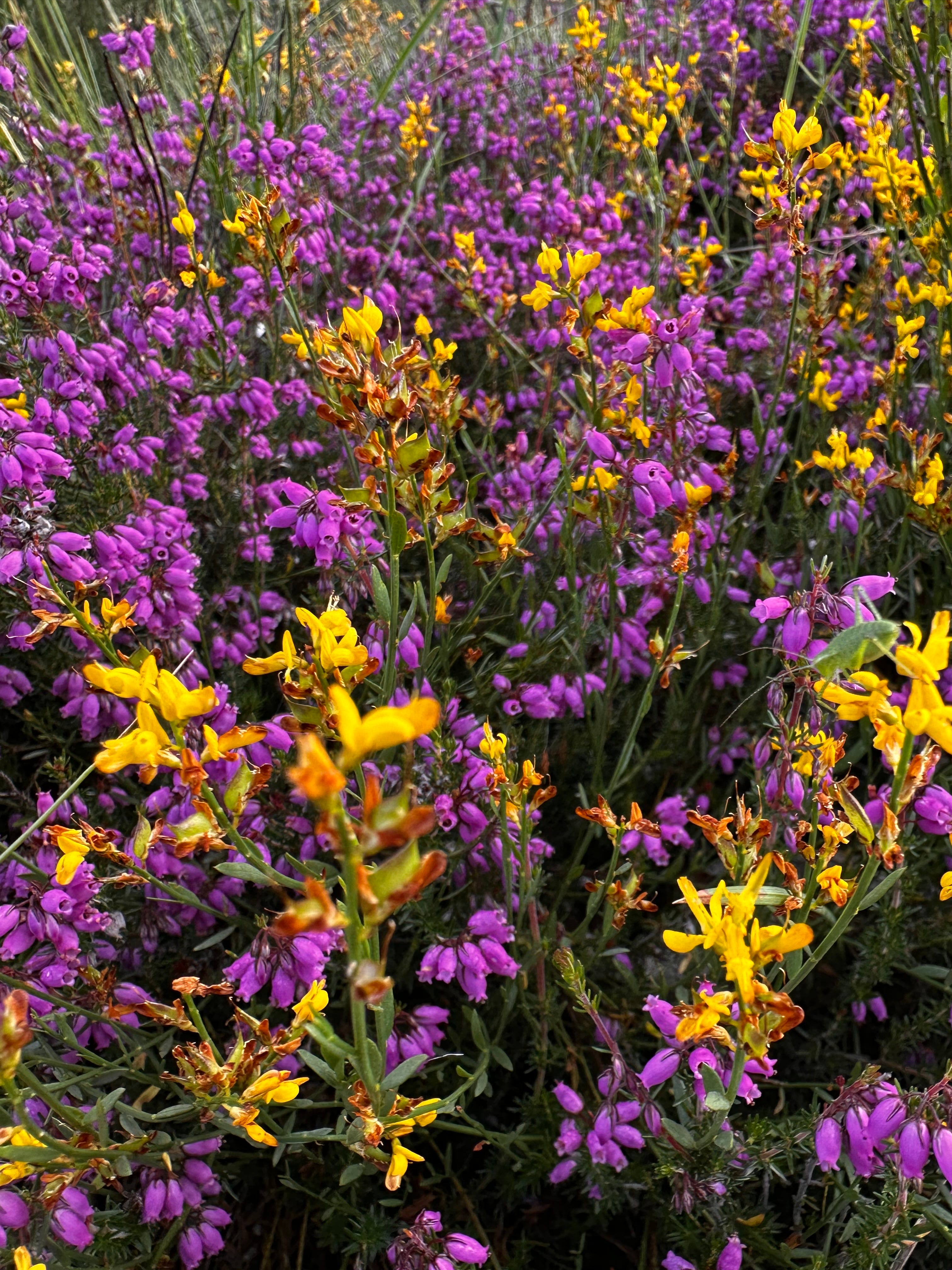
The heather on the hill
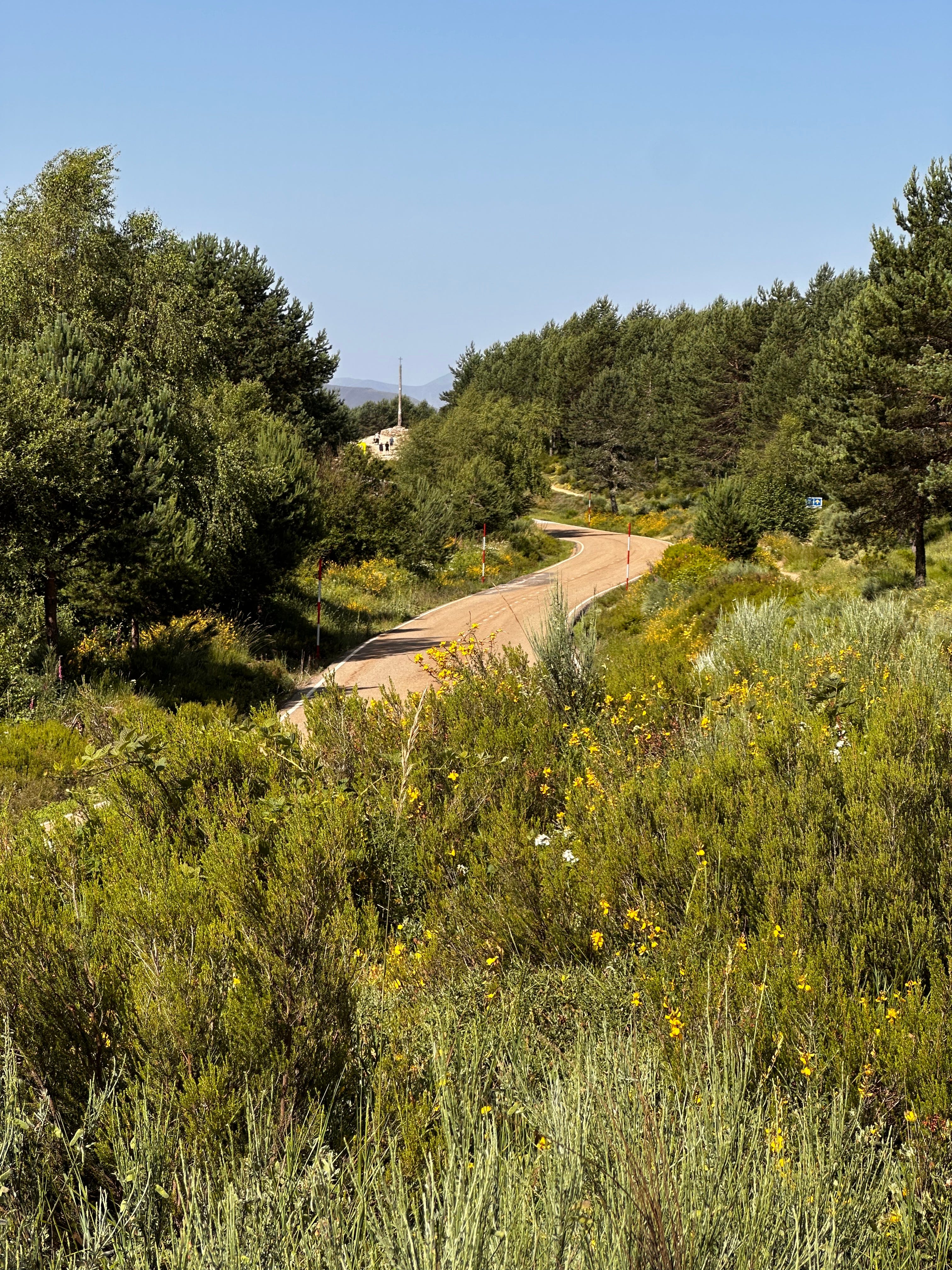
Approaching Cruz de Ferro
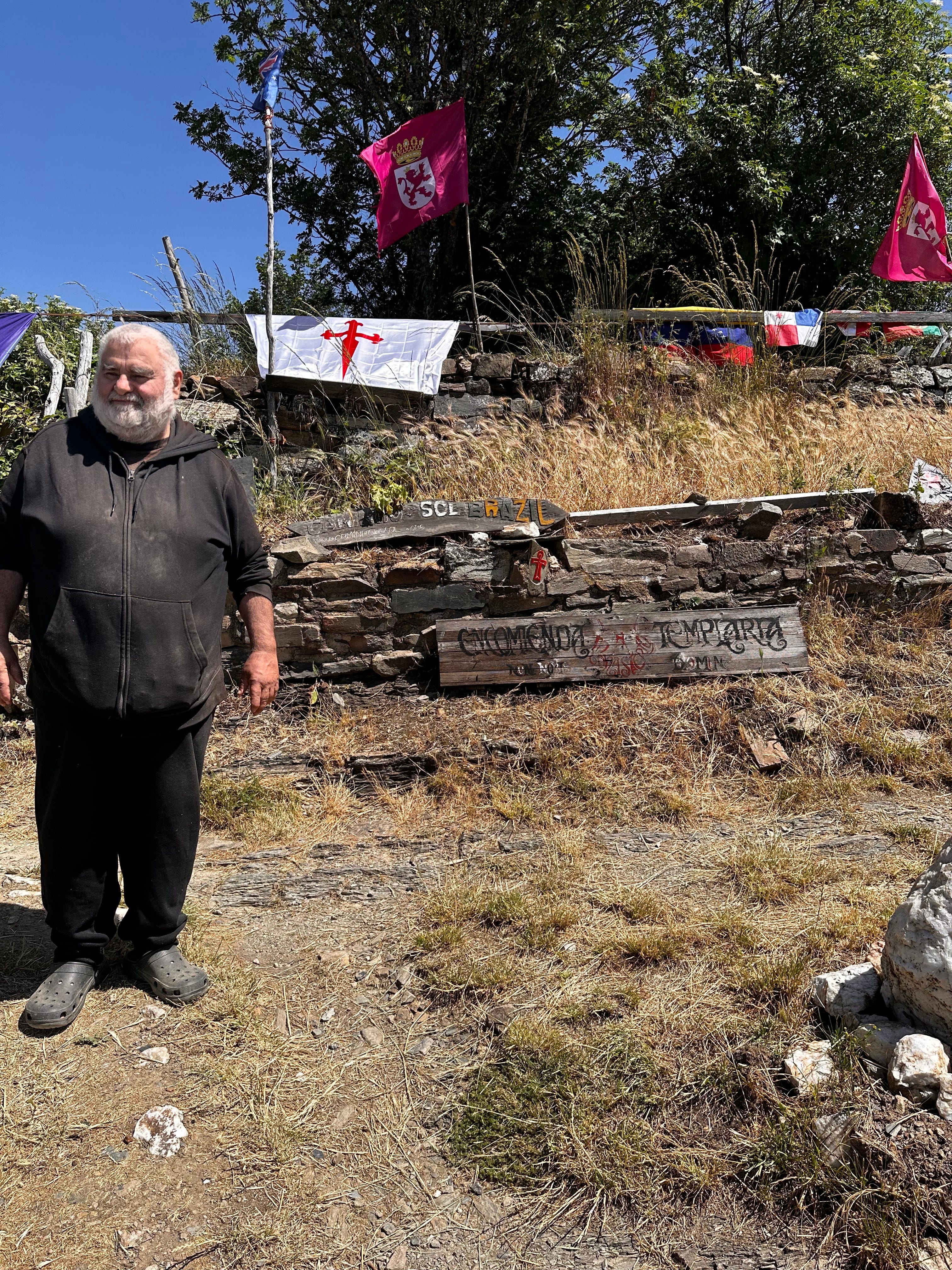
Oso (Bear) tending the refugio (shelter) of Tomás de Majarin
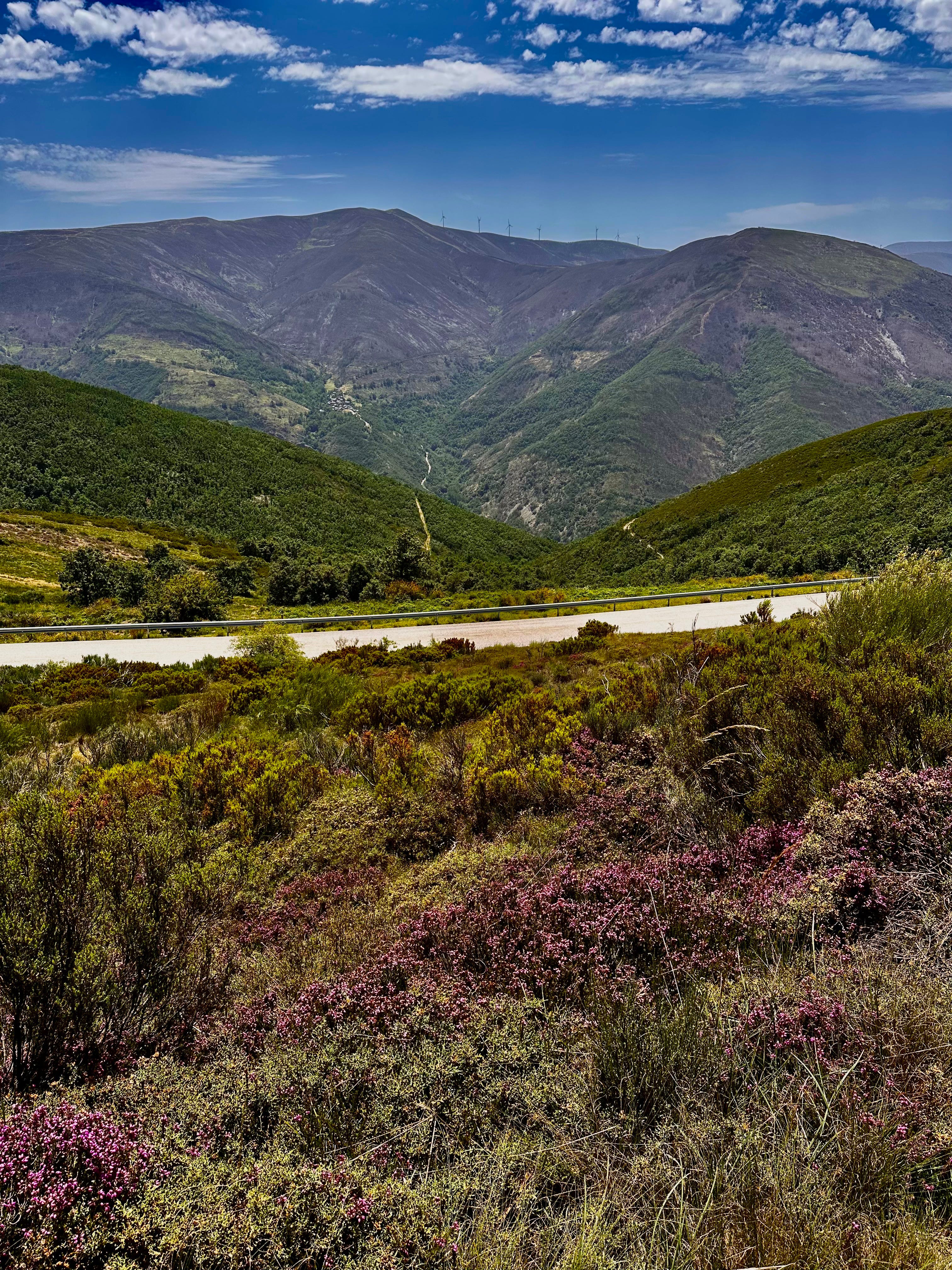
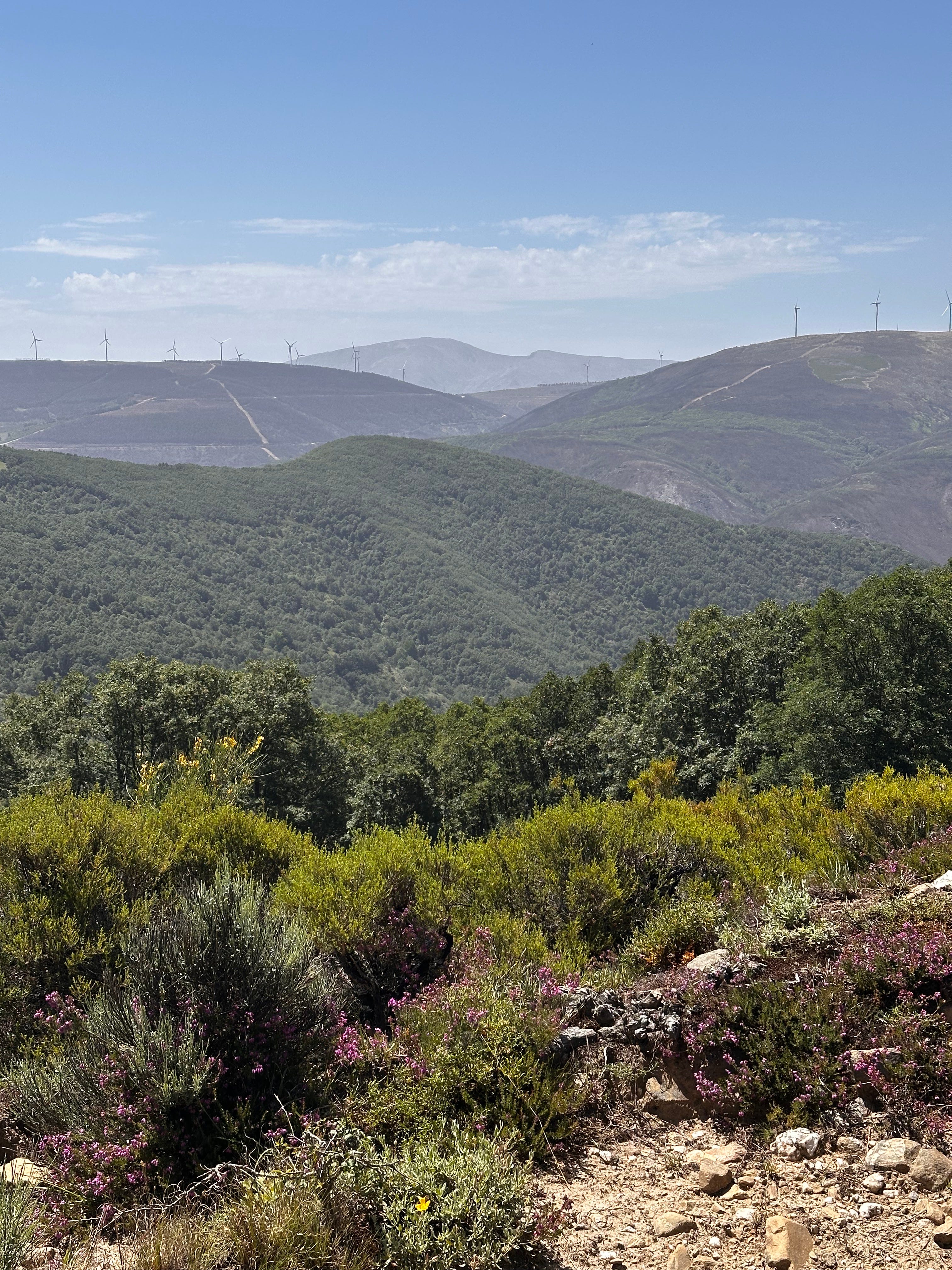
That is where we came from