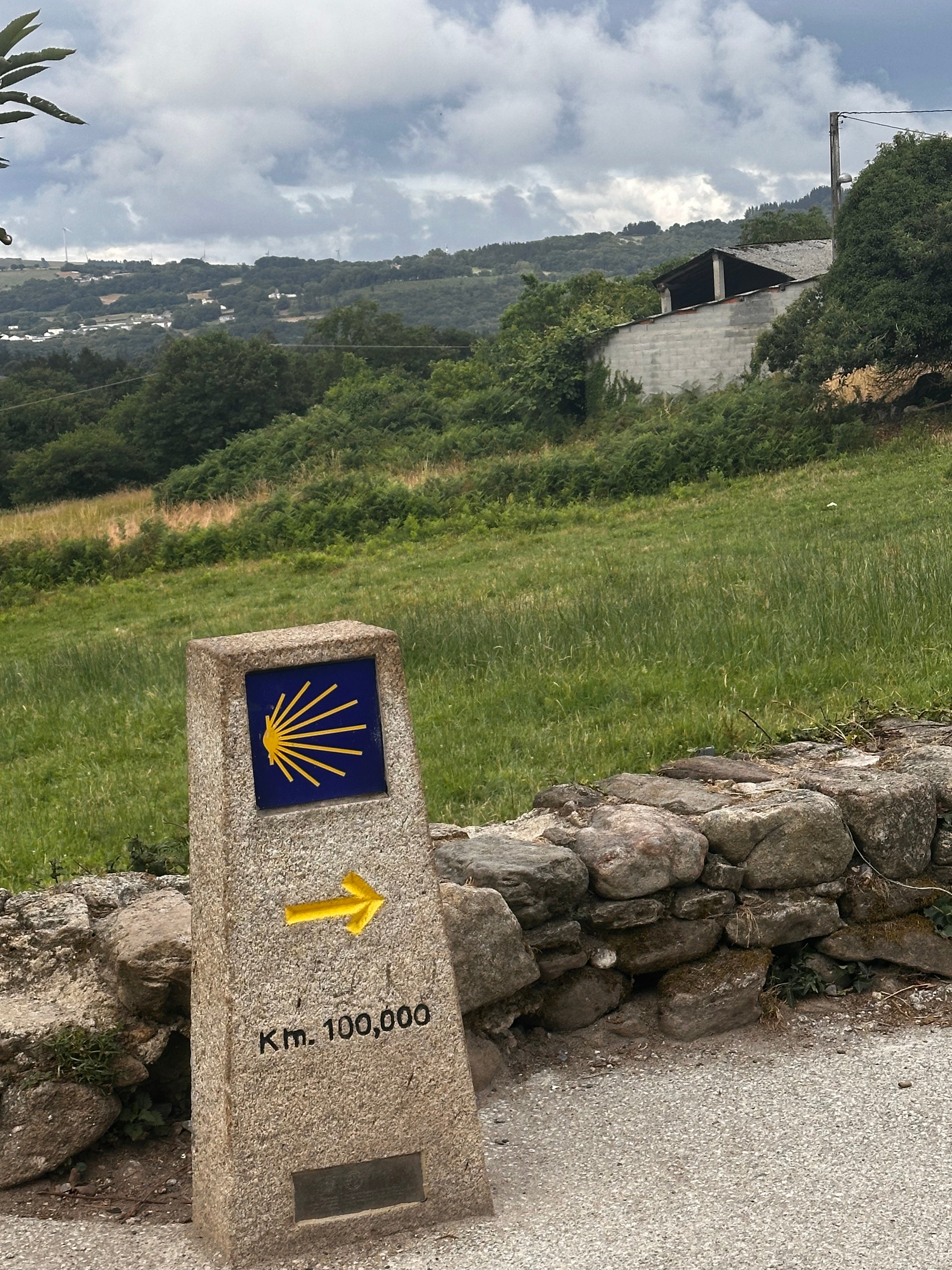
The marker came up in the morning, low and weathered, the number cut into its face: 100 kilometers. We had been walking since Astorga and the distance to Santiago count had been falling for days, but a round hundred lands differently. From there the road filled. Sarria is where most people begin, and their boots were clean and their packs still rode high. We passed them and they passed us, and for a while the path was louder than it had been in days.
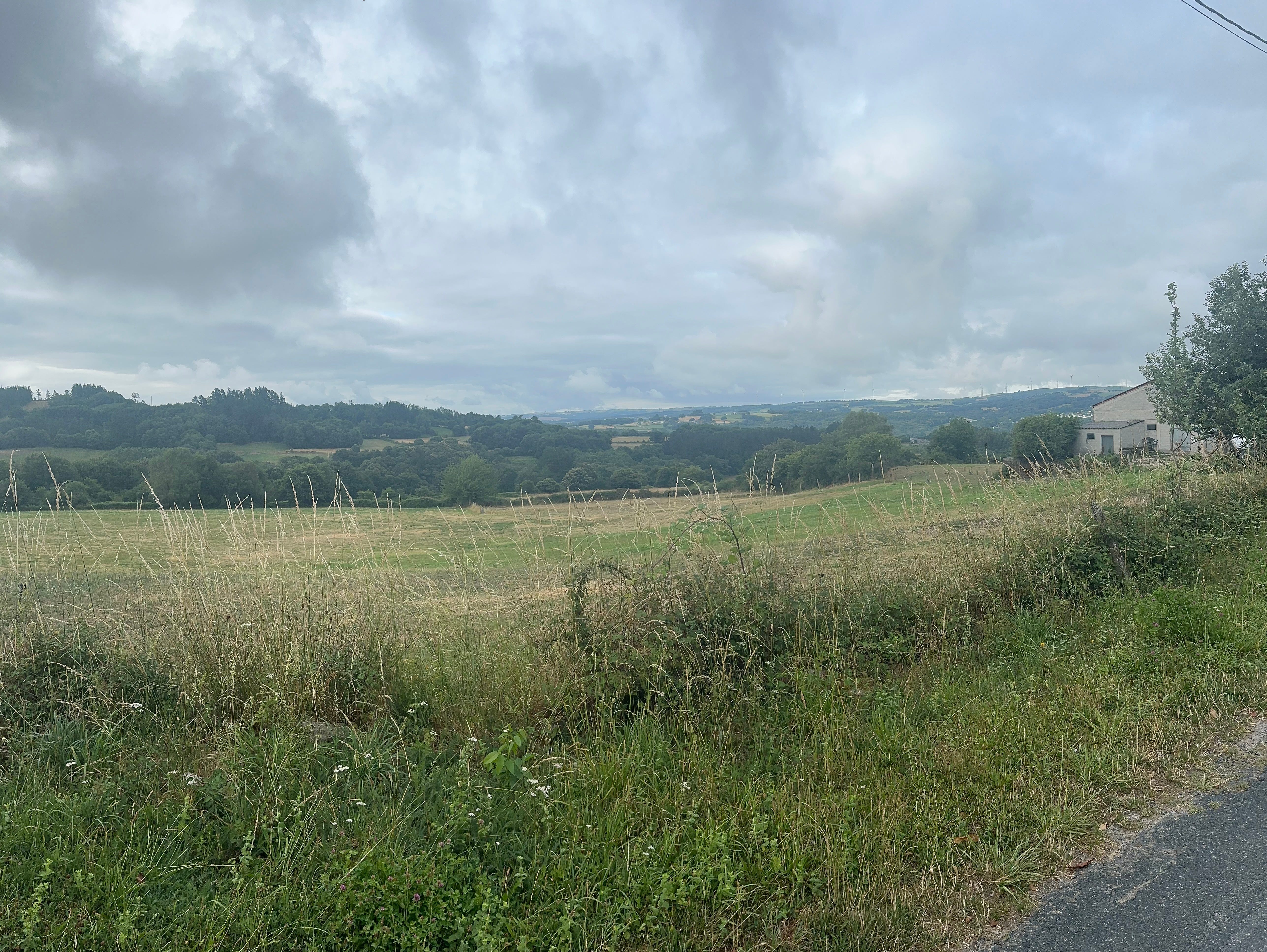
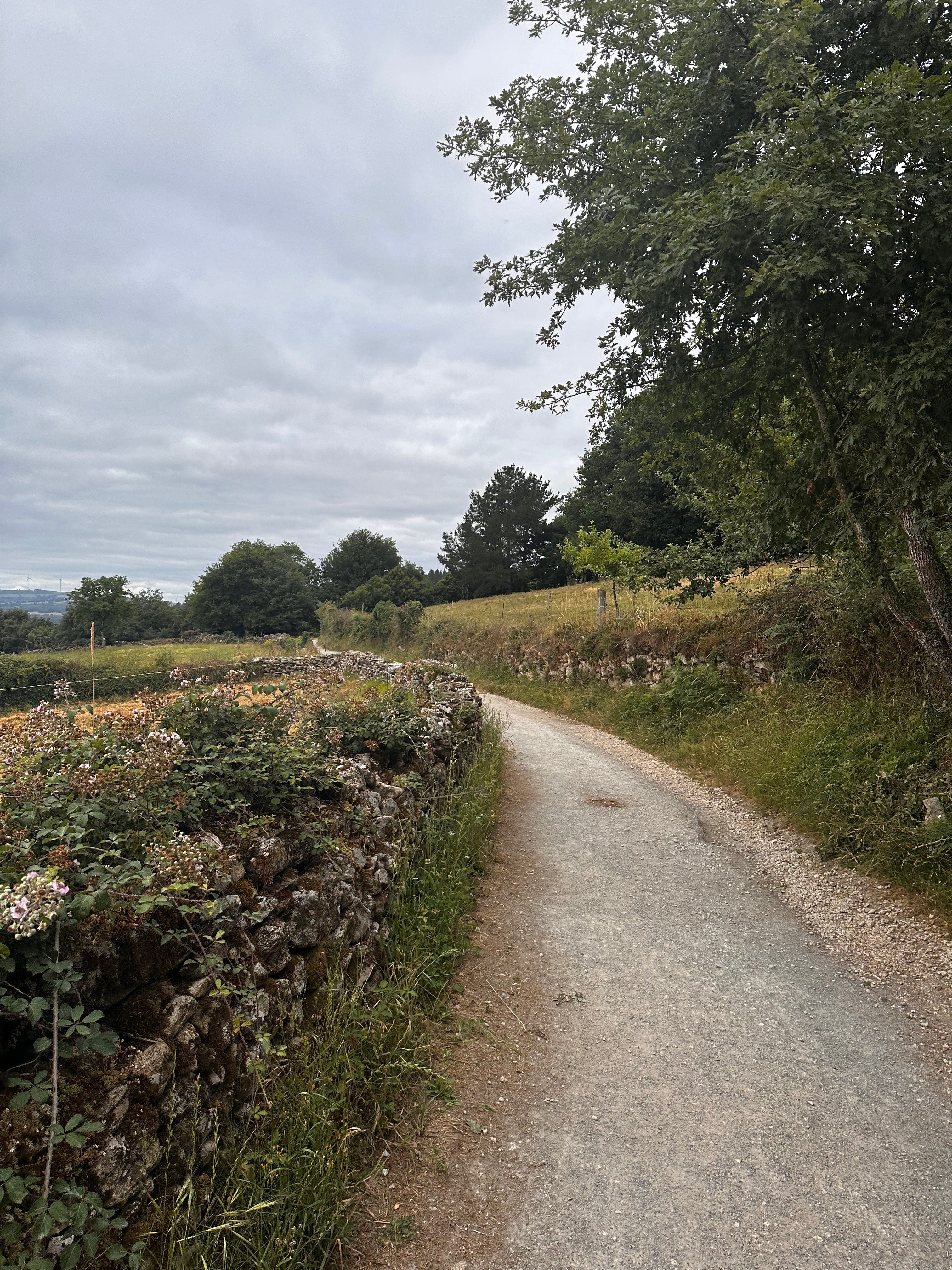
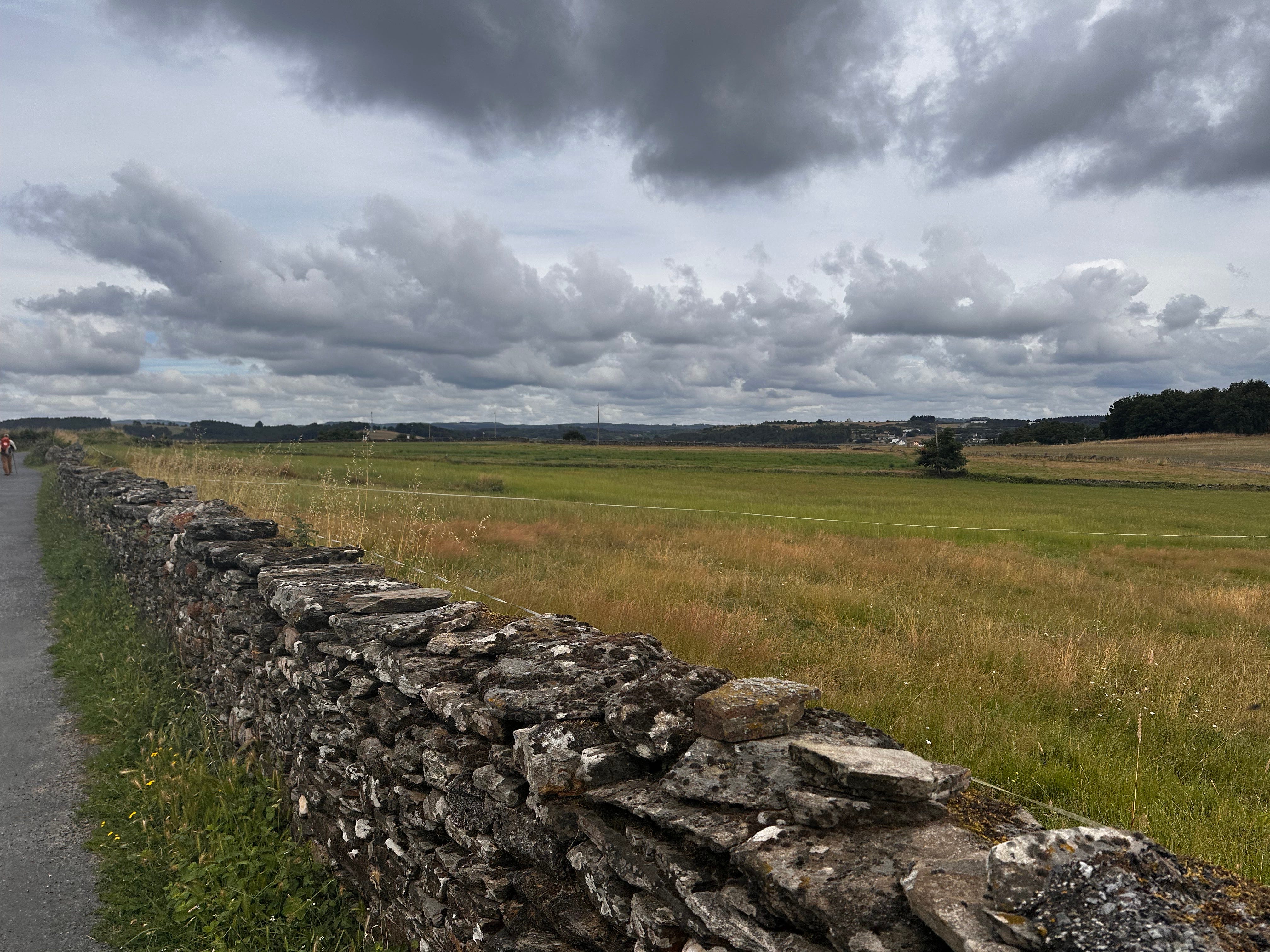
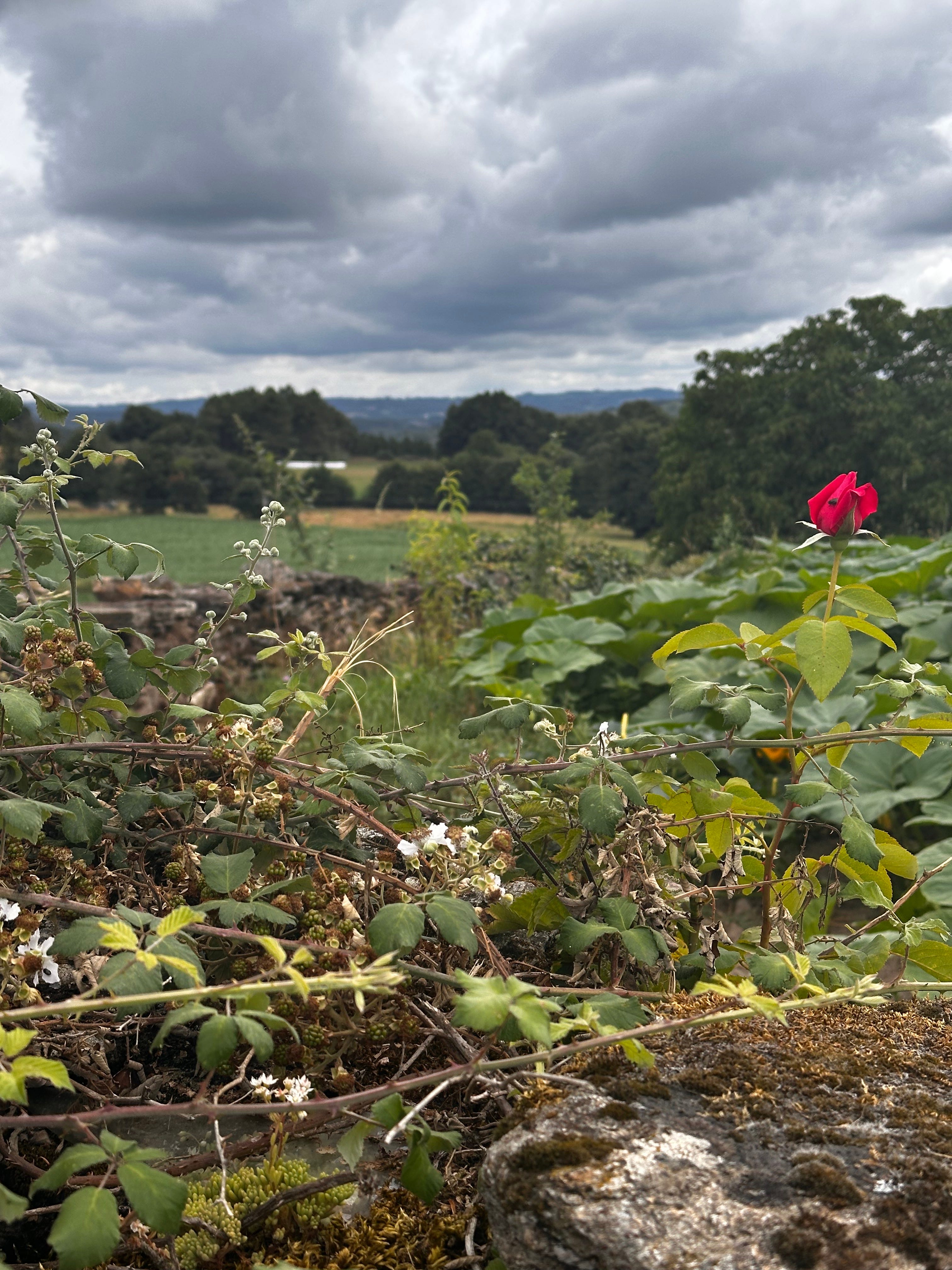
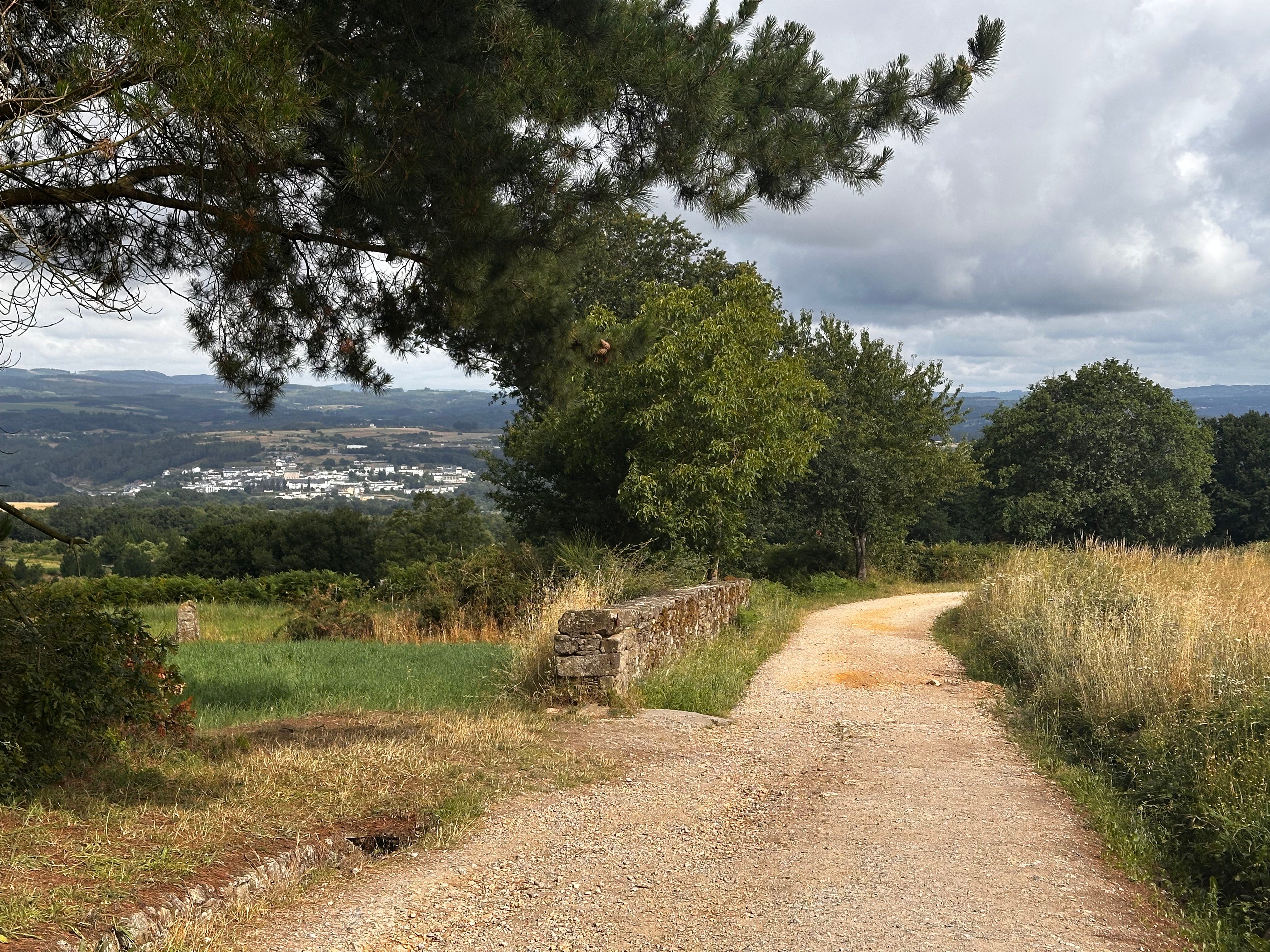
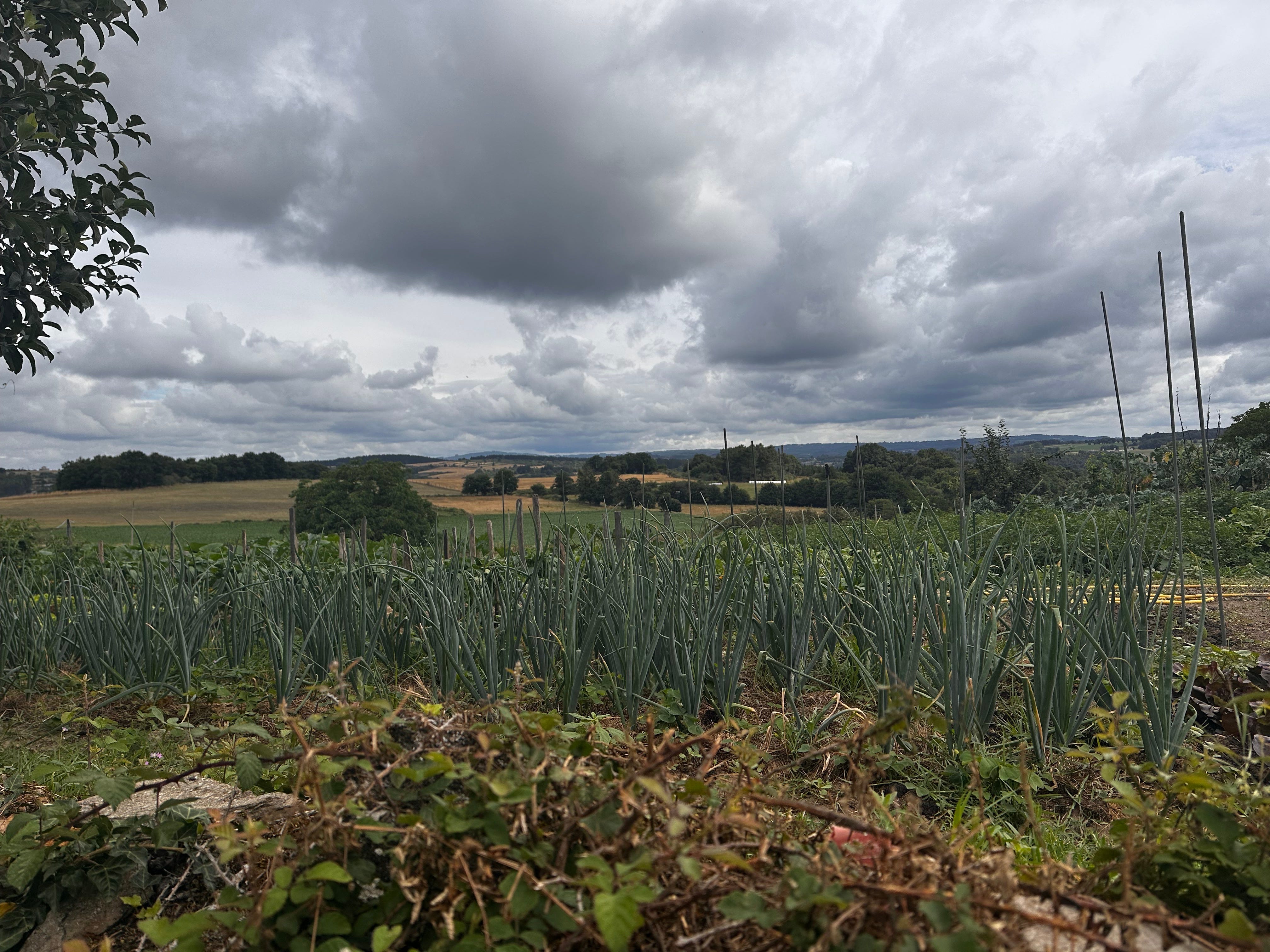
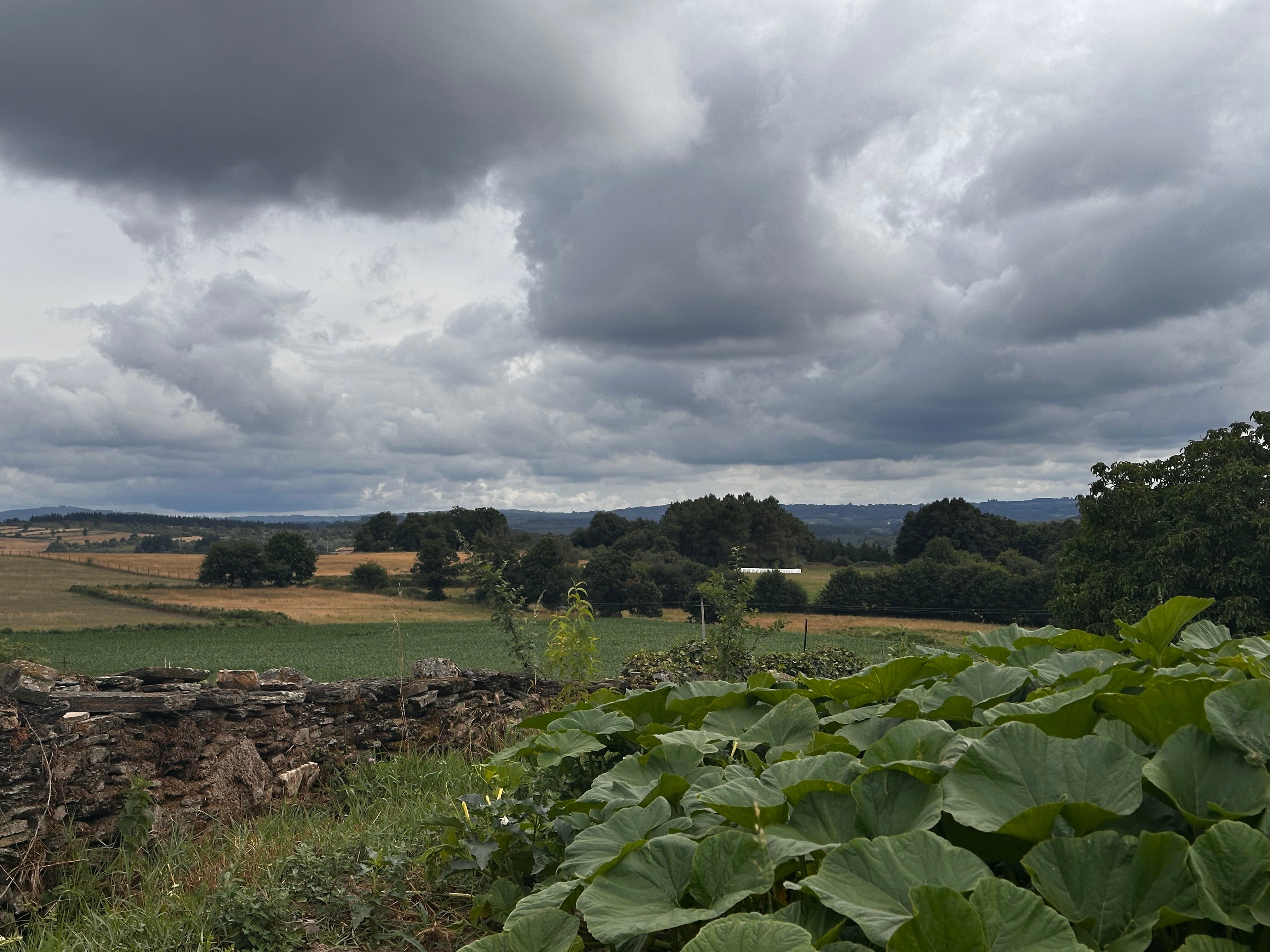
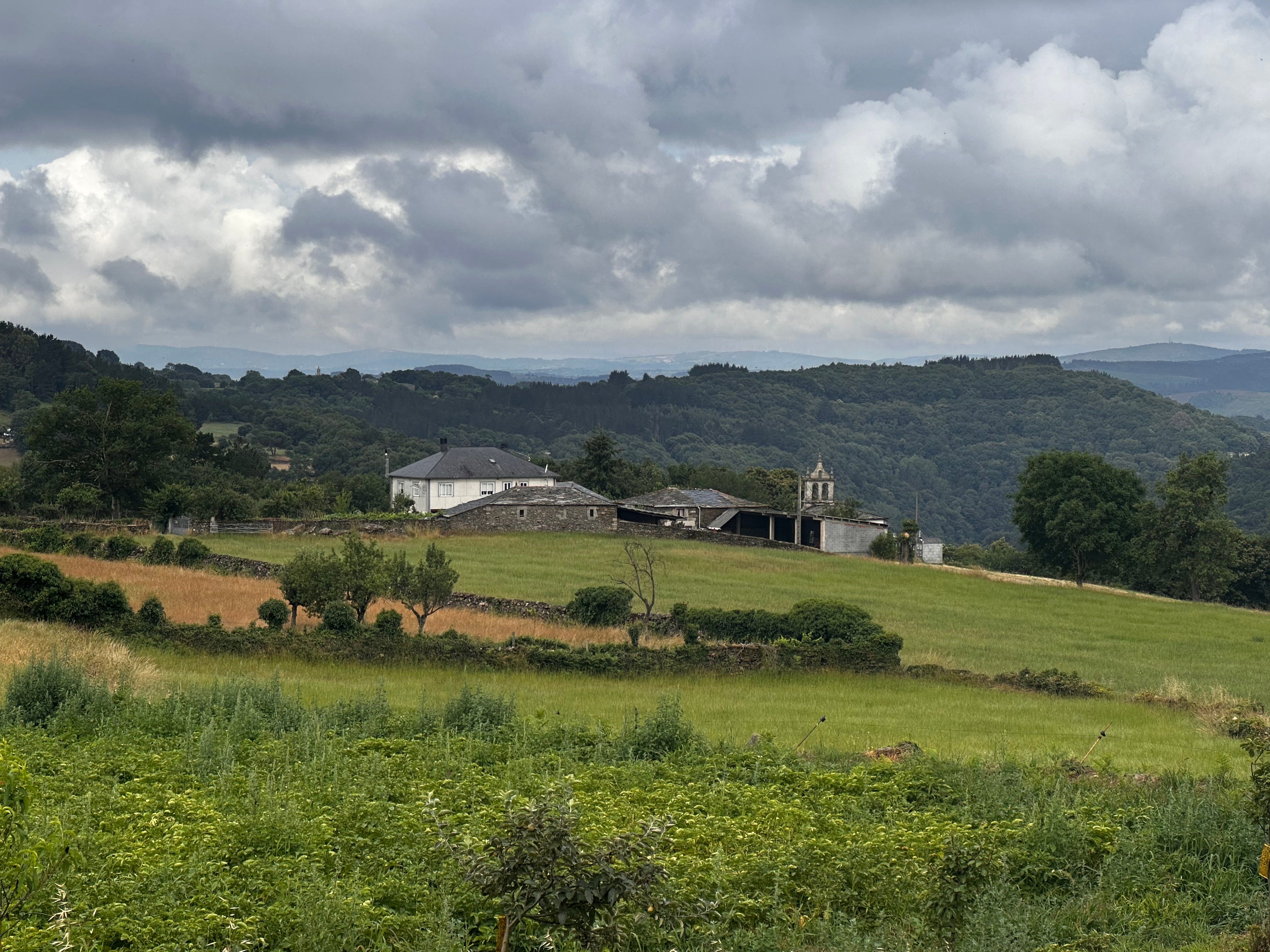
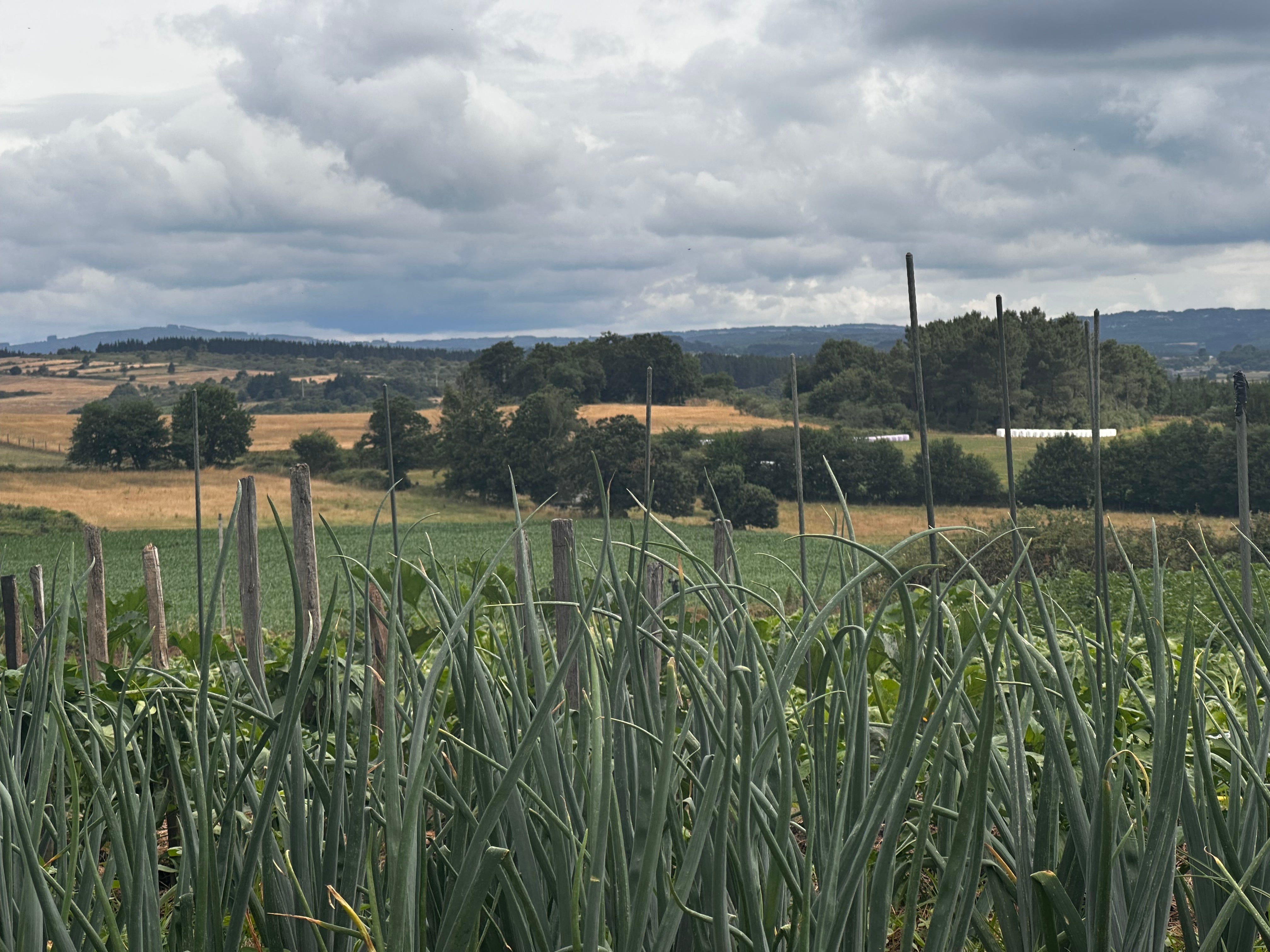
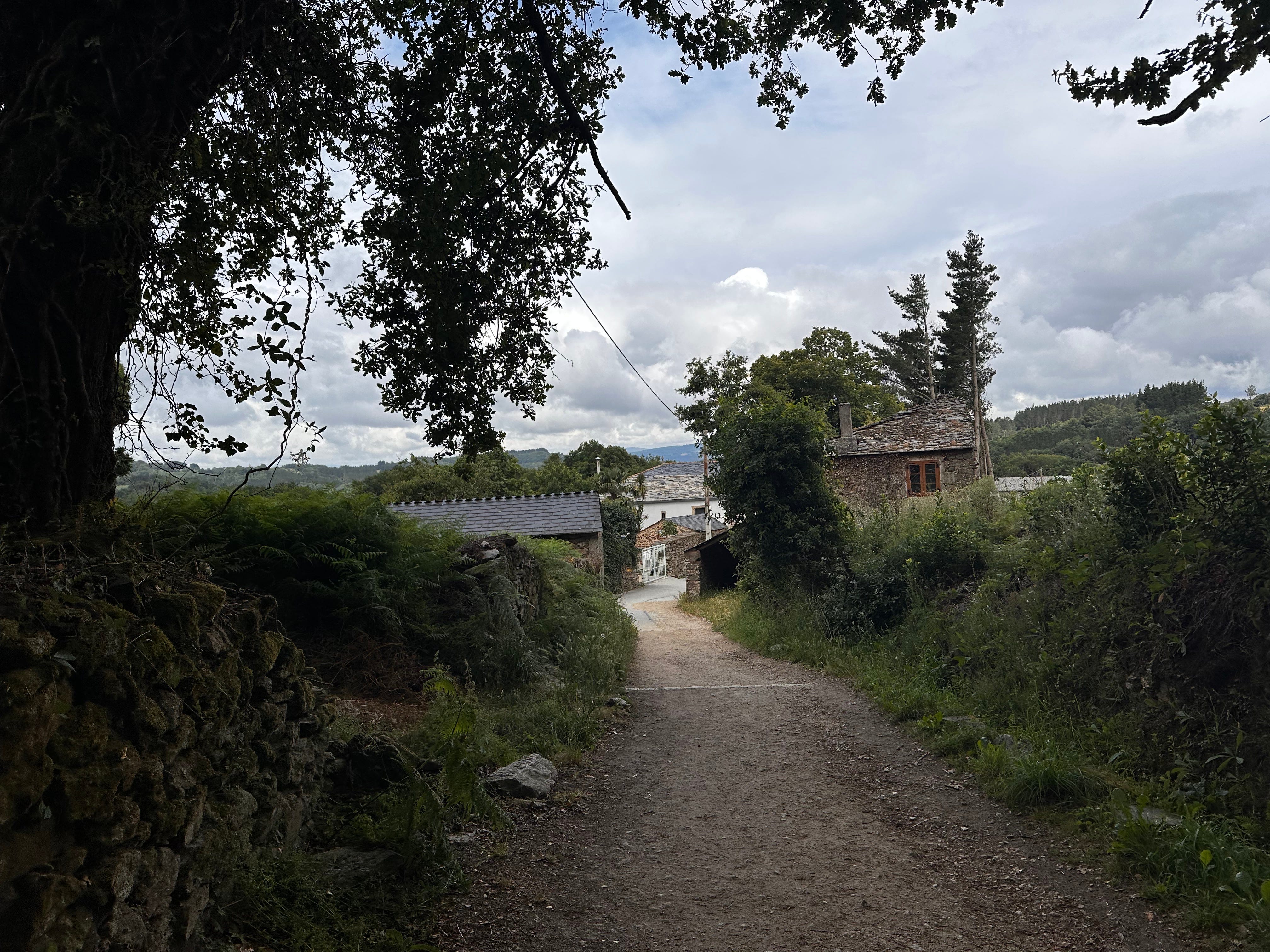
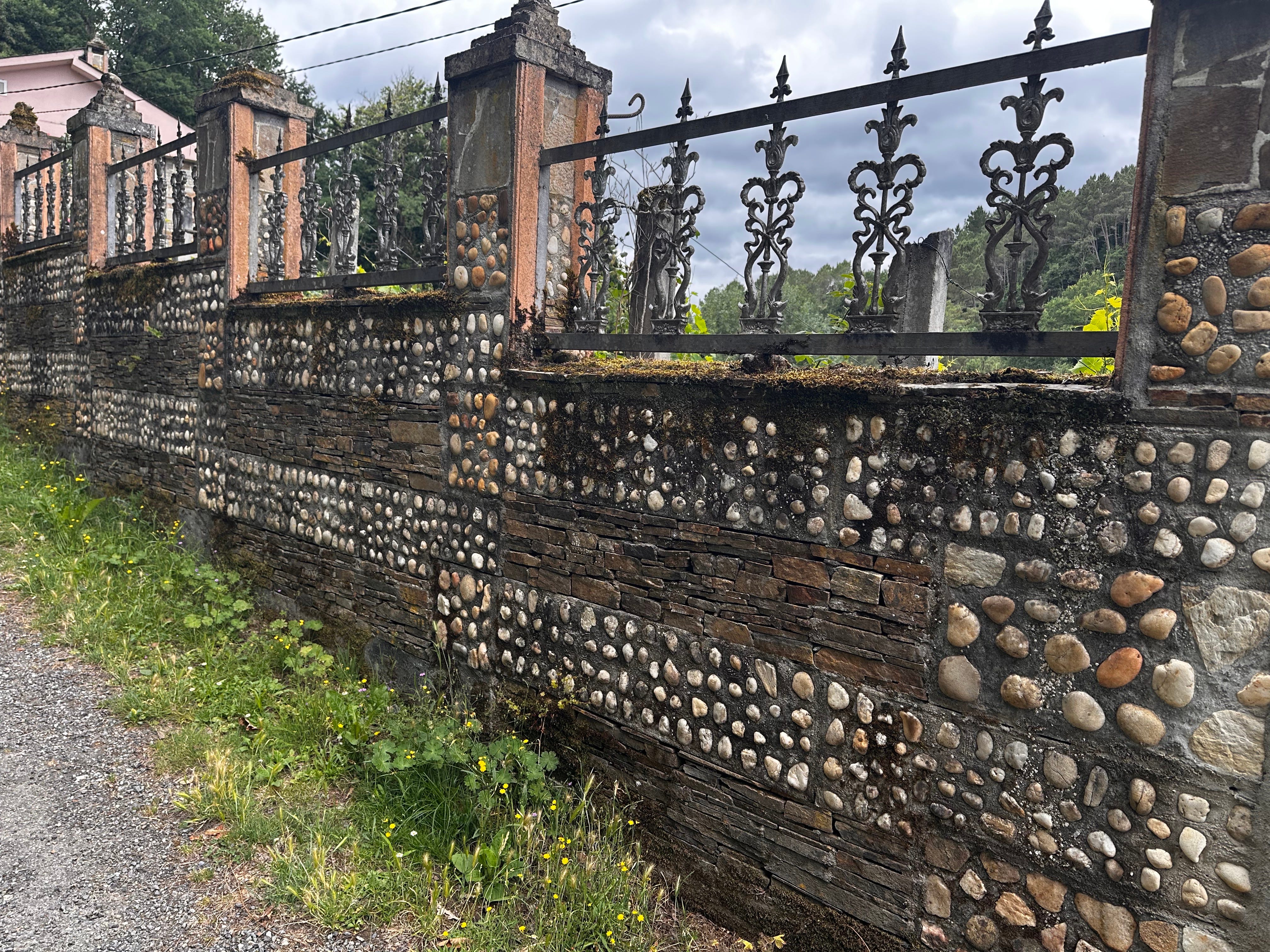
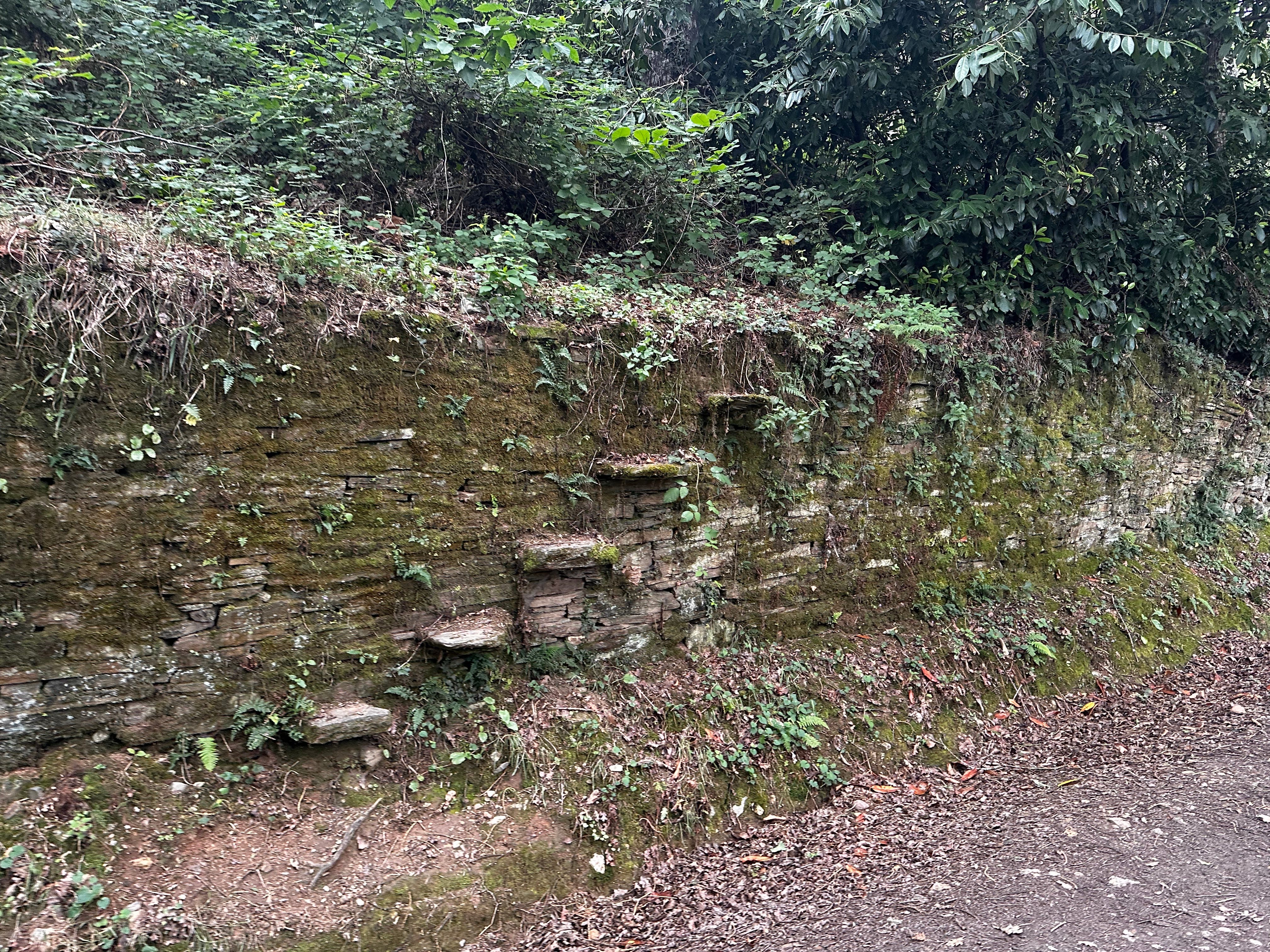
The country path before Portomarín ran between low dry-stone walls, the stones furred with moss, brambles spilling over the top with their last pale flowers. Beyond the walls the land fell away in green fields and rose again to wooded ridges, and on the far line a row of wind turbines turned. The sky held grey most of the morning, the Galician default, and the light under it was soft and even.
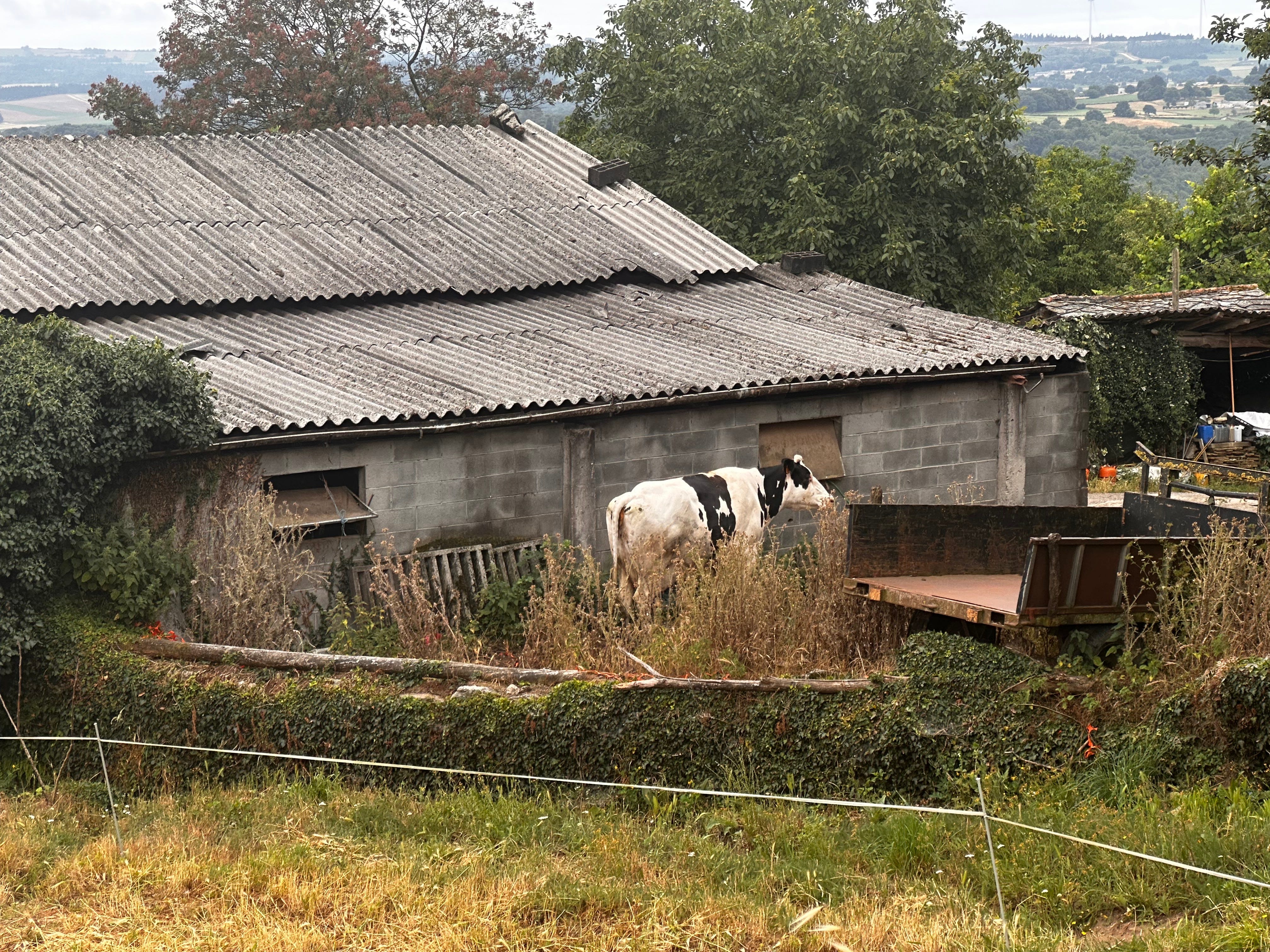
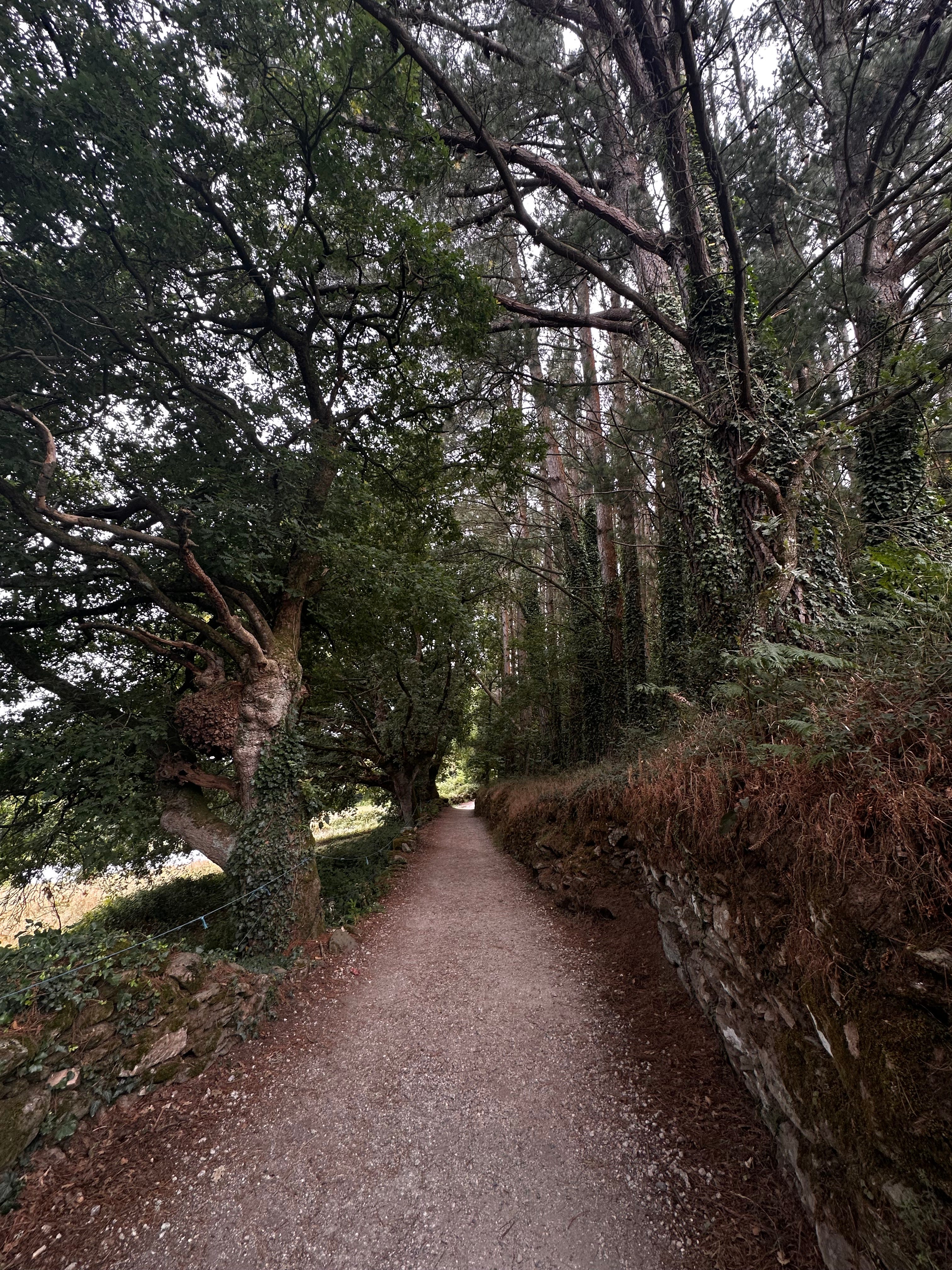
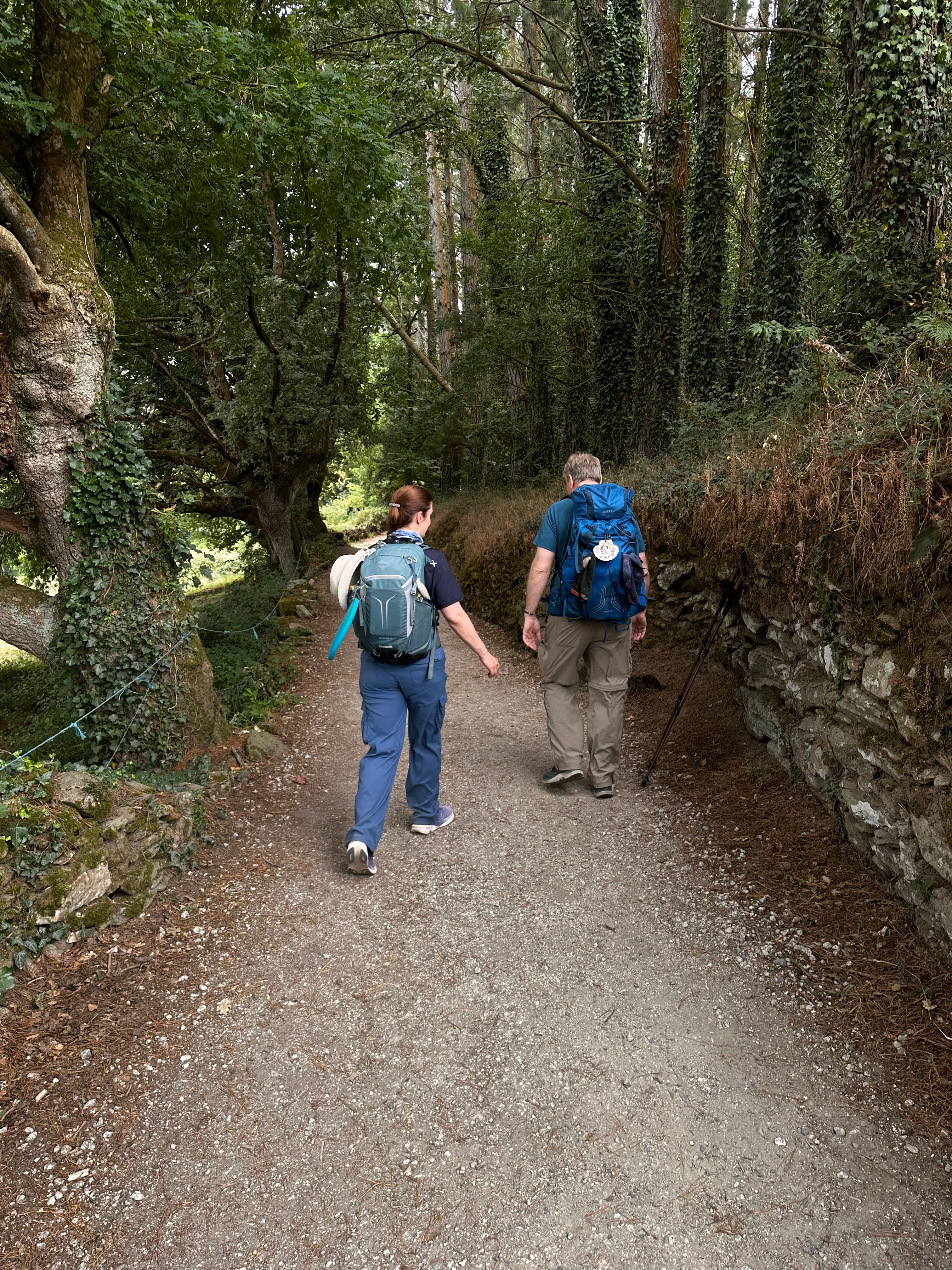
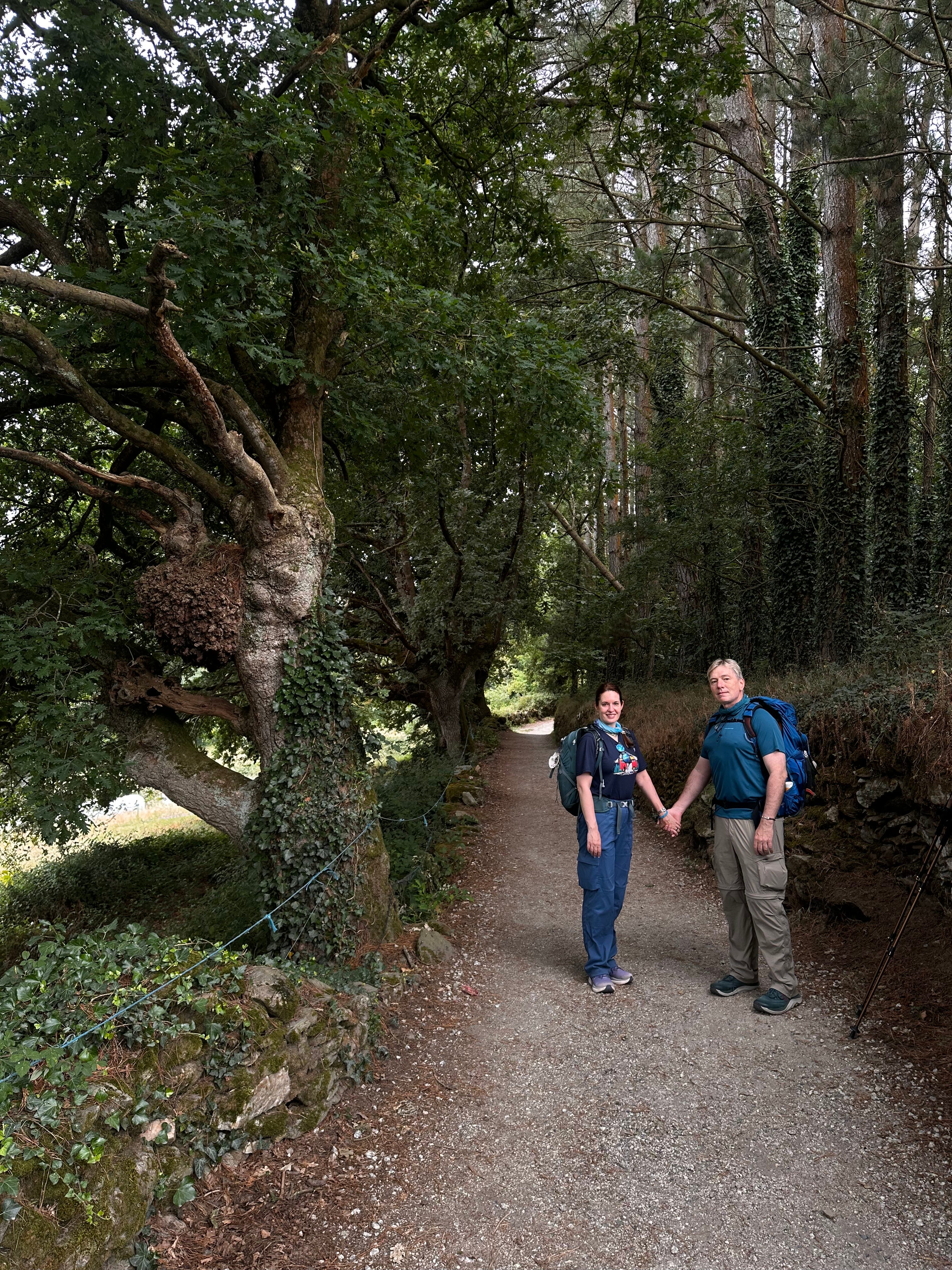
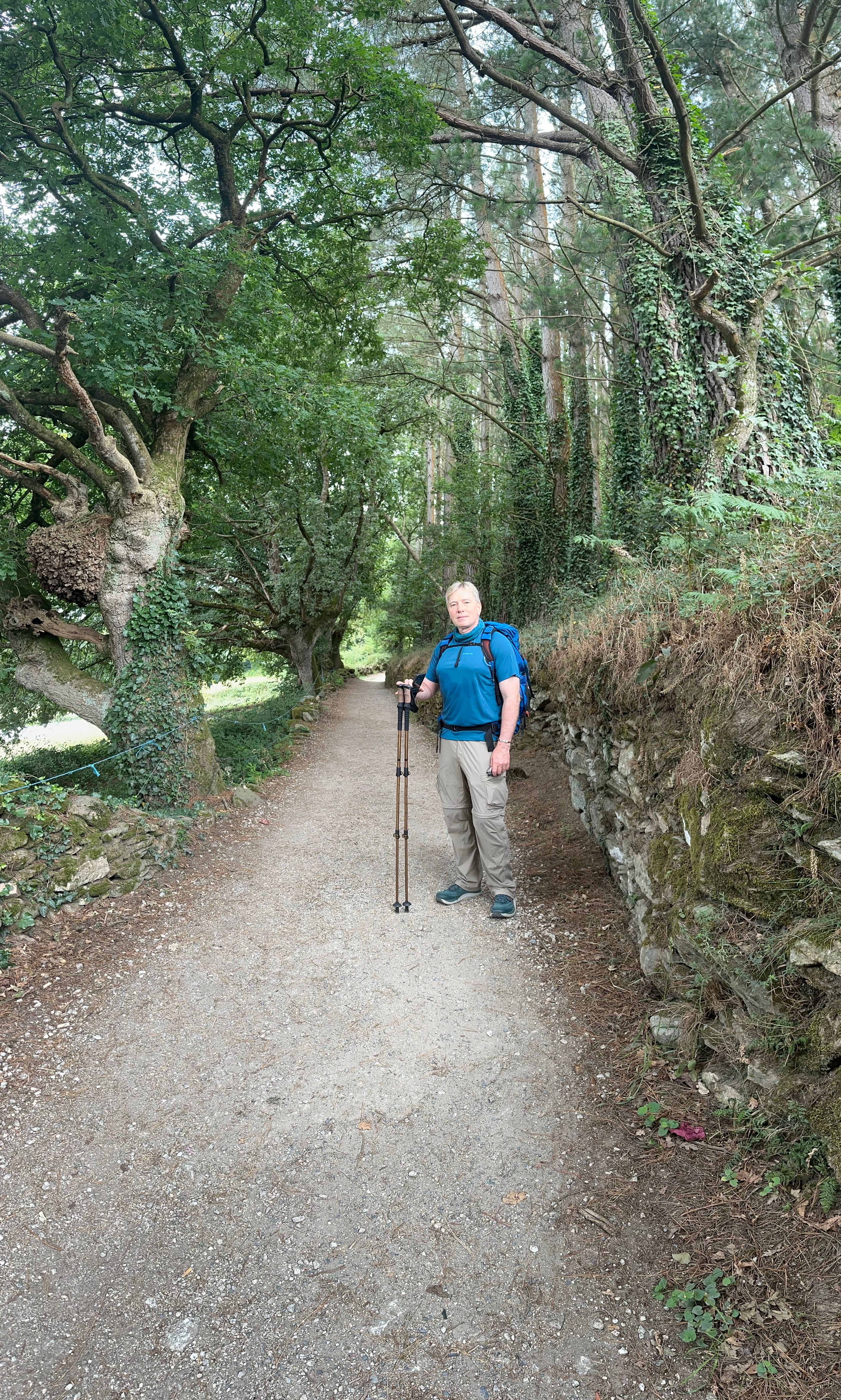
Then the track went into the trees, oak and chestnut and tall pine, the branches closing overhead until the path turned cool and dim. Ivy climbed the old trunks, some of them swollen and burled with age. The walls ran on beside us the whole way, and for long stretches there was nothing to hear but gravel underfoot and, somewhere out of sight, cattle.
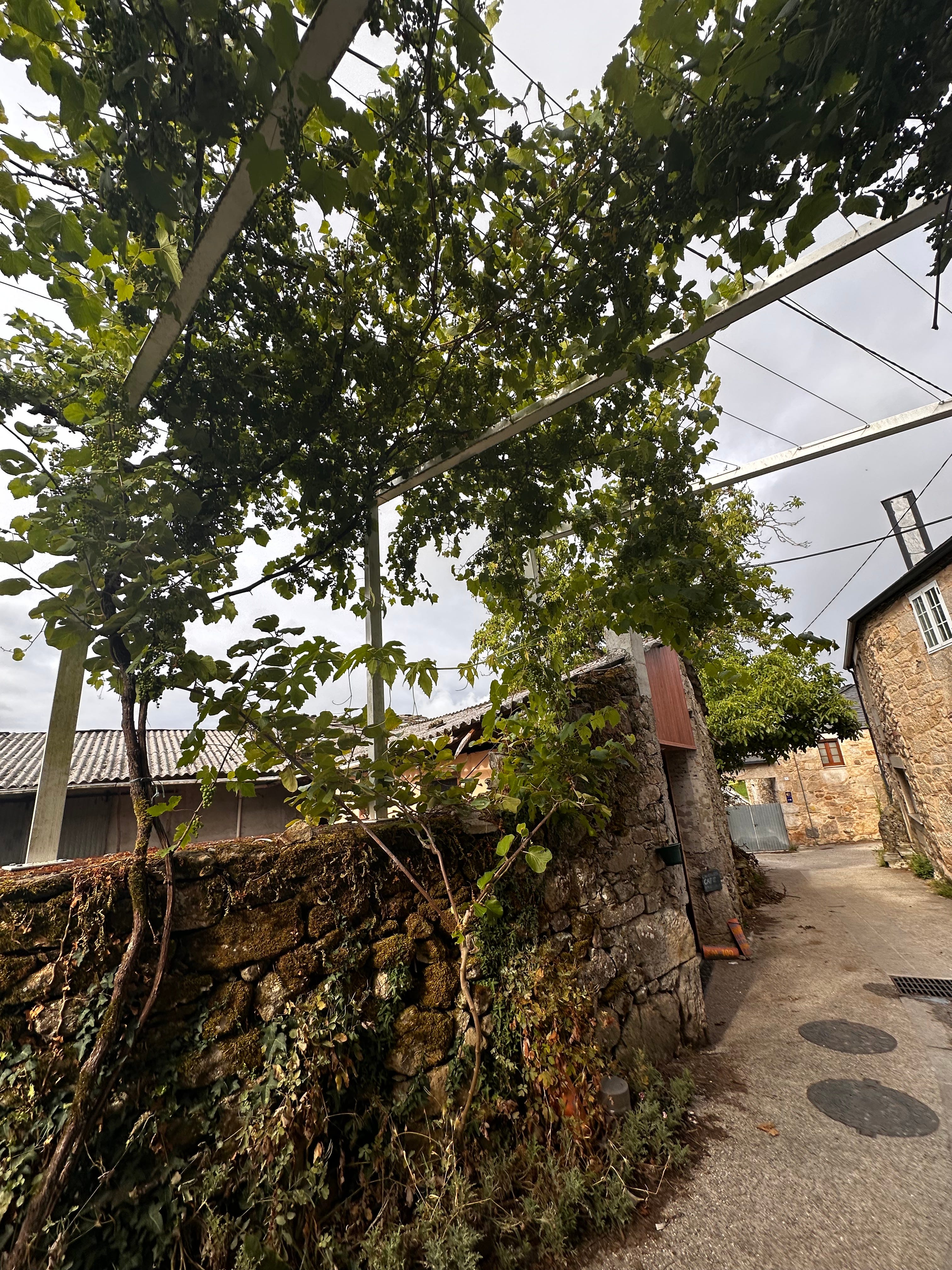
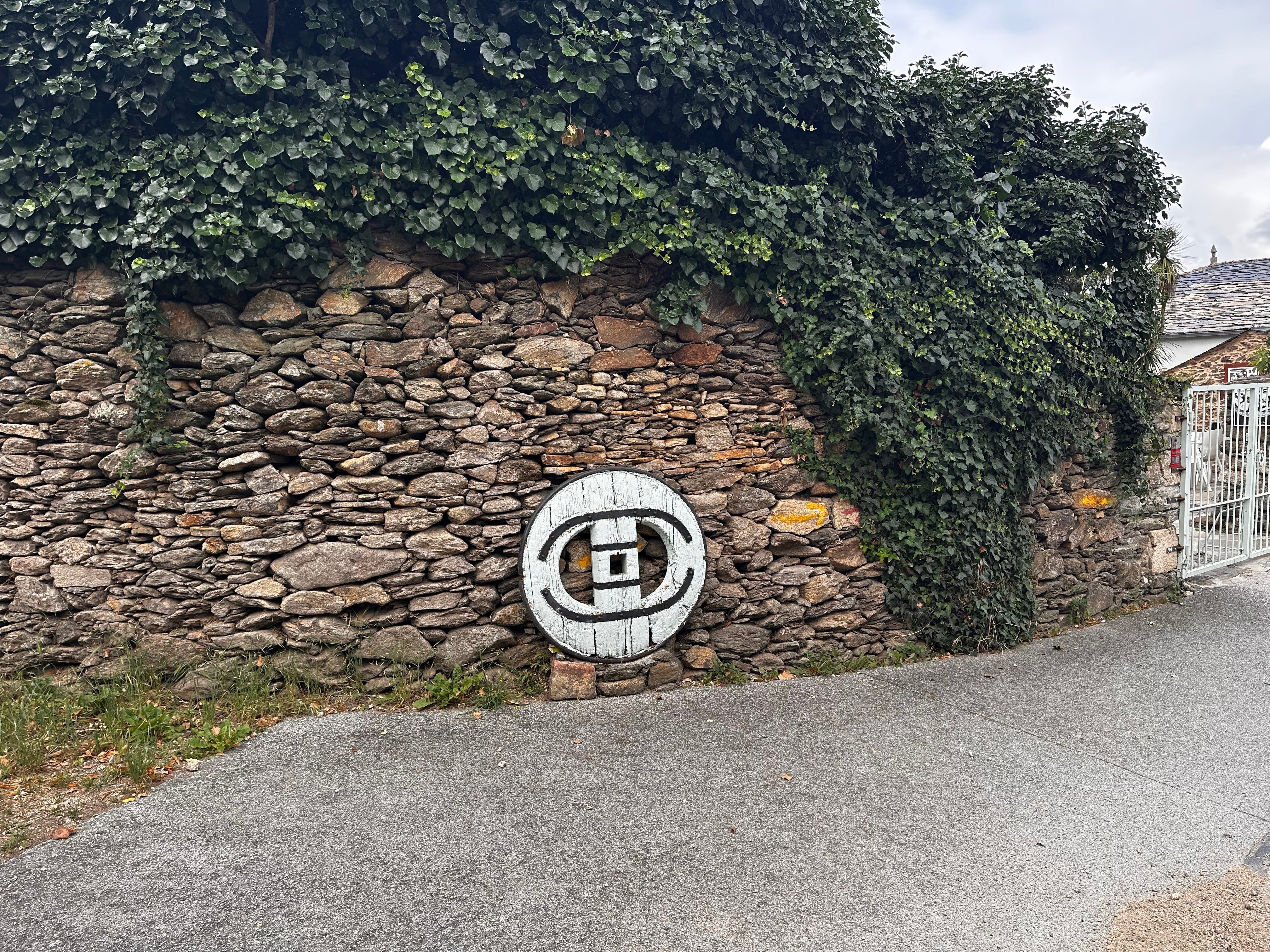
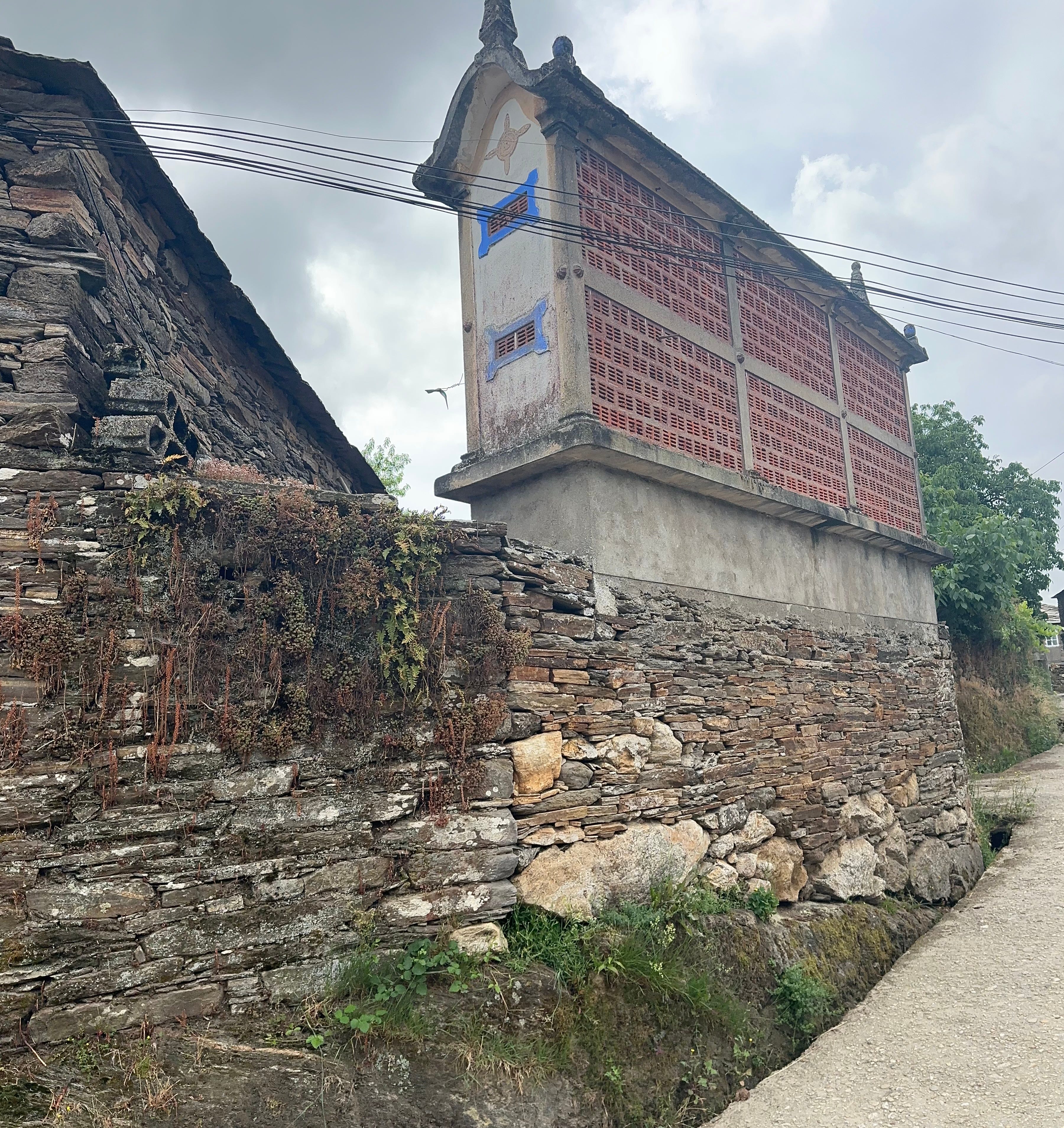
The villages had hórreos, the raised granaries of Galicia. Each is a long narrow box of stone or timber set up on legs, the walls slotted for air, the legs capped with flat stones a rat cannot climb over. A small cross tops one gable and a stone finial the other. They were built to keep grain and maize (corn) dry and off the ground, and most of them still stood in the yards and along the walls, in use or close to it.
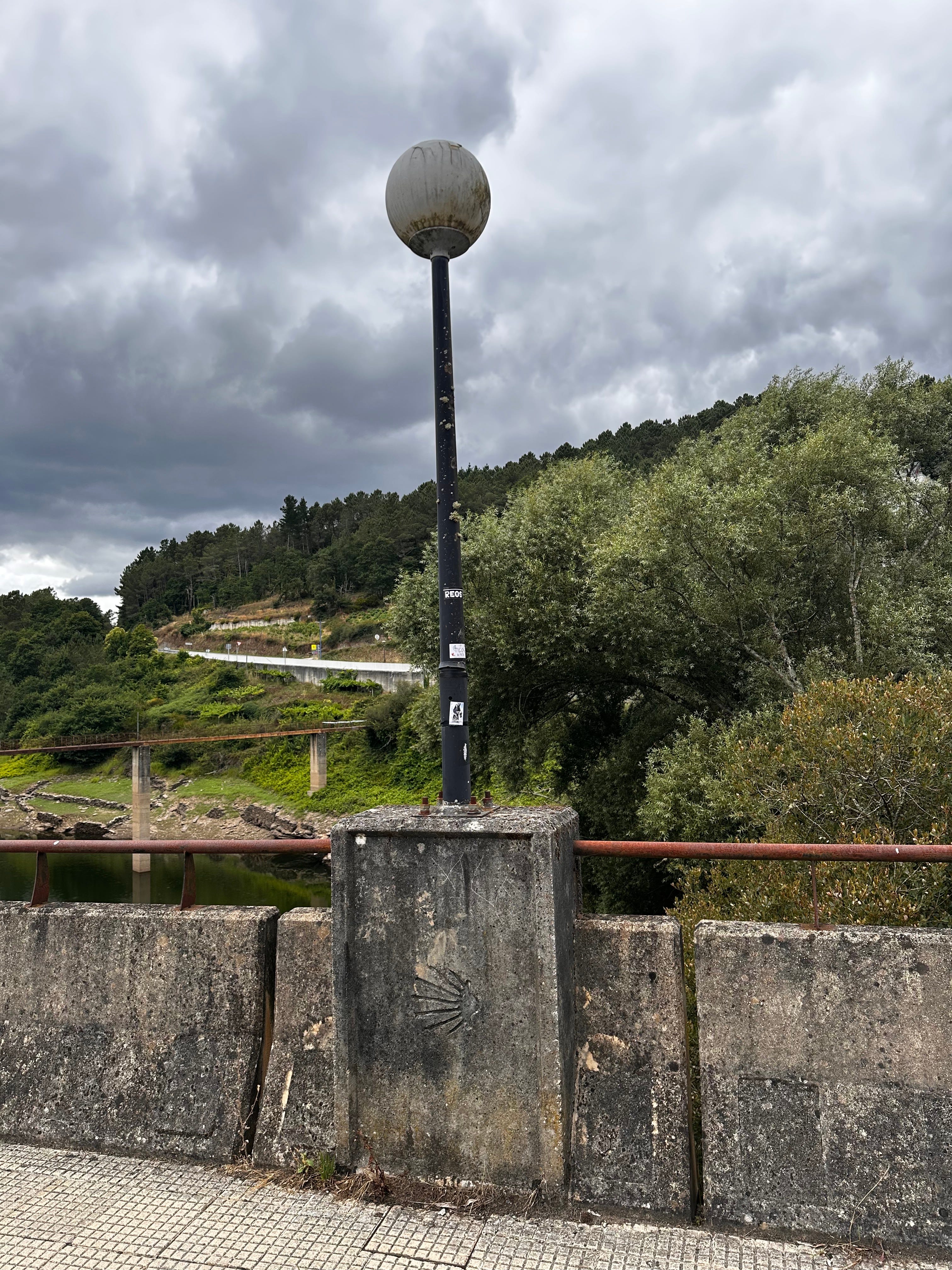
Portomarín came after a long bridge. The river there is not really a river. It is the Belesar reservoir, wide and flat and still, and the bridge runs straight across it. Under the water is the old town.They flooded it in the early sixties for the dam.
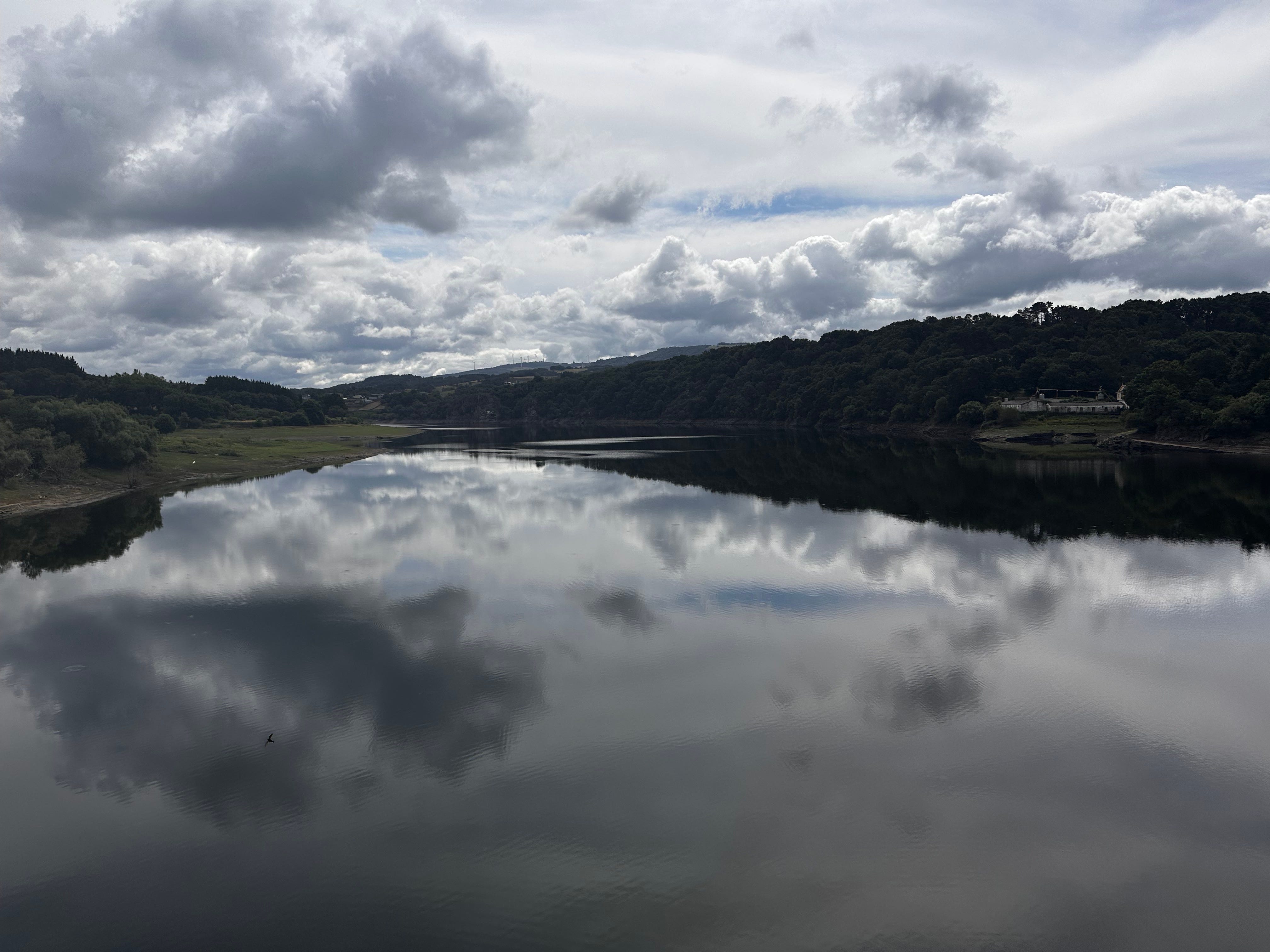
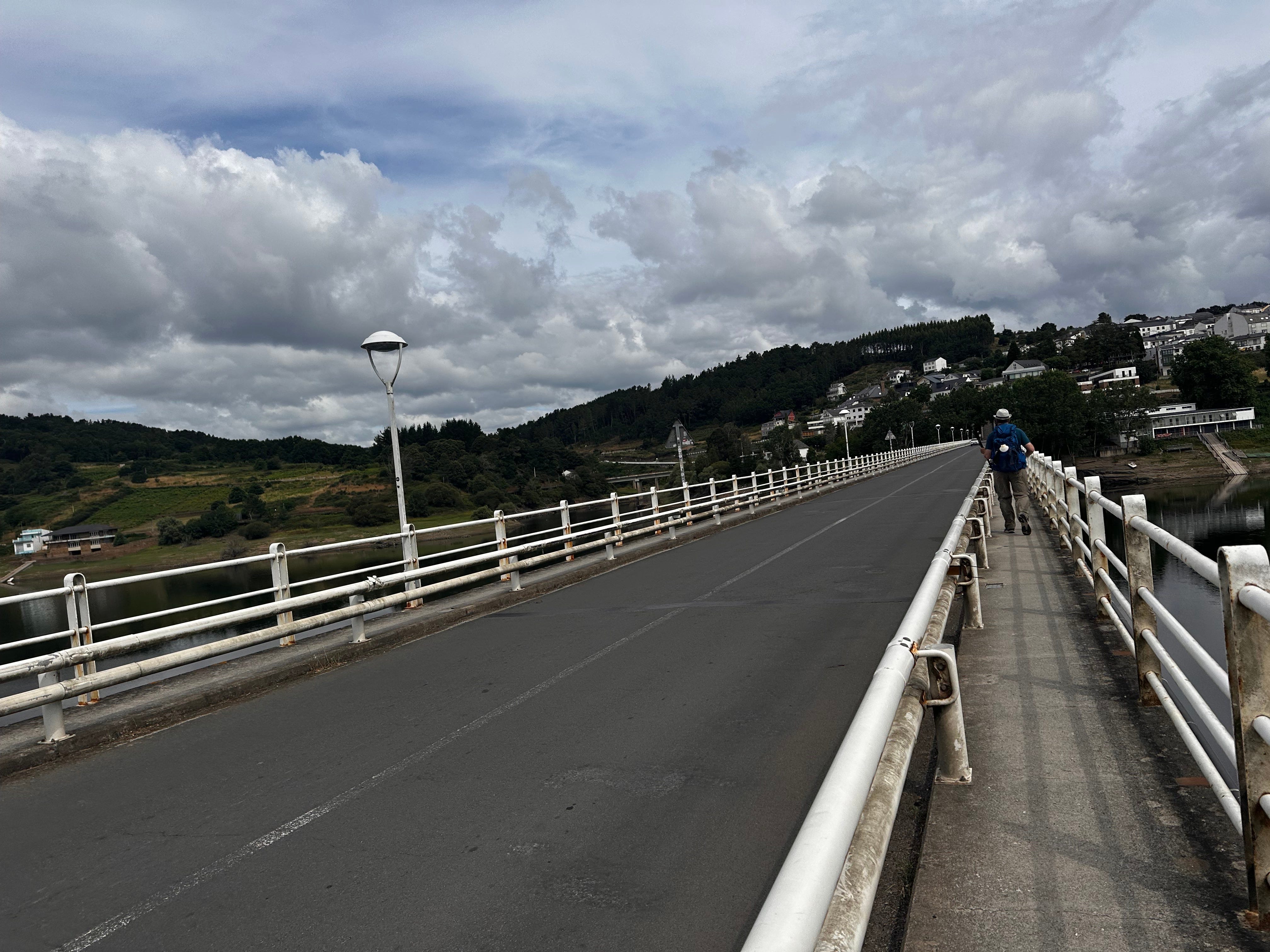
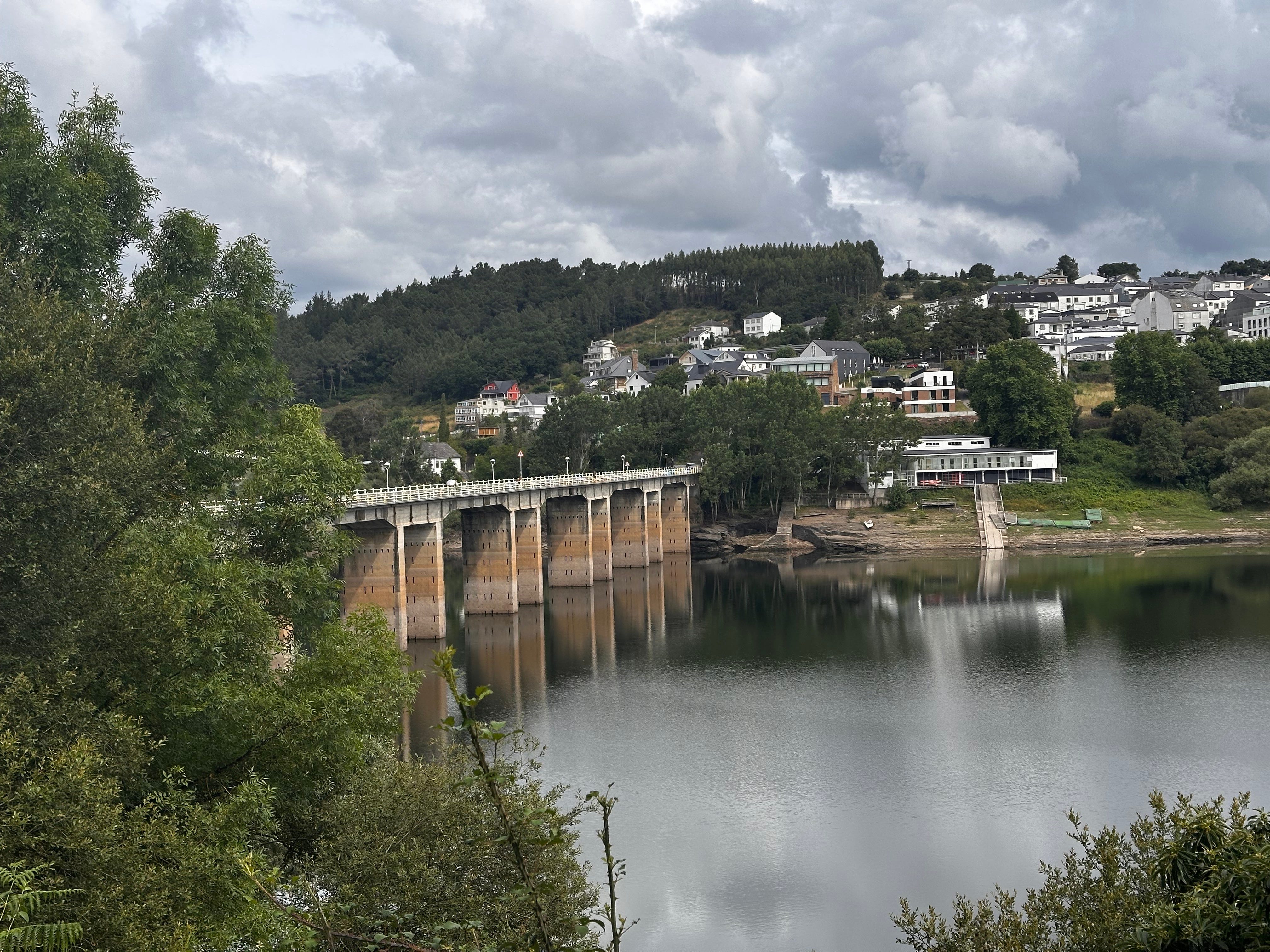
Before the water rose they took the church apart. Every stone was numbered and carried up the hill and set back in its place, so the fortress-church of San Nicolás stands now in a new location up a hill. When the reservoir drops in a dry summer, the old streets surface, and the arch of the medieval bridge.
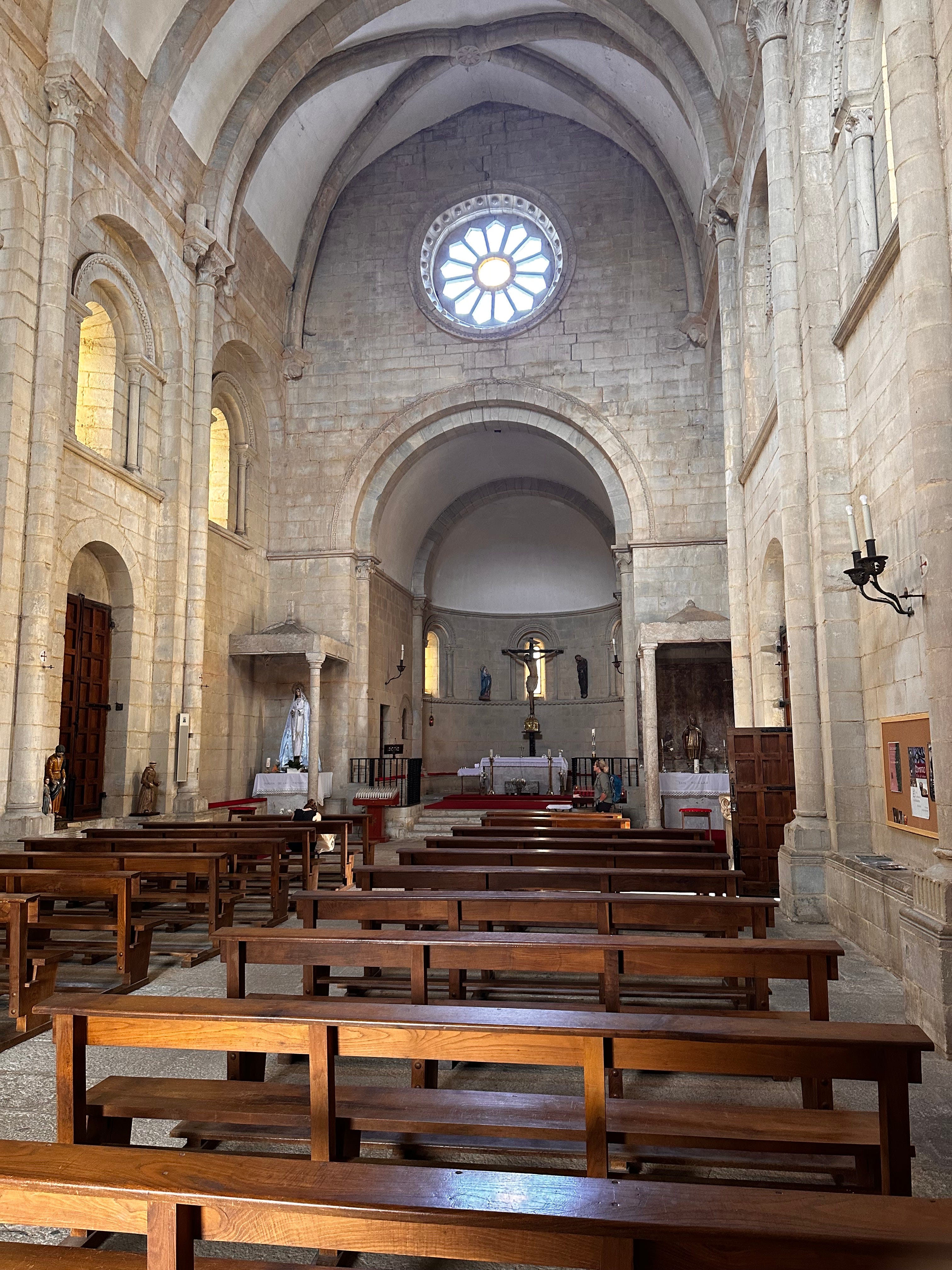
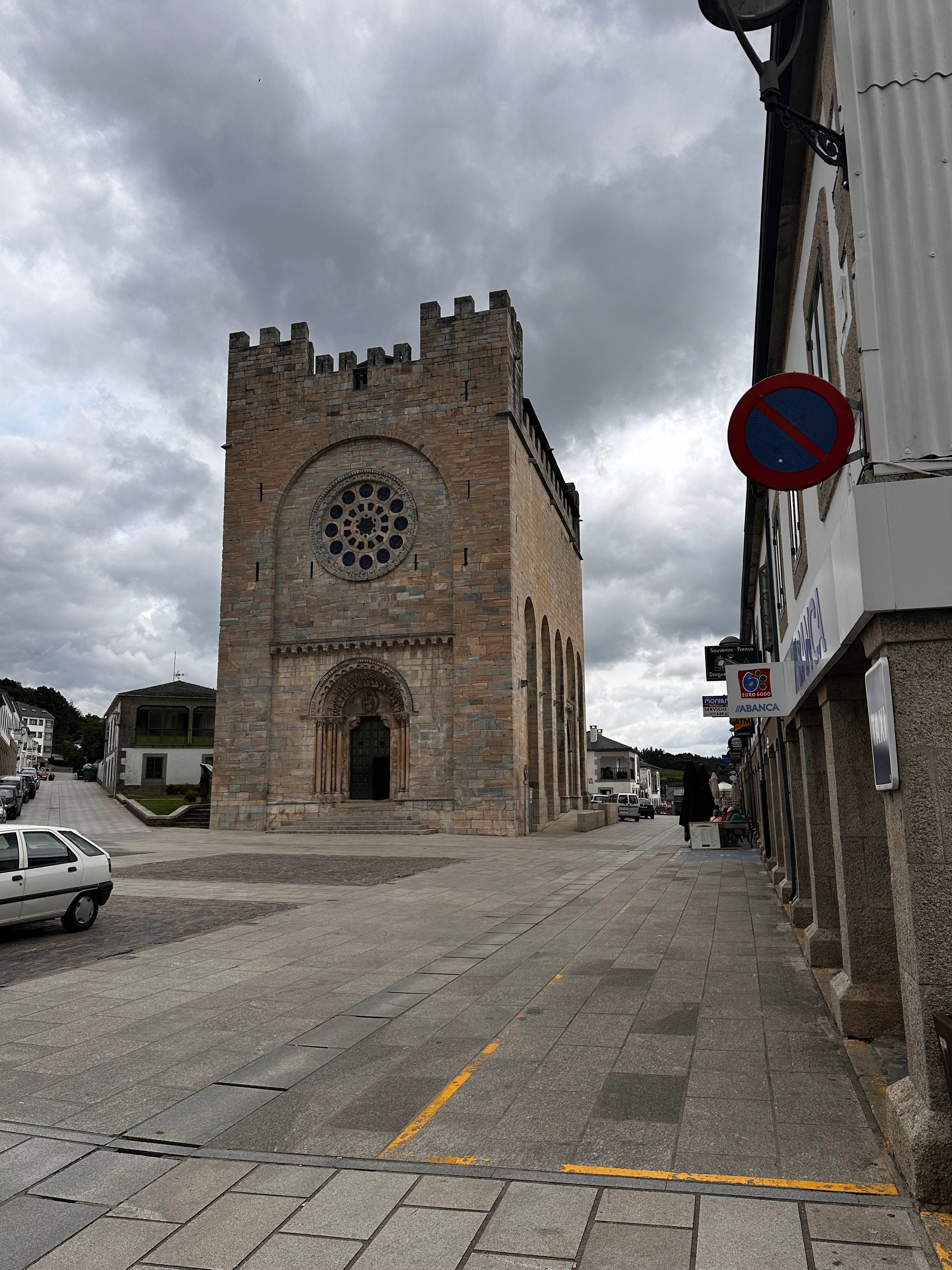
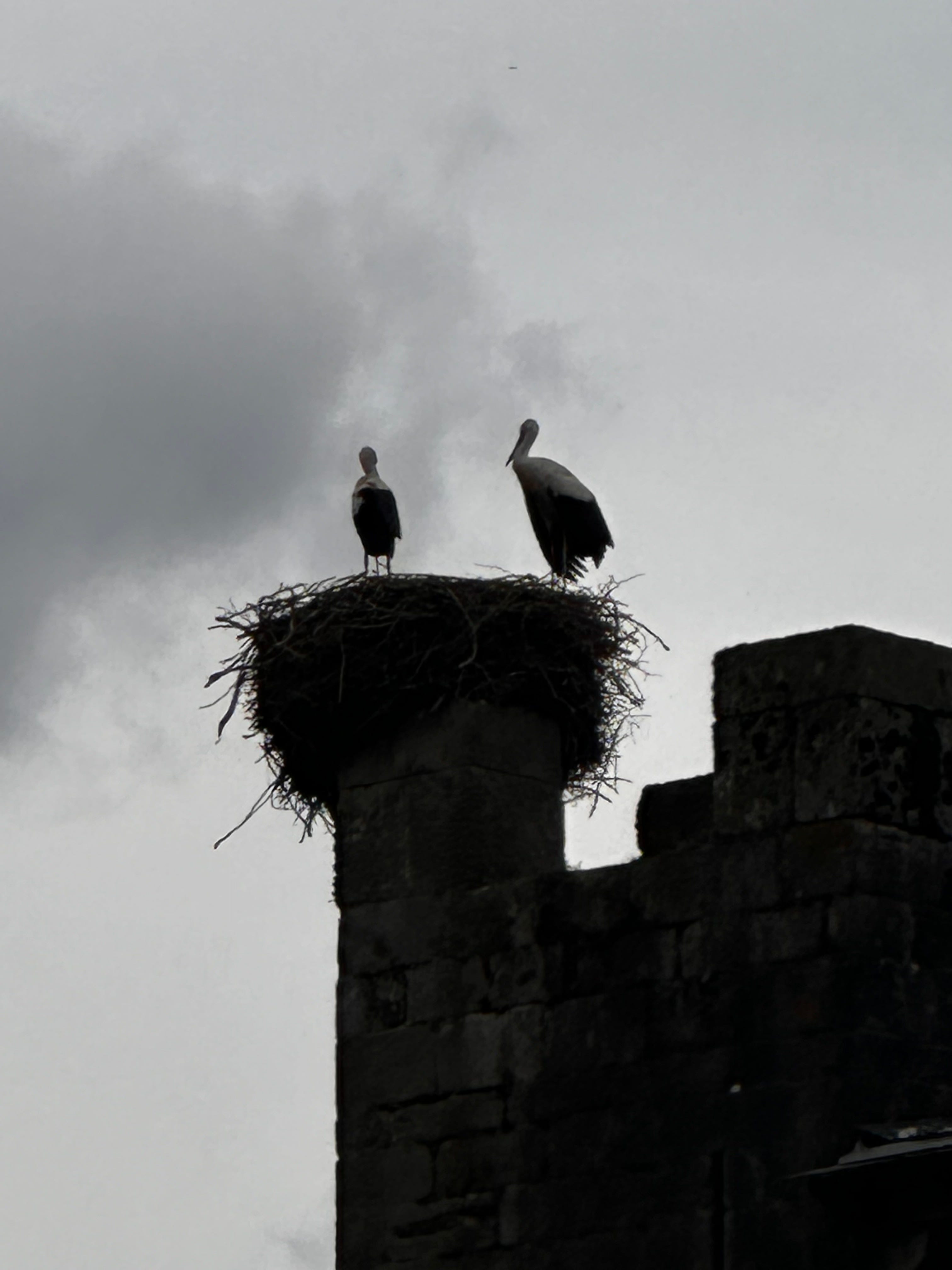
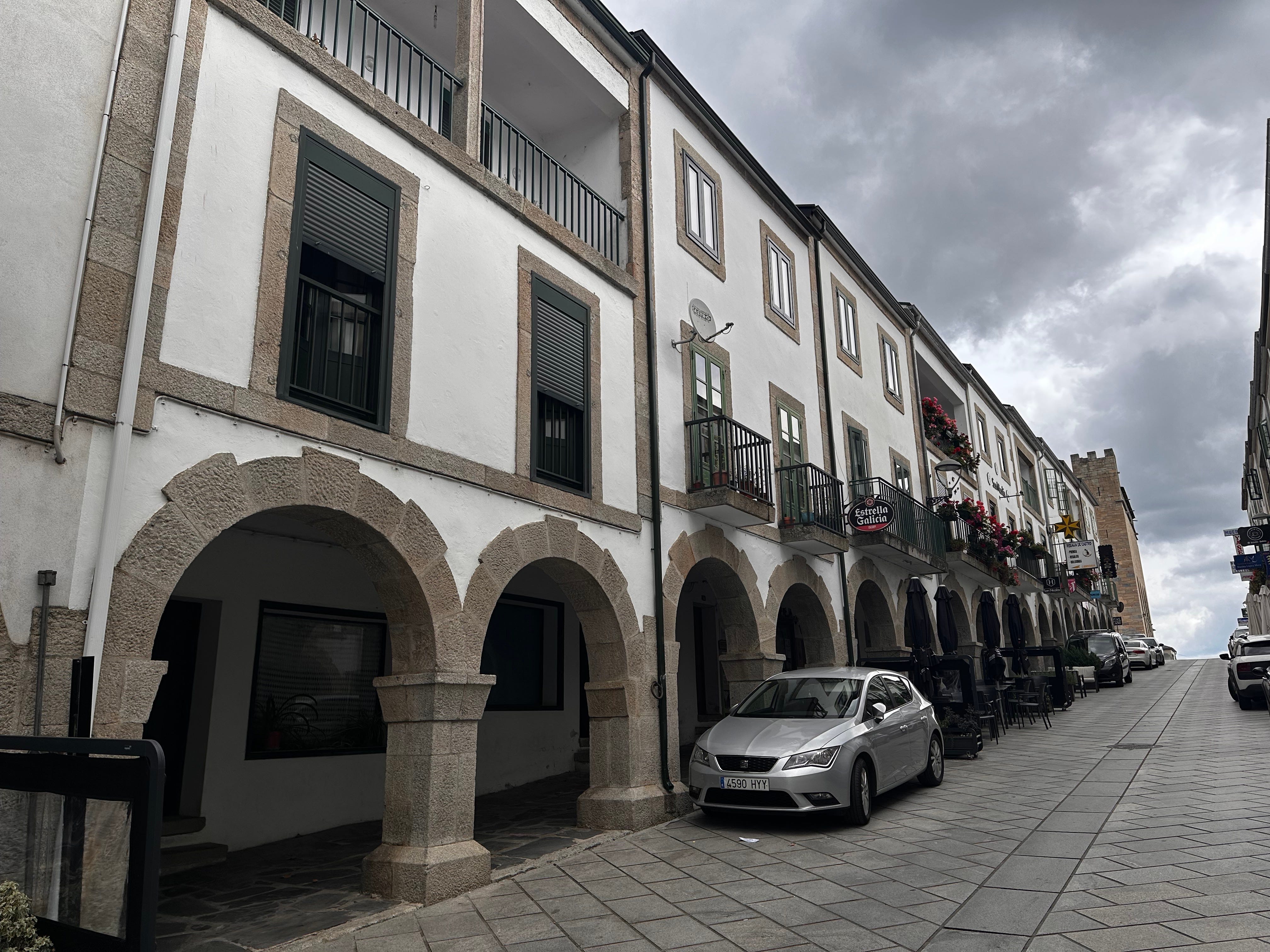
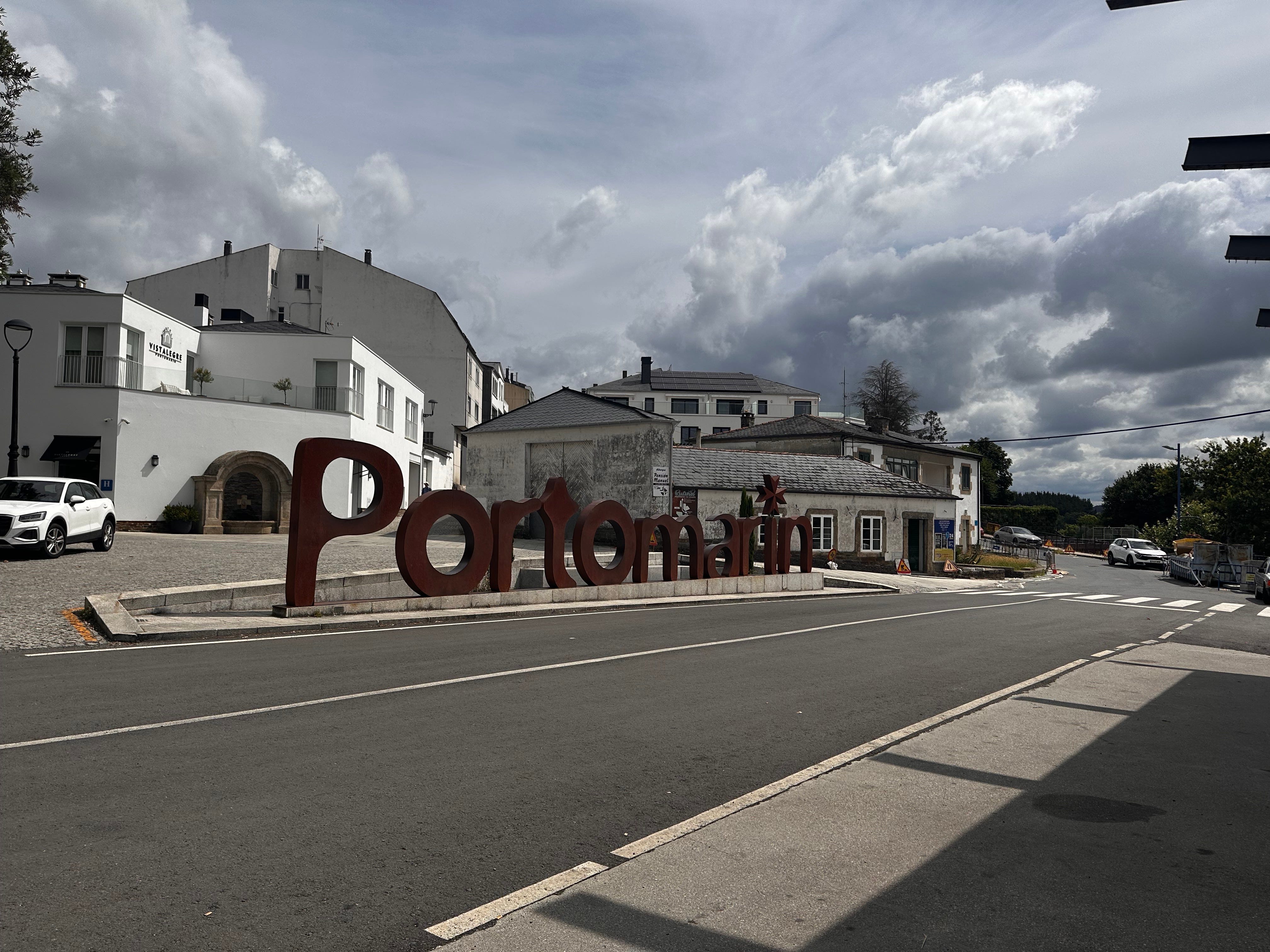
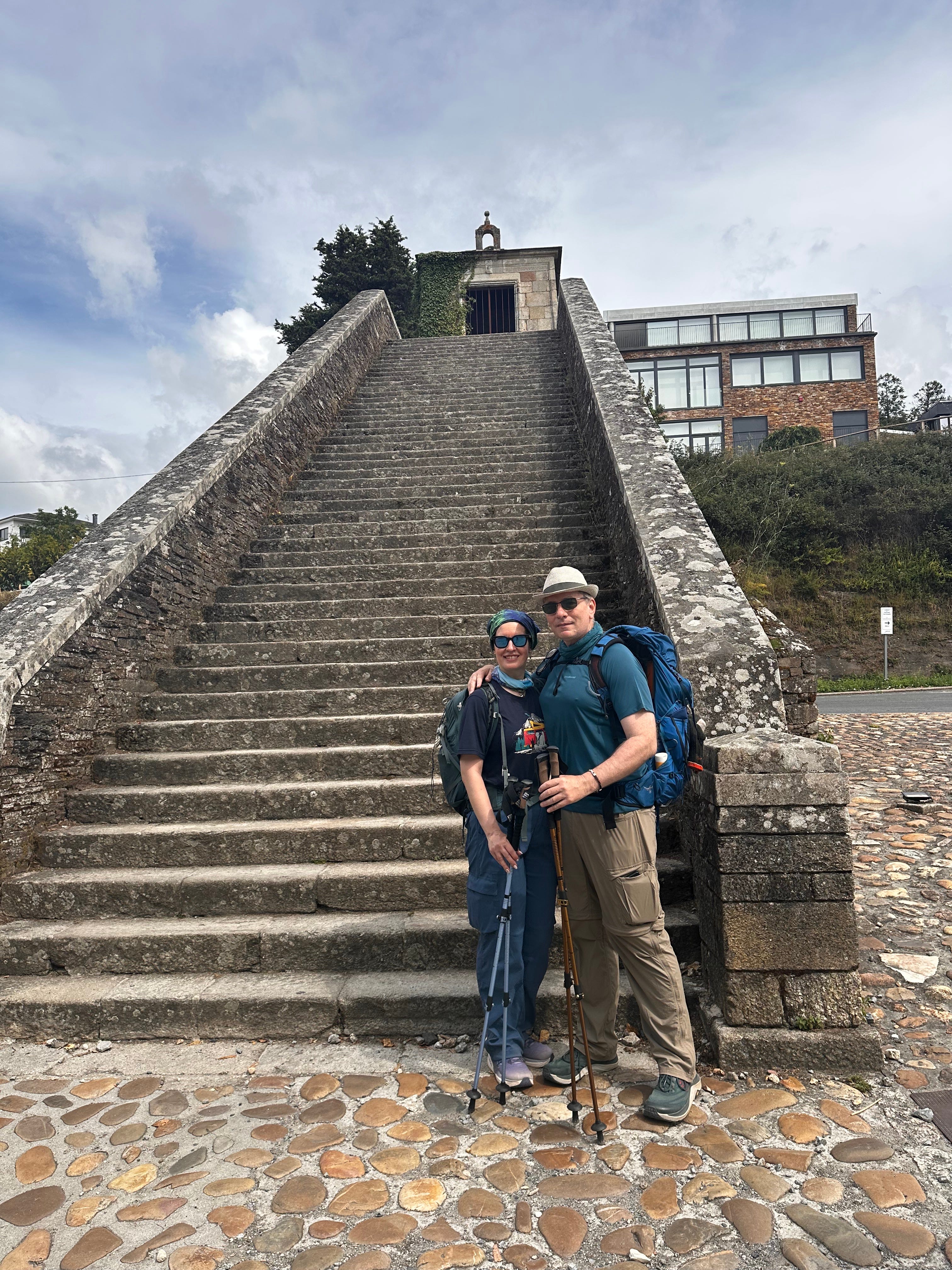
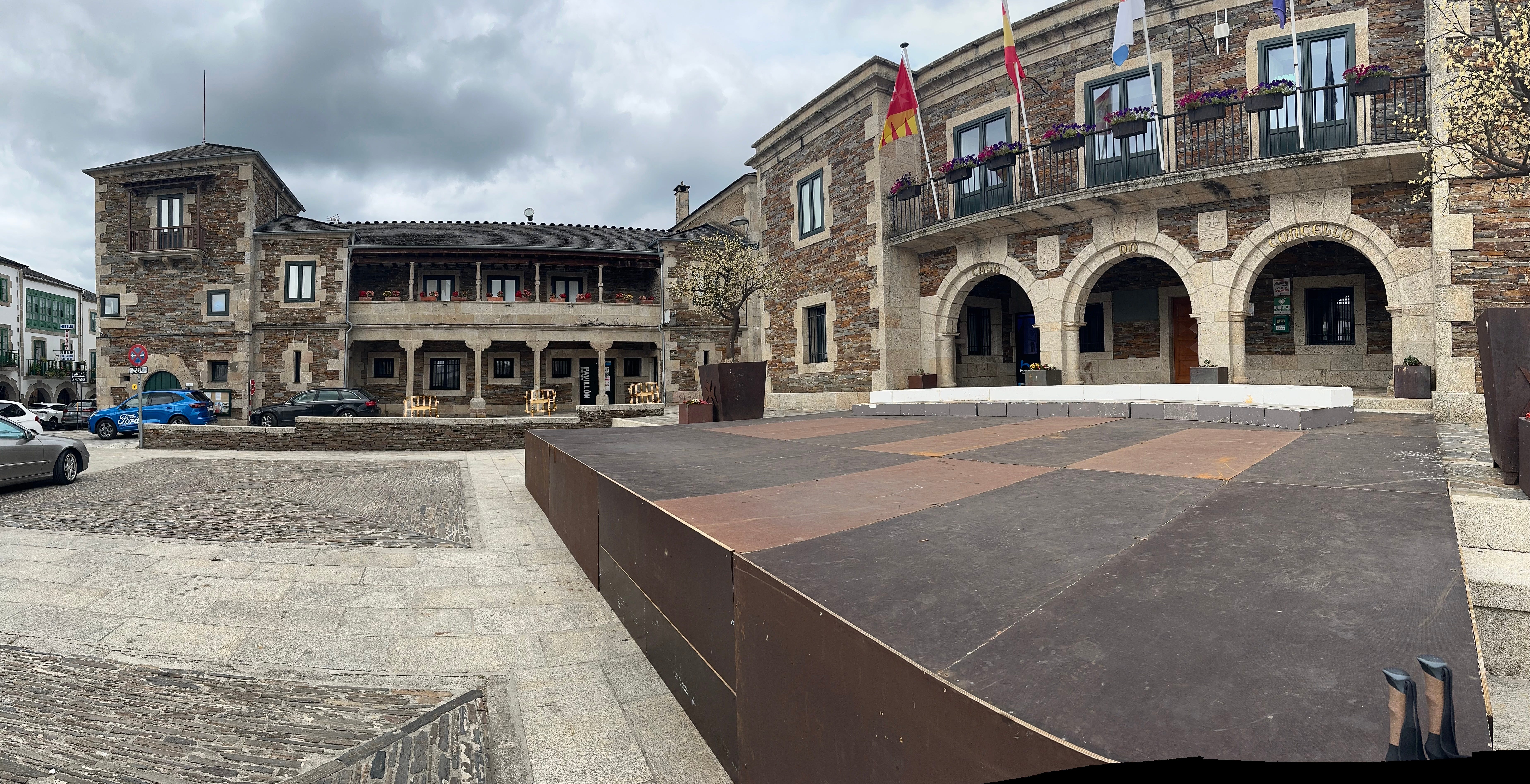
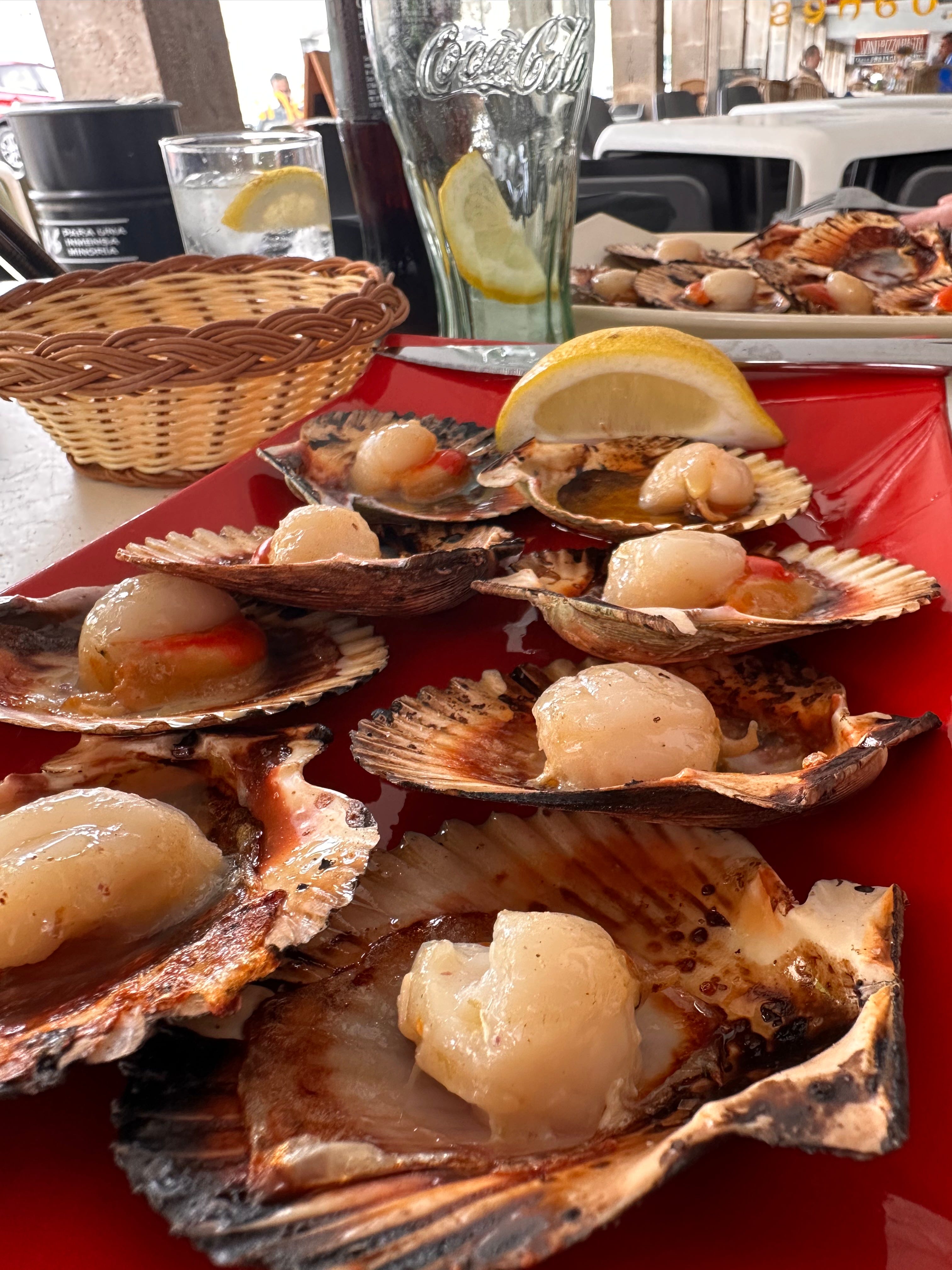
We stopped in the town for lunch. Set into the wall of St Nicholas church across from the table were stones with numbers painted on them, the system that moved the church. The whole old town was apparently rebuilt this way, piece by labeled piece. The numbers were still legible, a century and a half of stone turned into a packing list and then put back together.
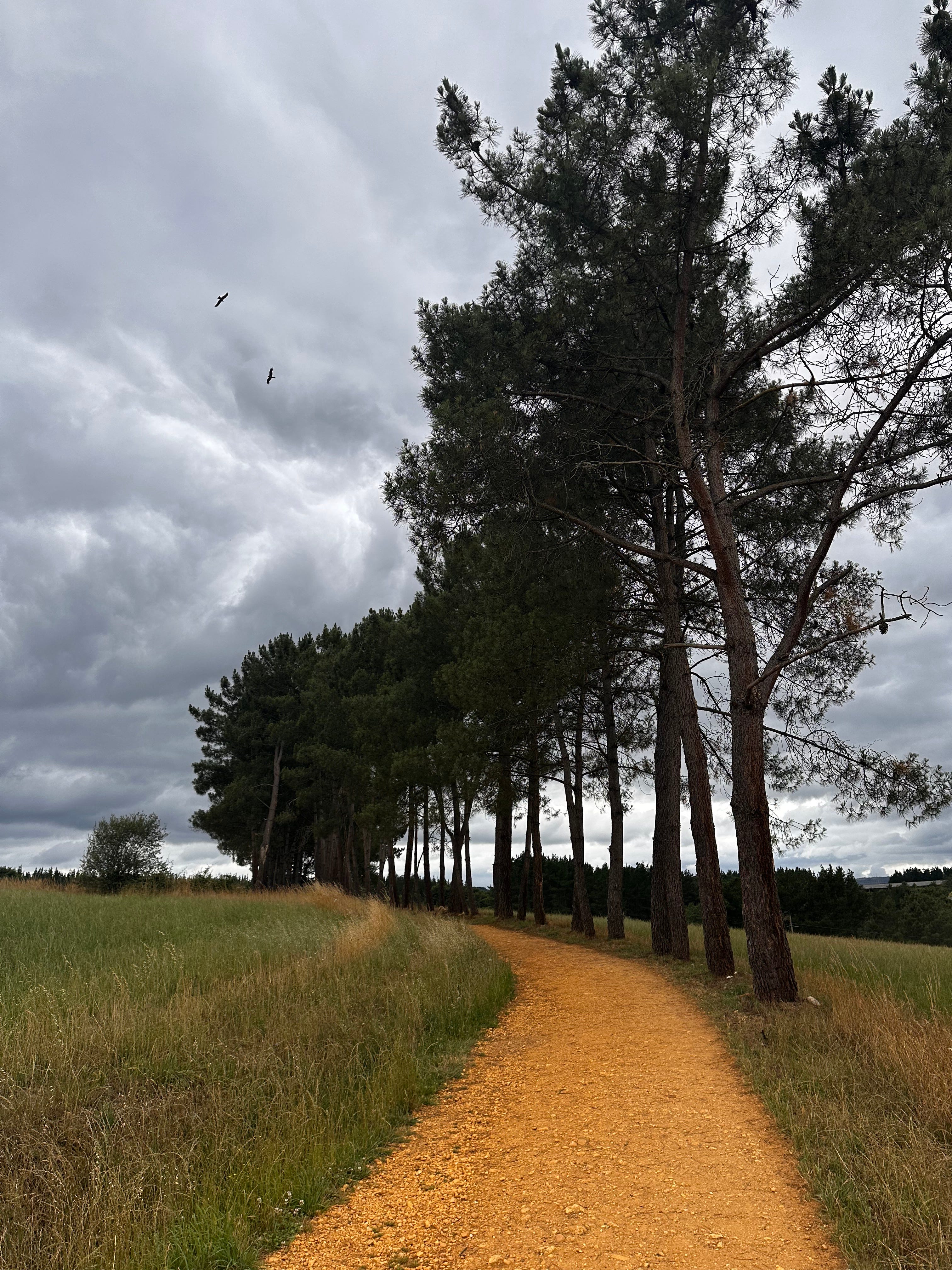
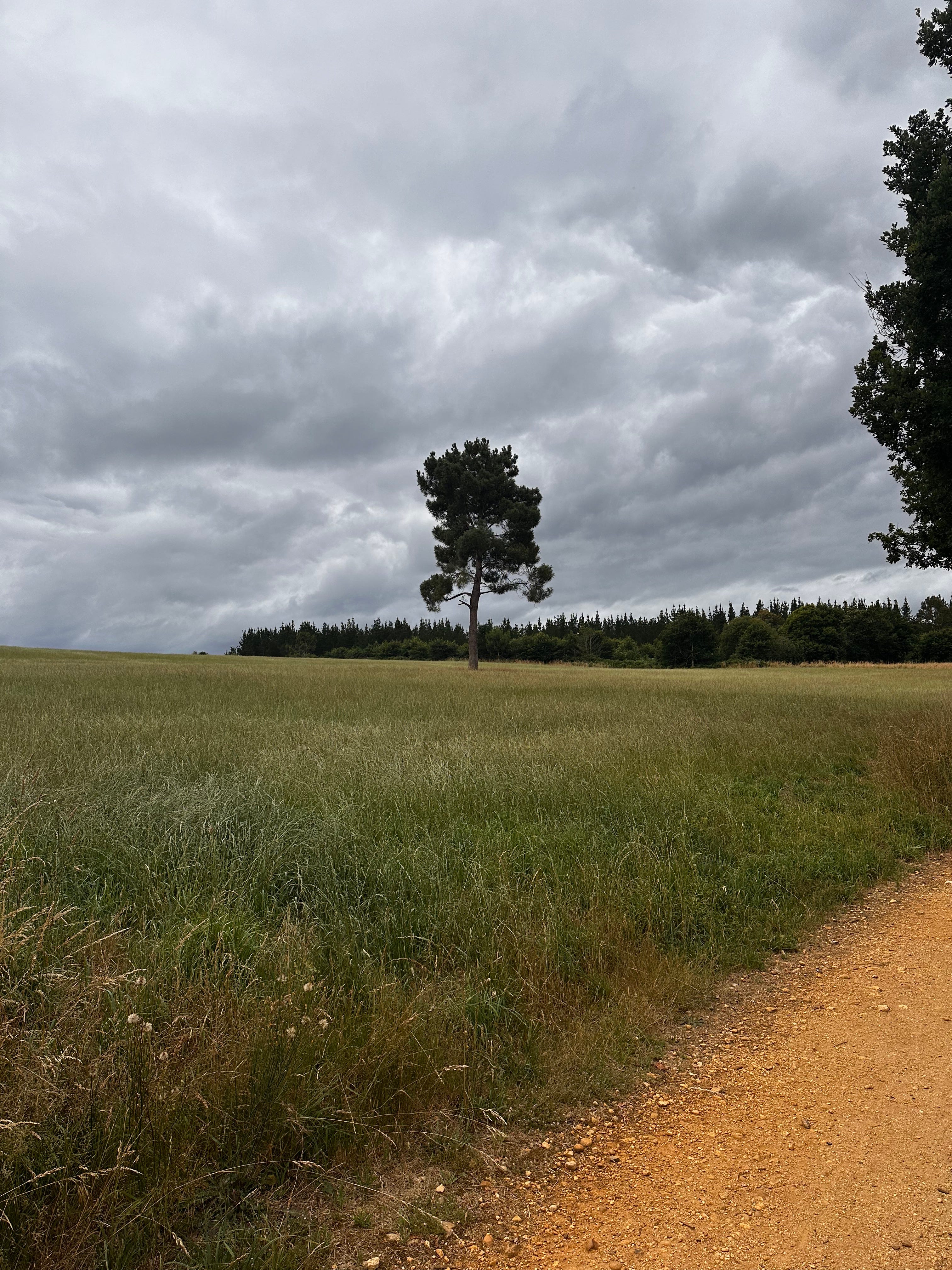
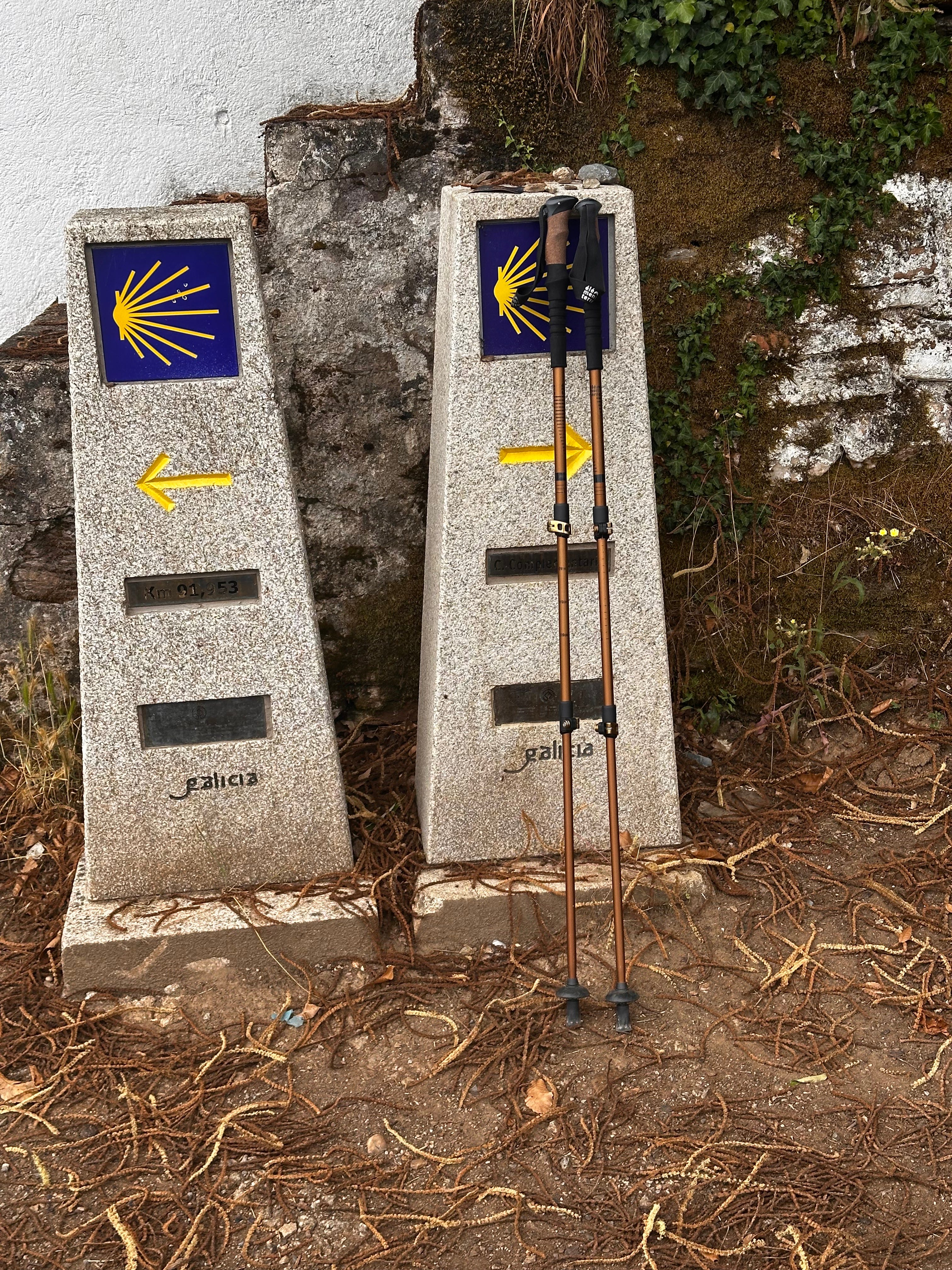
We climbed out toward Gonzar after, the markers still counting down, the town behind us standing dry above the one it used to be.
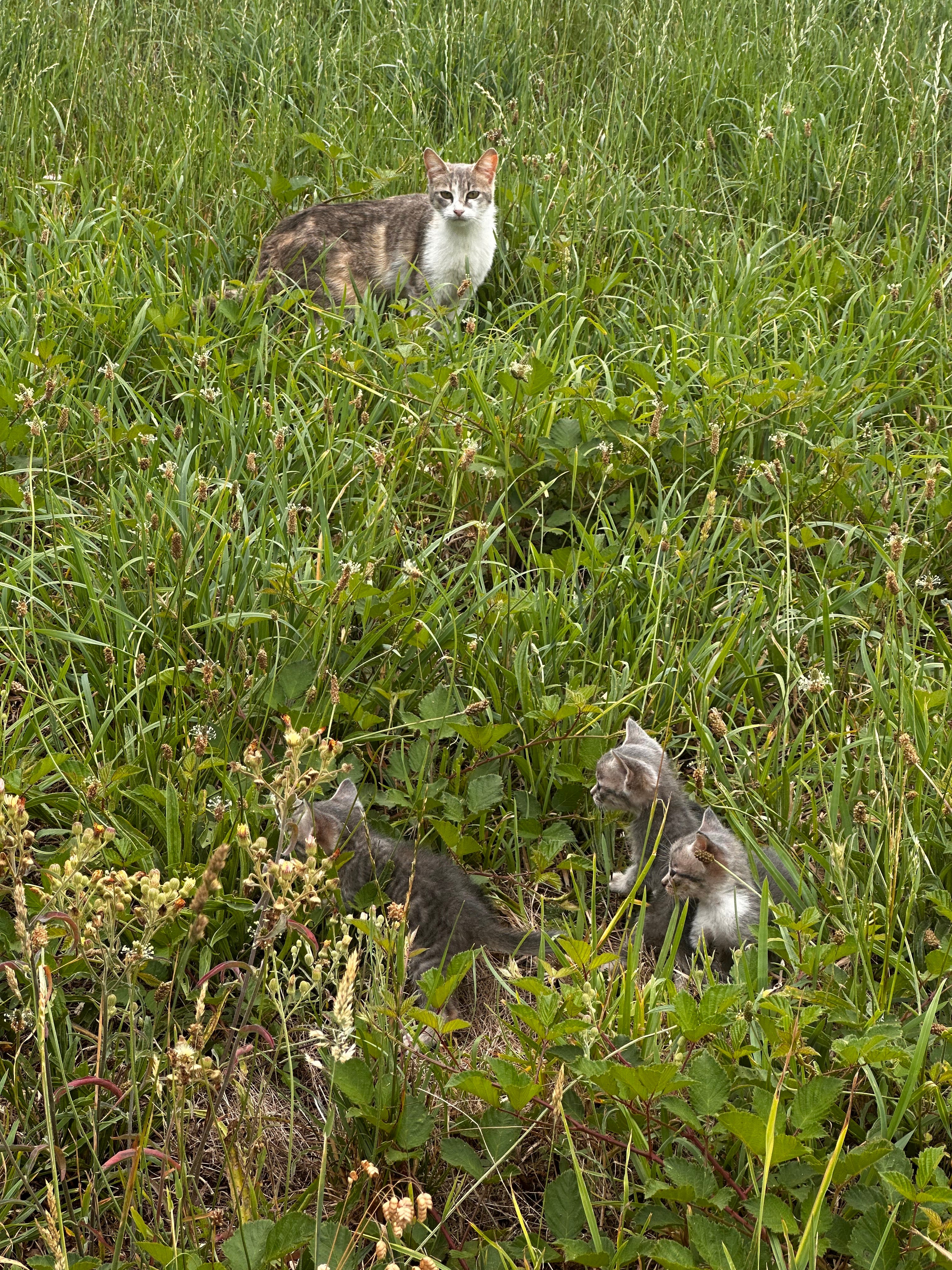
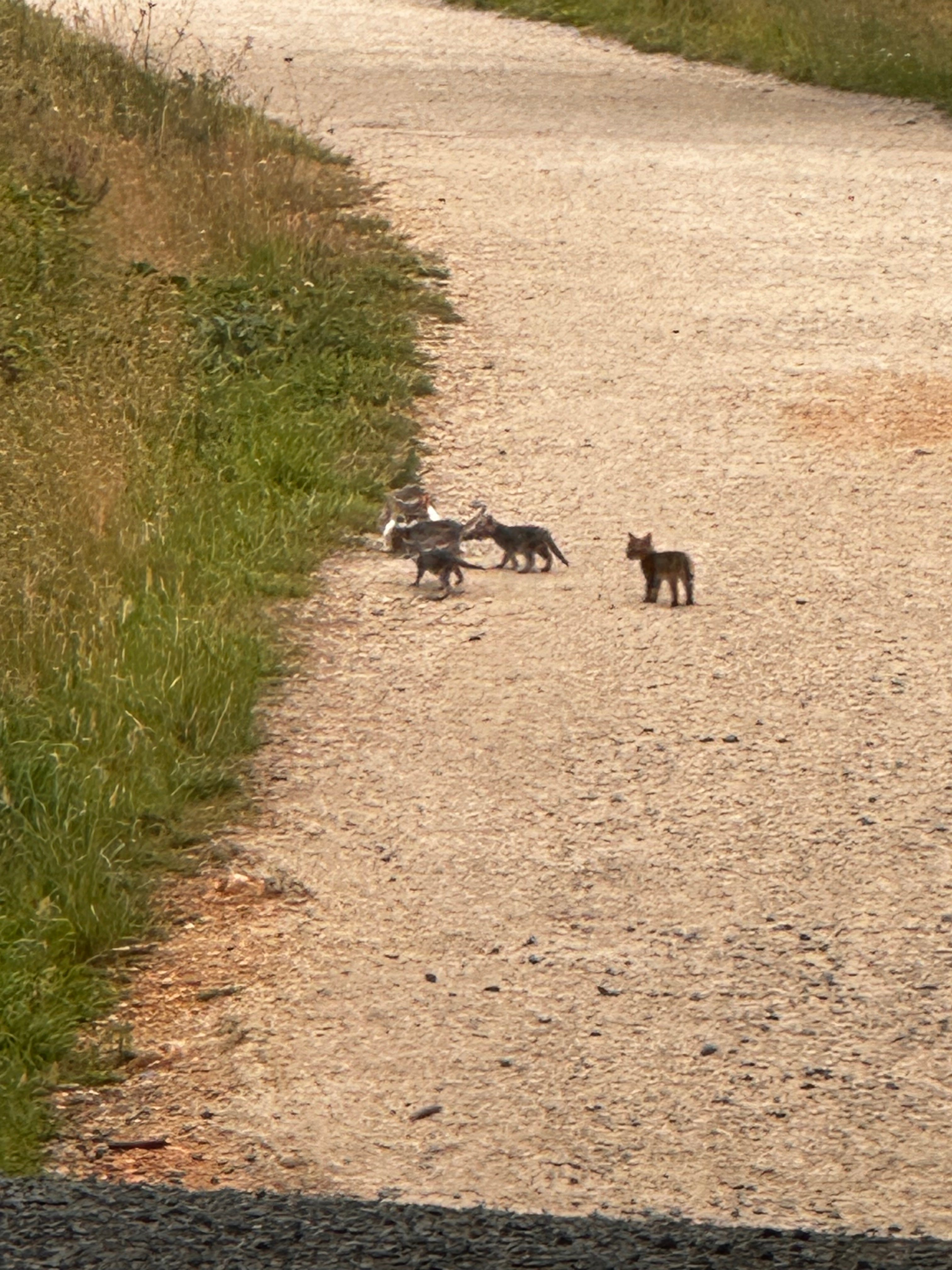
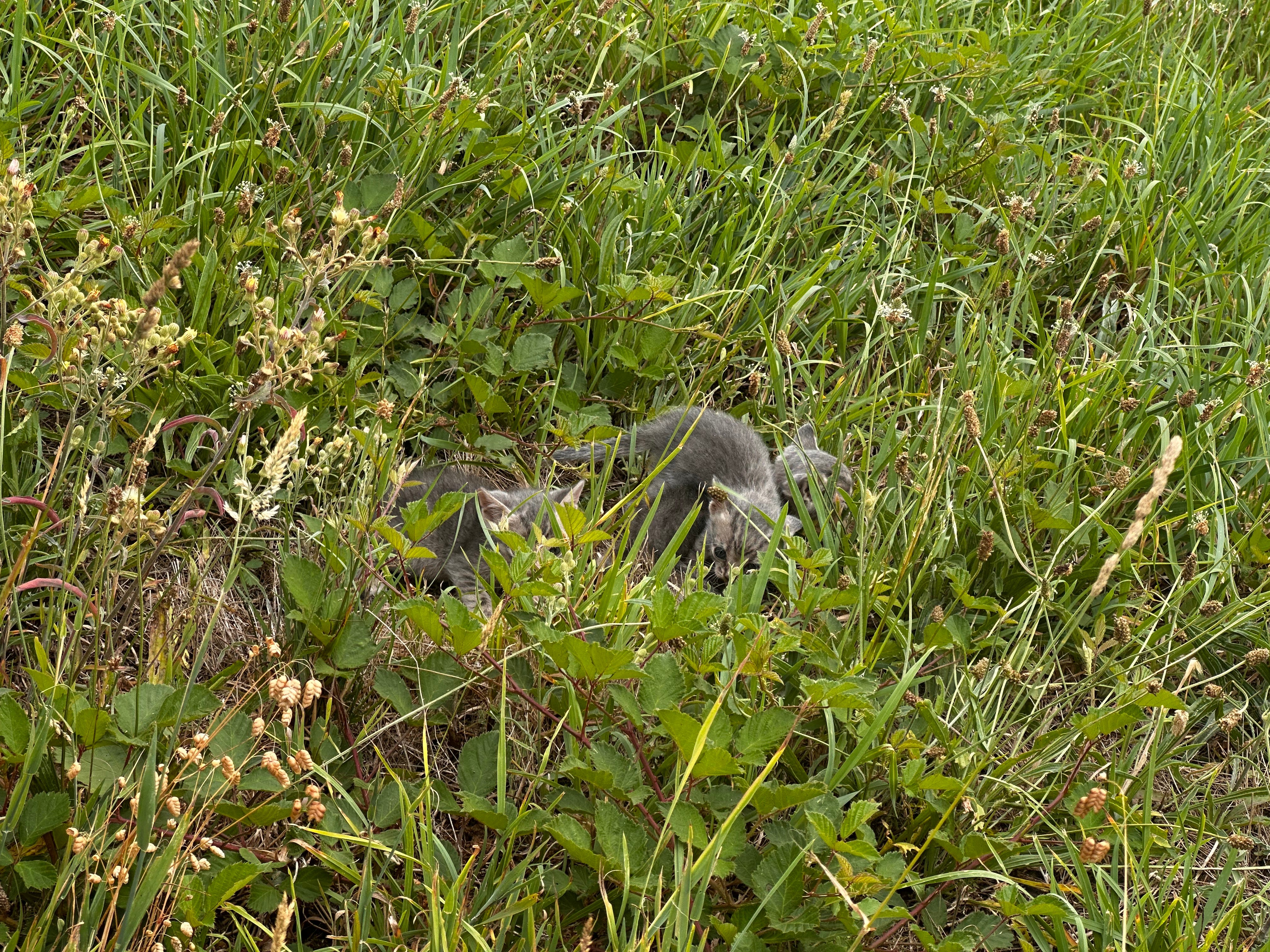
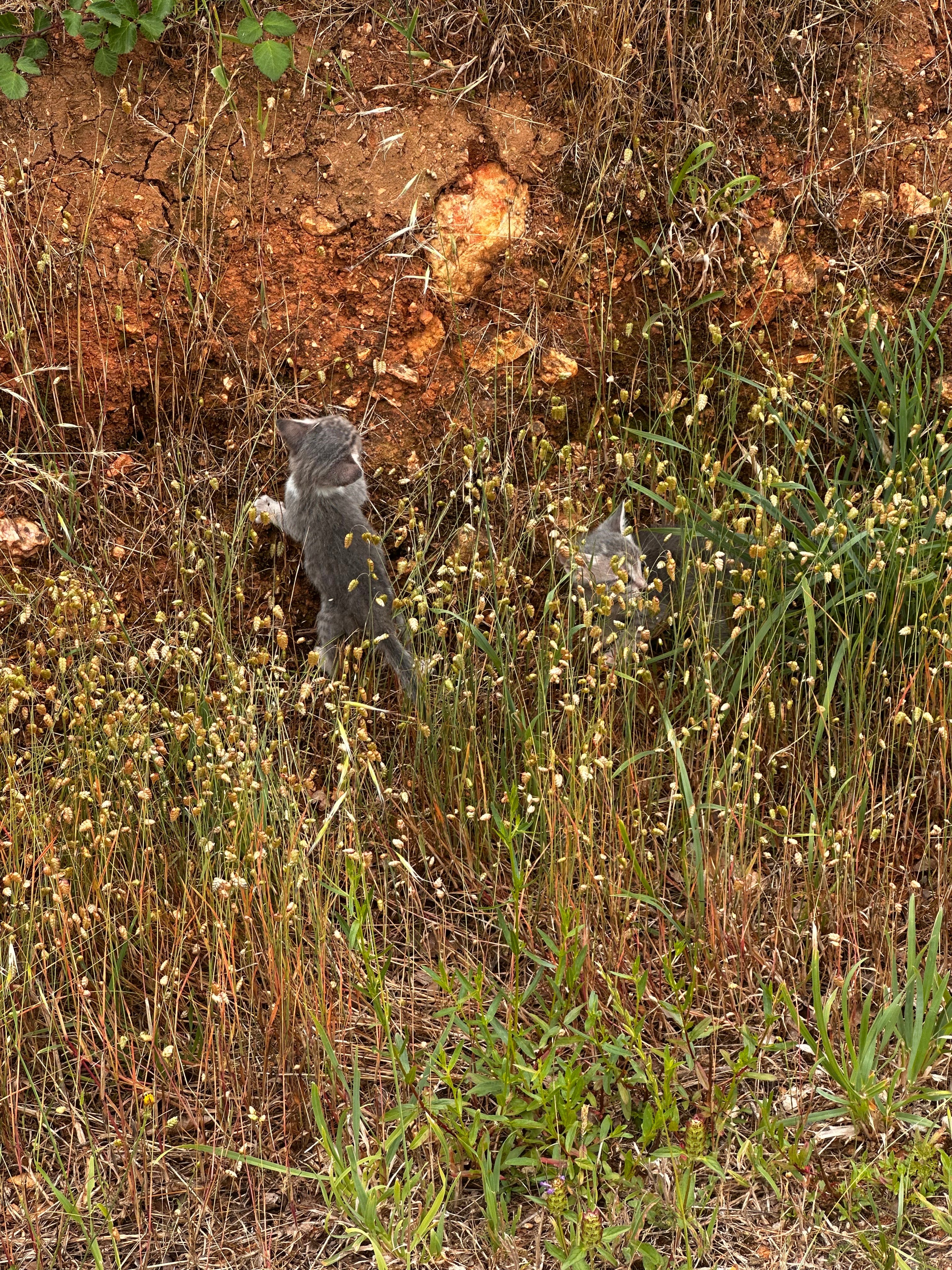
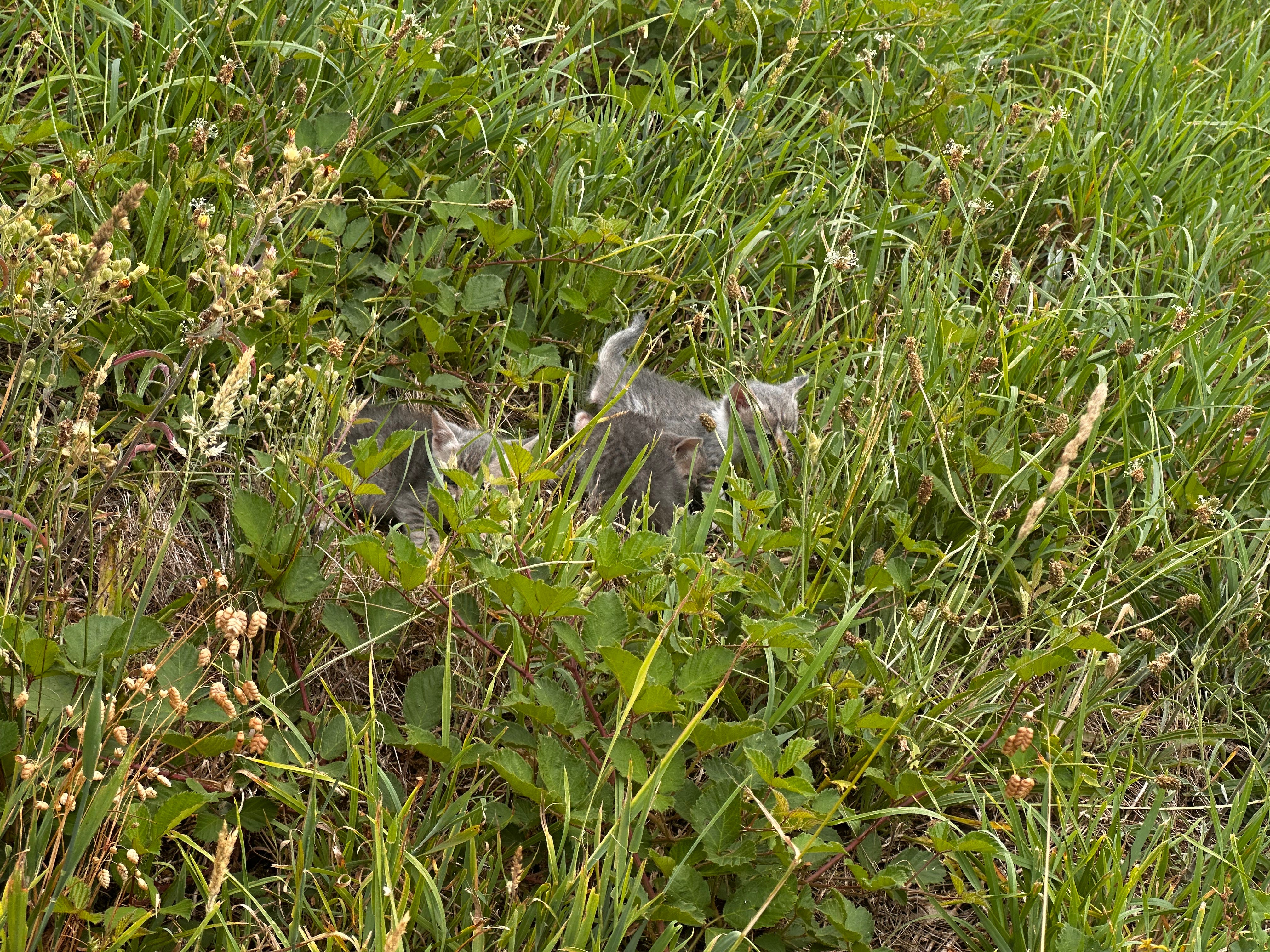
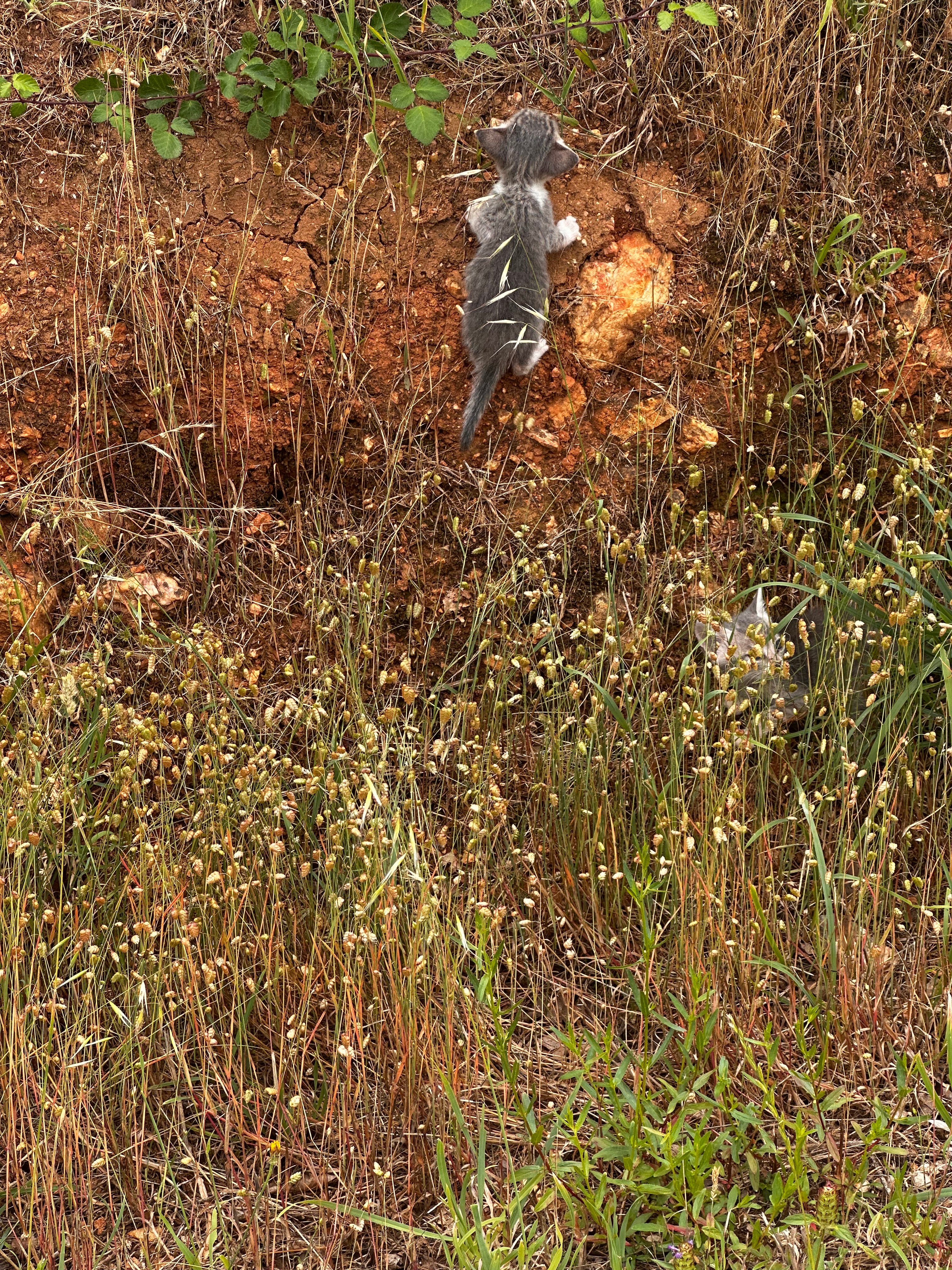
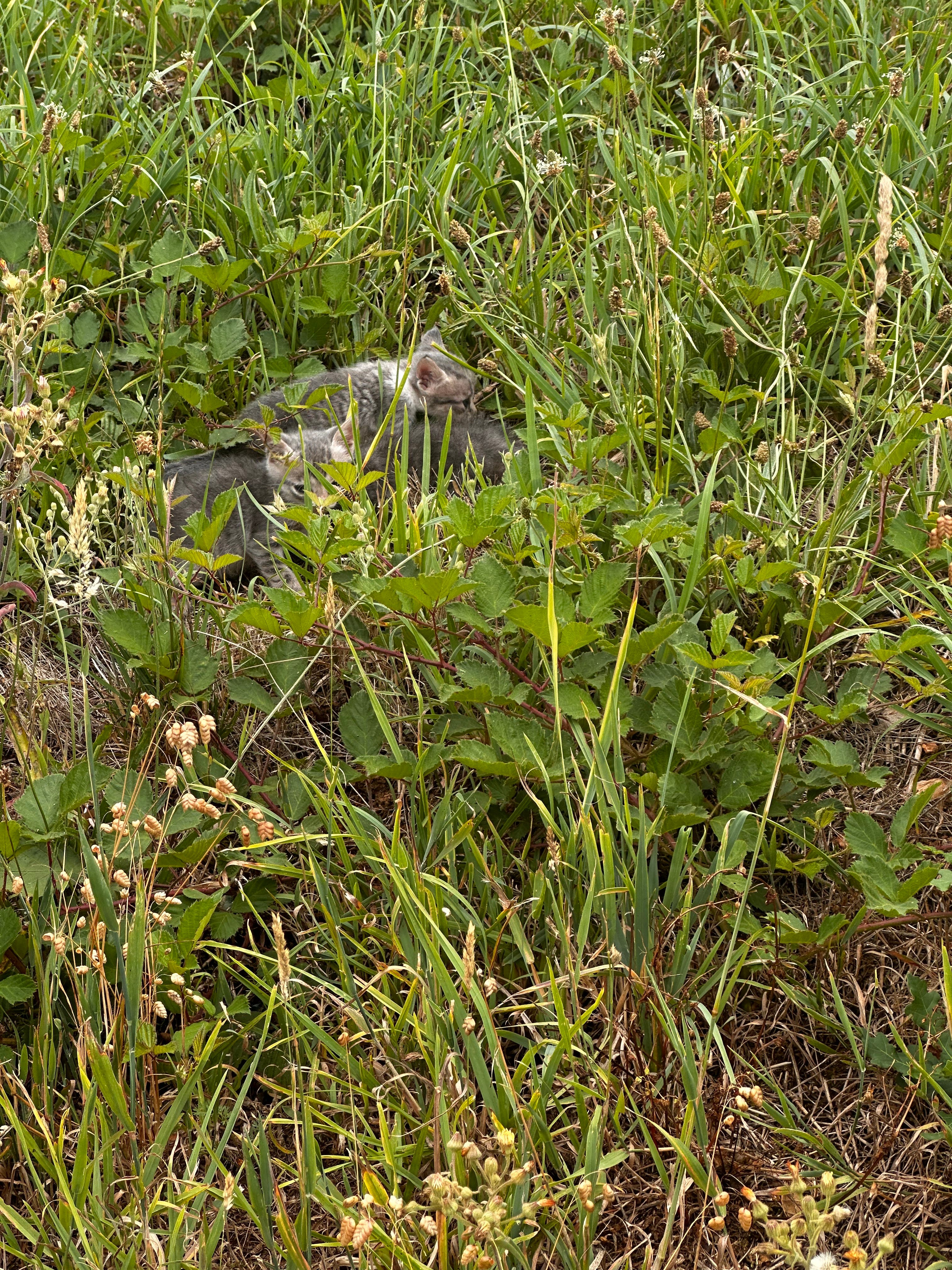
A little before Gonzar we met a cat with her kittens at the edge of the path. Four or five of them, grey and small, just old enough to be out in the world. They spilled onto the gravel and back into the long grass, climbing the cut bank, falling off it, finding their feet again. One scrambled up the red earth after something only it could see and slid down and tried once more.
The mother sat a short way off in the green, white-chested, watching. She did not move when they stumbled. She let them climb and fall and right themselves, and only kept her eyes on them, close enough and far enough at once. When they had finished she was still there. We watched a while and then walked on.