

Somewhere past Gonzar the walking stopped being hard. I noticed it the way you notice weather that has already changed. The heels and the forefoot that had complained for days went quiet. My back, tight at the start from the unfamiliar weight of fifteen to seventeen kilos for seven and eight hours at a stretch — seventeen when the water bottle is full, which it should always be! — loosened and stayed loose. I had spent the first week managing my body, and by now it simply carried me, and I had done nothing to earn the change except keep going.
The country gave me plenty to look at and a great deal to walk through.
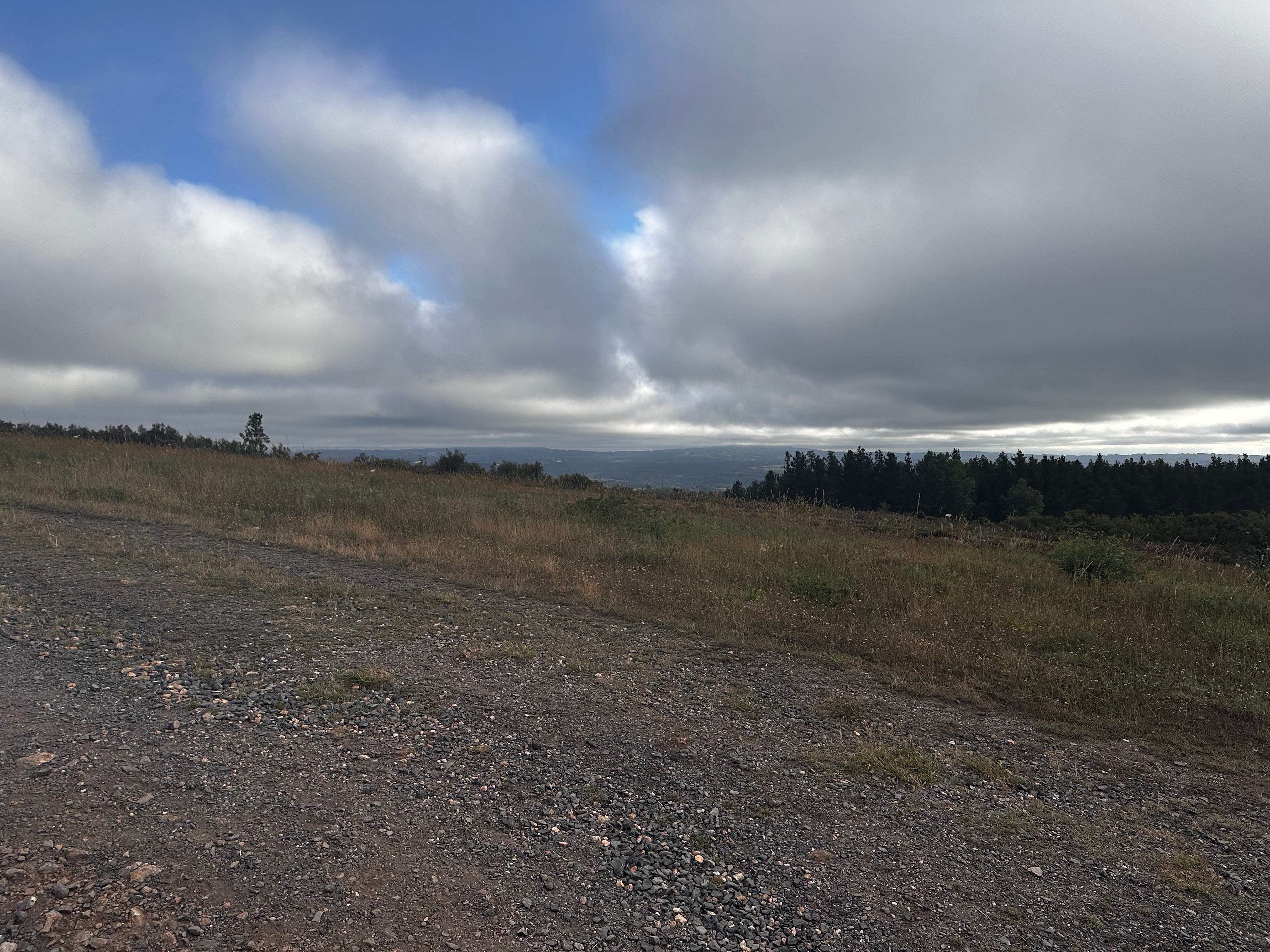
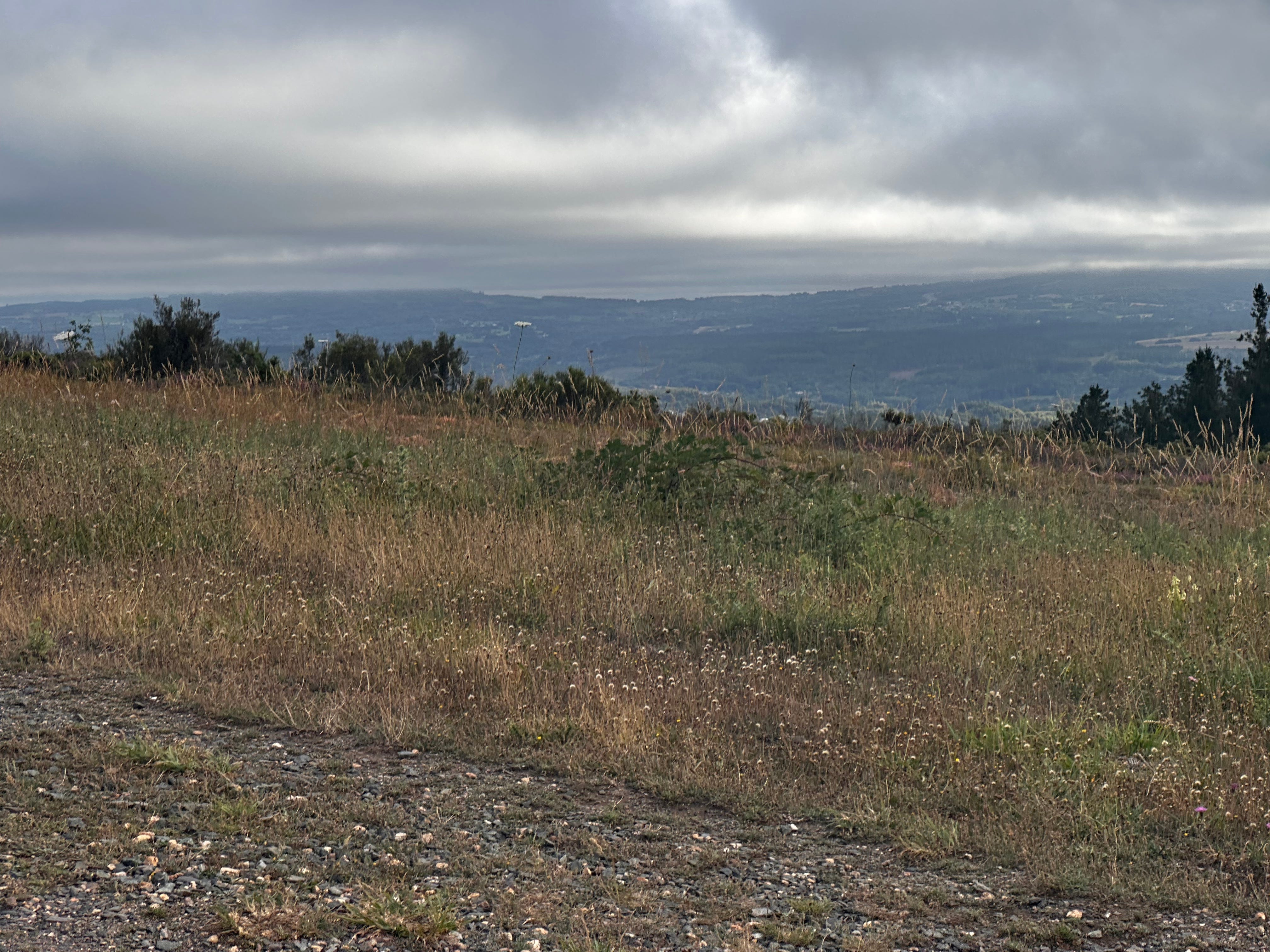
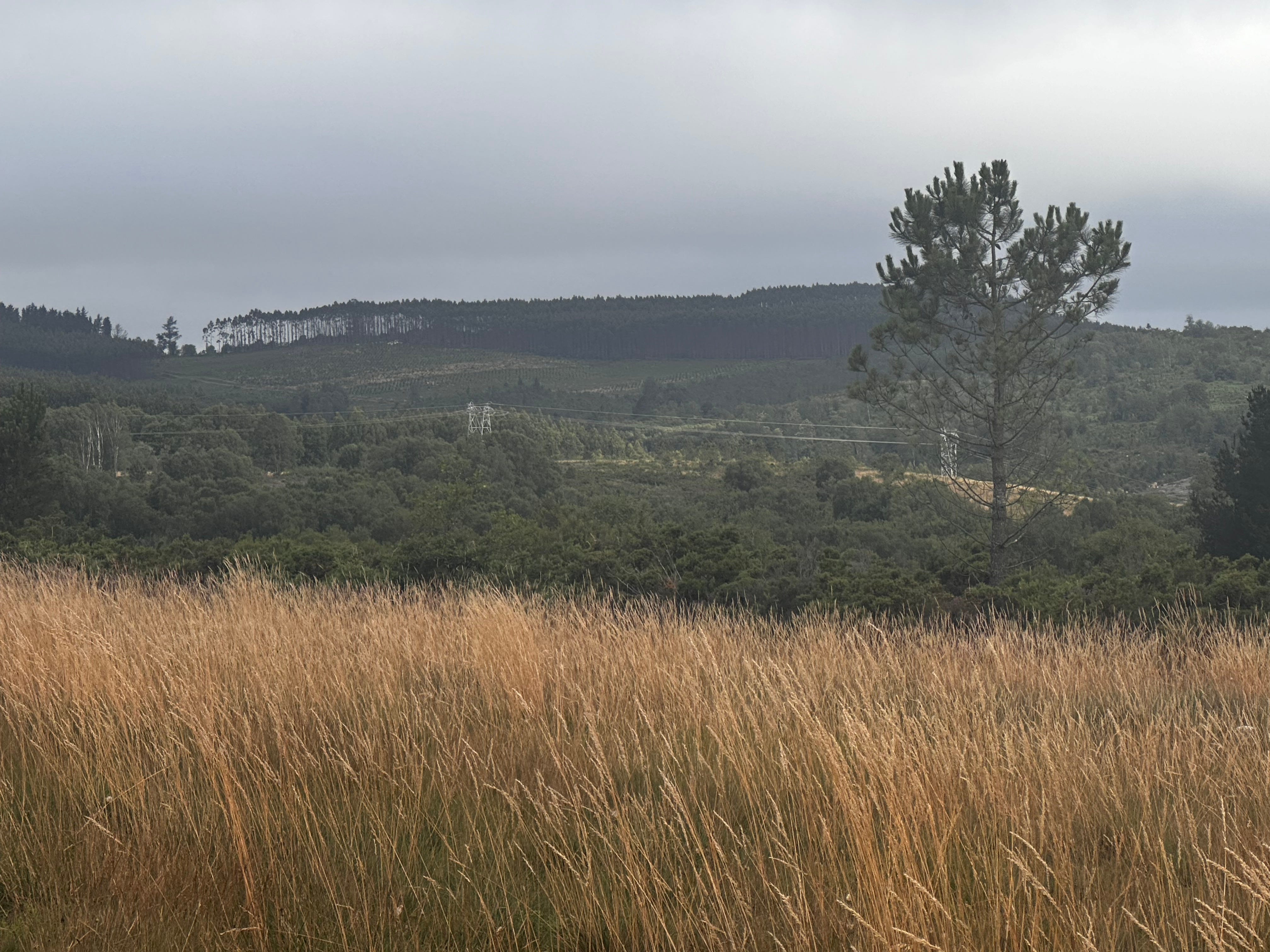
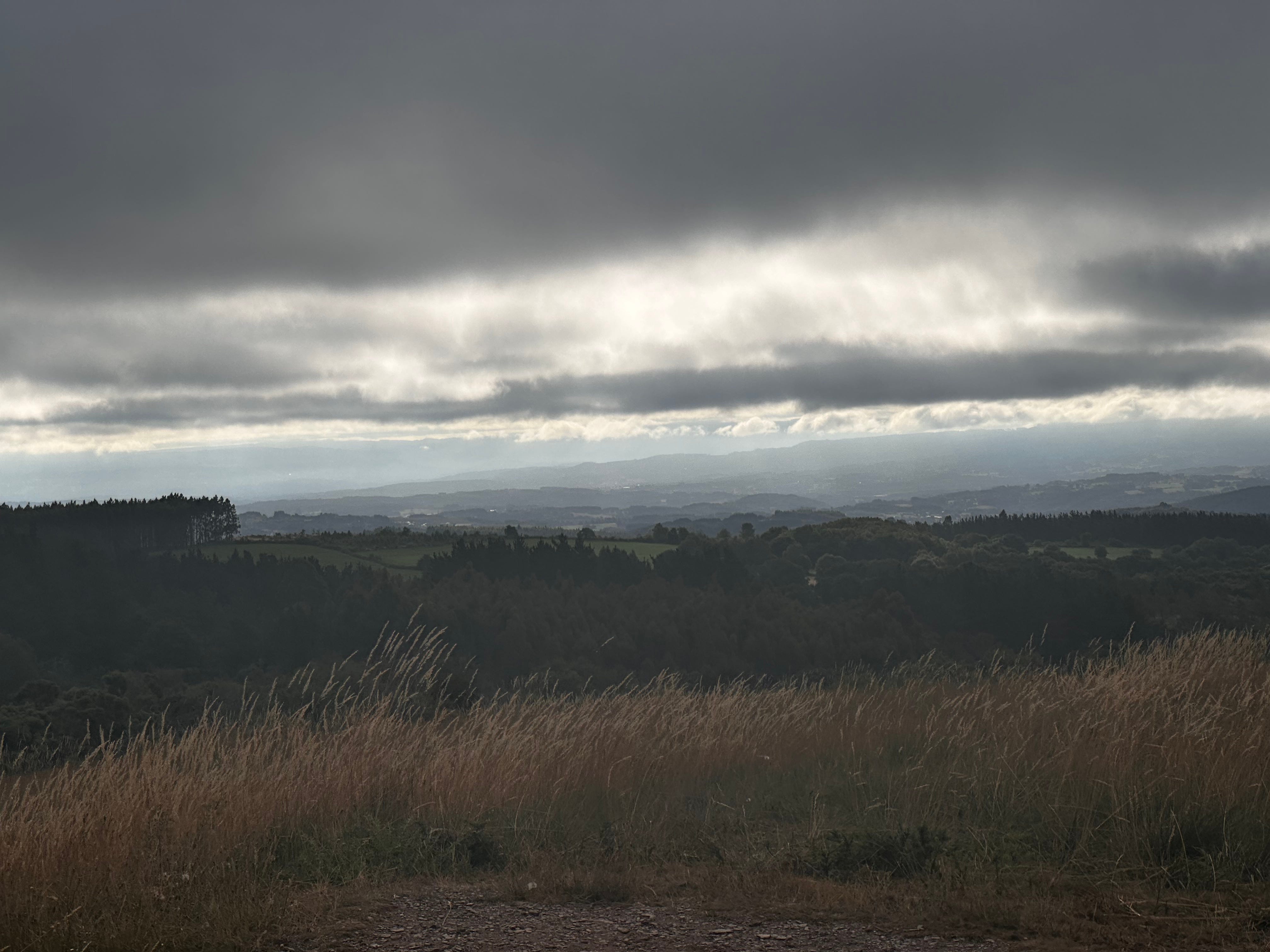
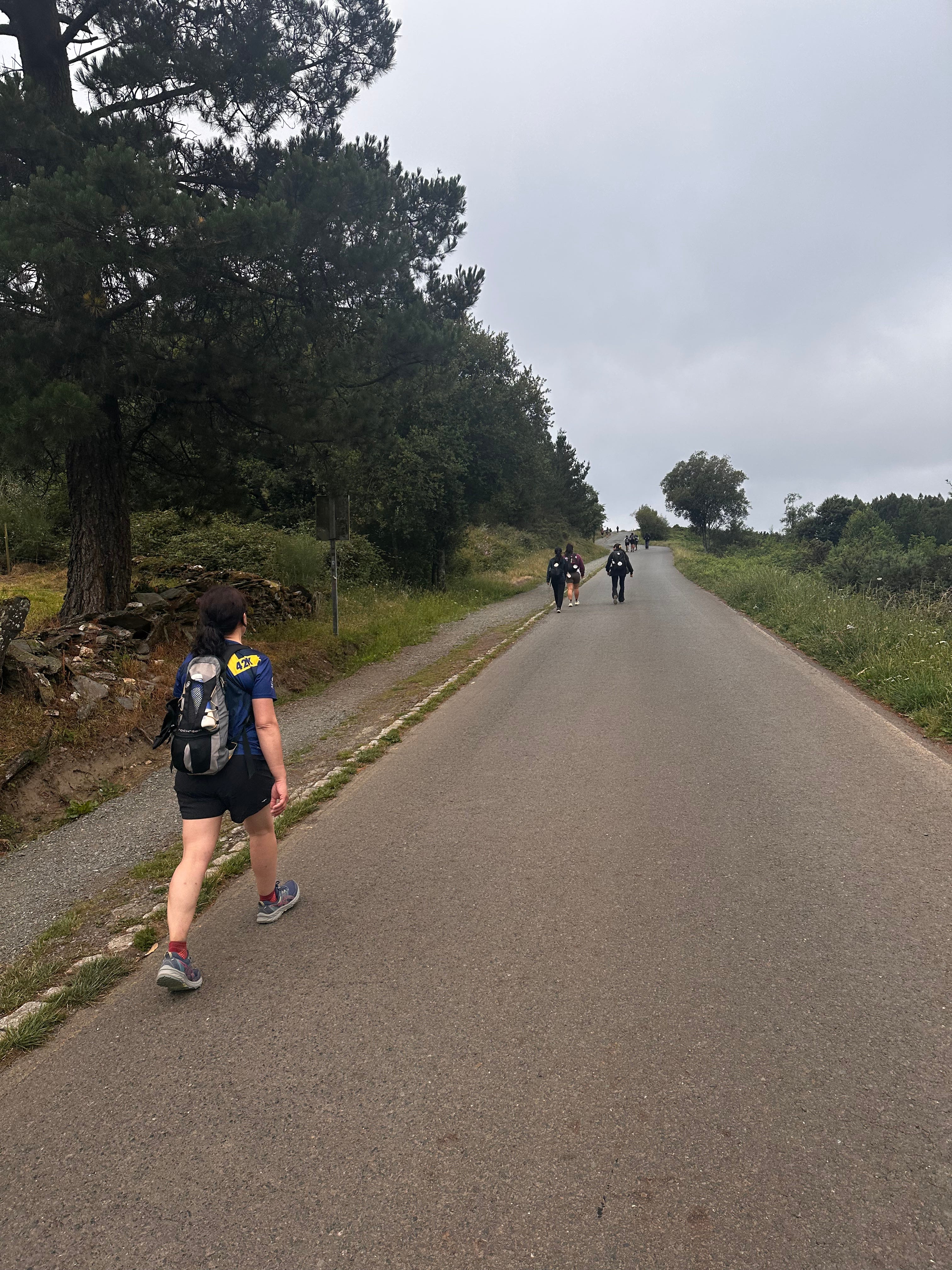
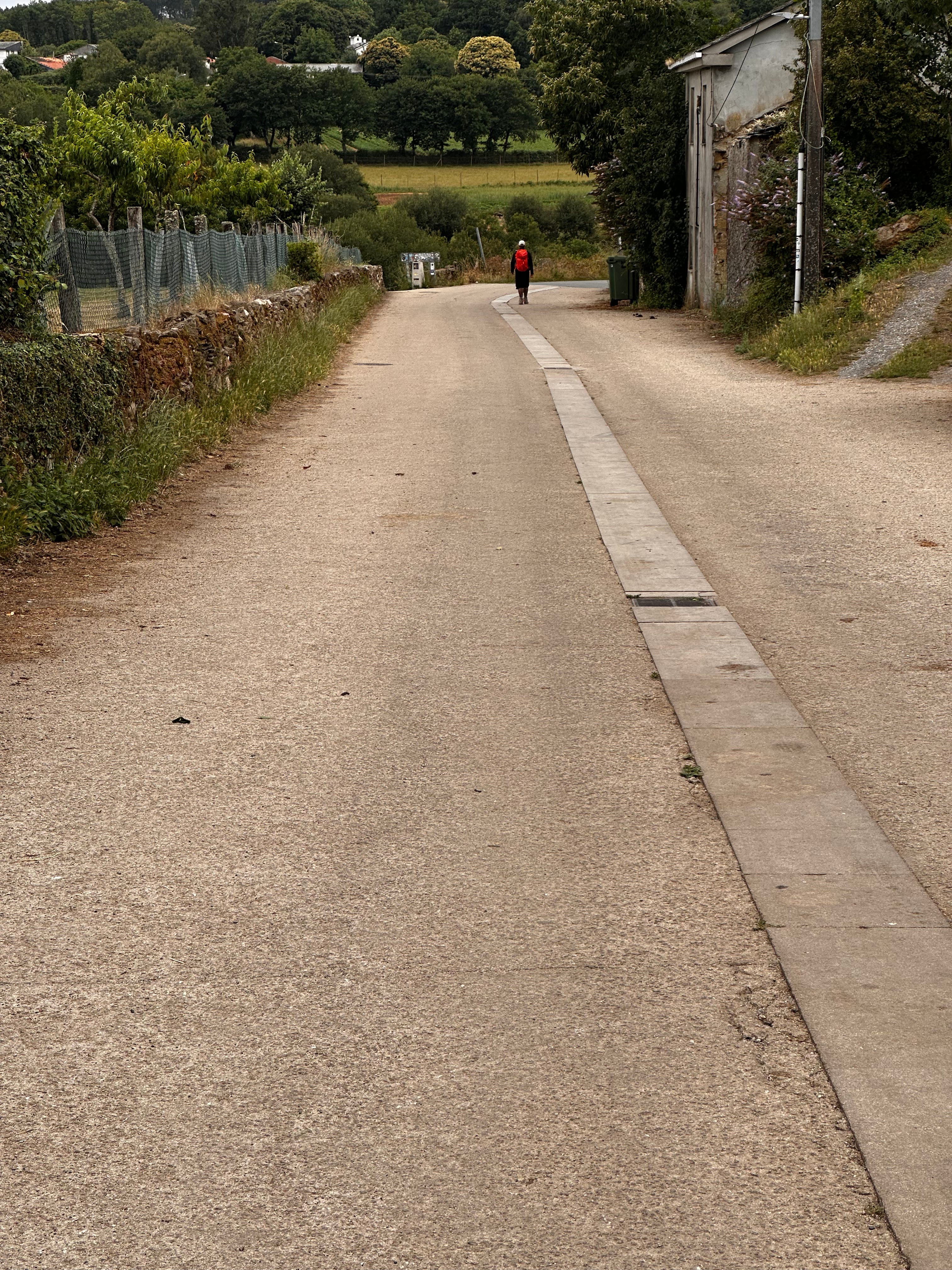
The first morning out of Gonzar the sky came down low and grey, a heavy lid over everything, and from the high ground the whole of Galicia lay below in shadow: dark plantations, a patchwork of fields and small roofs, a far ridge going blue with haze, and in the near foreground the dry grass gone to seed, pale and rustling, the only lit thing in the picture. Then the road. Just a road, a strip of tarmac running straight between a spruce and a clipped hedge, with a woman walking the verge ahead of me and two more figures further on, and nothing happening at all. That is the true face of a Camino morning, and nobody photographs it, and I did.
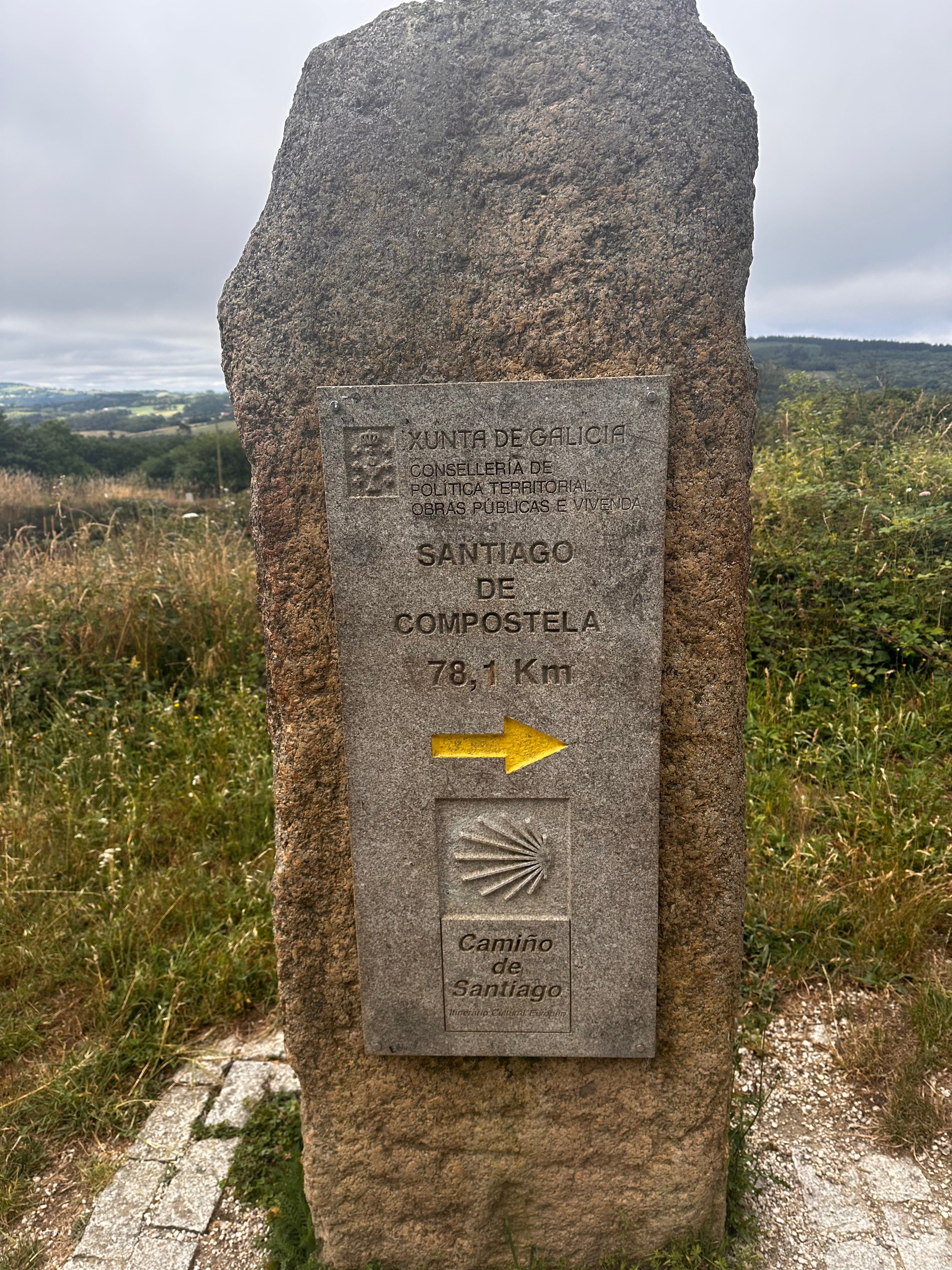
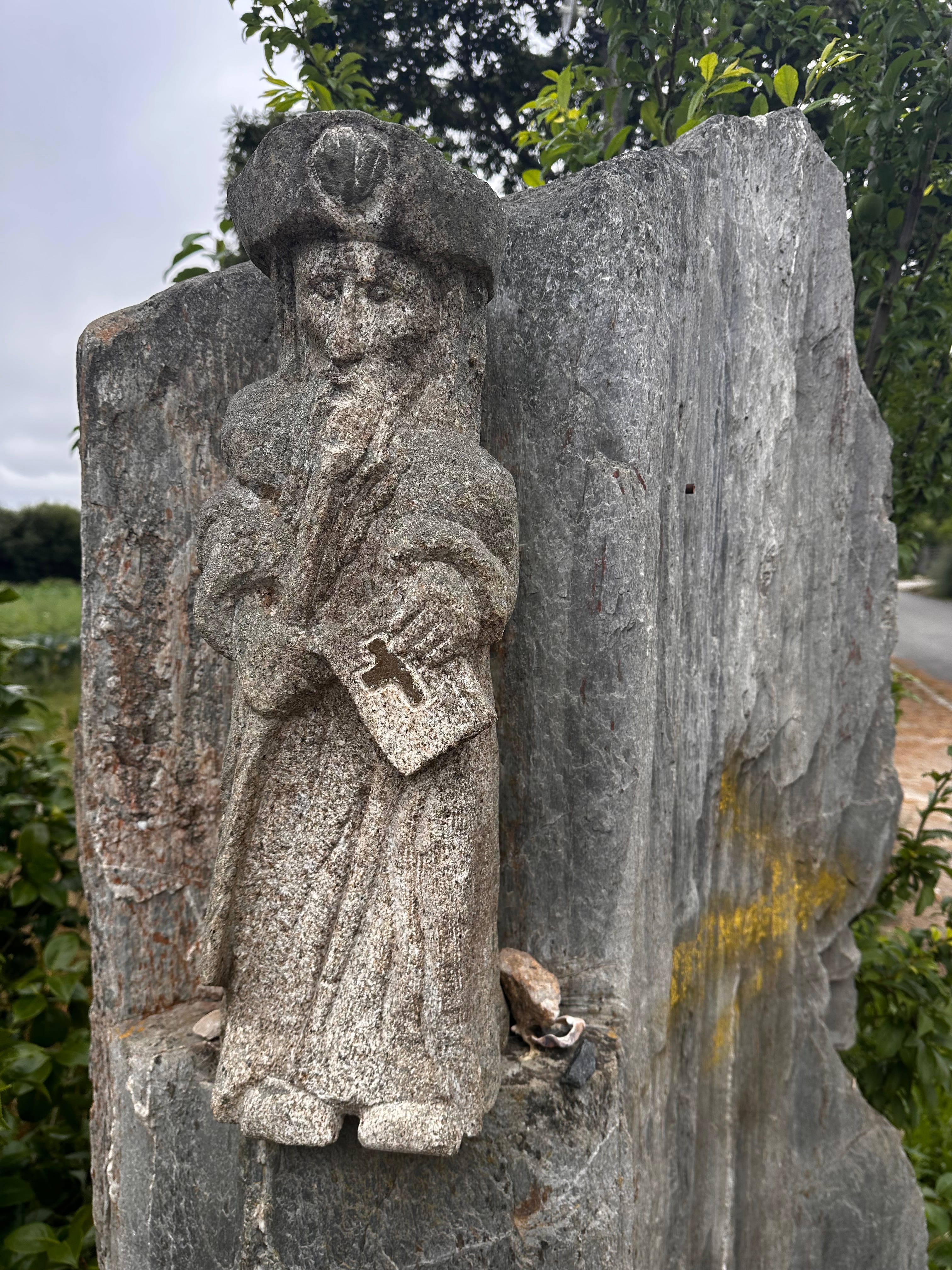
The stones counted for us. Santiago de Compostela, 78.1 km, cut into granite with the yellow arrow and the shell beneath it. And then, a little further on, a pilgrim carved into a slab beside the path, hat with a shell on the brim, cloak, staff, a book held against his chest. His face has been weathered nearly smooth and is still perfectly legible. Someone had set a real scallop shell on the ledge at his feet, and someone else had brushed a stroke of yellow paint on the stone beside him, and I loved that both of those were true at once: the old devotion and the new one, four hundred years apart, doing the same work.
Breakfast in Gonzar this morning was, surprisingly, a miss. I love Spanish food without reservation, and that morning the eggs came up tasting off and I set them aside, drank my coffee, and walked out into the day owing it nothing. Then the road did what the road does. A few kilometers on there was a small bar under a wisteria, two coffees, a plate of Ulloa cheese with quince beside it. The gift was in the order of things: what I had counted on fell away, and what I had not thought to ask for was waiting a little further on.
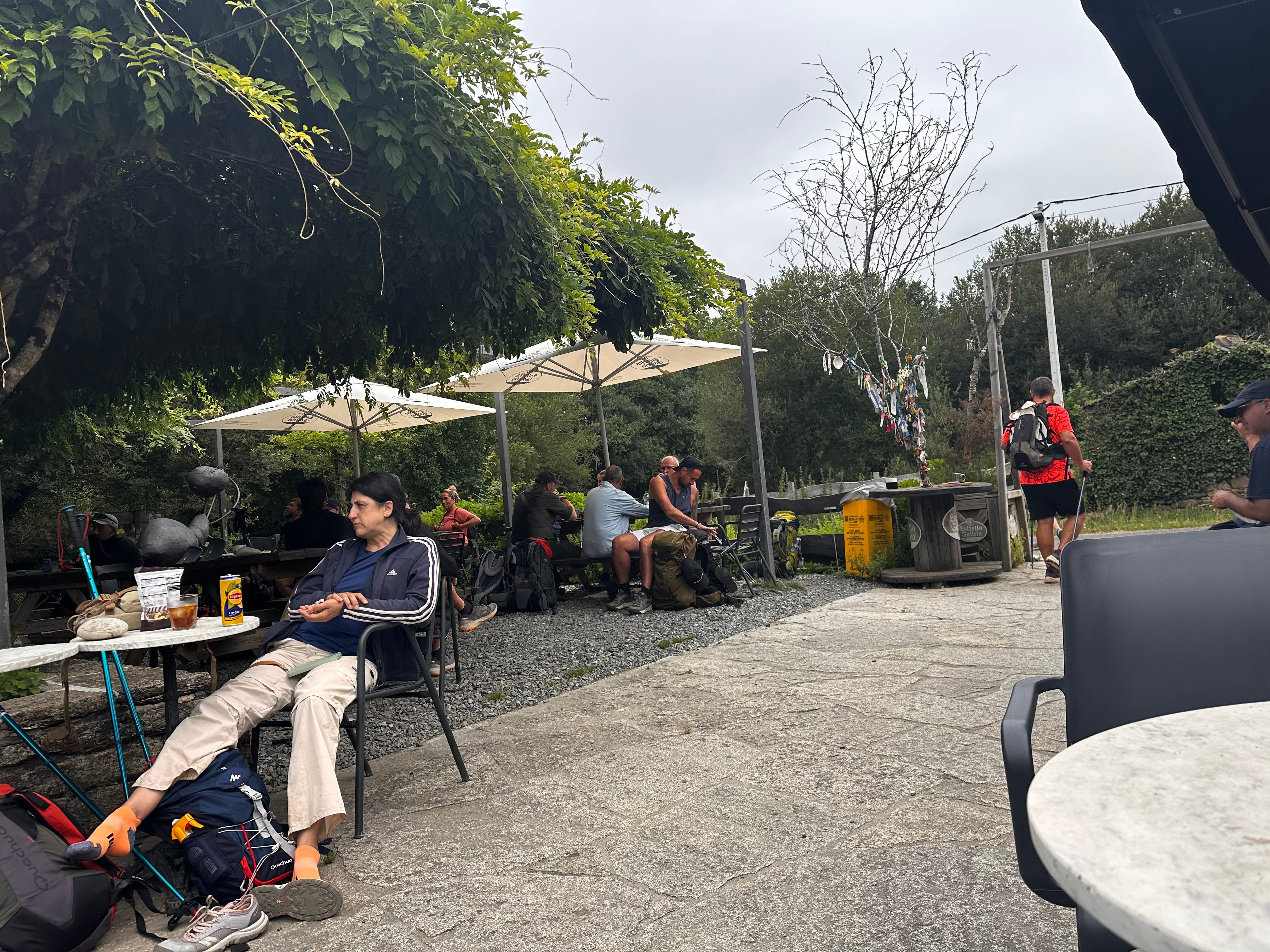
The bar had a gravel yard with white umbrellas and plenty of comfortable chairs, and it was near full. A woman sat with her legs stretched straight out in front of her, boots off and set aside, feet in orange socks resting on her pack, a glass of iced tea and a lemon tin on the marble table, her poles leaning against the wall. She was not talking to anyone. She was simply sitting in the deep, uncomplicated satisfaction of having stopped. Two men shared a bench with their packs slumped at their knees. Others ate quietly under the umbrellas, and a man in red went past behind them without breaking stride, poles swinging, already gone. In the yard a bare tree had been hung all over with ribbons and small bright things, left there by people we will never meet. Nobody hurried anybody. The whole place had the feel of a room where everyone has agreed, without saying so, that the walking will still be there in twenty minutes.
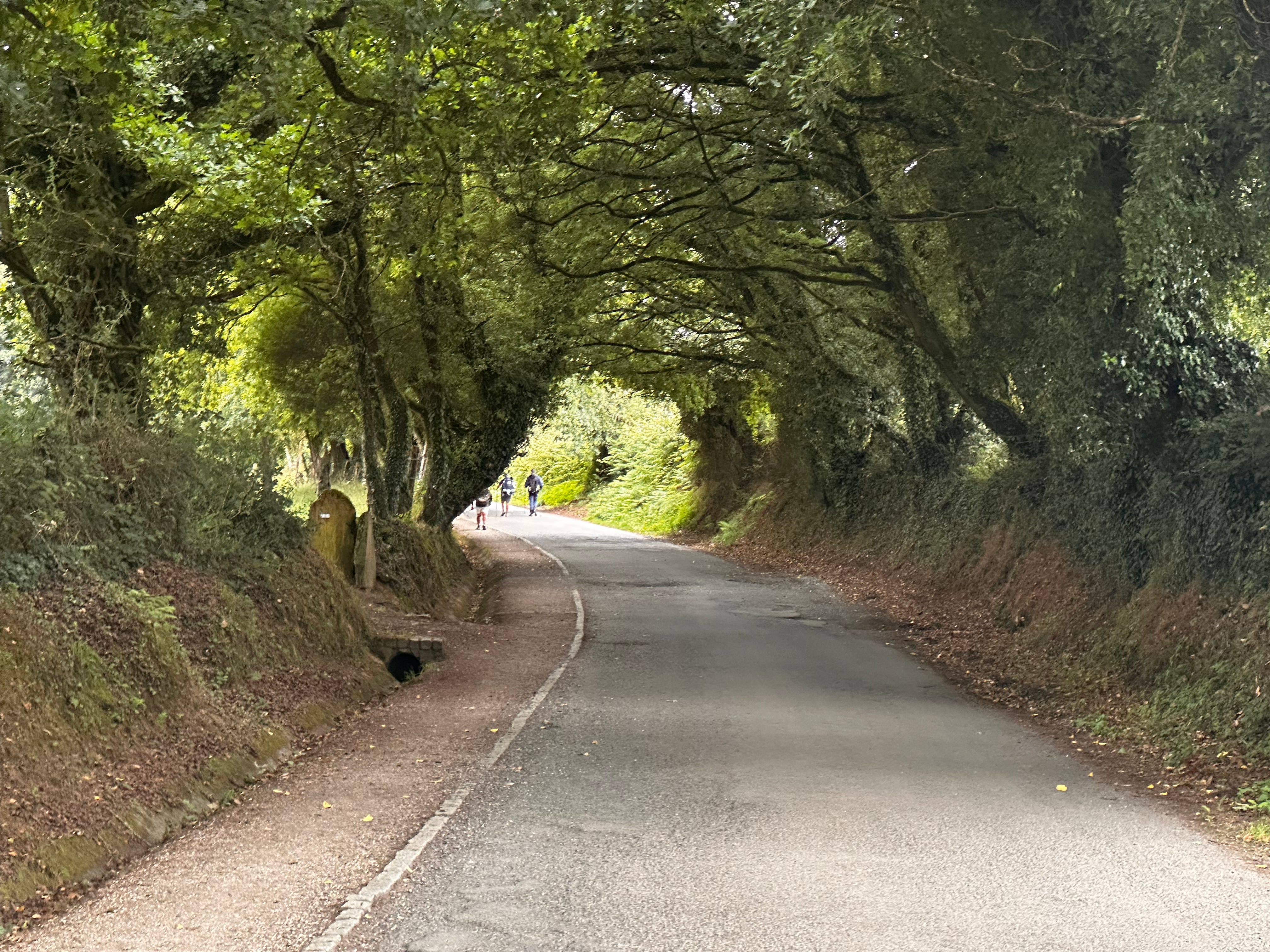
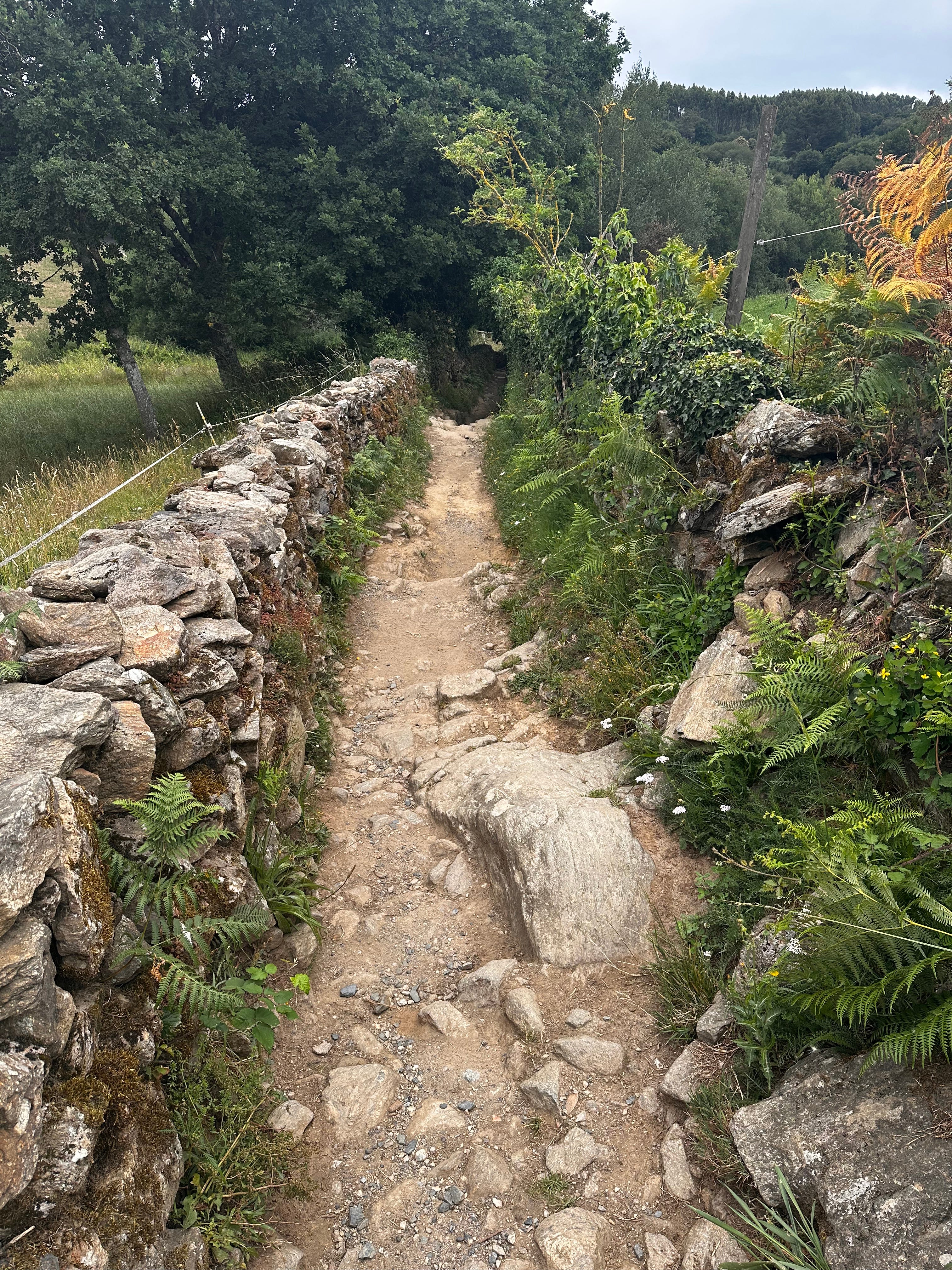
After the welcome stop, the path climbed away between dry stone walls, a sunken lane with ferns and ivy spilling over the sides and the bedrock breaking through the middle of the track like a step nobody built.
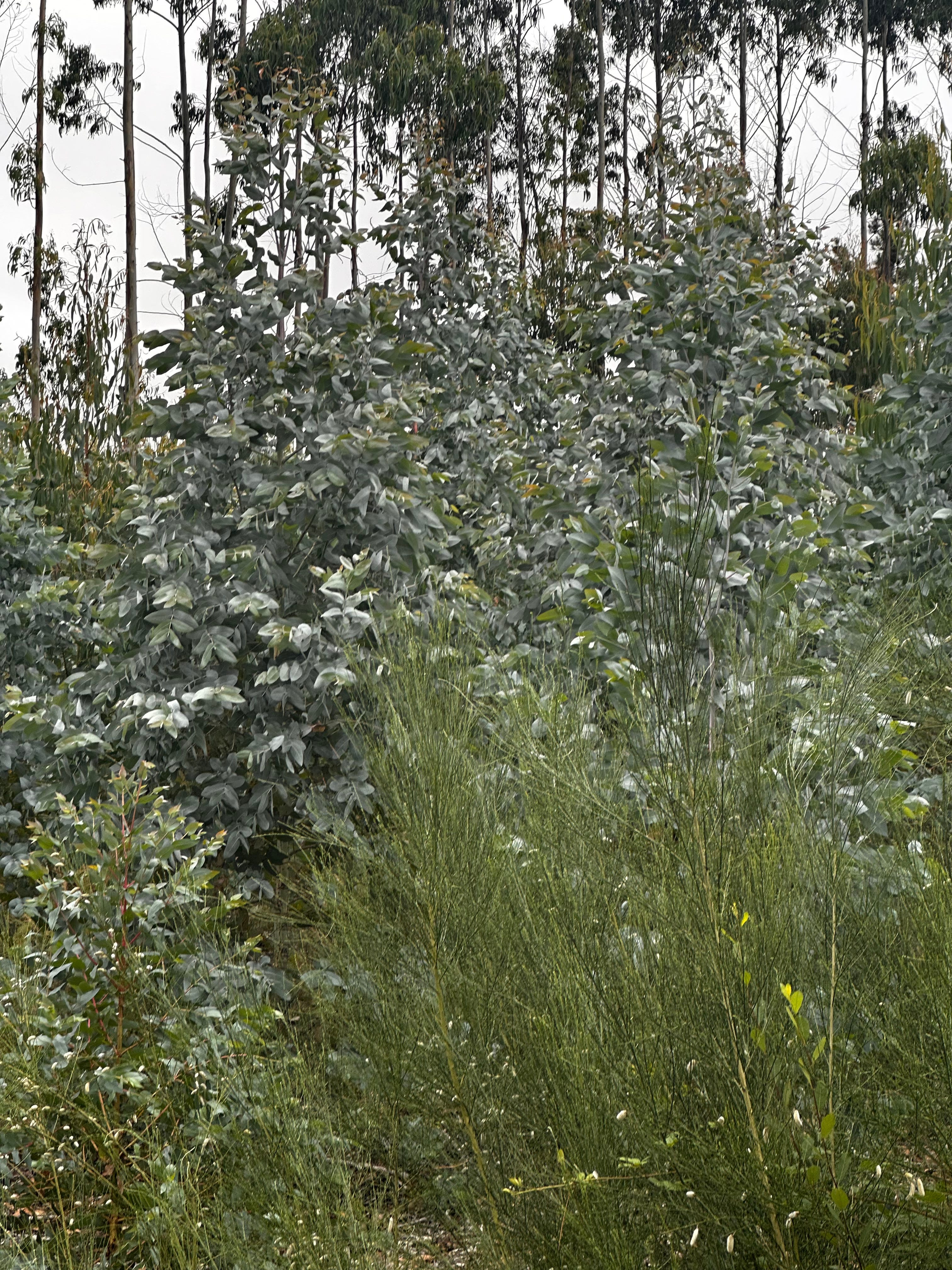
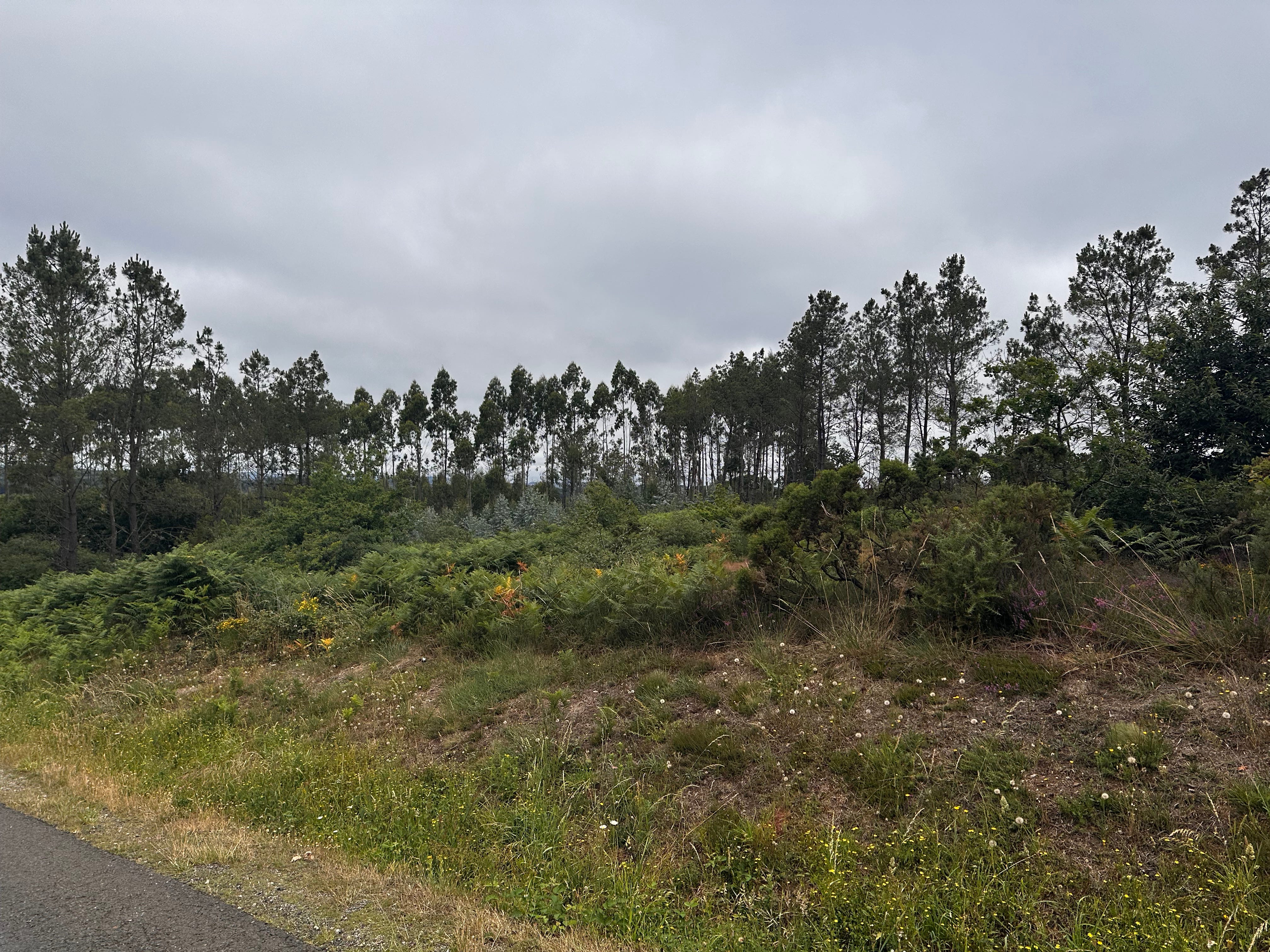
Beyond it the eucalyptus began. Not the shaggy oak woods we had been given until now, but eucalyptus: mature trees standing bare and straight along the ridge with their long sickle leaves high above, and beneath them a thicket of young growth carrying the round blue-grey juvenile leaf, so different you would swear they were another species. Three generations of one crop, and all of it silver, and all of it planted. I had thought of eucalyptus as an exotic thing. In Galicia it is an industry.
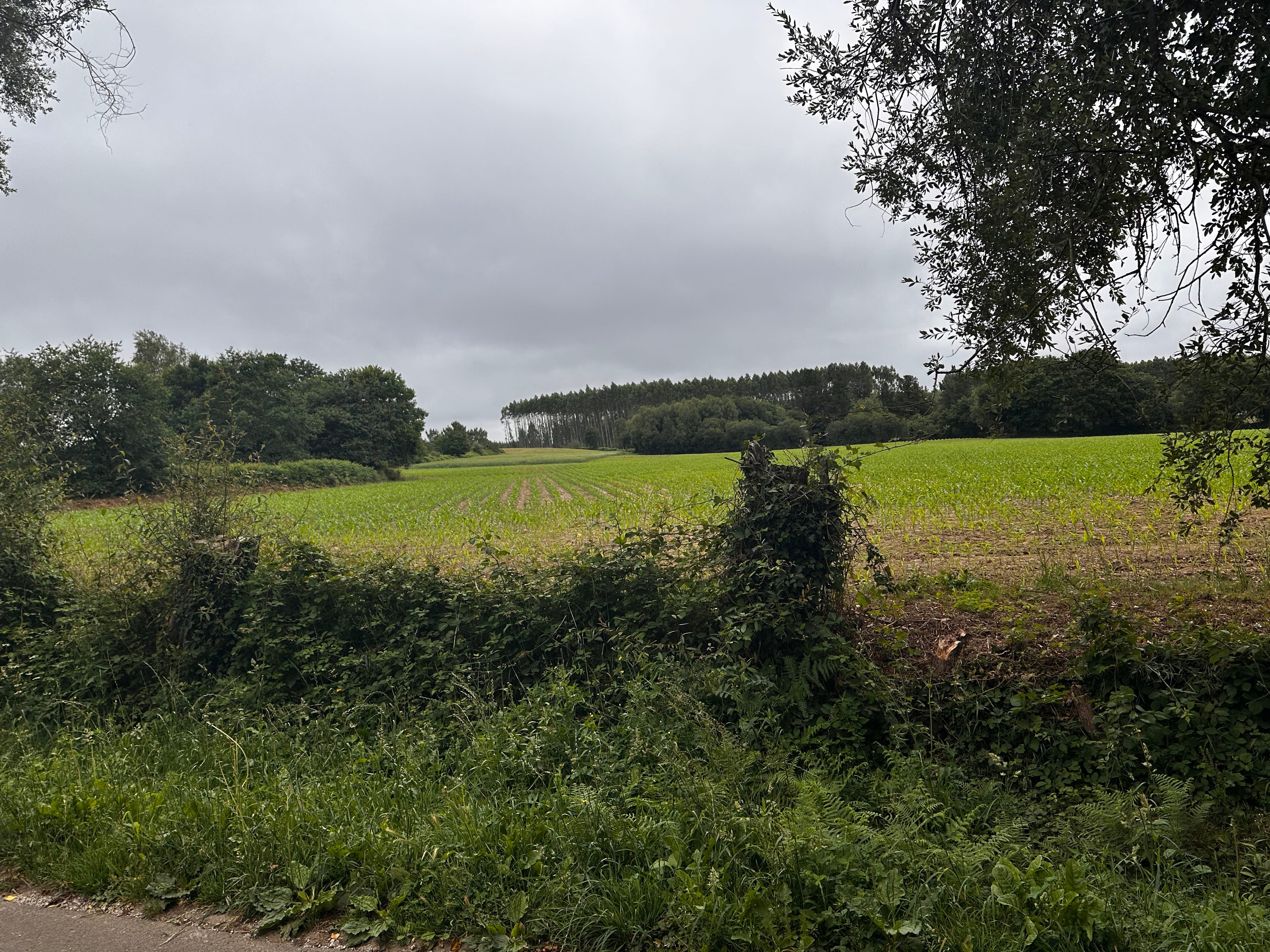
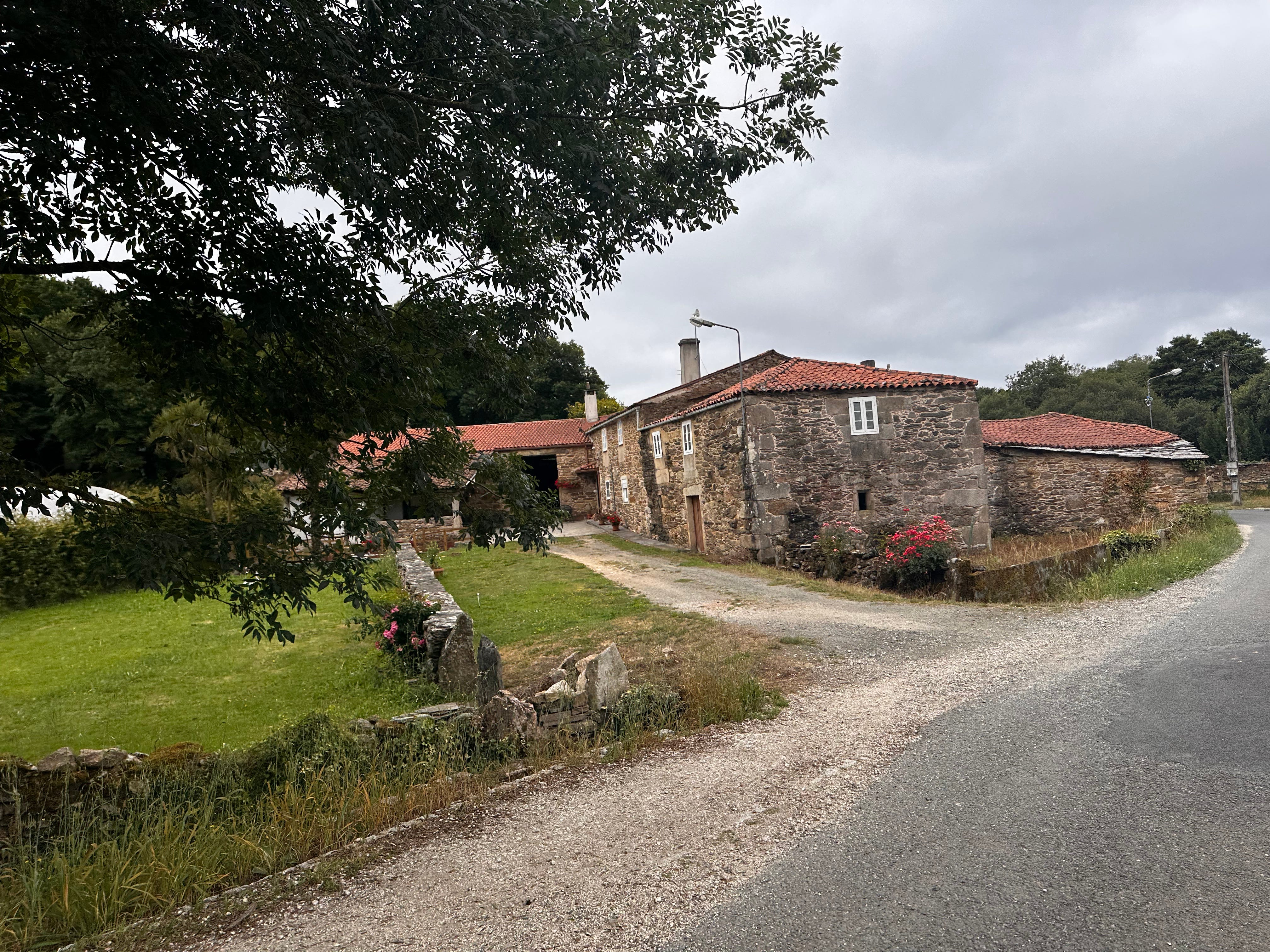
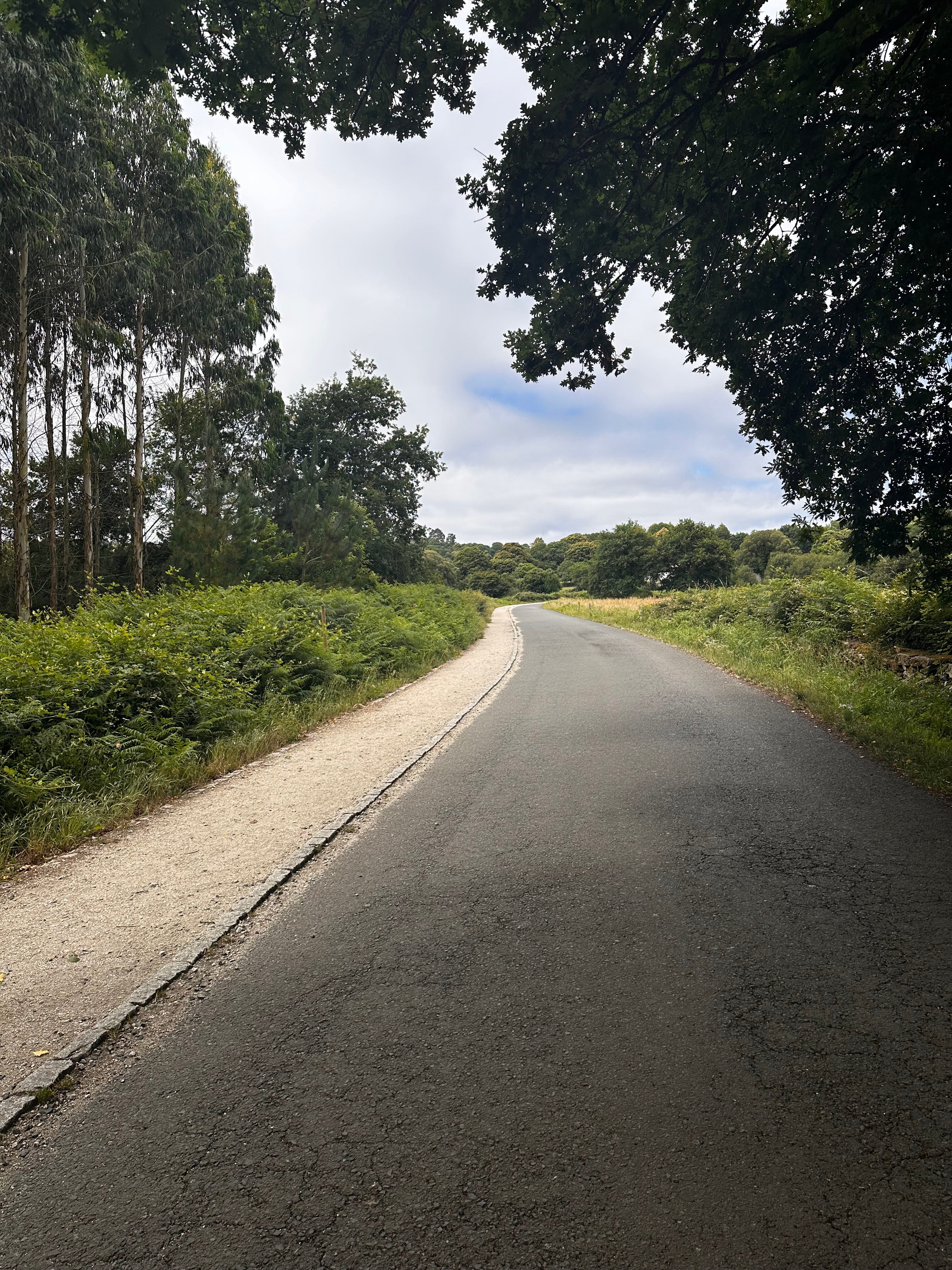
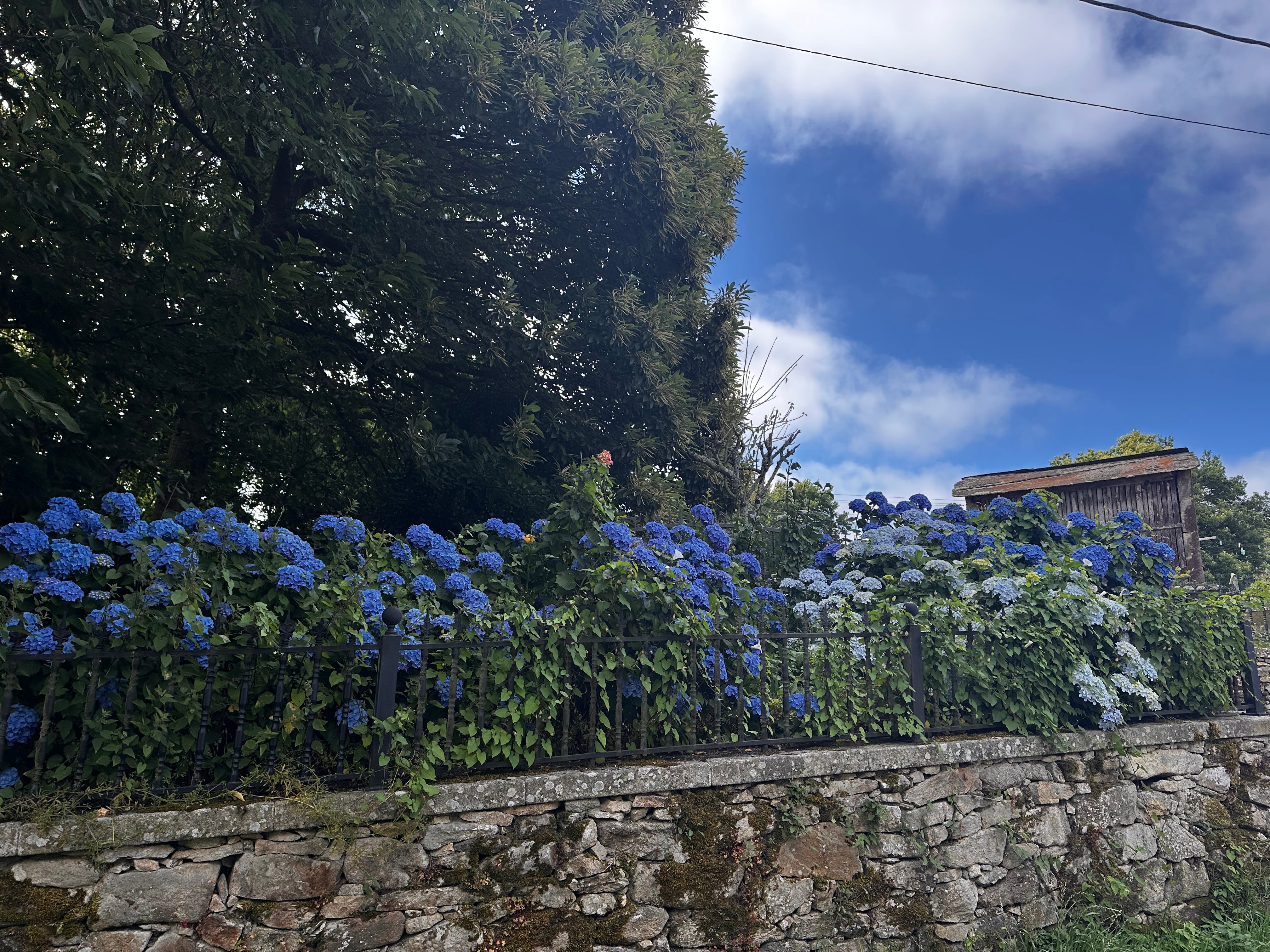
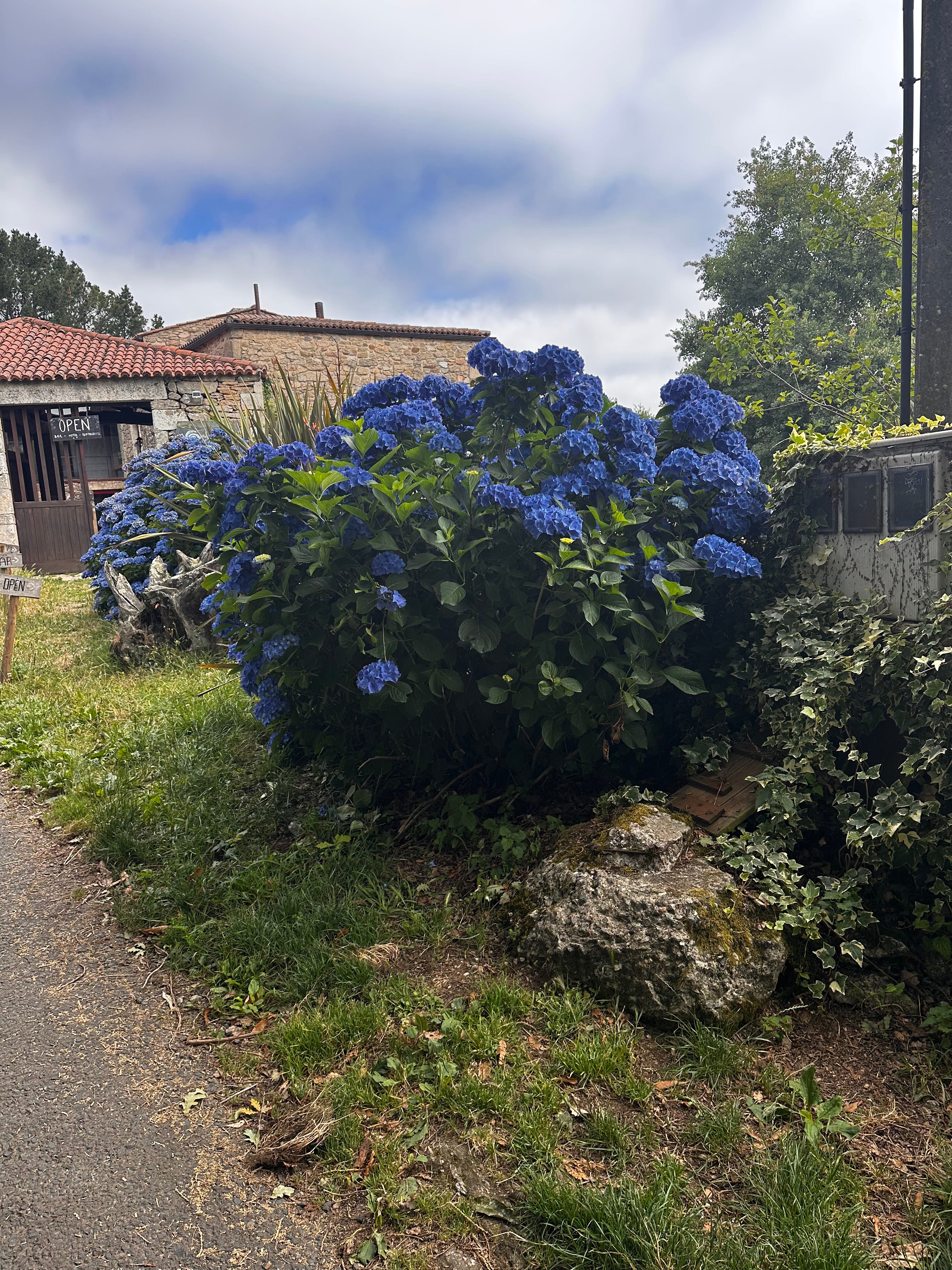
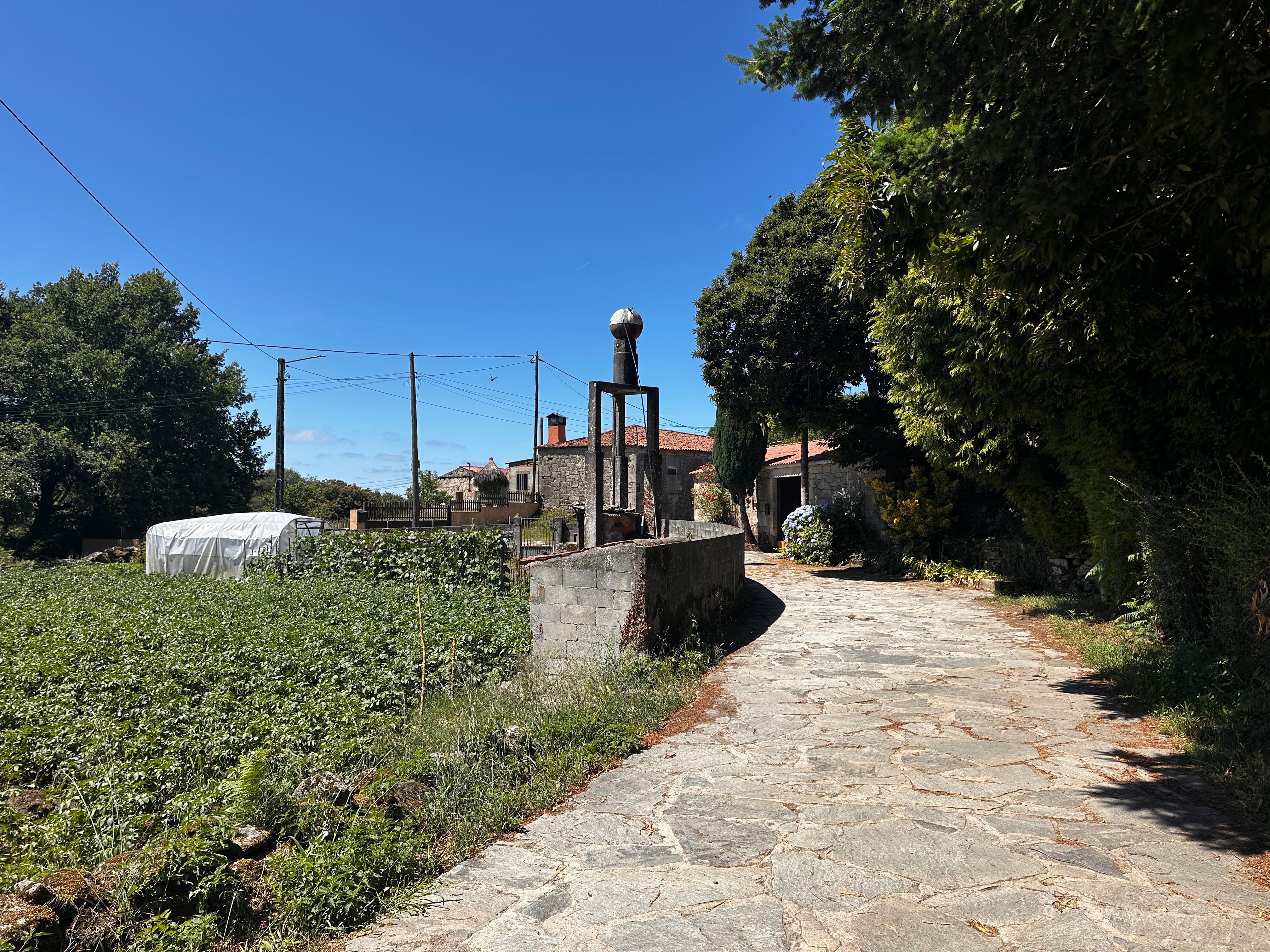
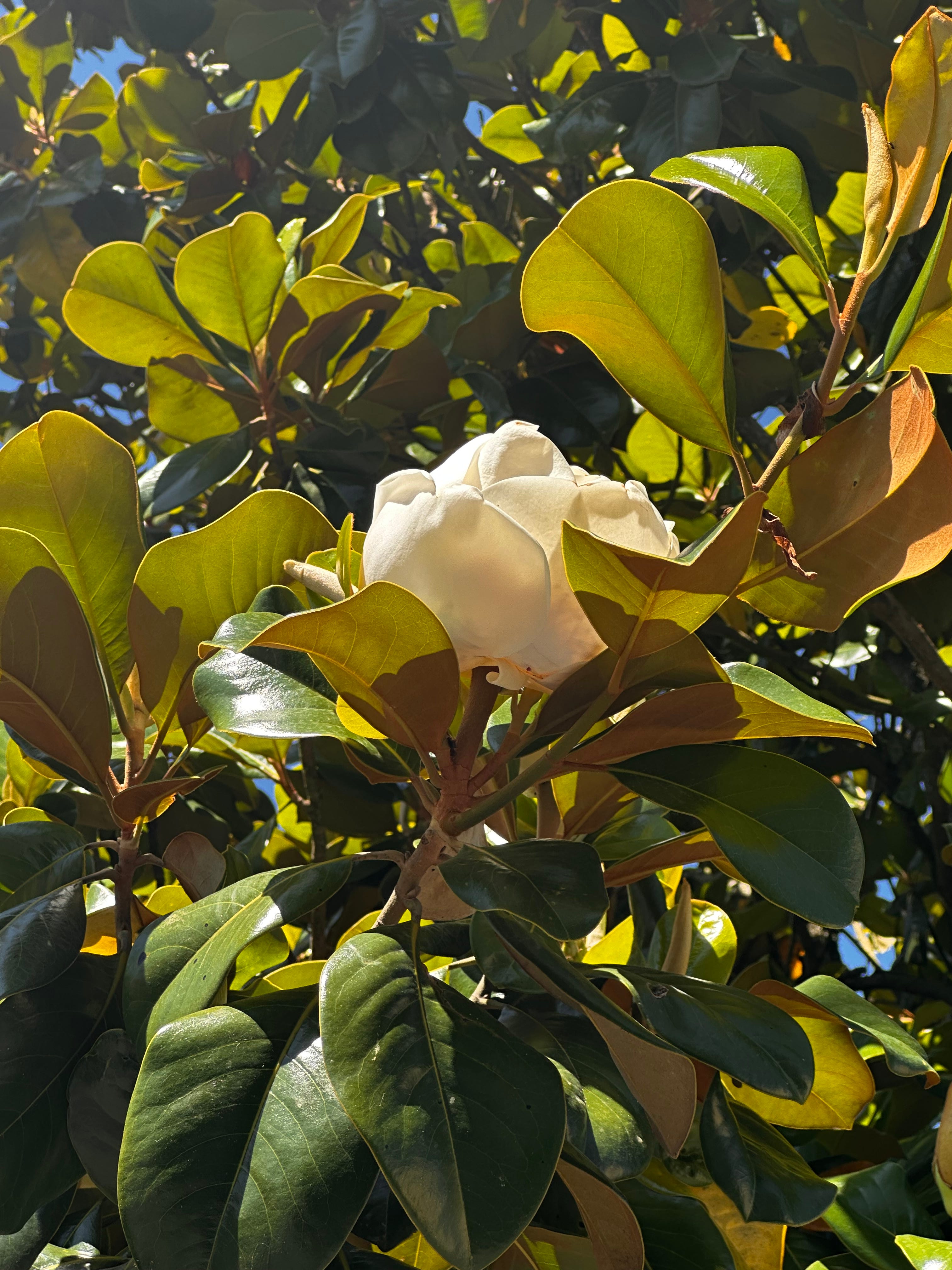
And then the sky broke, the way it does here, all at once and without apology. A stone farmstead at a bend in the road with new terracotta on one roof and old slate on the other and red geraniums against the granite. A wall of hydrangea, that deep saturated blue that only acid soil gives, spilling over a low wall in front of a bar with a hand-lettered sign that simply said OPEN. A single magnolia bloom, cupped and cream-white and not yet fully open, held up among leaves with copper undersides against a blue that had not existed an hour earlier. The road running on, empty and sunlit, with a tree’s shadow laid across it. Nothing was happening. Everything was.
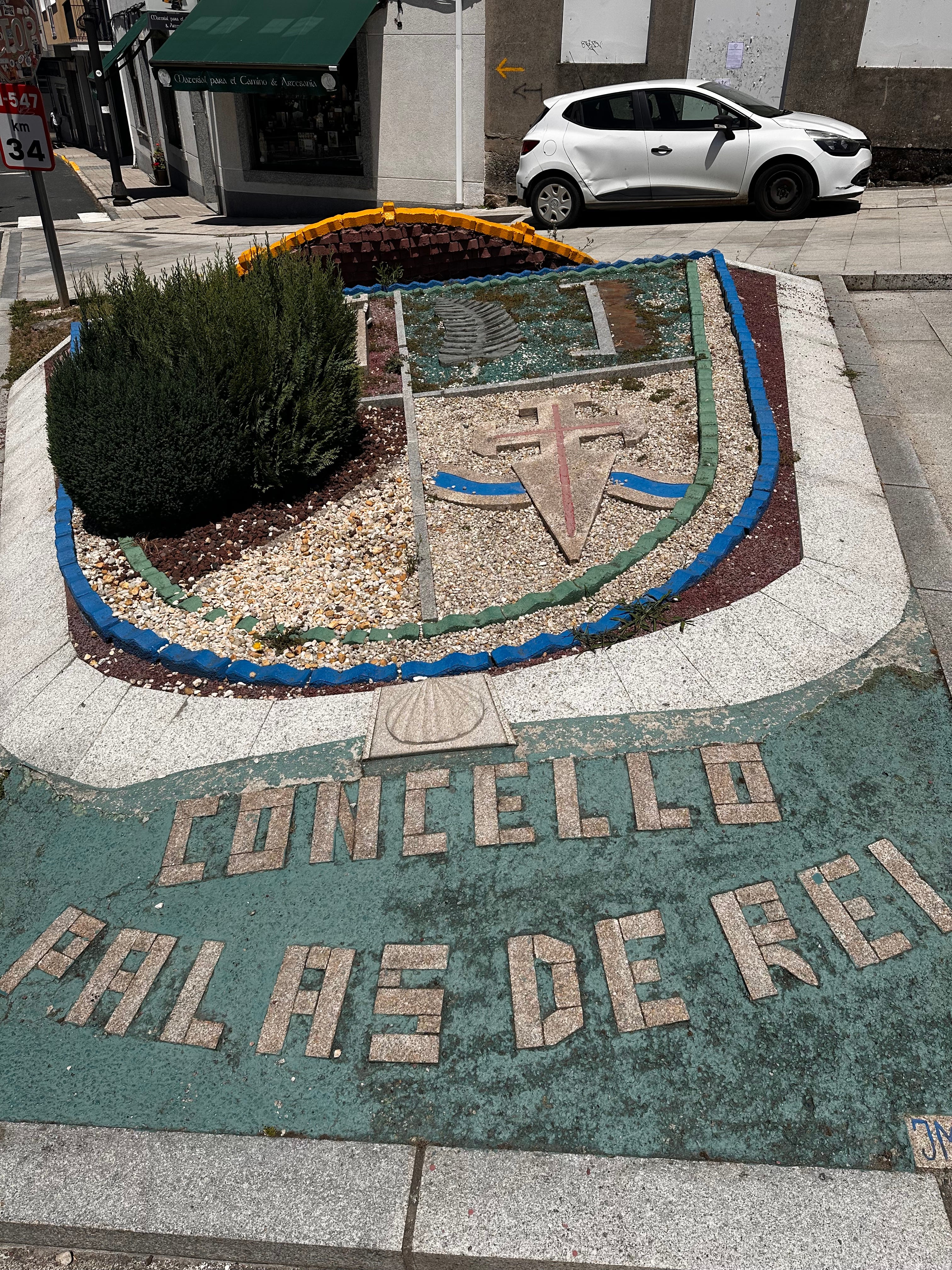
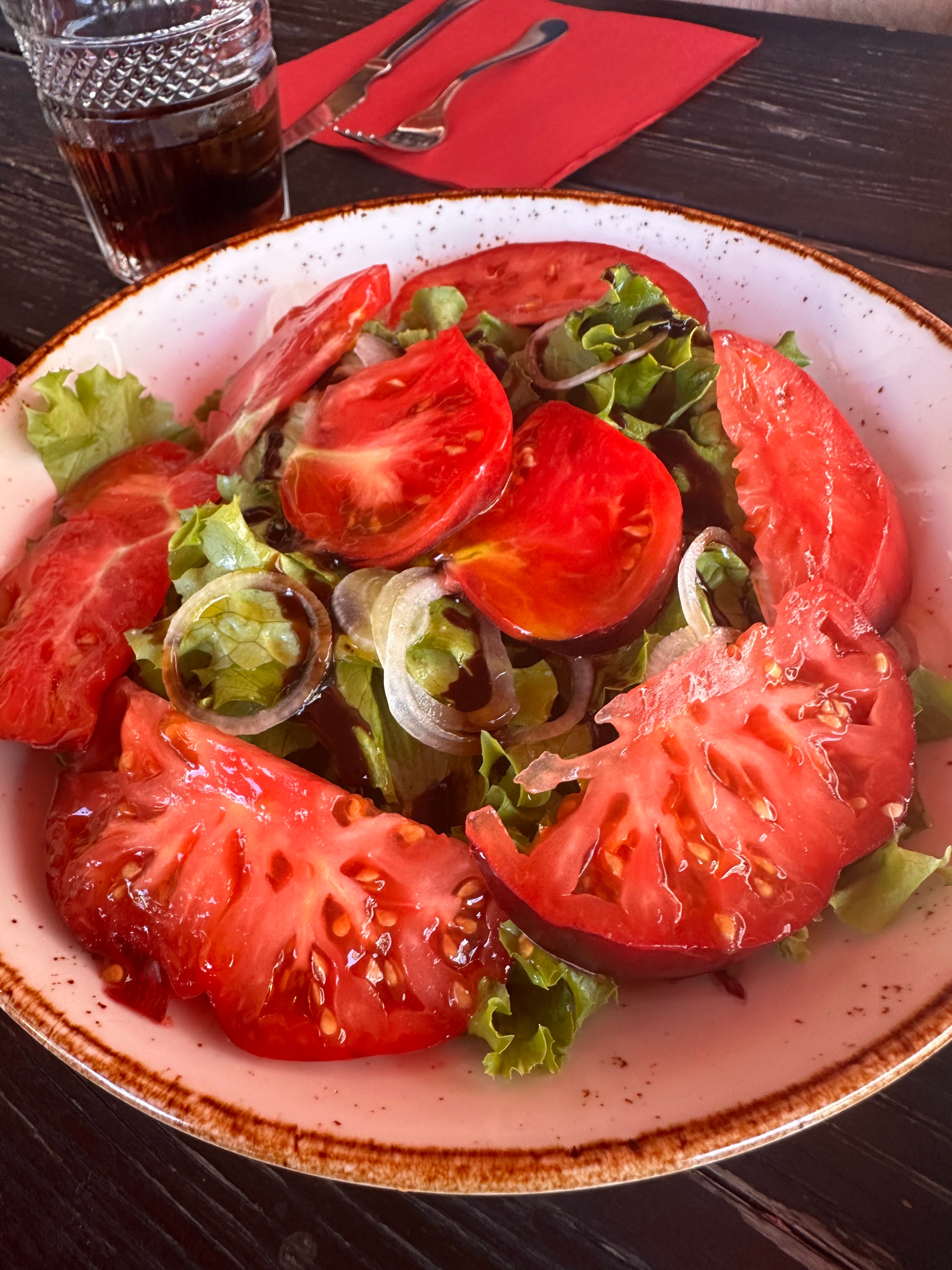
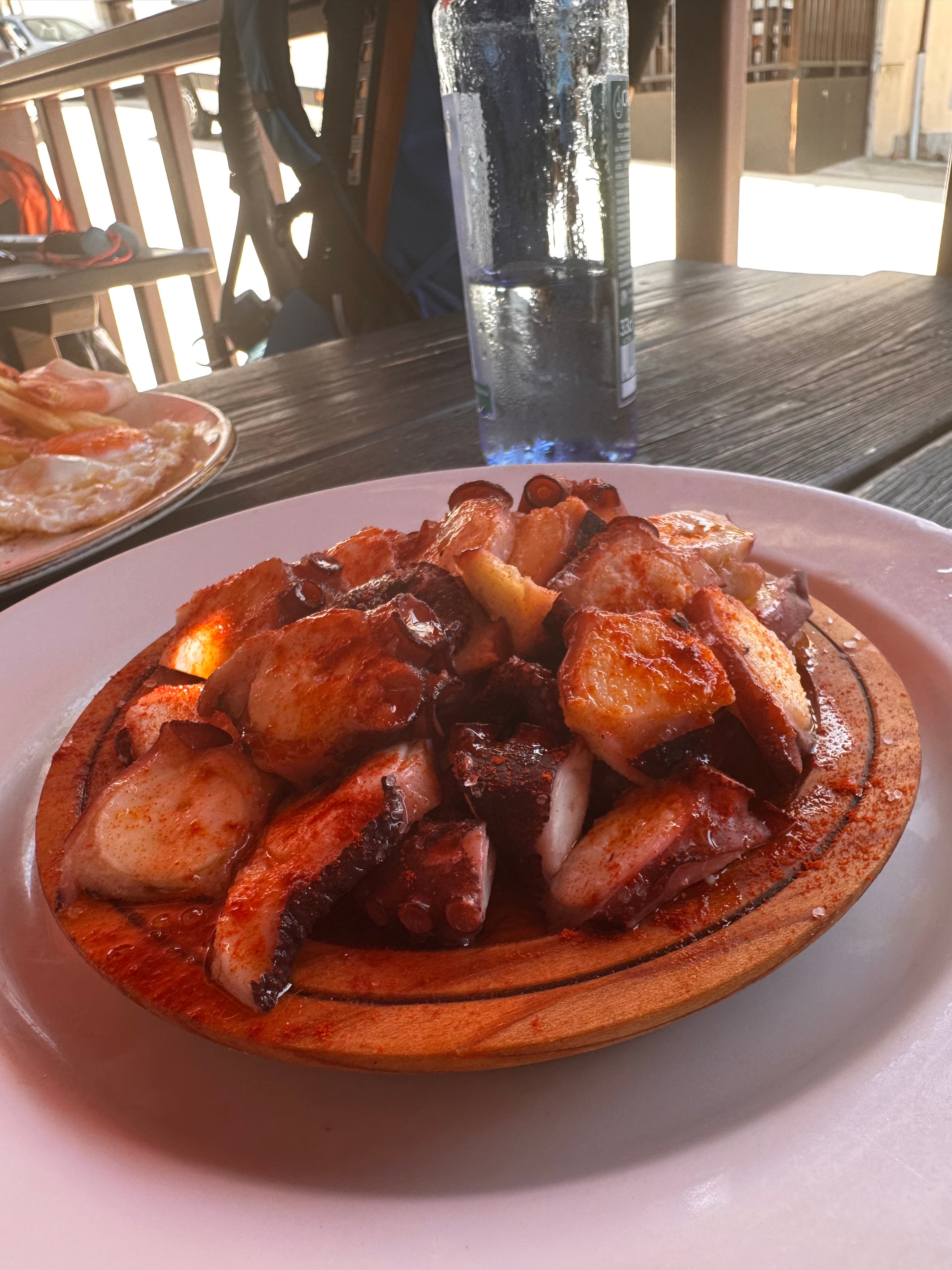
In Palas de Rei they had spelled the town’s name out in cut stone letters in the pavement and laid the coat of arms in colored gravel, with a granite scallop set in the middle of it, and it was a little ridiculous and I was completely charmed. And we sat and ate: thick wedges of tomato, translucent rings of onion, a gloss of balsamic. Then the pulpo on its wooden plate, coins of octopus under olive oil and a red dust of pimentón and coarse salt, which is the only way it is served here and the only way it should be.
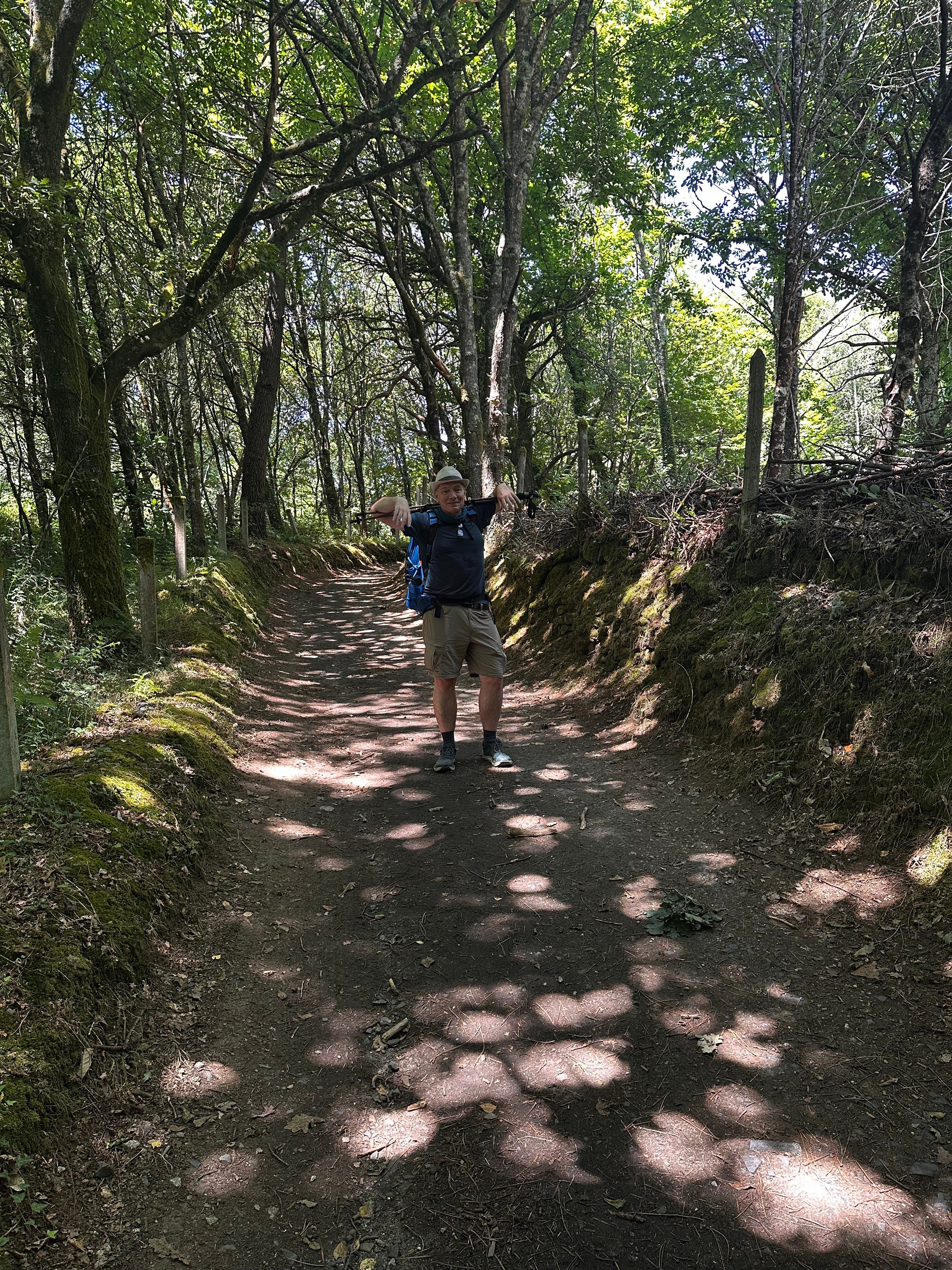
Our remaining trek today was only two more miles. John came up the lane with his poles slung across his shoulders like a yoke, grinning, delighted about being out and about and moving.
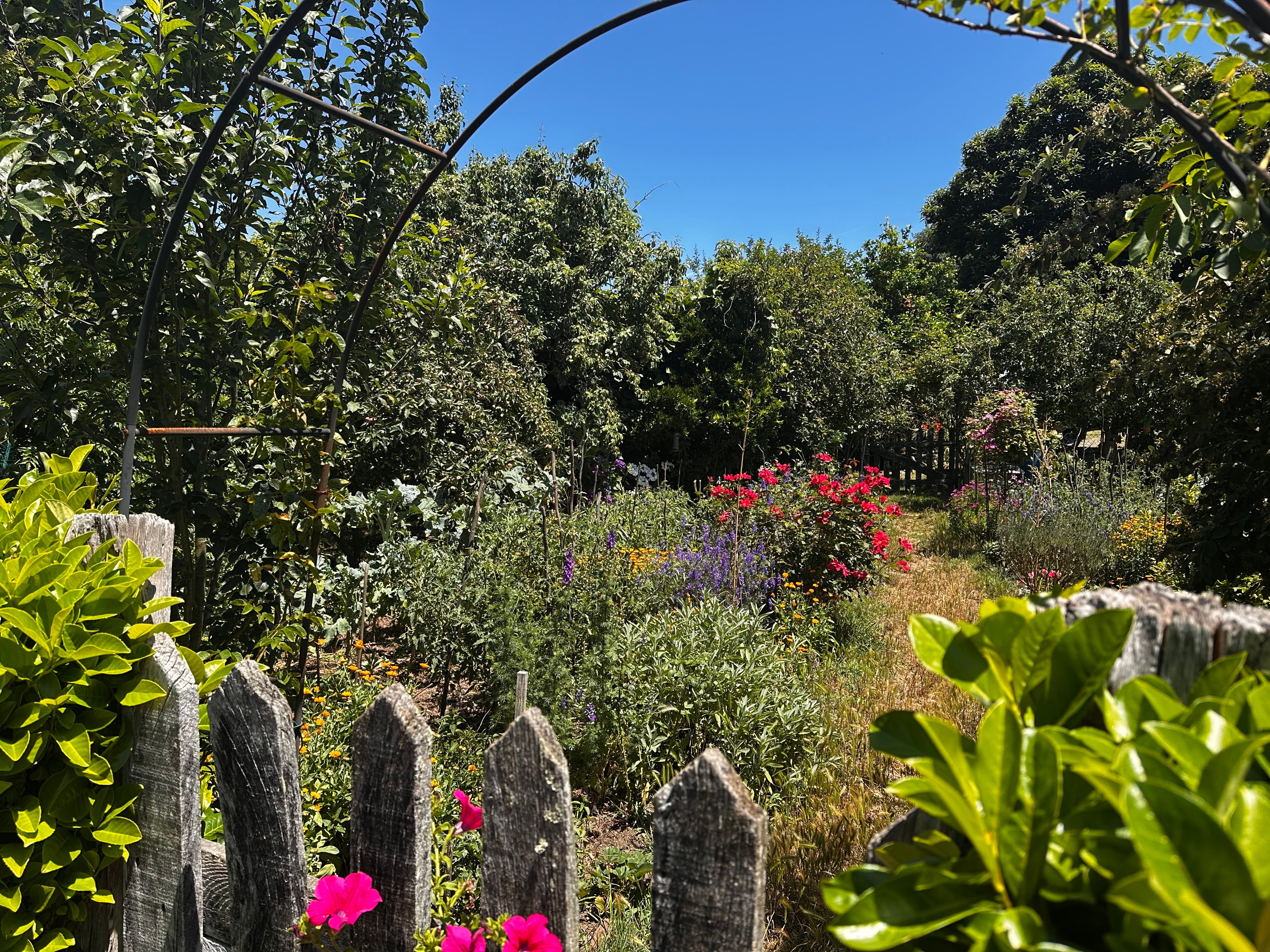
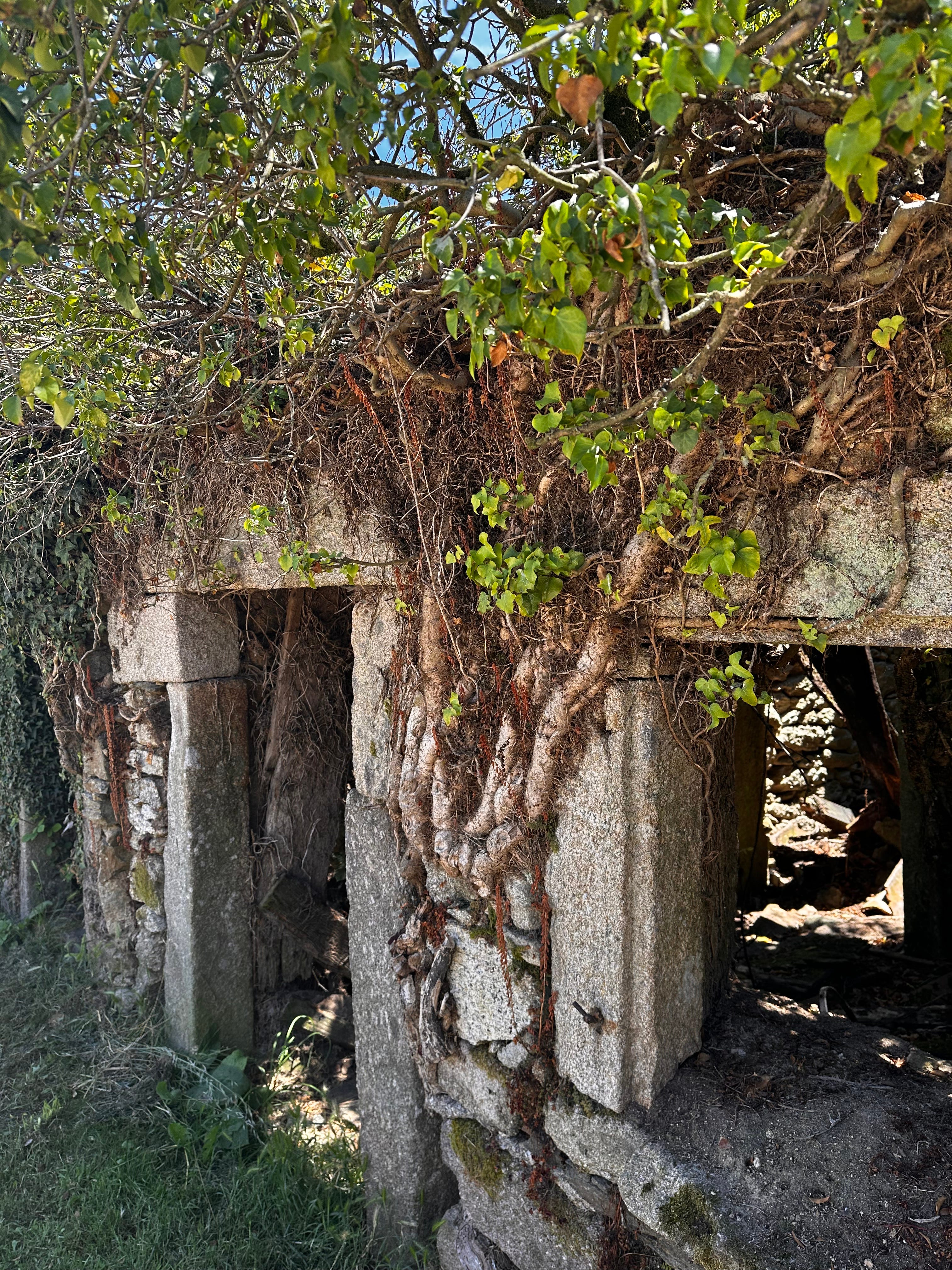
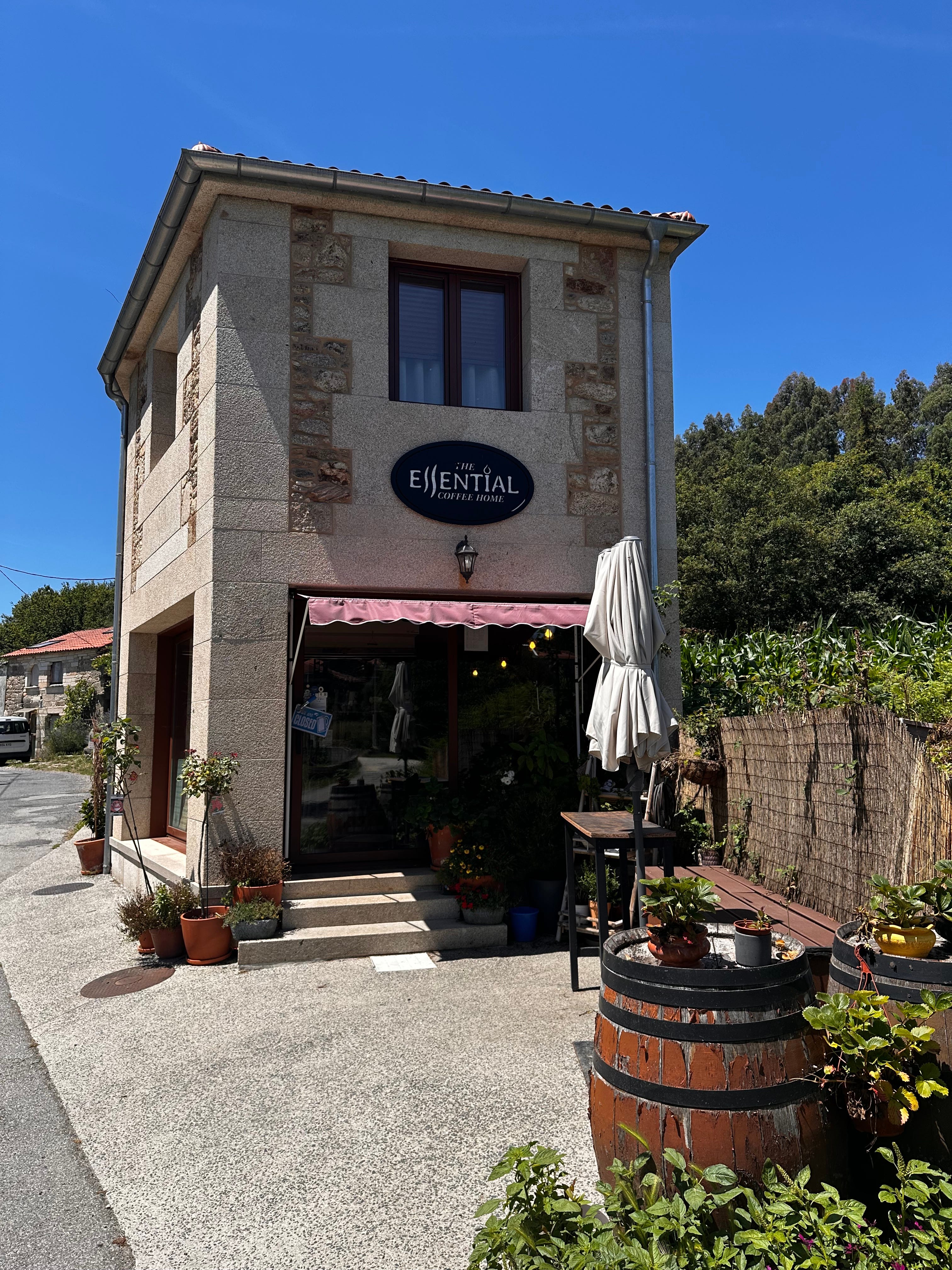
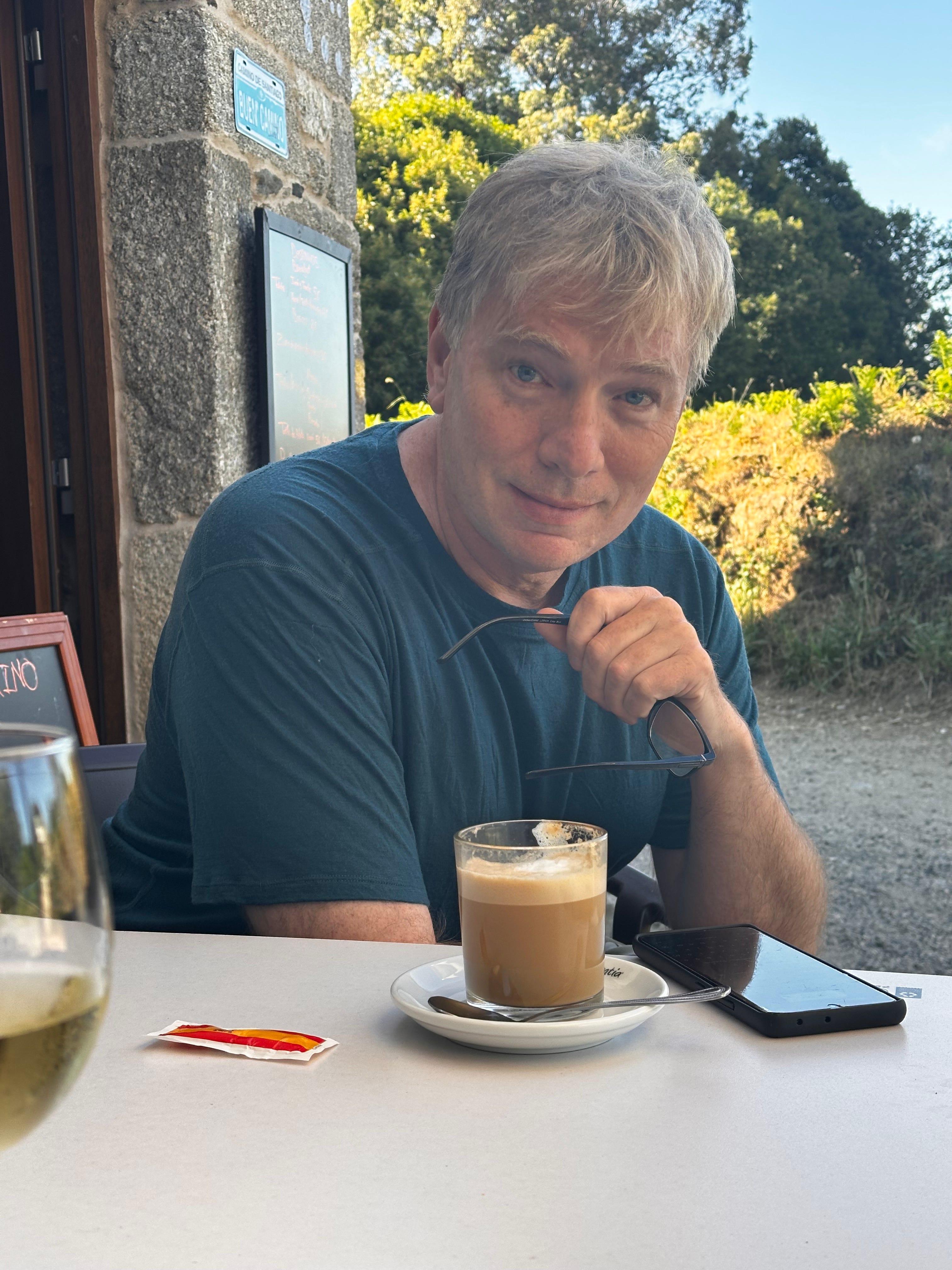
We came into San Xulián do Camino at half past three, a hamlet of a few stone houses and a lane, and La Pallota de San Cristóbal waiting at the end of it. The pack came off. The back that had been so tight a week ago had nothing to say at all. There was wine that evening, and caldo gallego, and a tortilla, and none of it was remarkable, and all of it was exactly enough. Later there was a cortado in gold light with a small blue plaque on the granite behind John reading BUEN CAMINO, and that was the day.
I have spent most of my life arranging things. It is what I am good at, and it is most of what I am paid for. Out here, day after day, the arrangement keeps coming apart in my hands and the day keeps turning out better than the one I had planned. Twenty kilometers of Galicia, a cheese I had not heard of, a woman with her boots off in a gravel yard, unapologetic for stopping, a plate of tomatoes in Palas de Rei so ripe they needed nothing but oil and salt. And I did nothing to earn any of it except keep going.
El peregrino agradece. Tomorrow, Melide.


