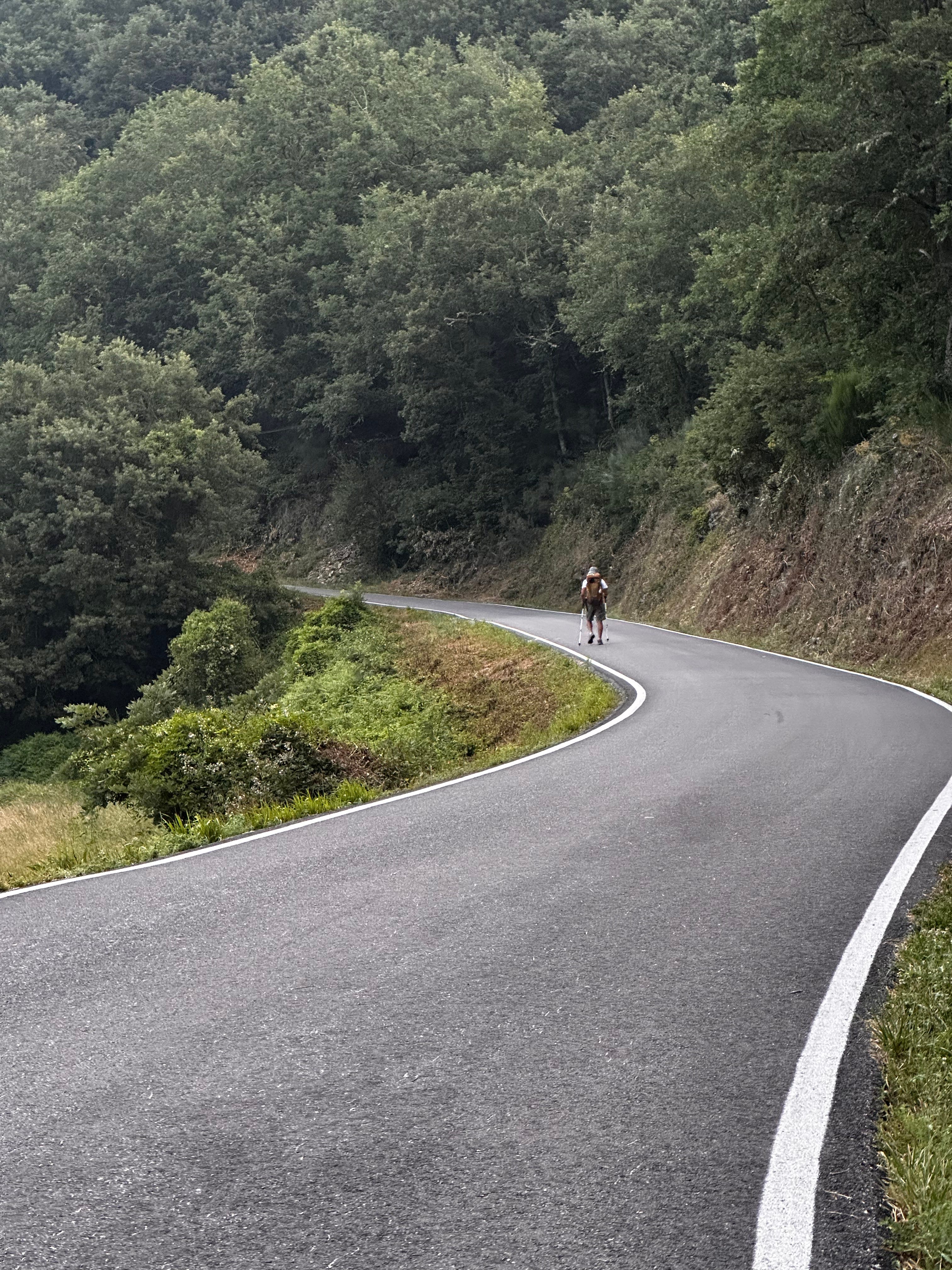
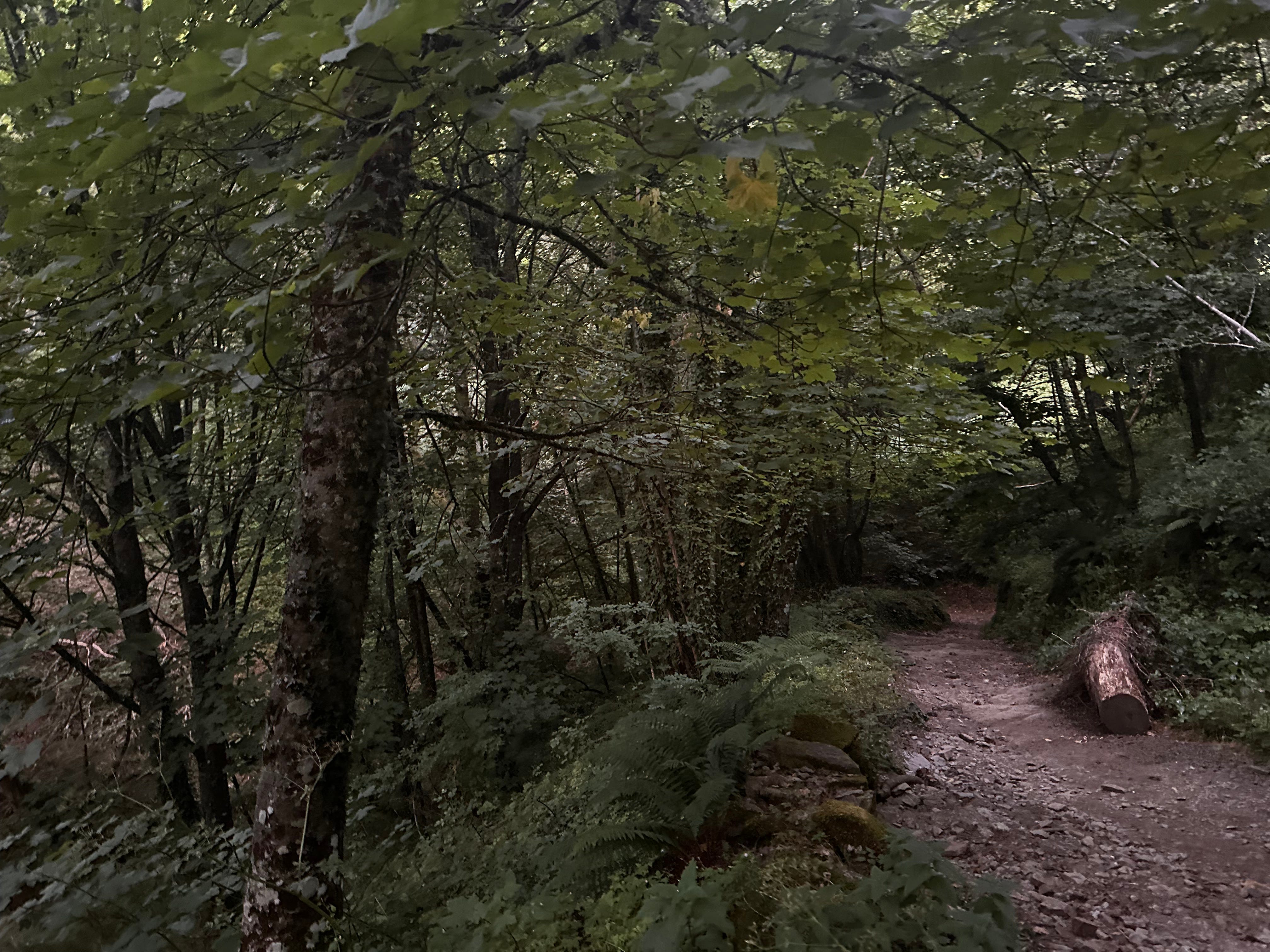
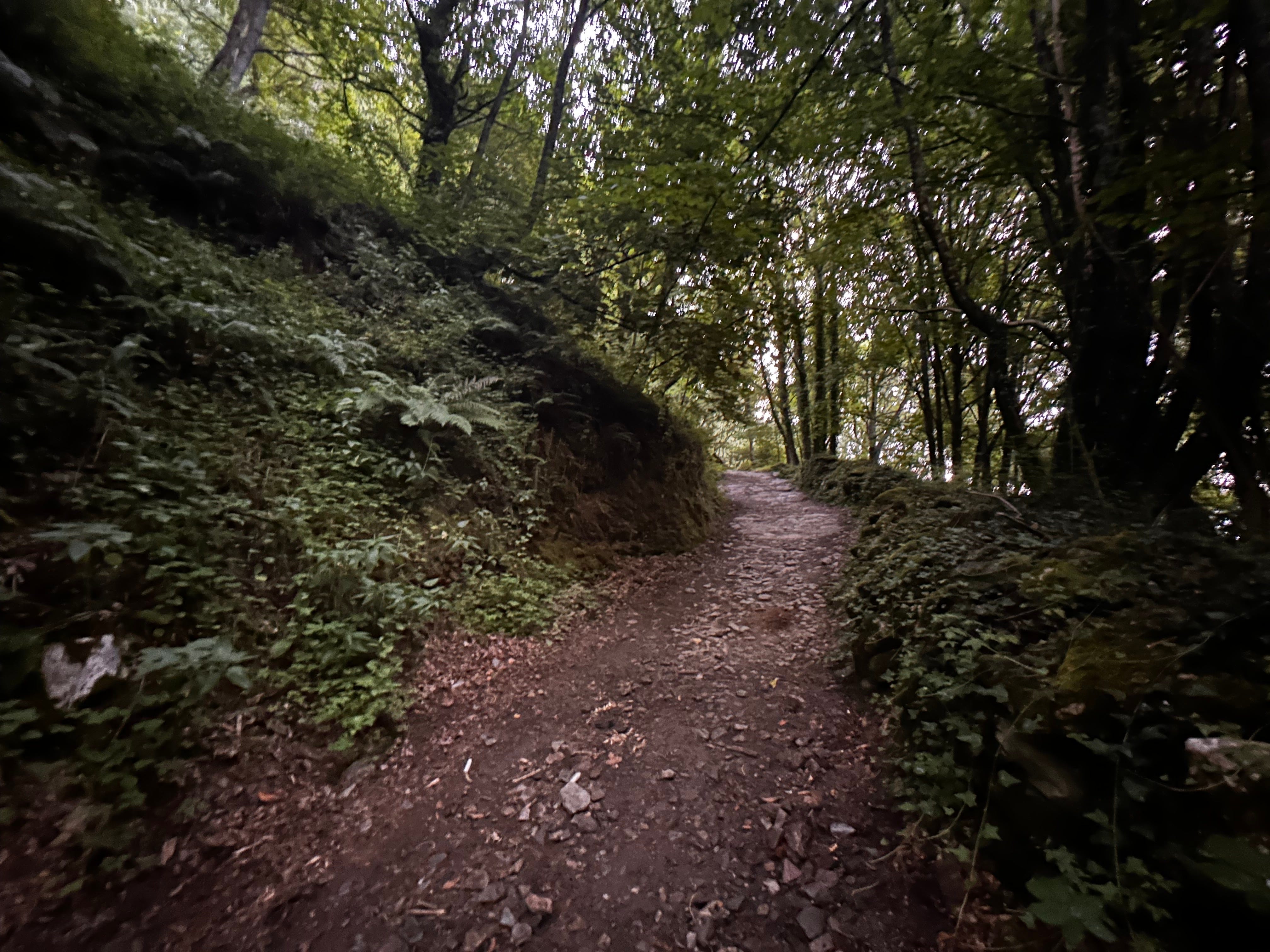
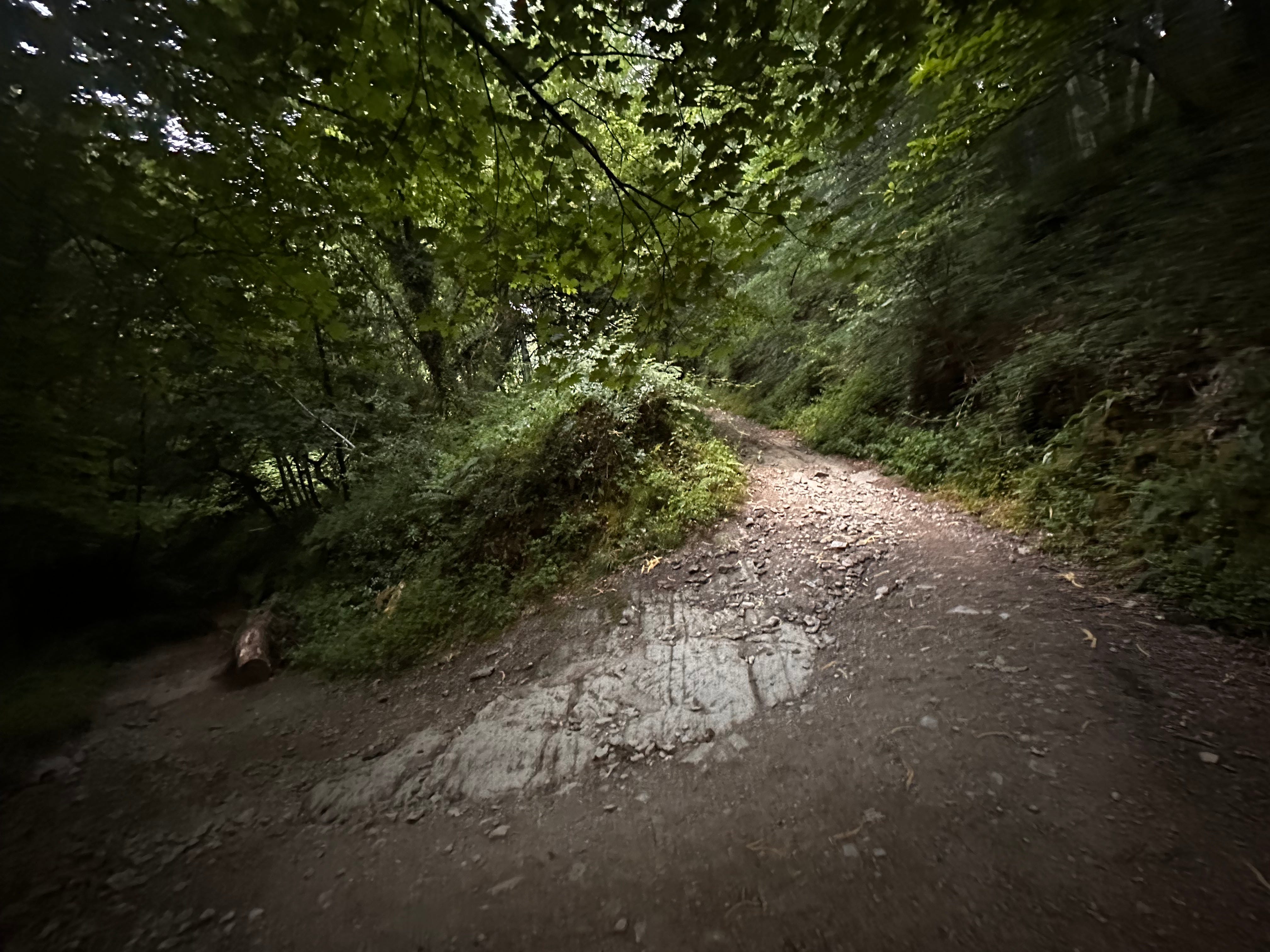
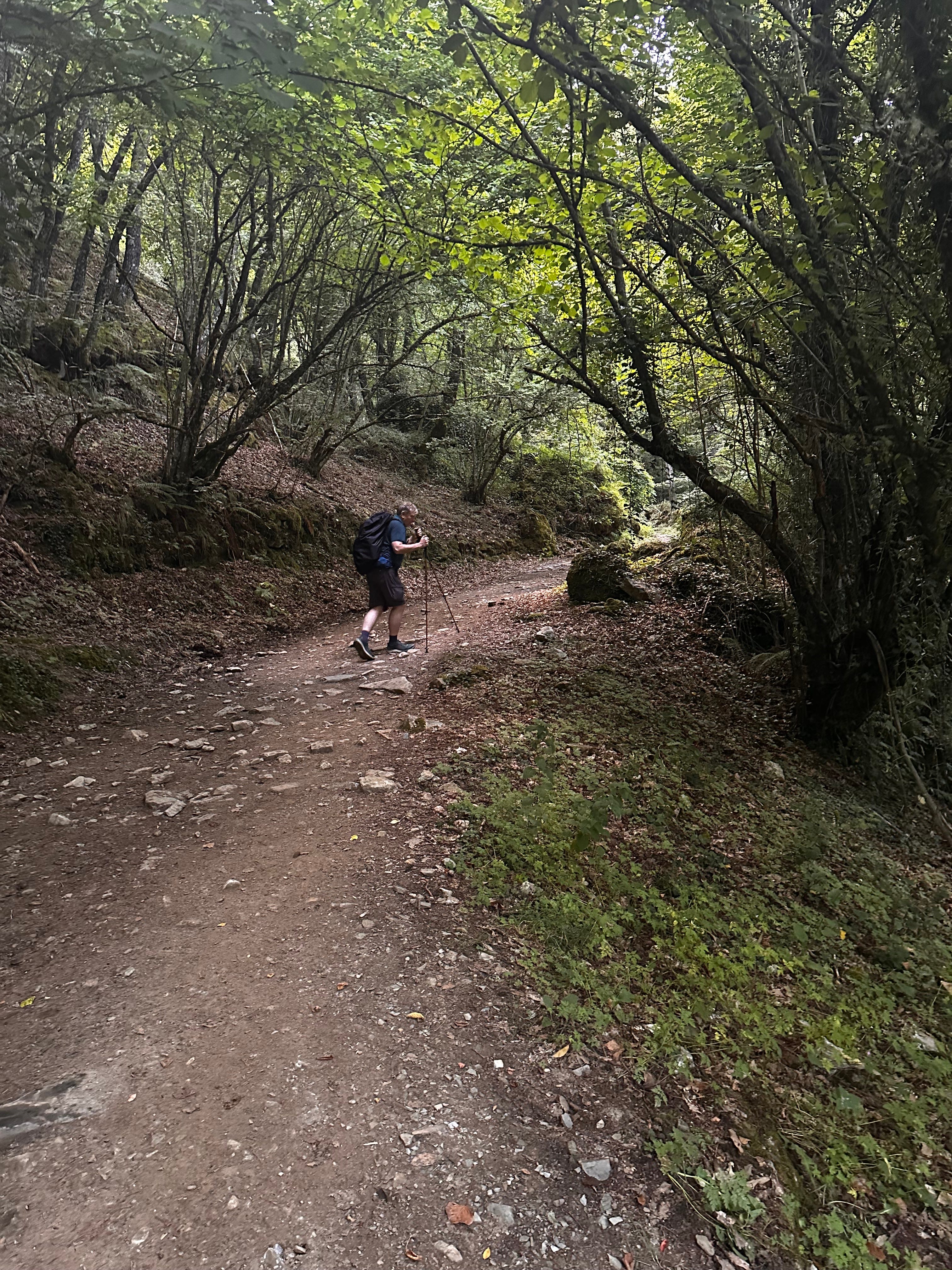
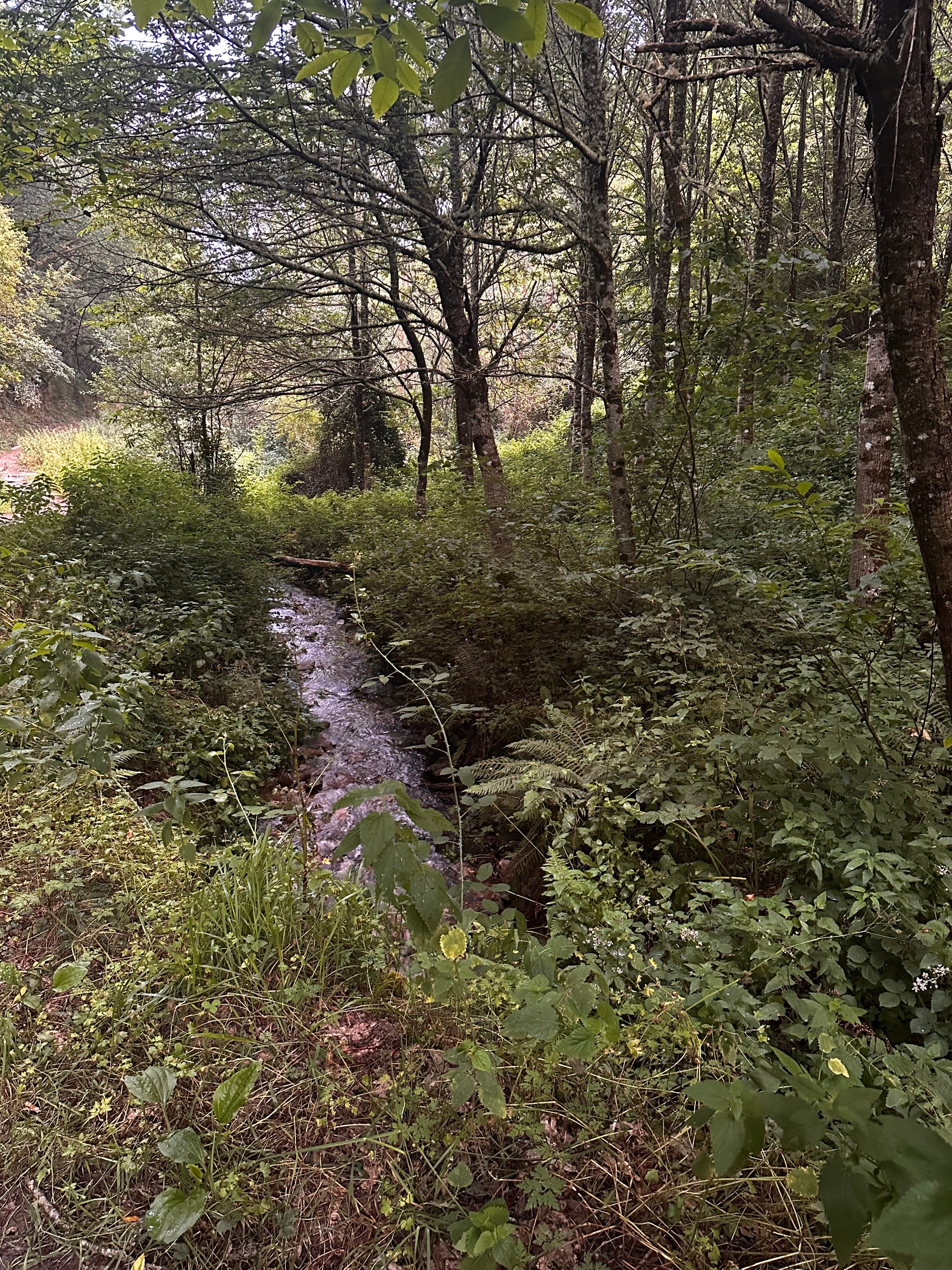
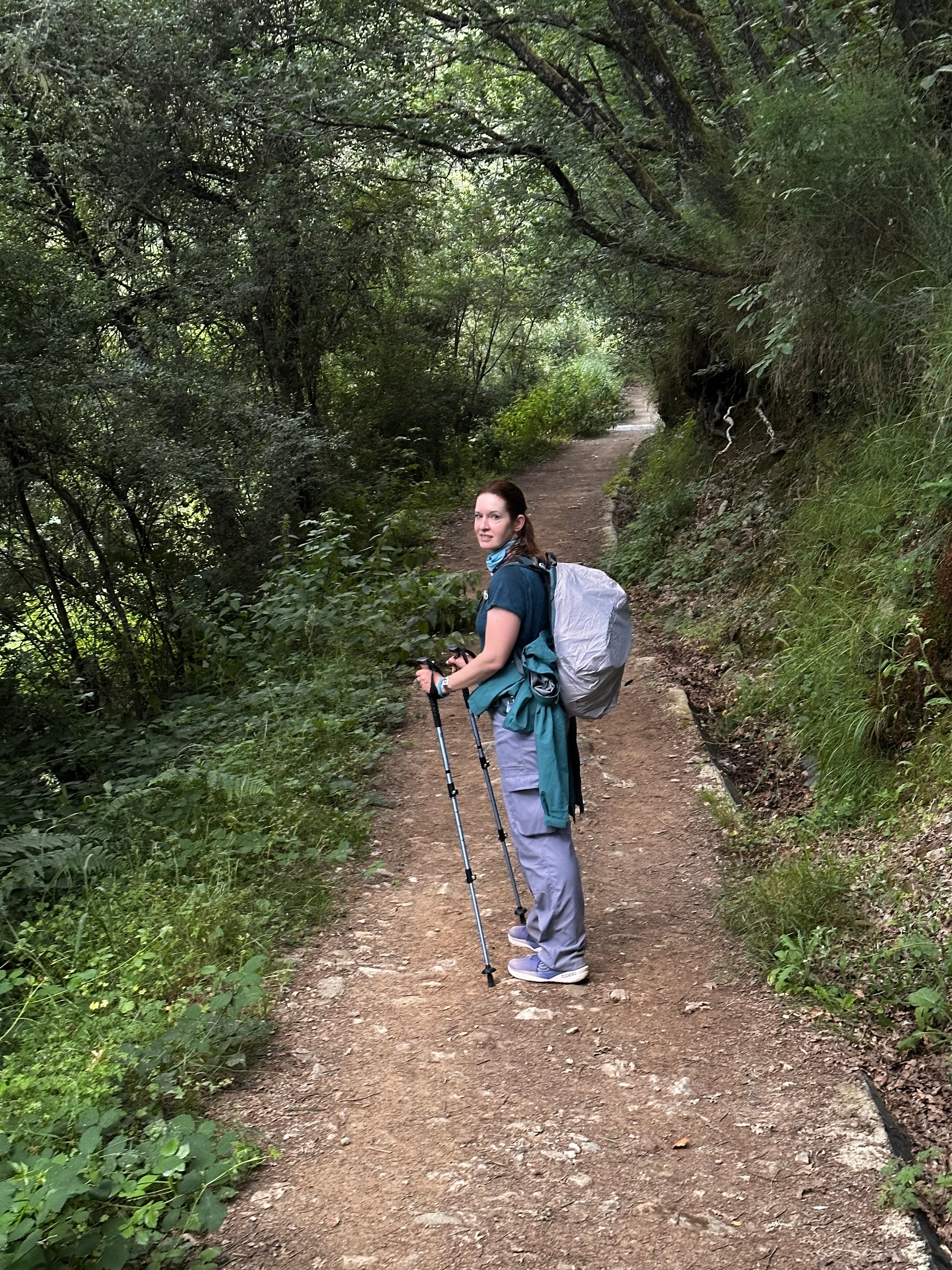
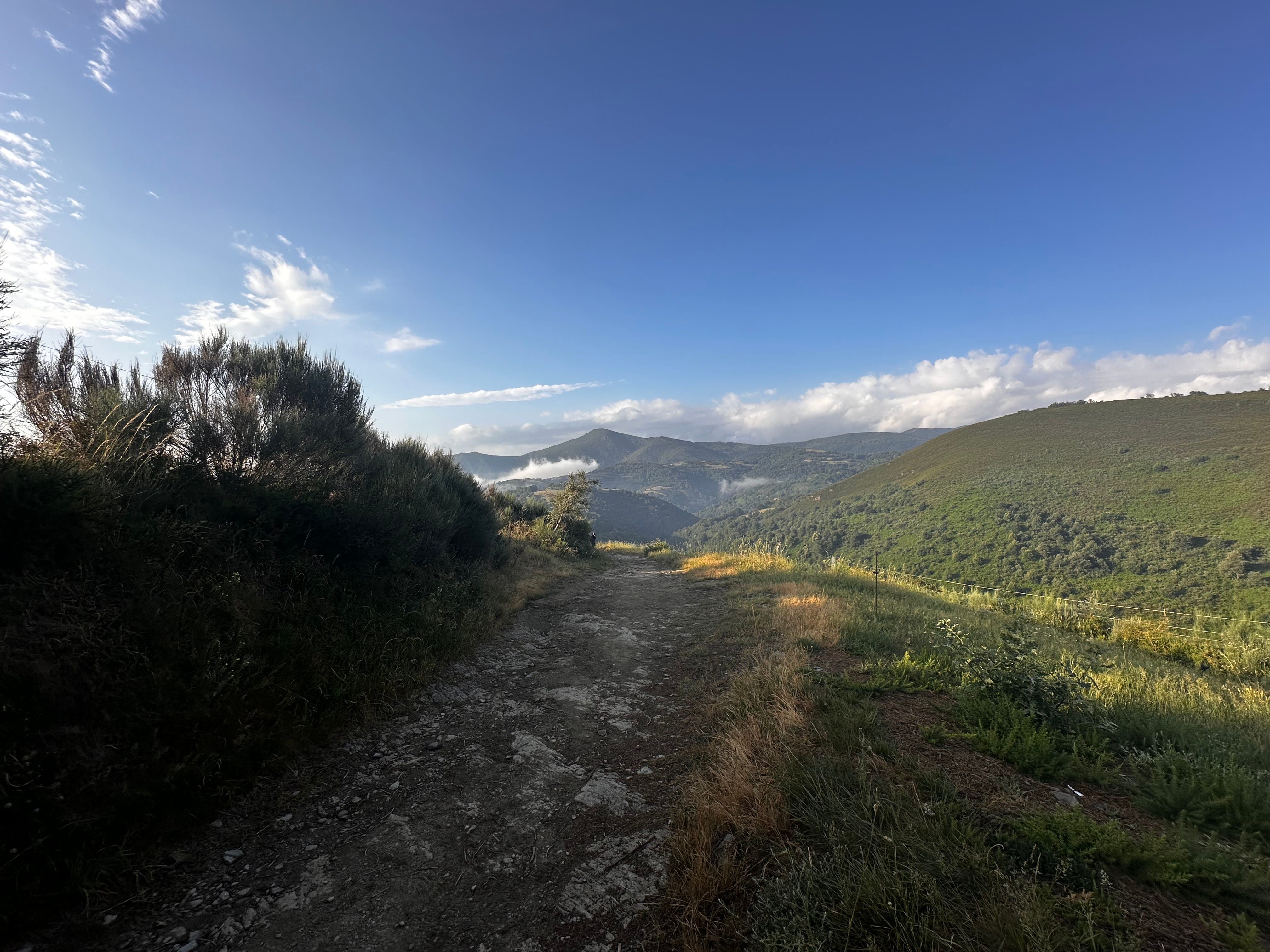
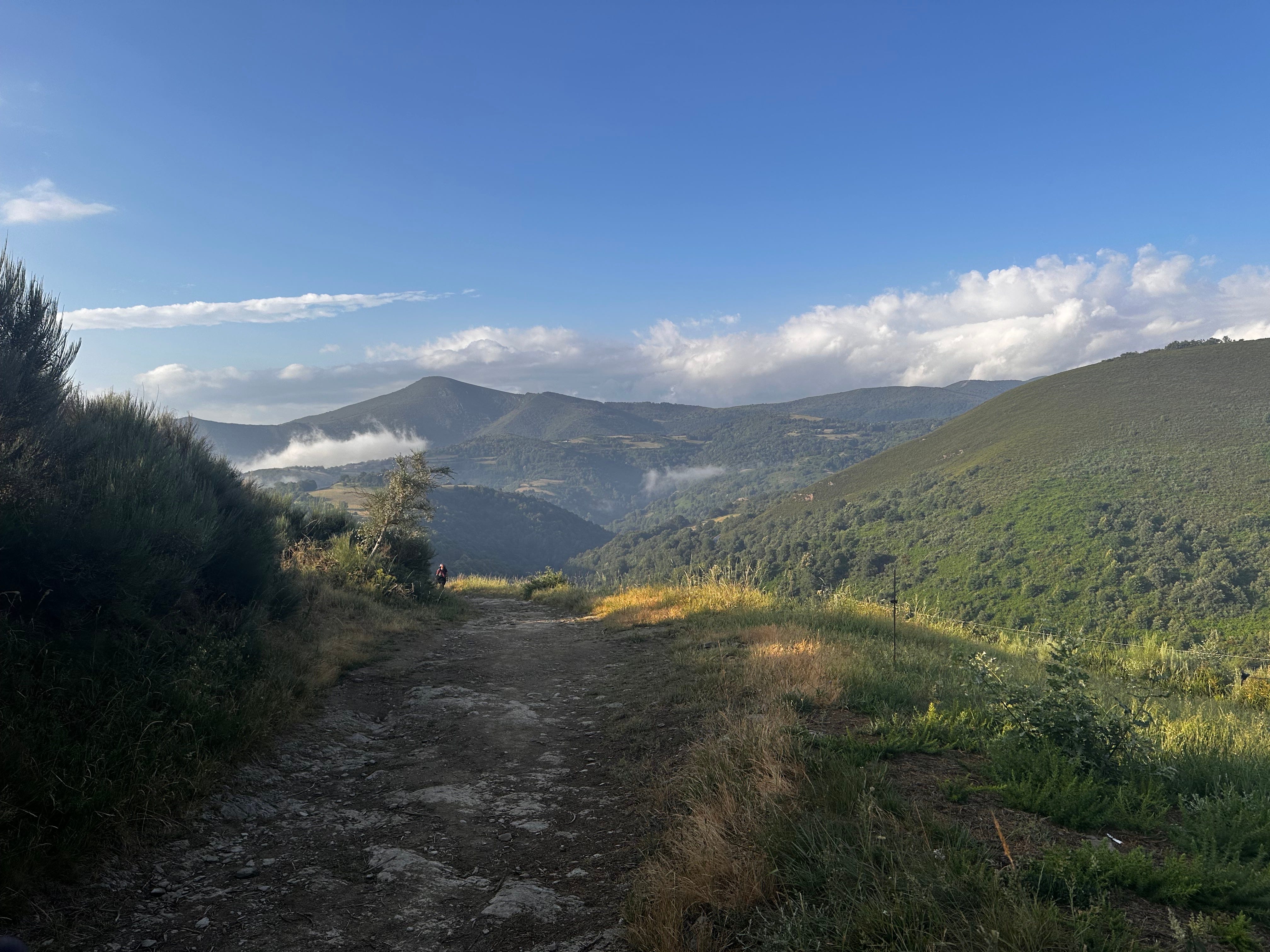
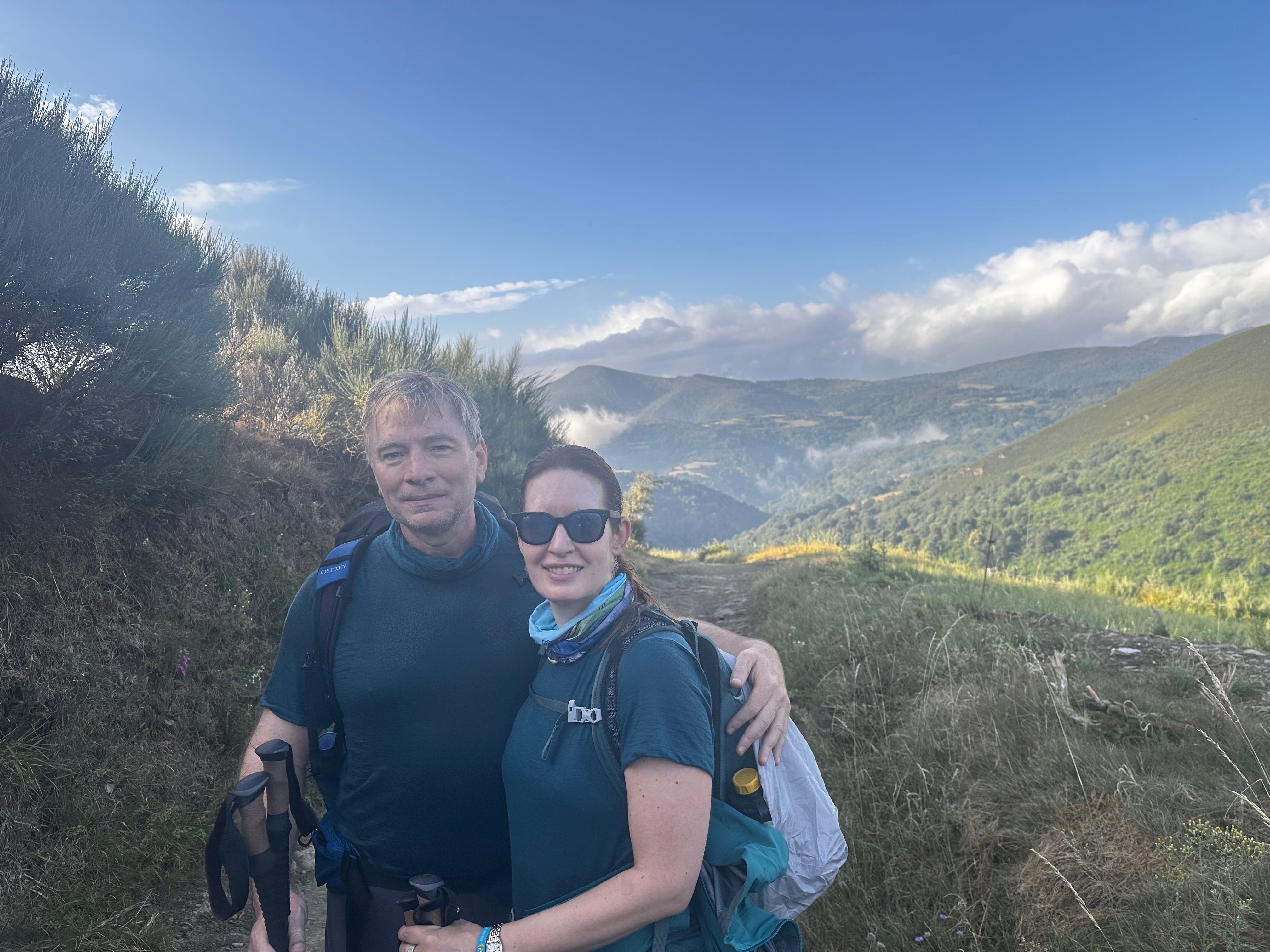
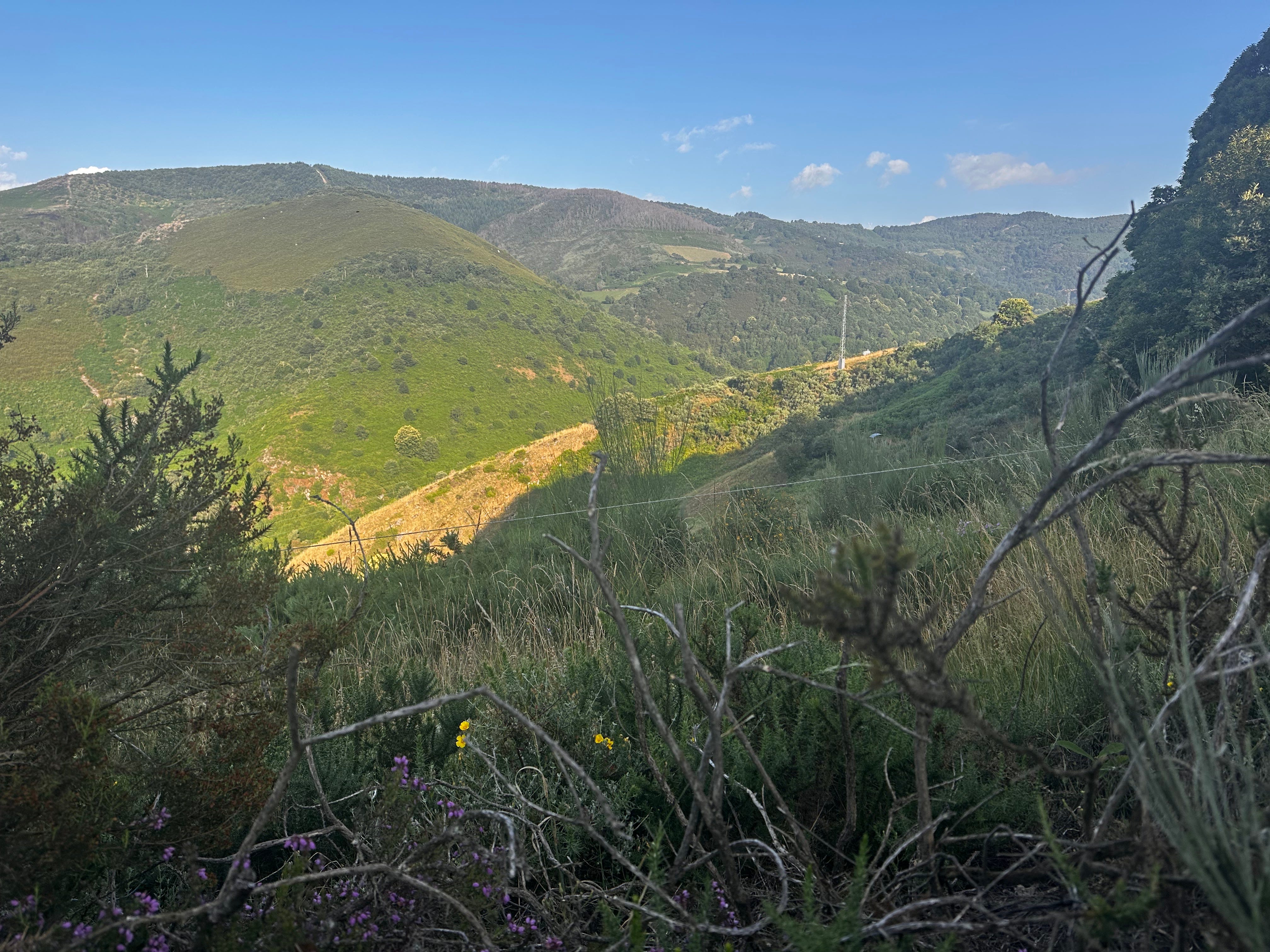
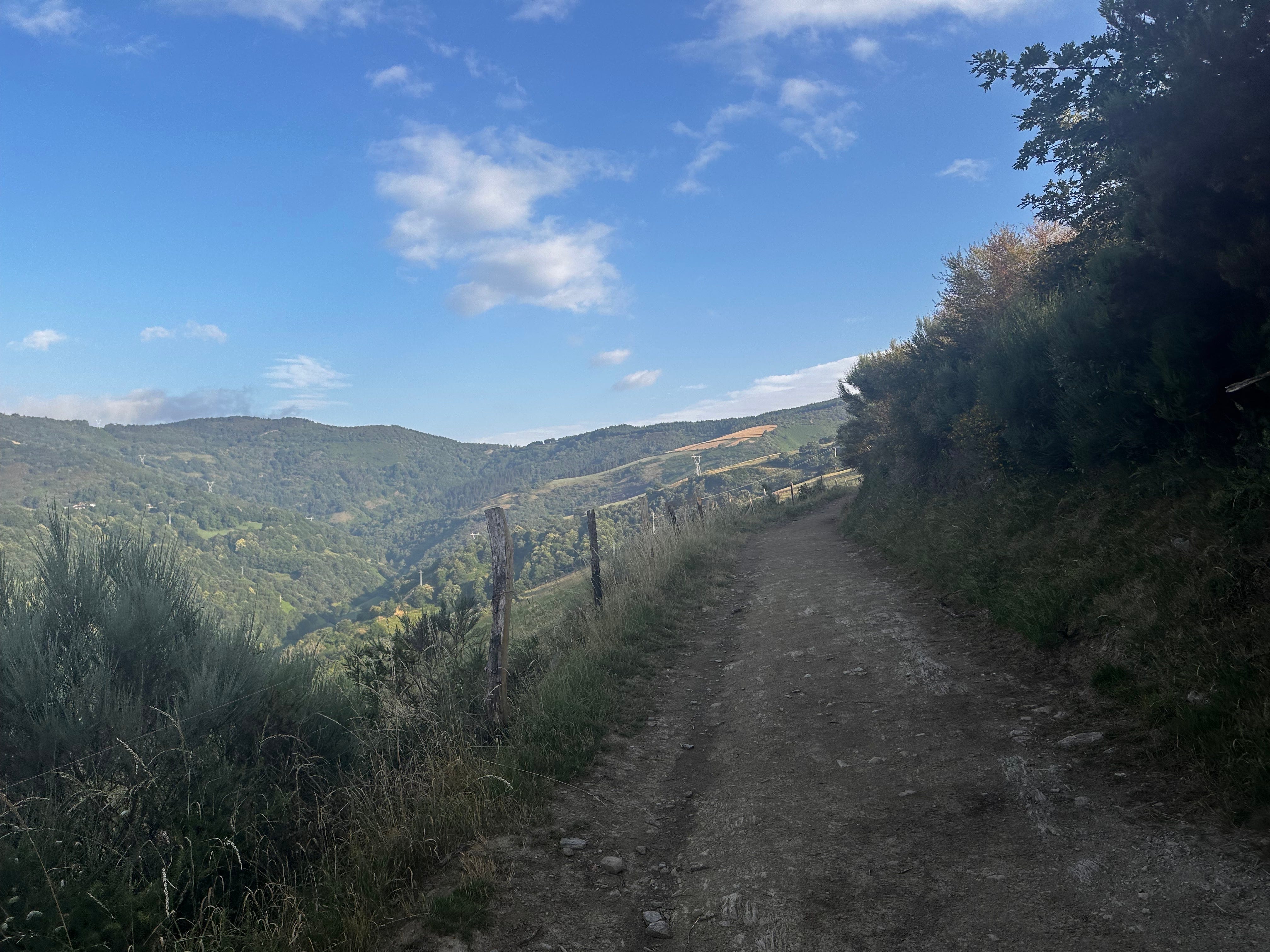
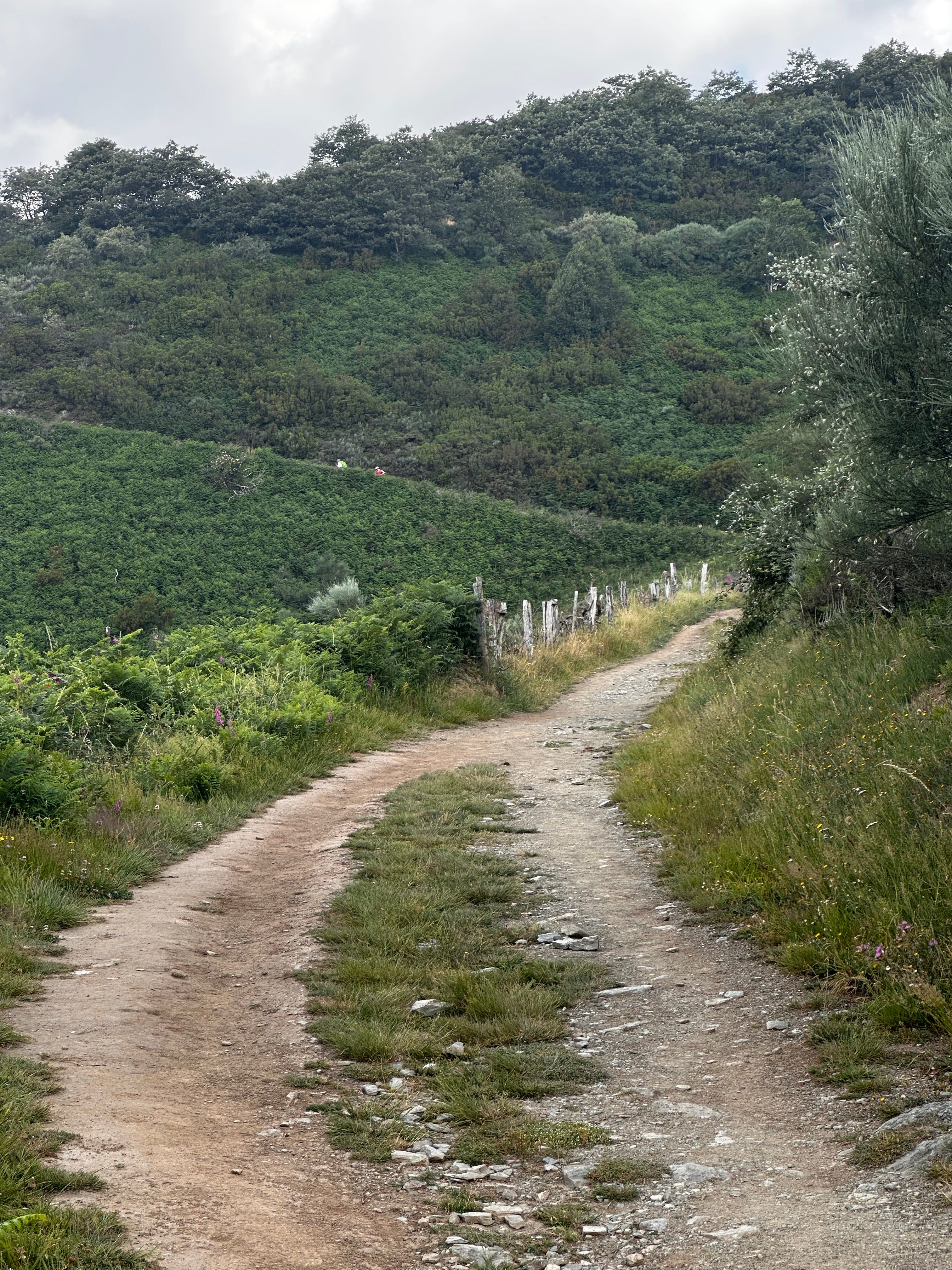
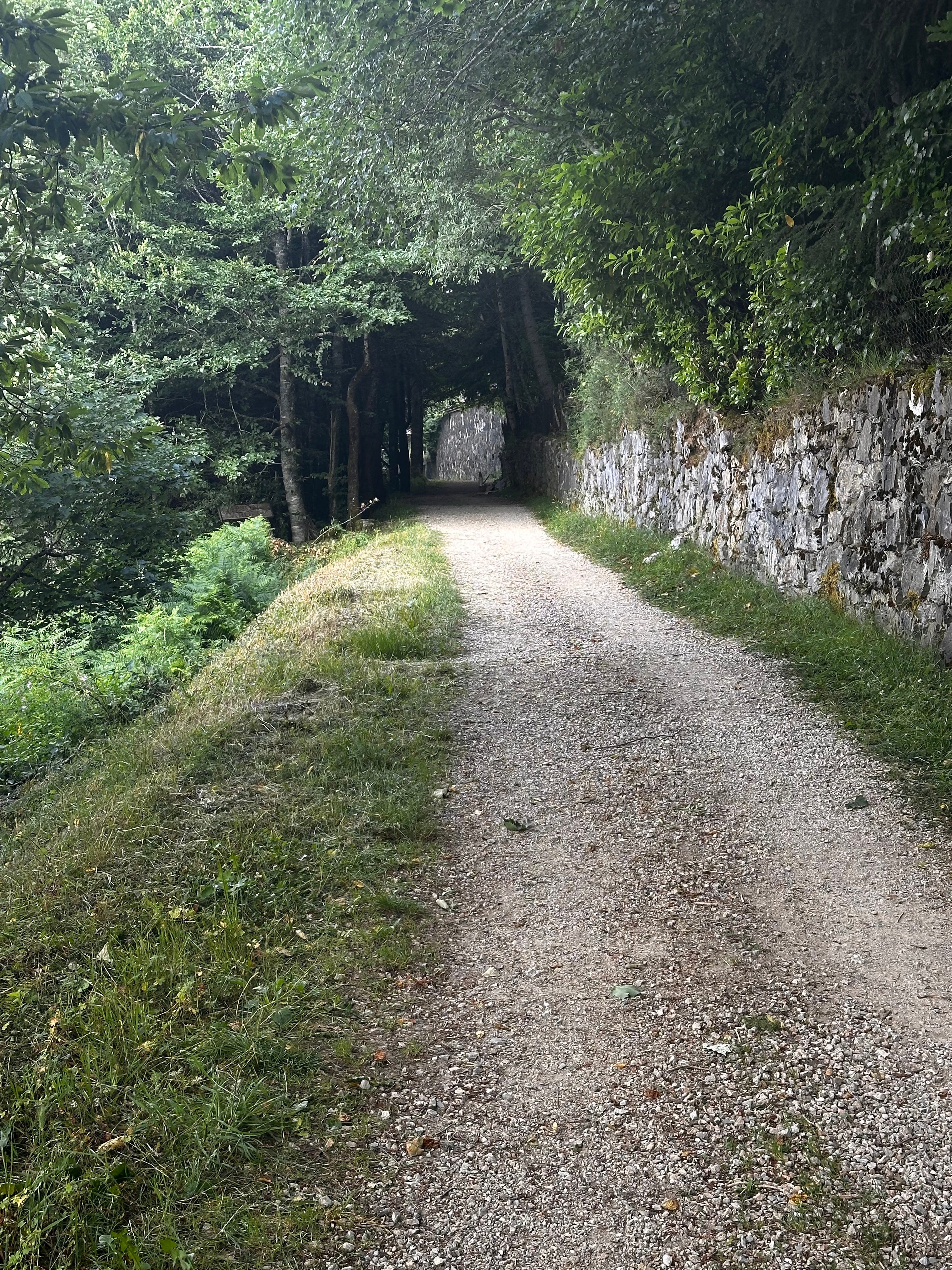
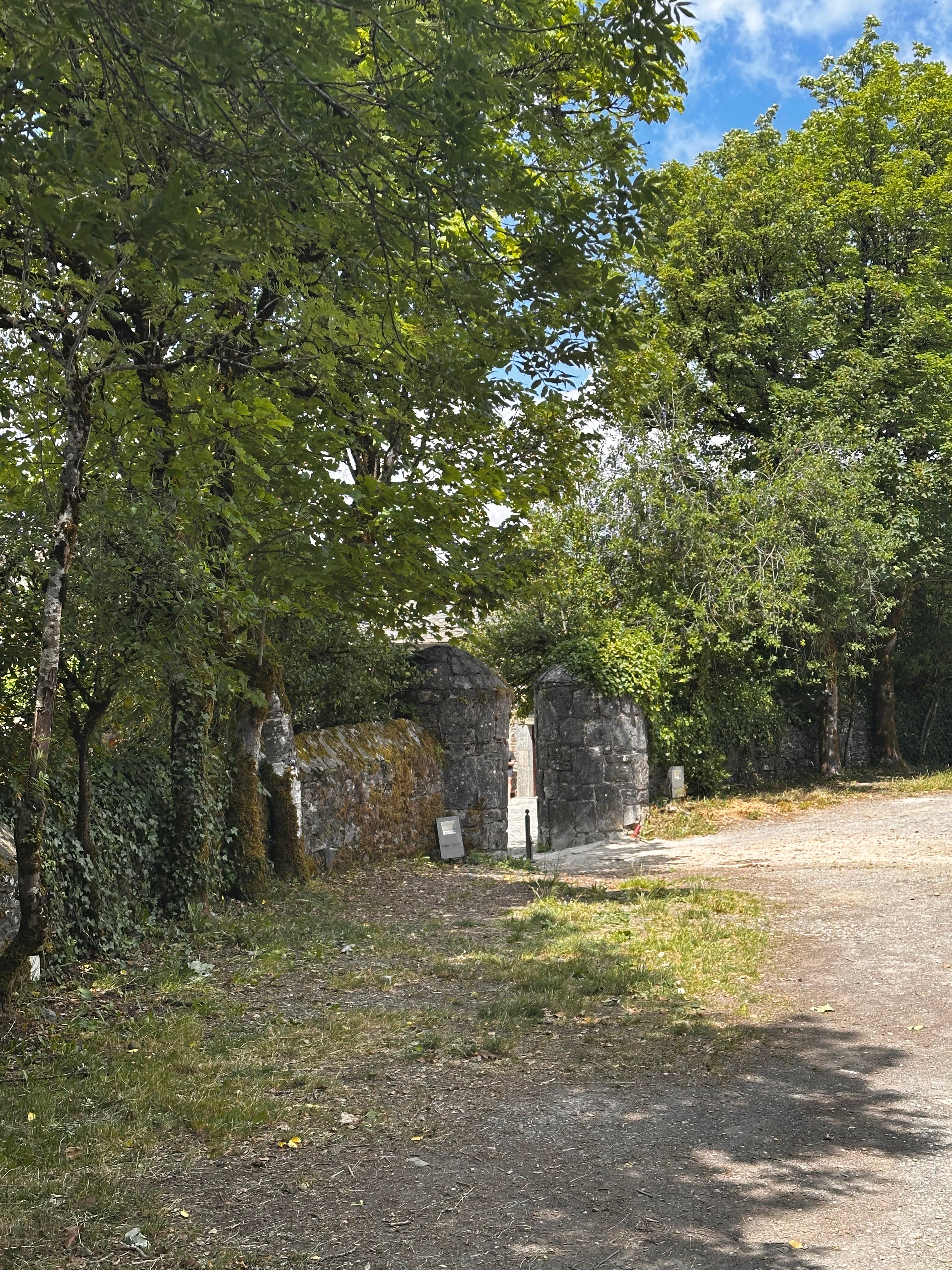
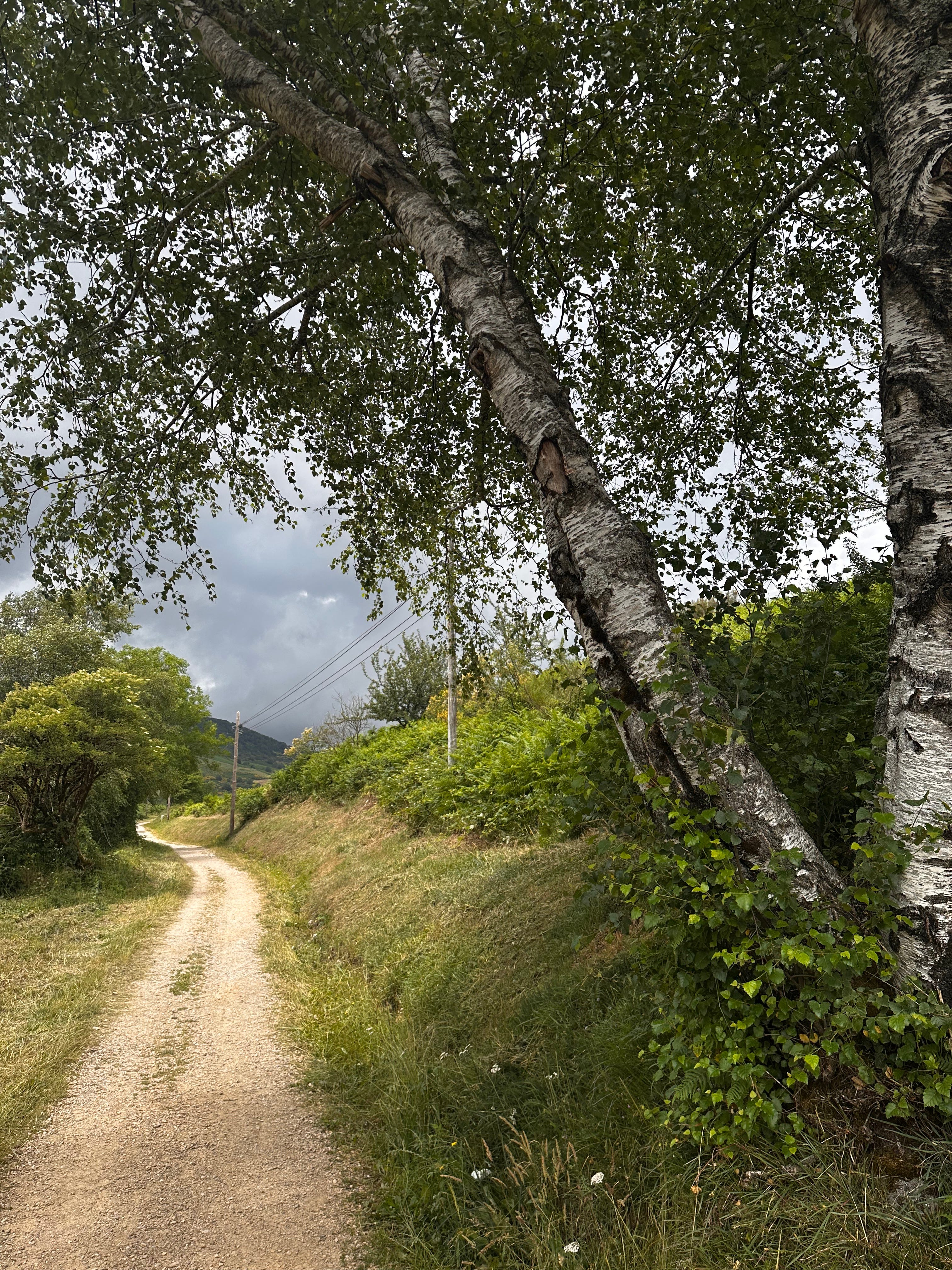
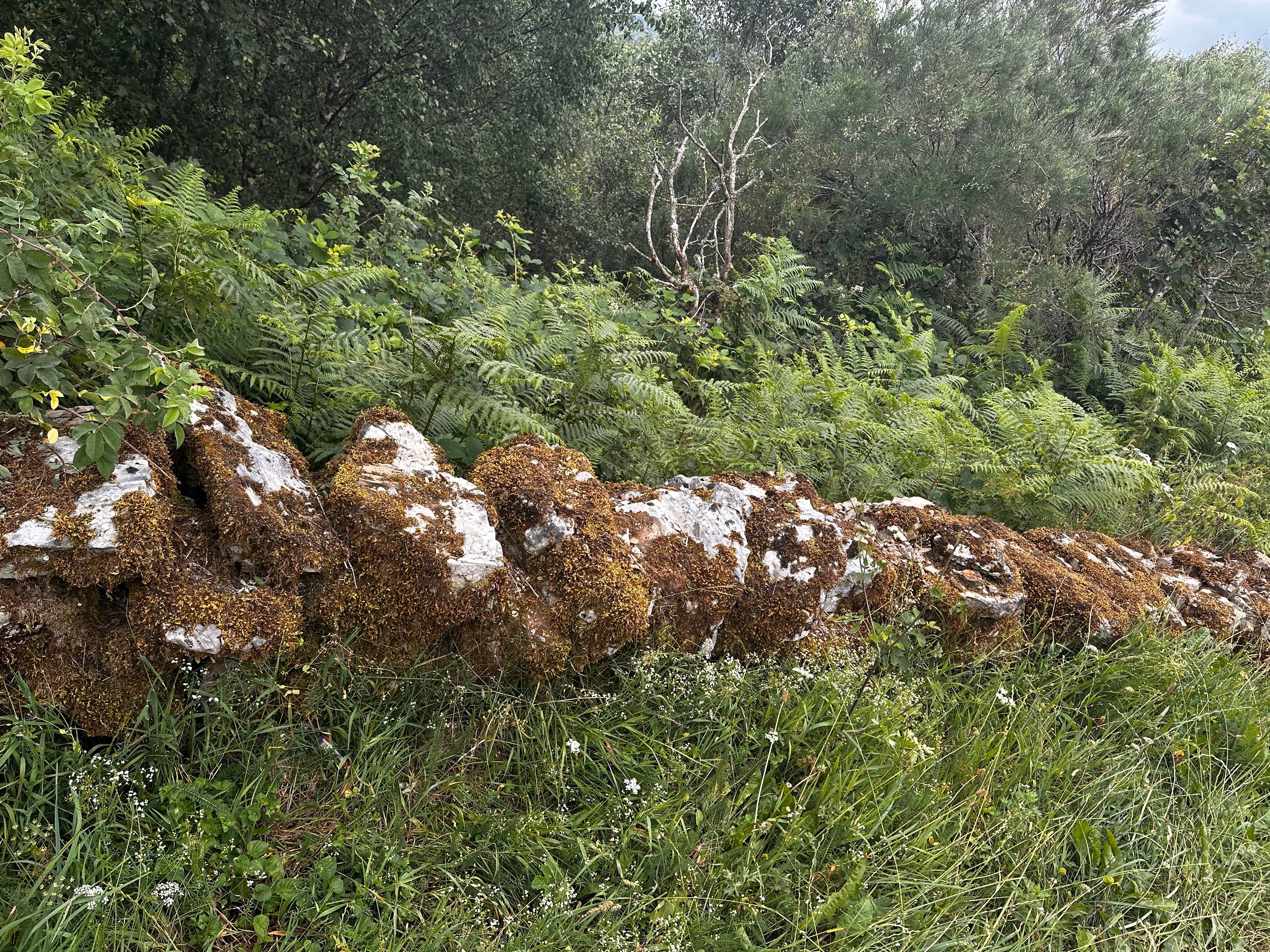
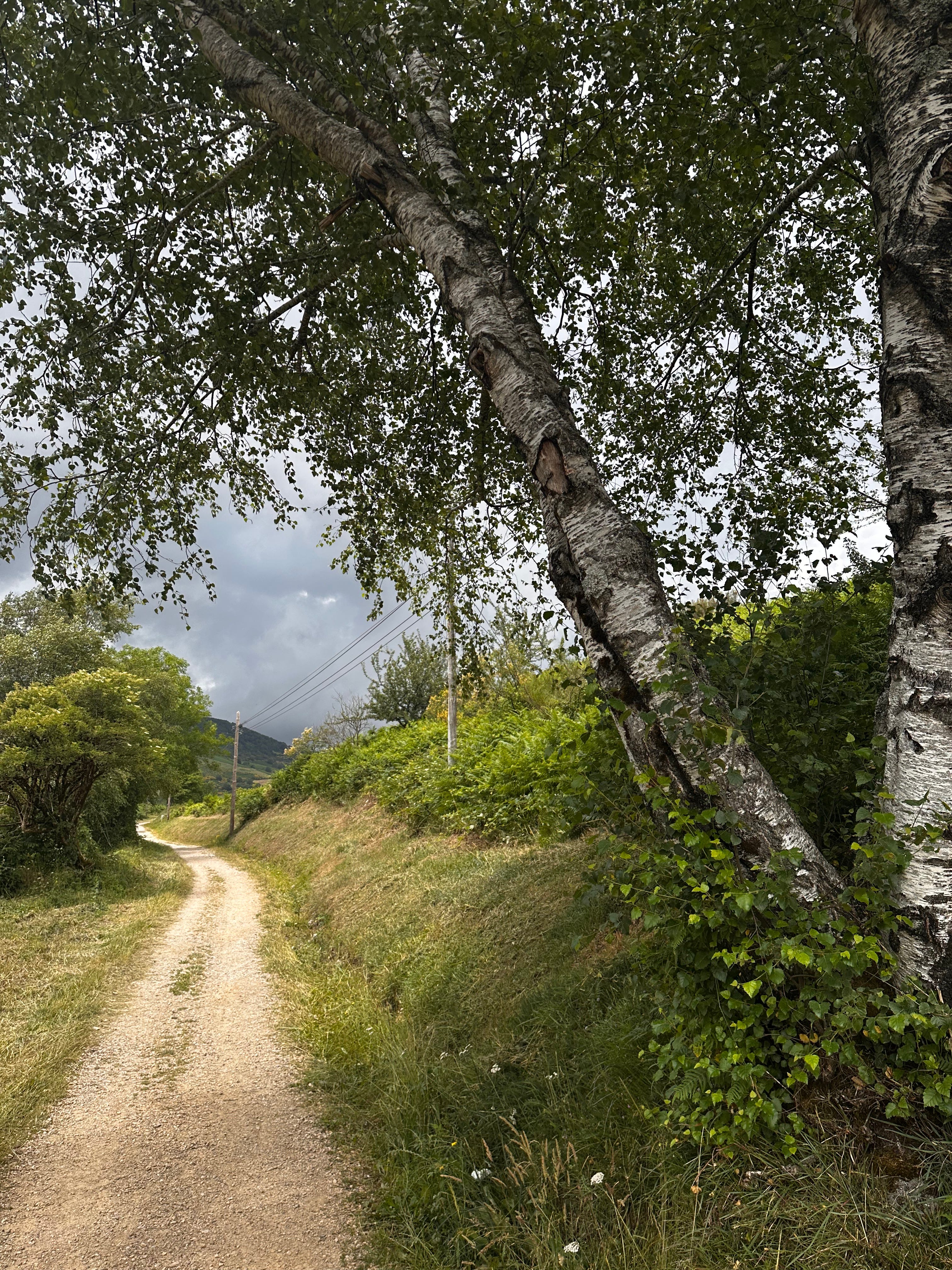
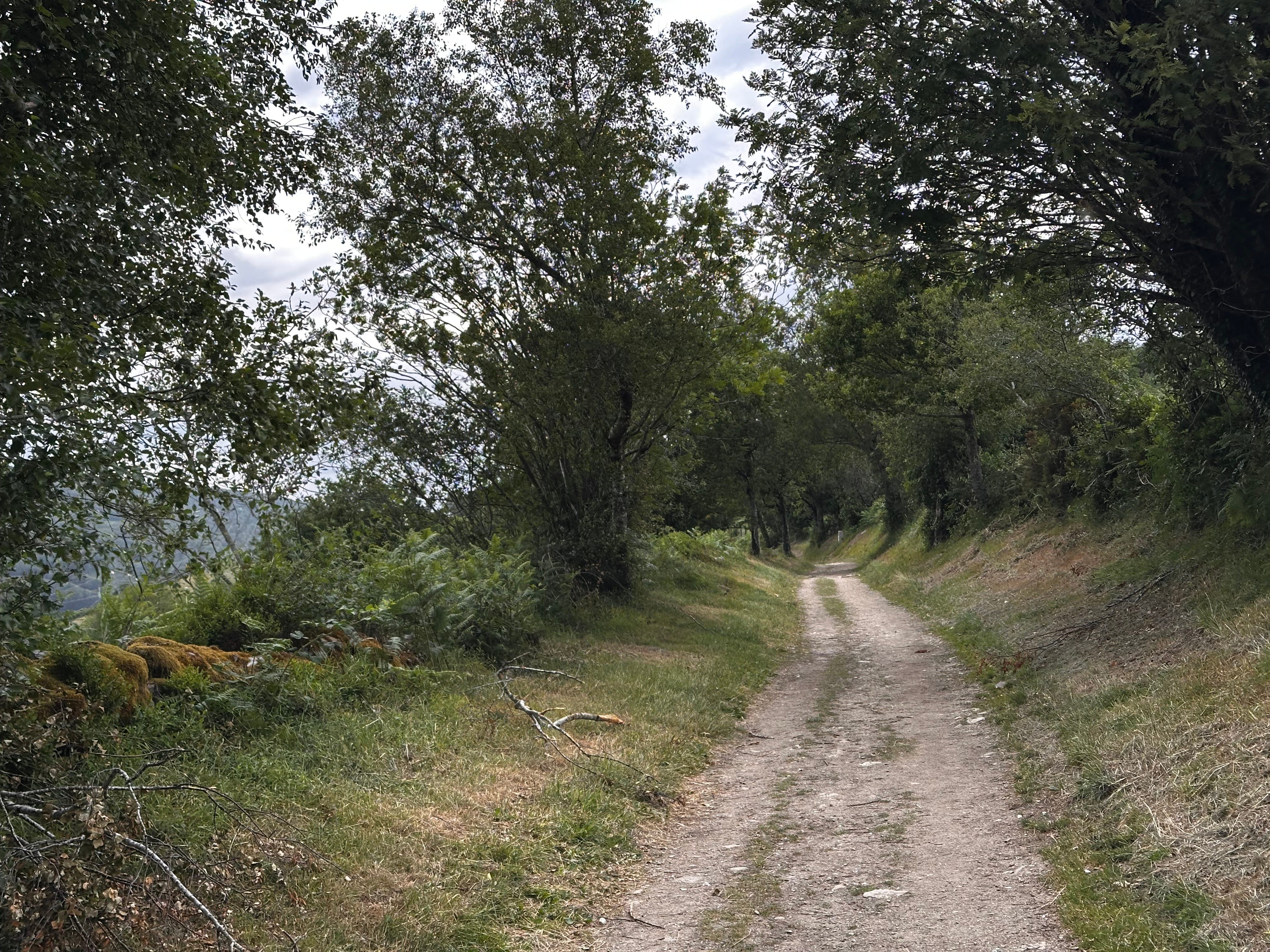
The climb out of Las Herrerías was one long pull, seven hundred meters of vertical with almost nothing on it. No village to speak of, no bar, just the trees and the grade and the two of us going up. The path ran through old forest, the trunks furred with moss and pale lichen, the light coming down in pieces.
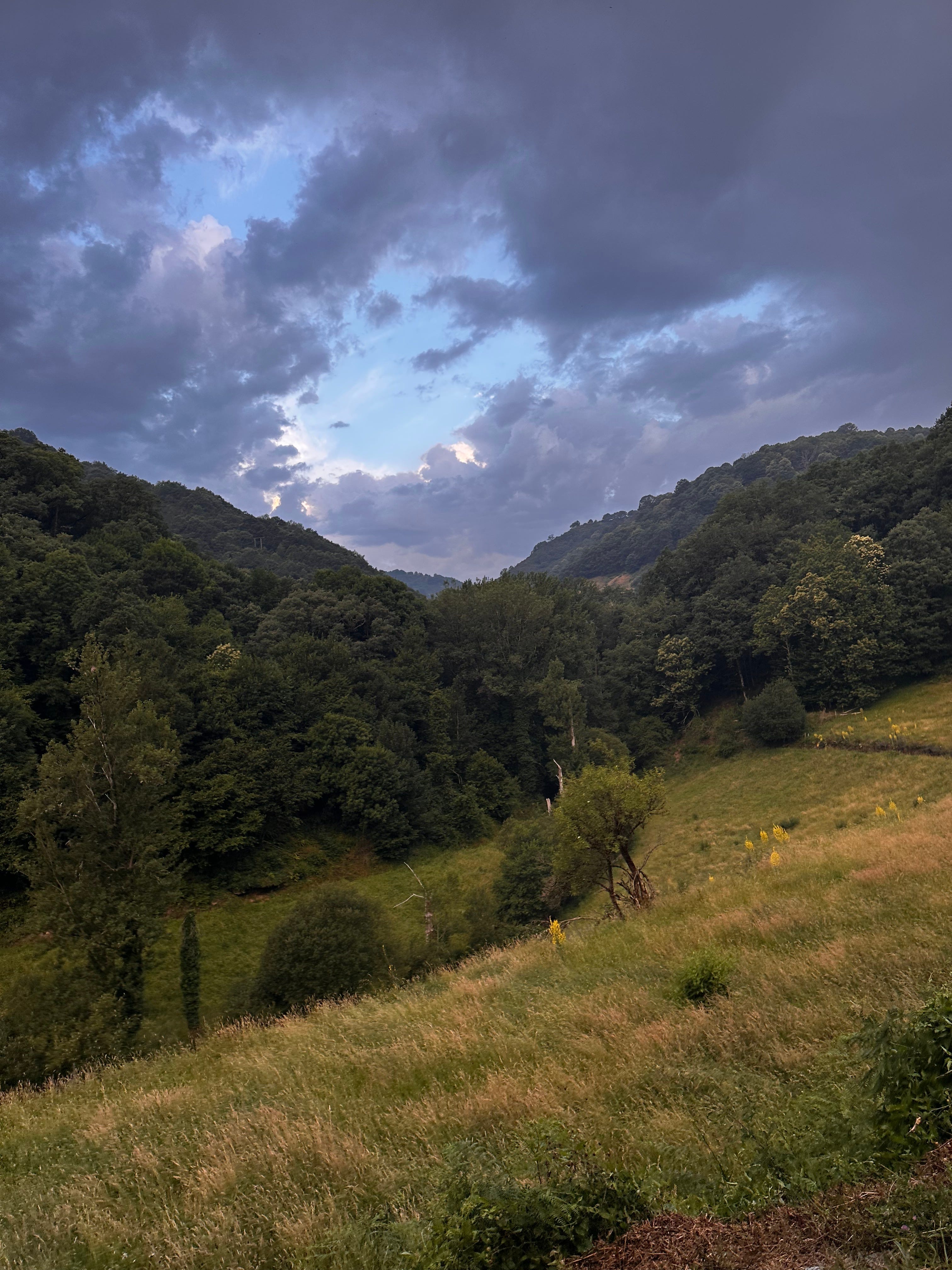
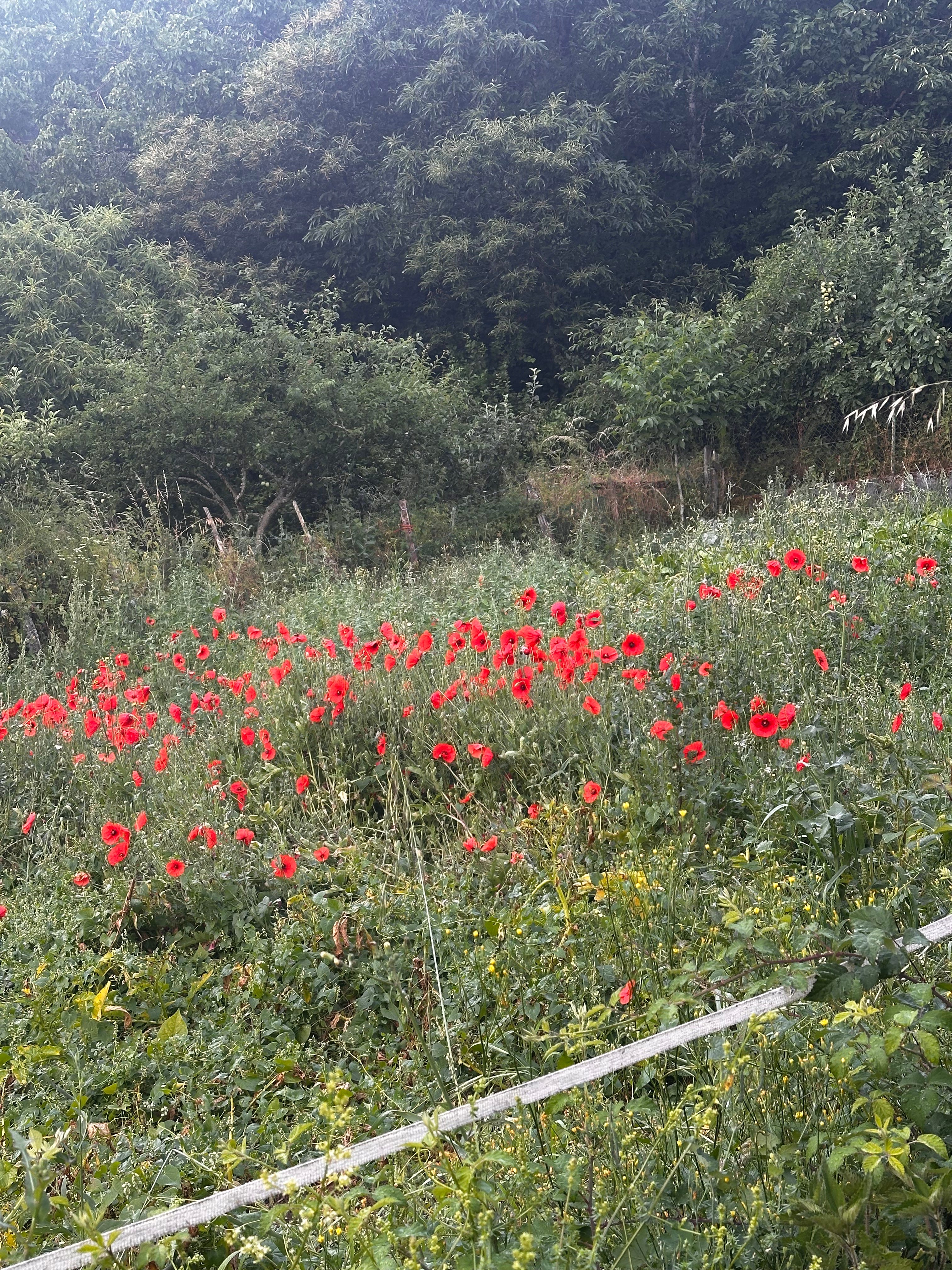
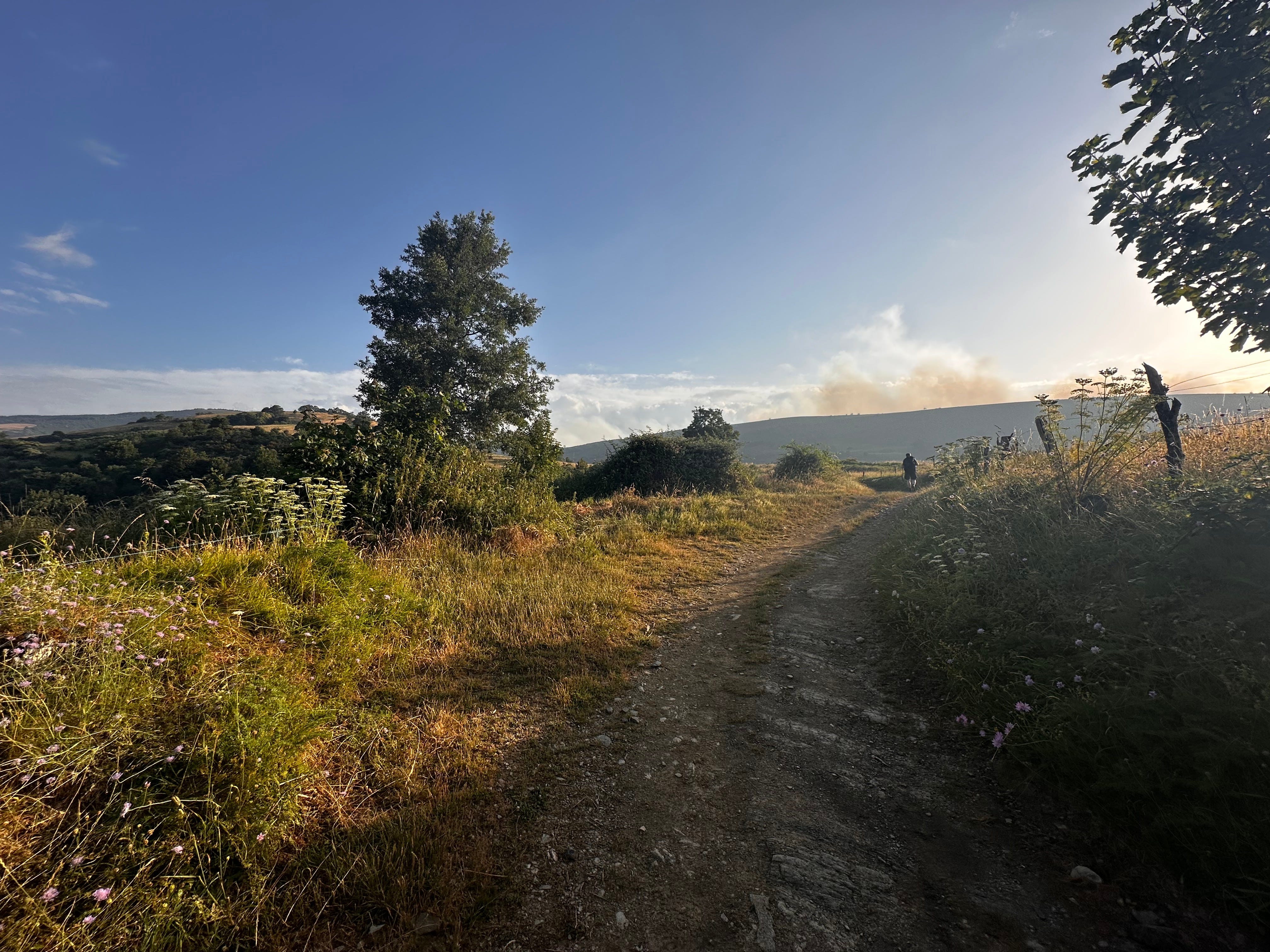
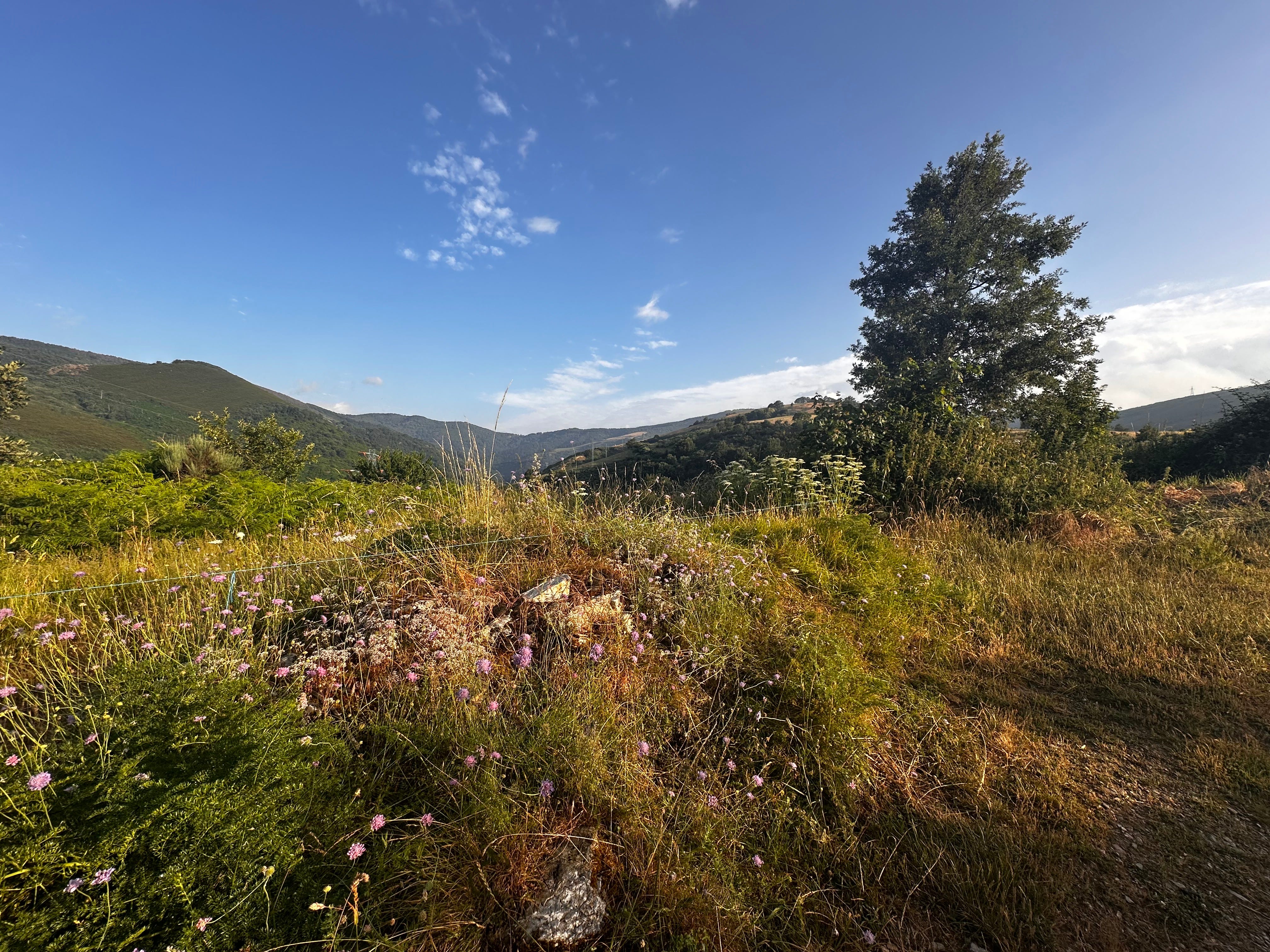
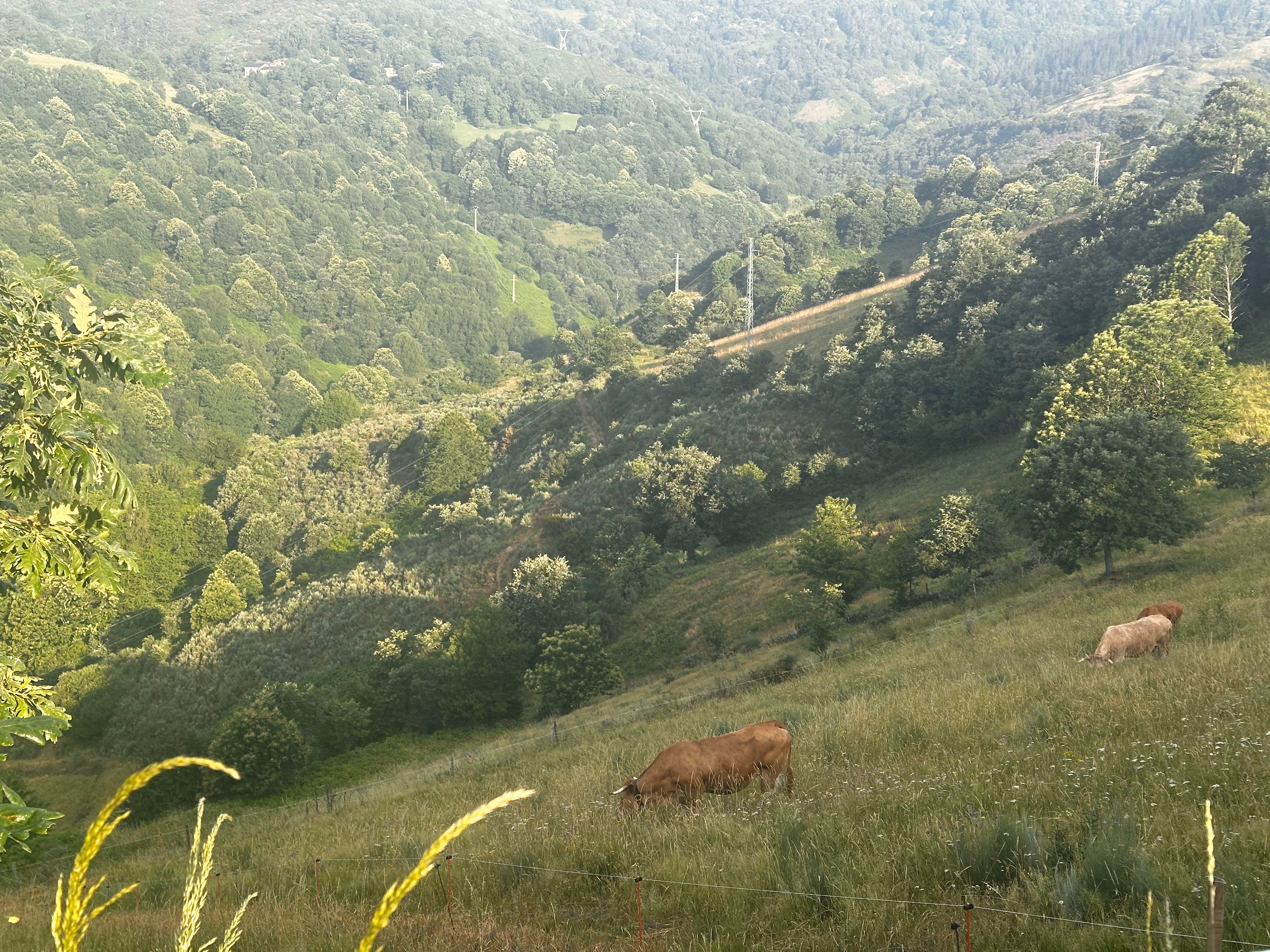
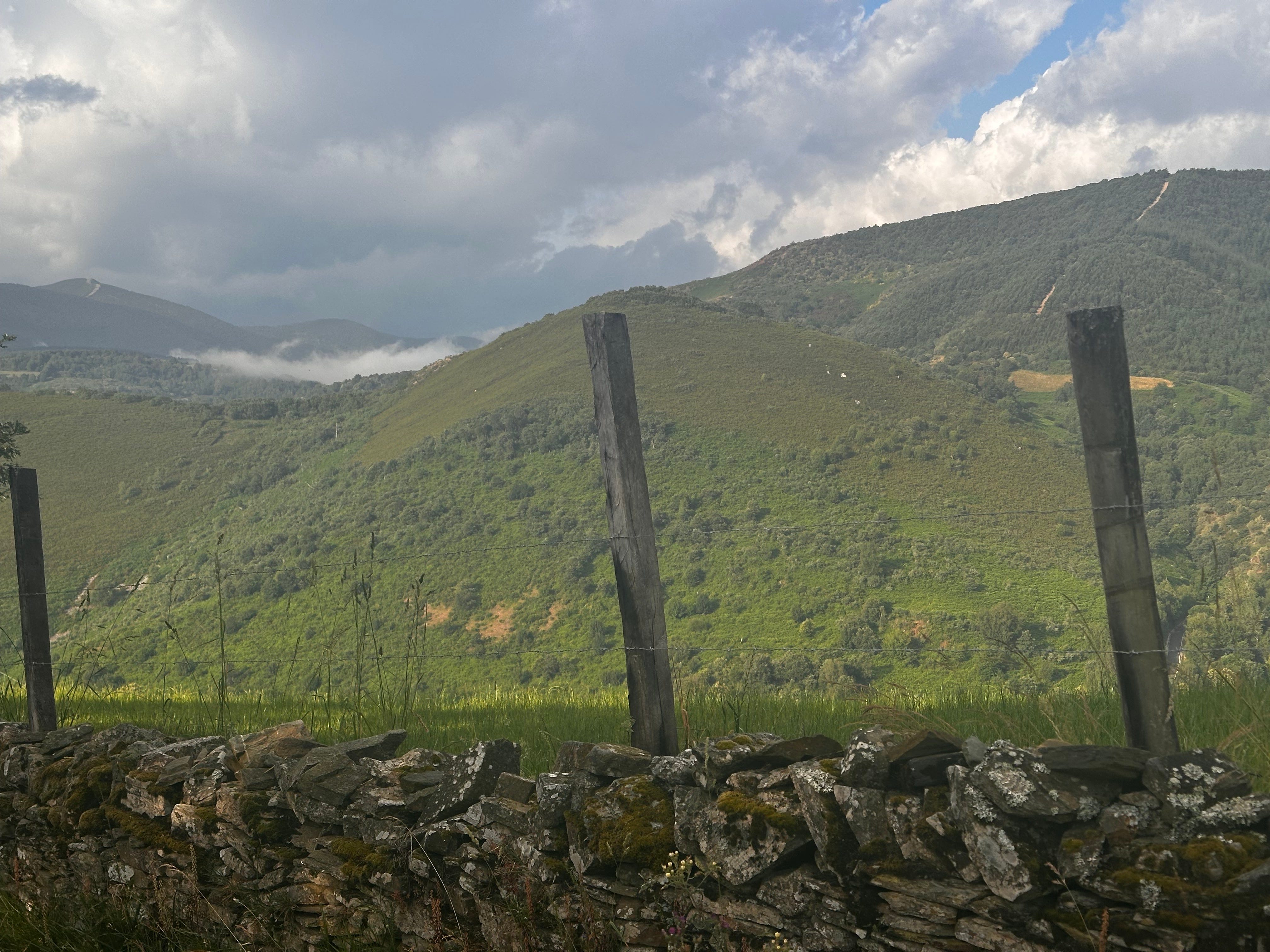
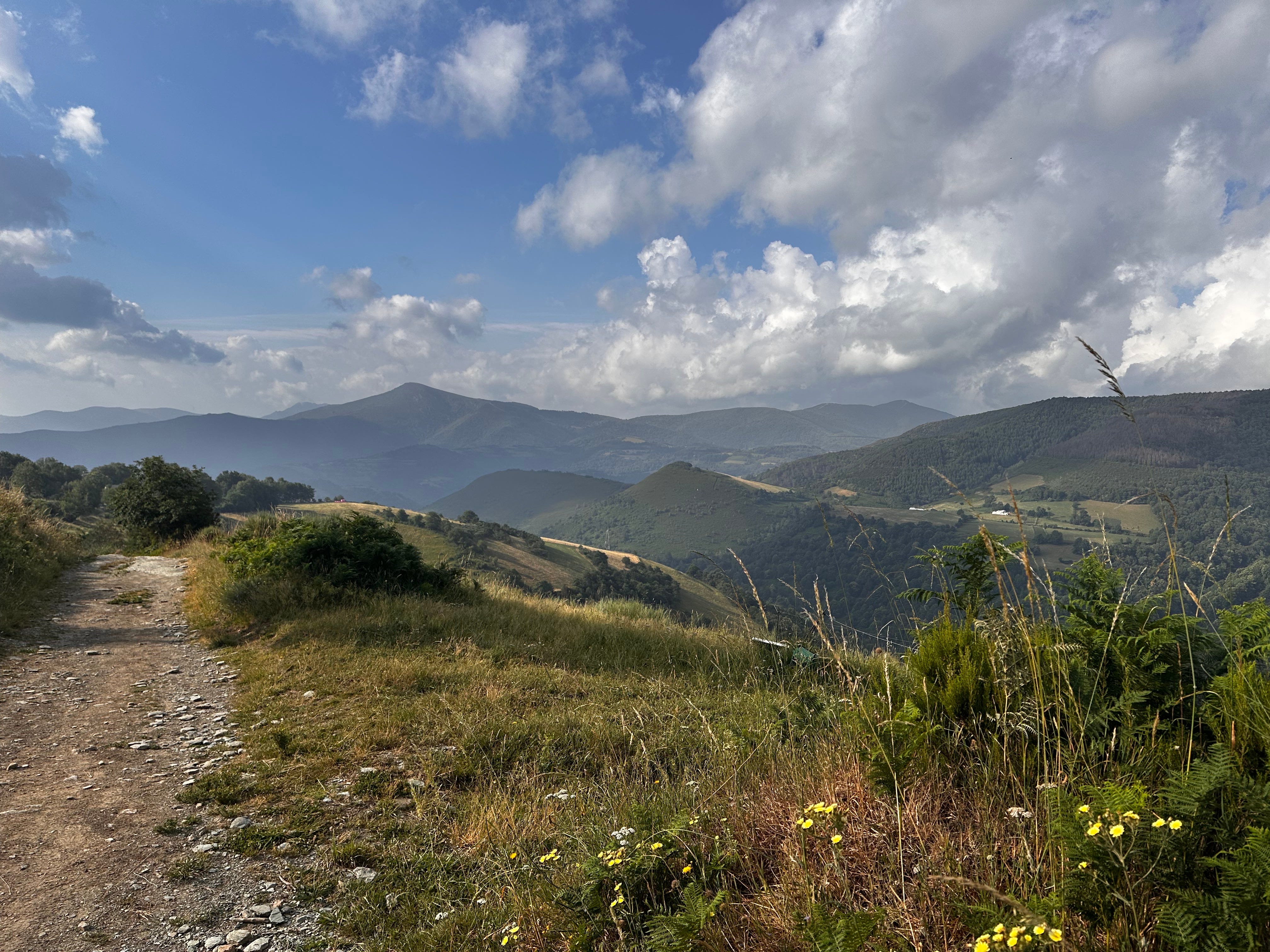
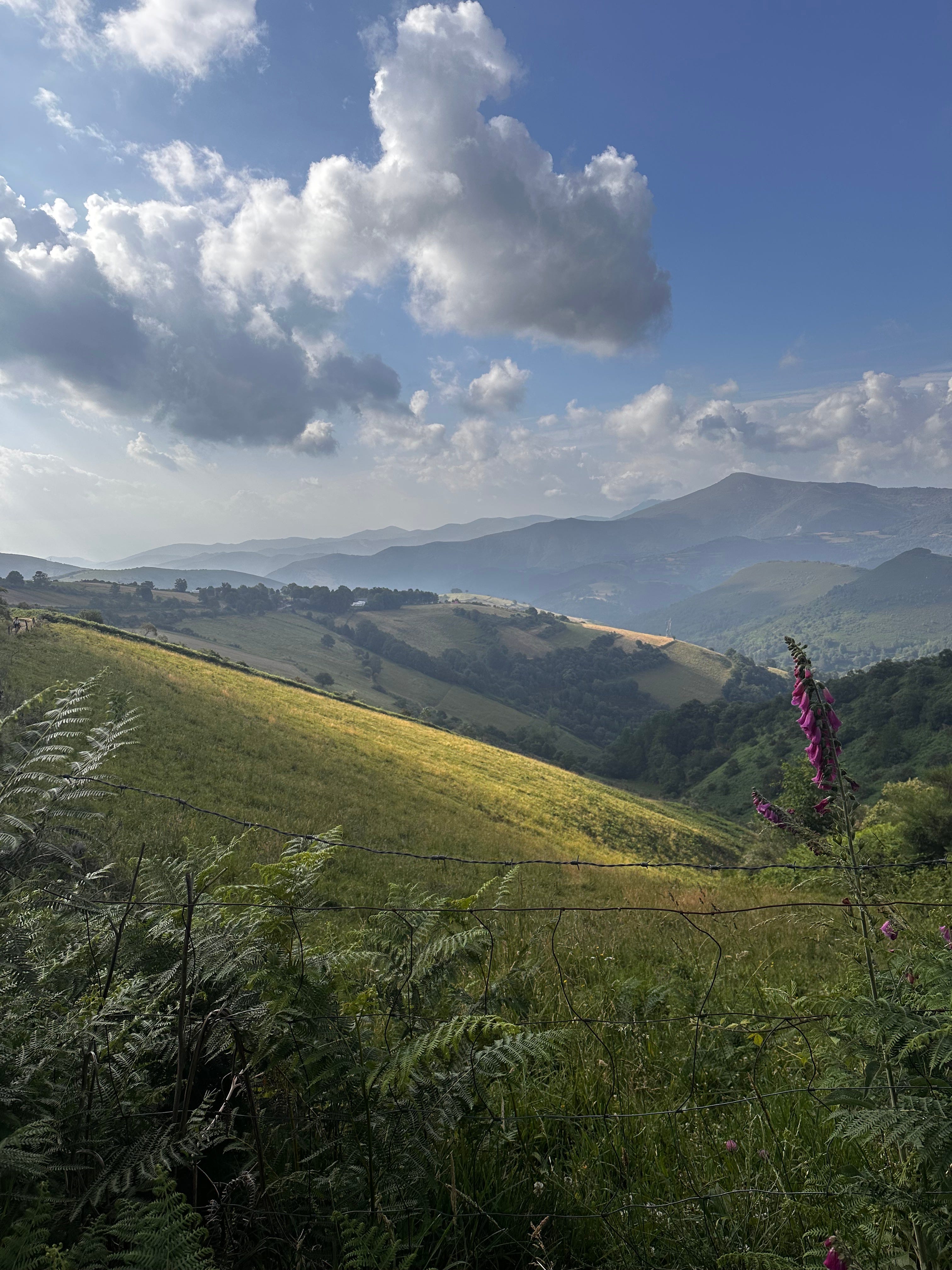
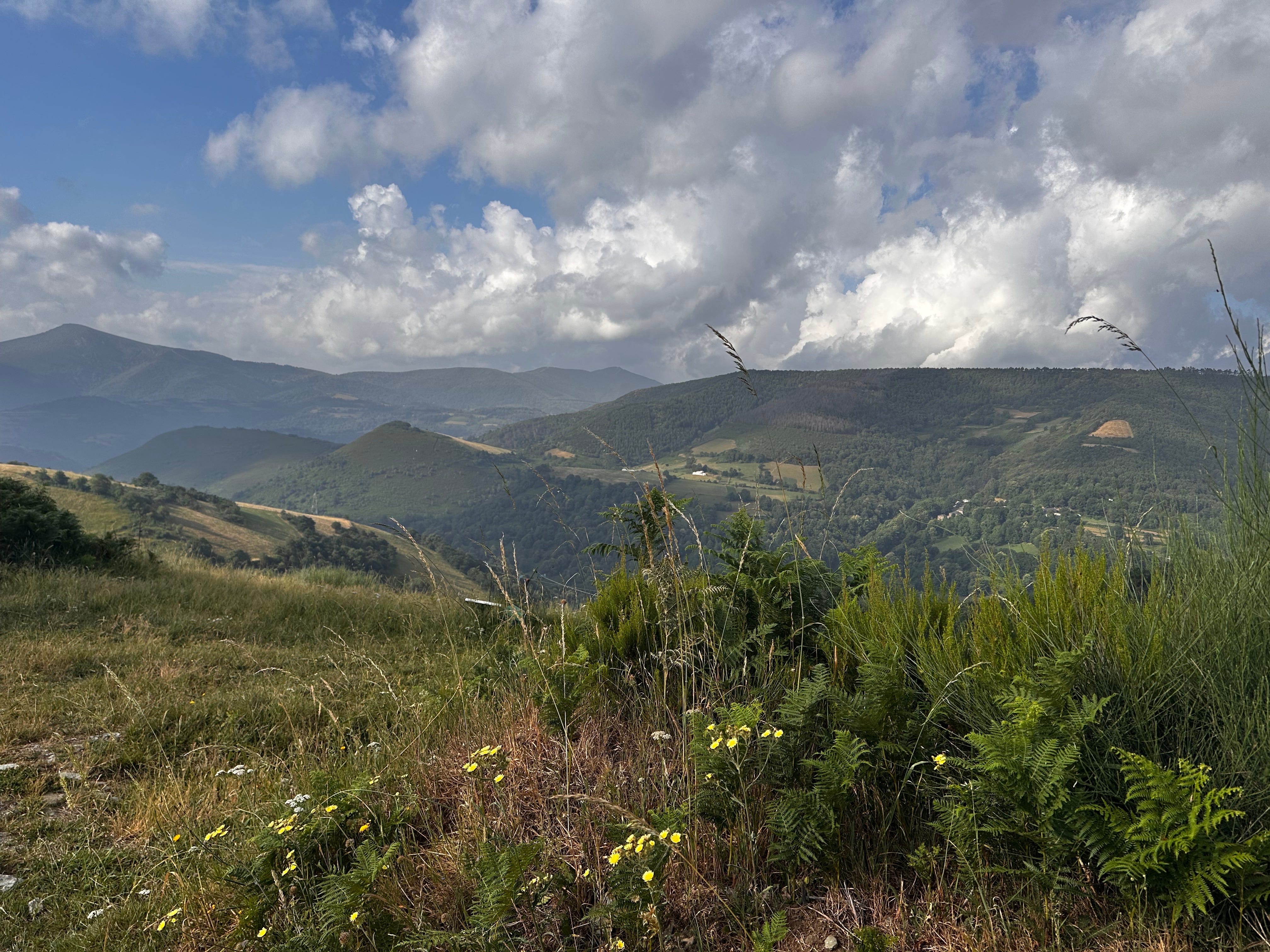
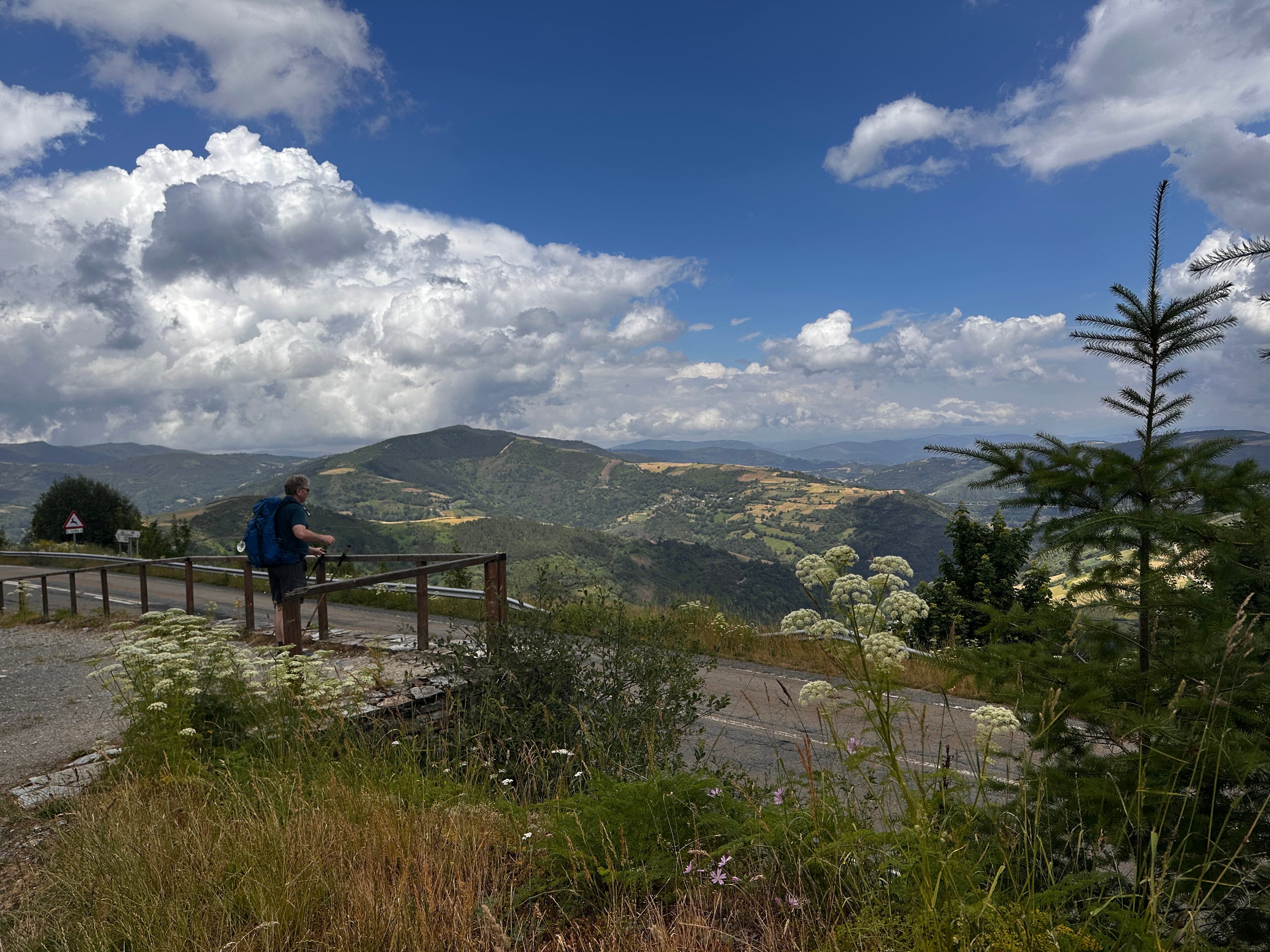
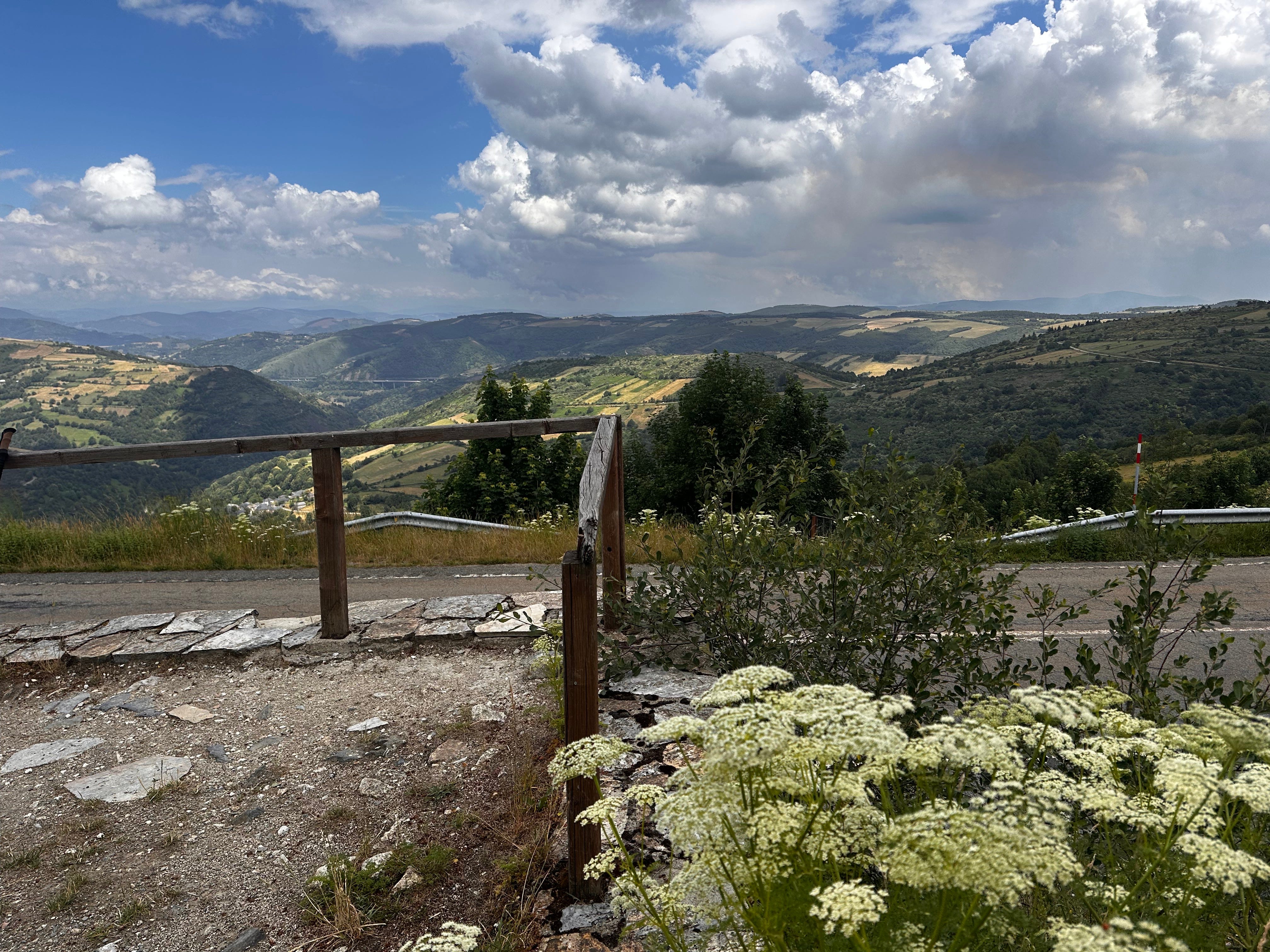
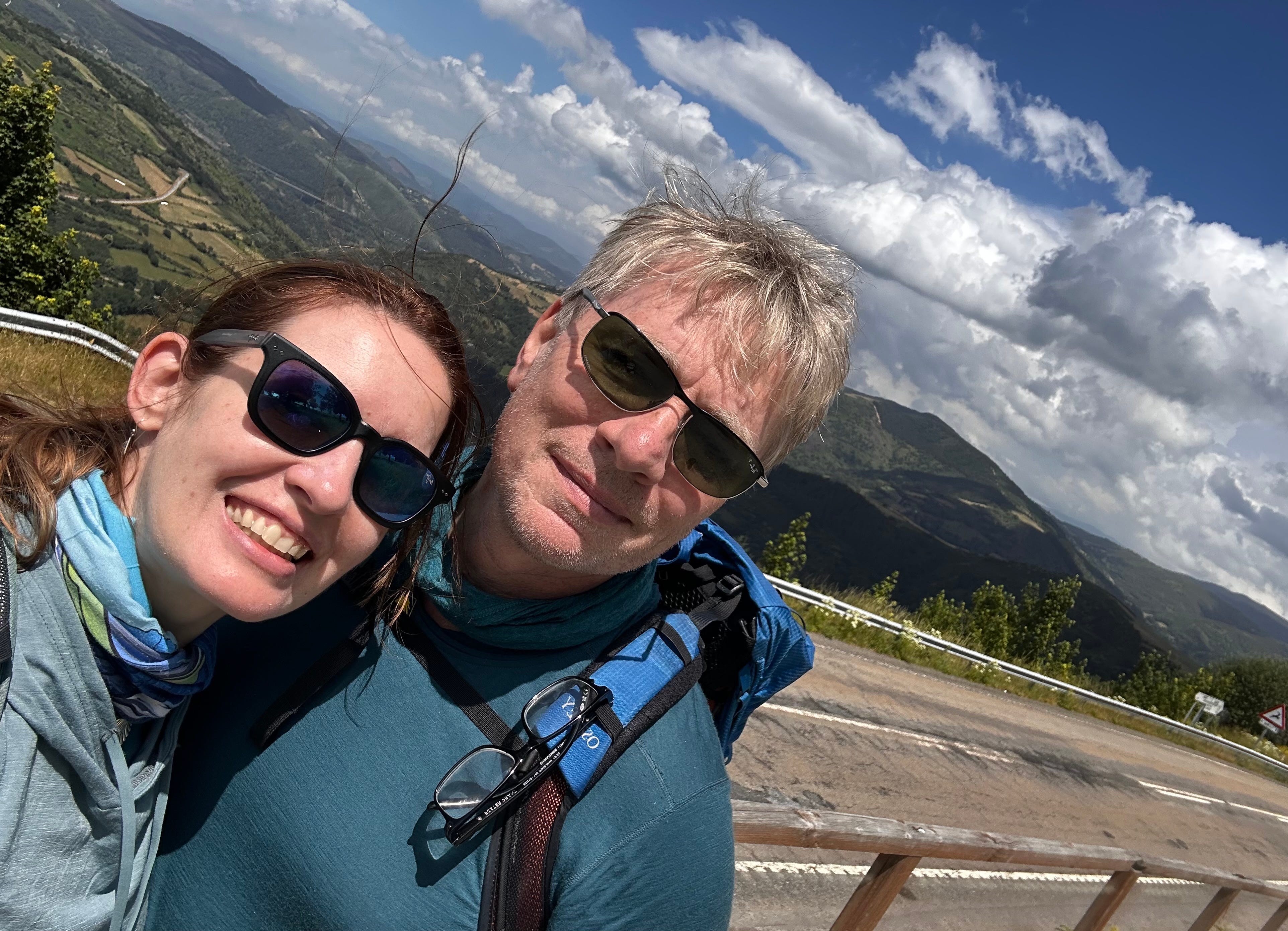
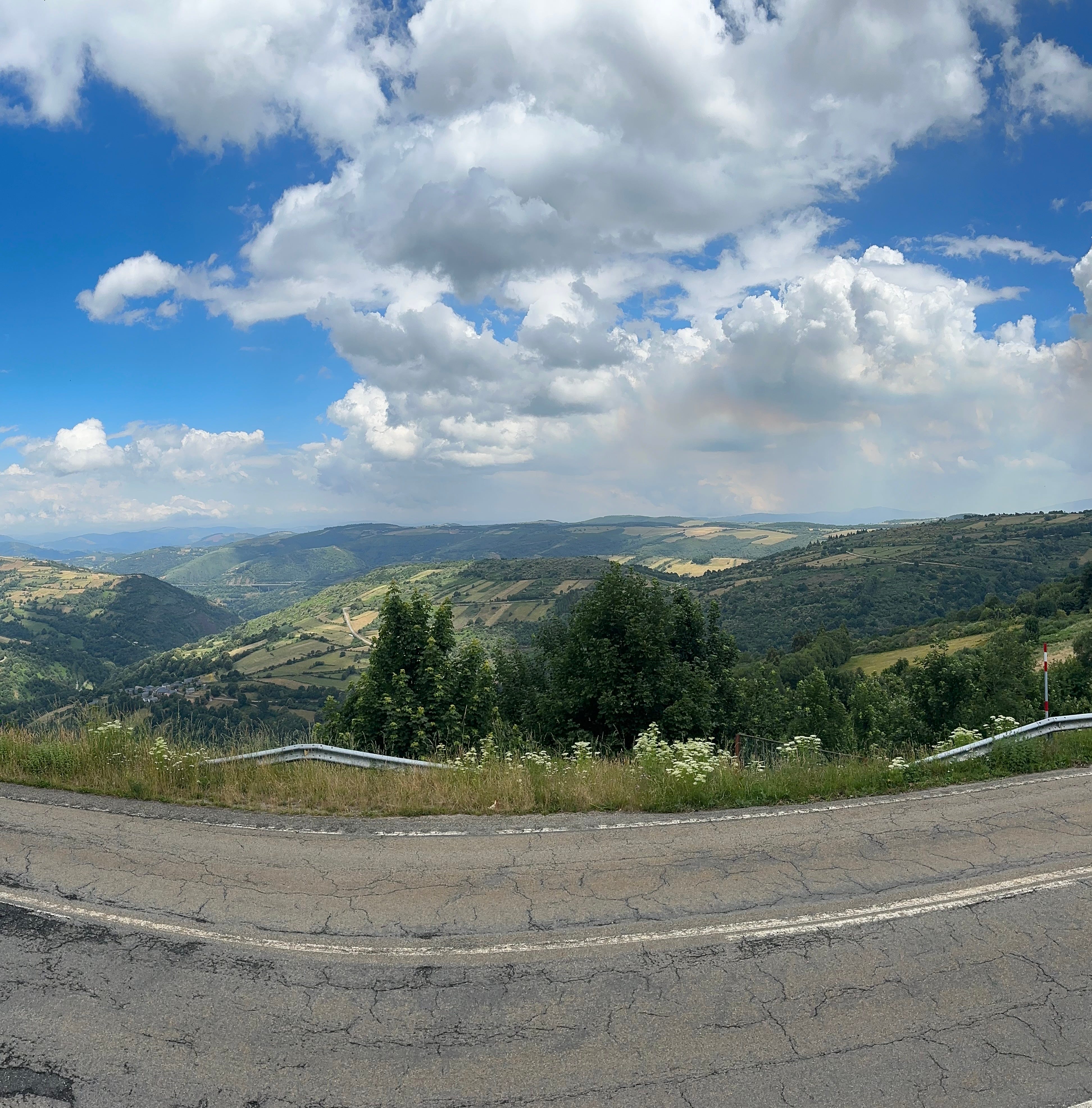
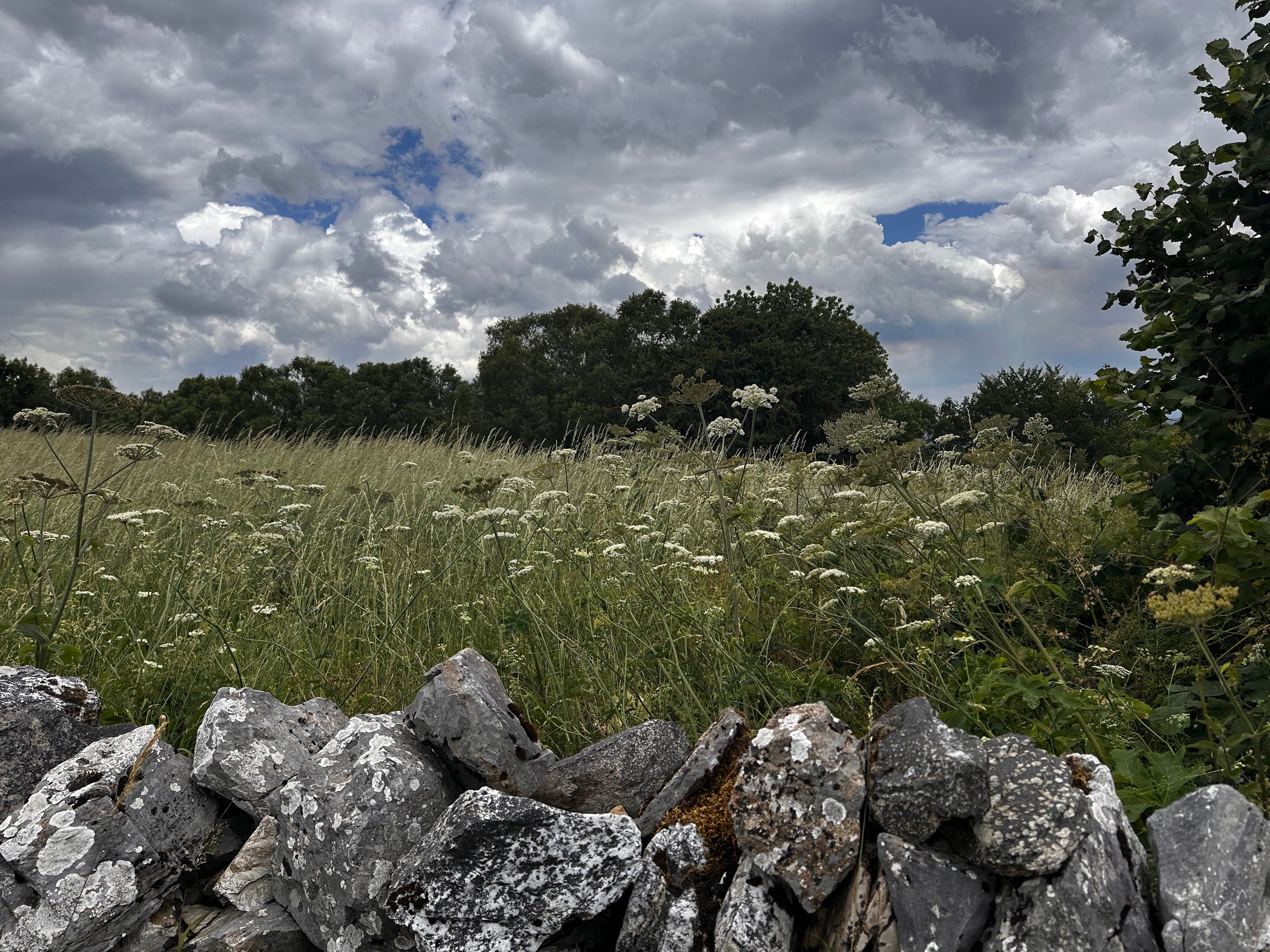
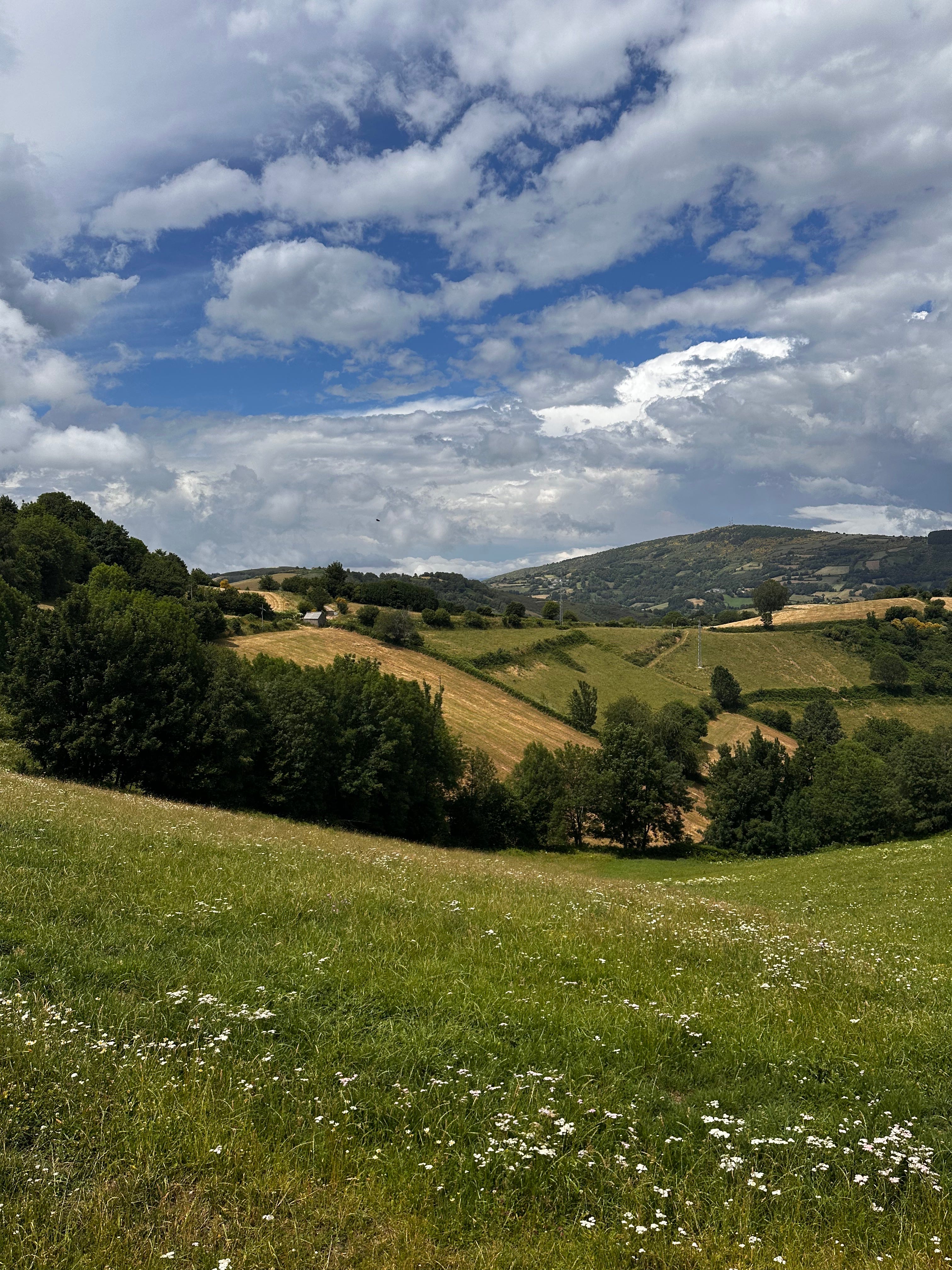
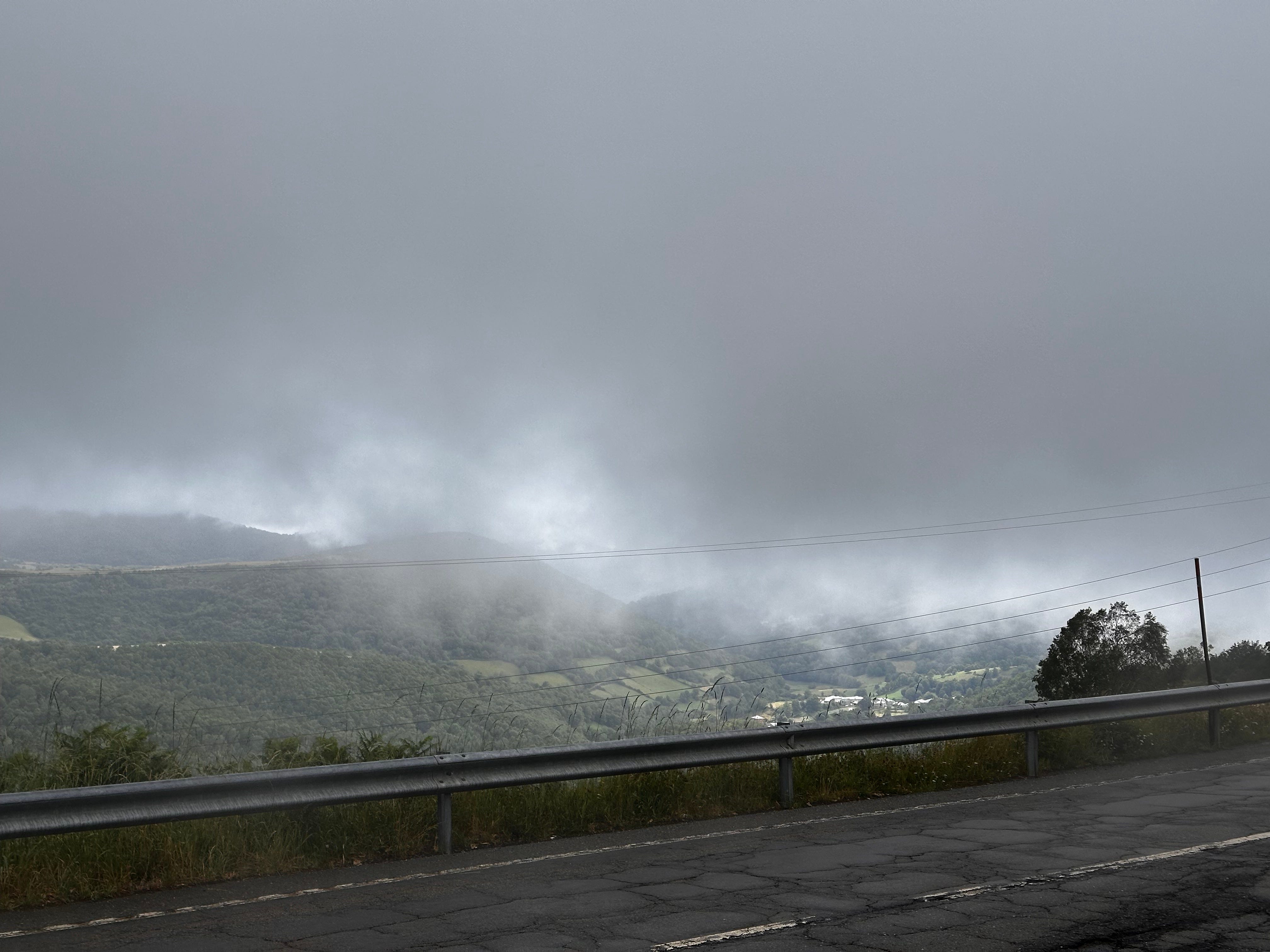
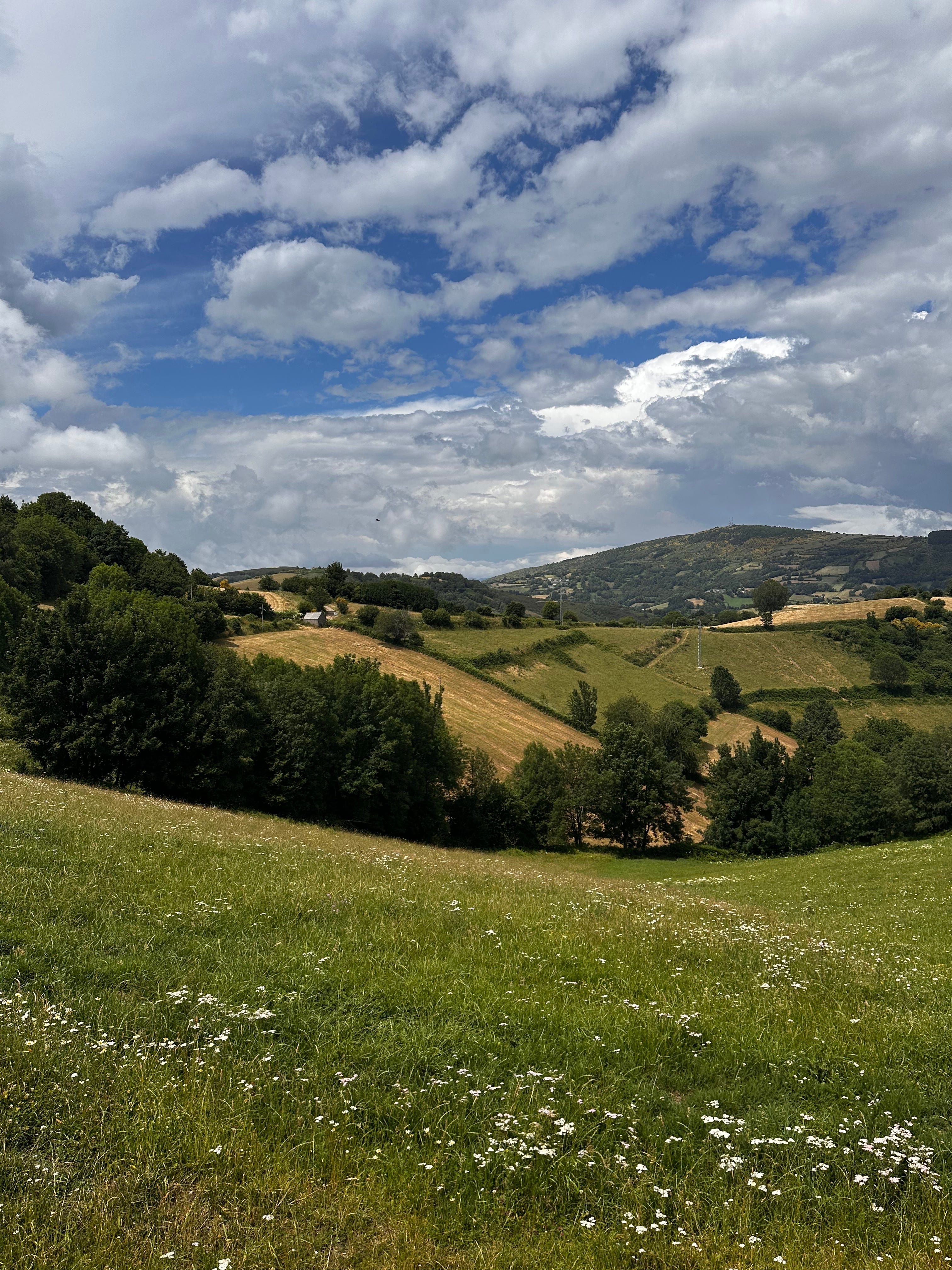
We stopped past La Faba, once the climb had crested. We sat at the edge of the road and made a small breakfast out of what we had with us, two David bars carried from home and water with the electrolyte tablets we had picked up at a pharmacy here, the kind that are good in the heat. Below us the valley had opened, green folding into green, the little towns set down in it, poppies along the verges and a cool wet wind that kept threatening rain and then thinking better of it.
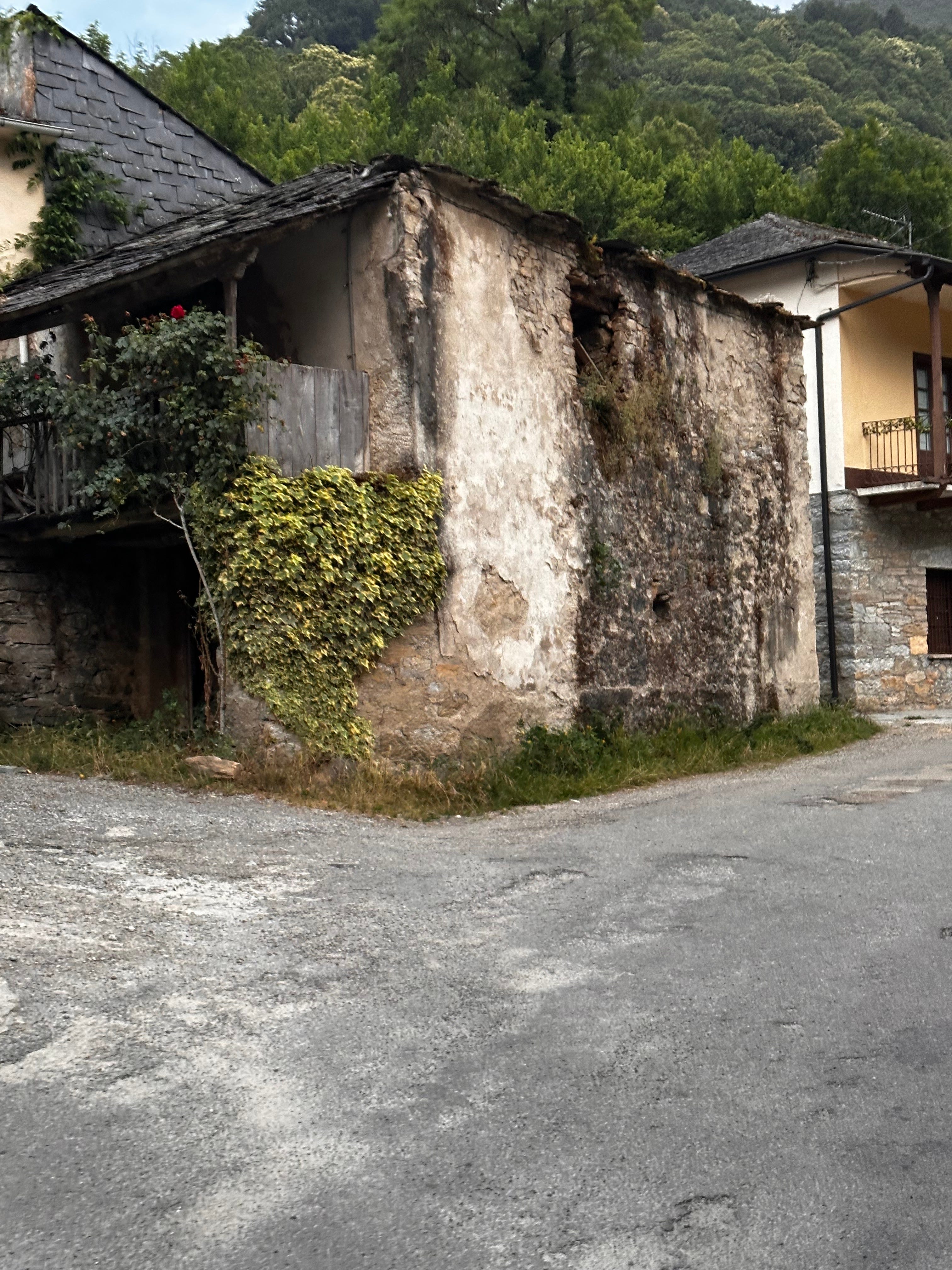
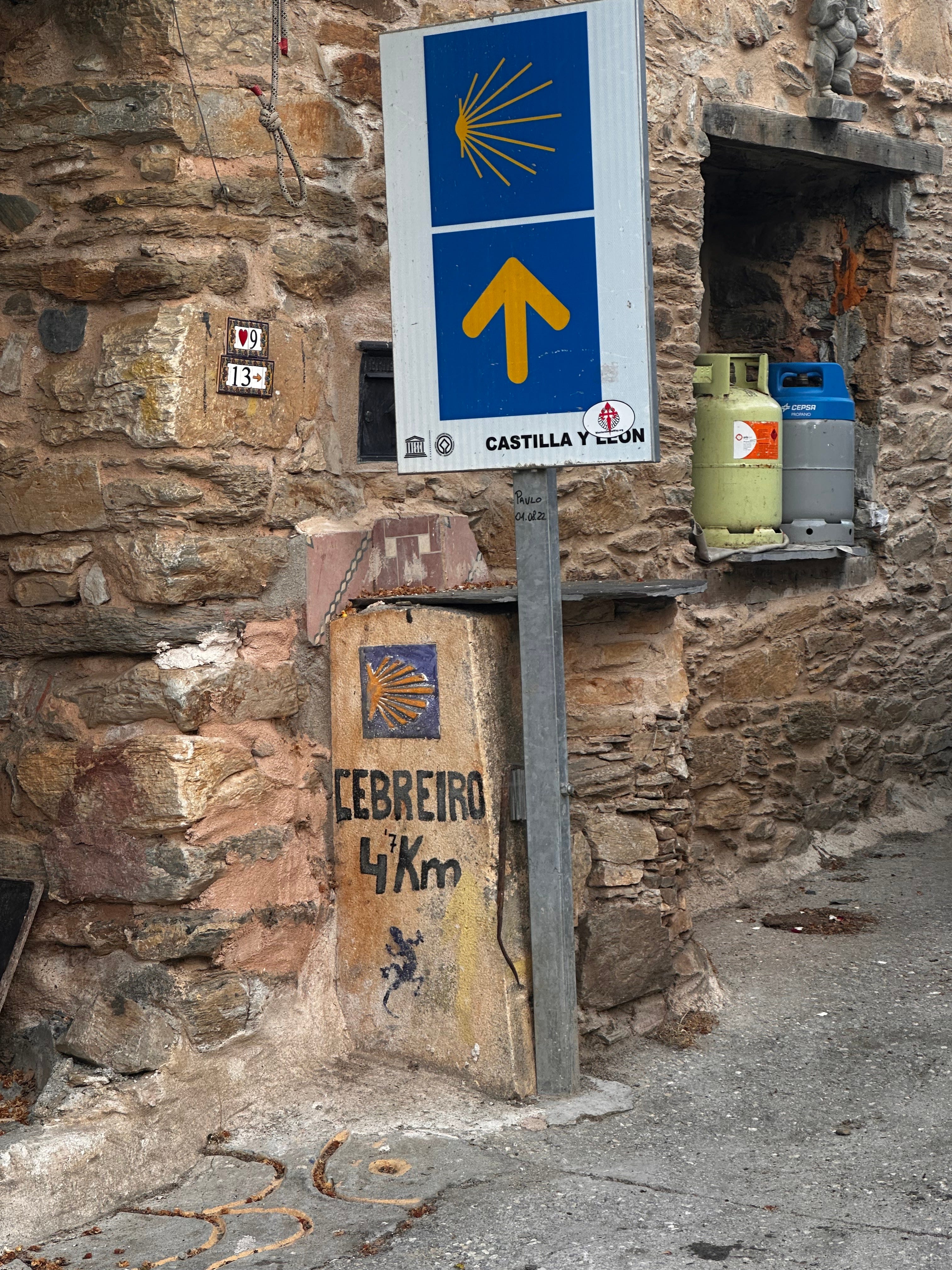
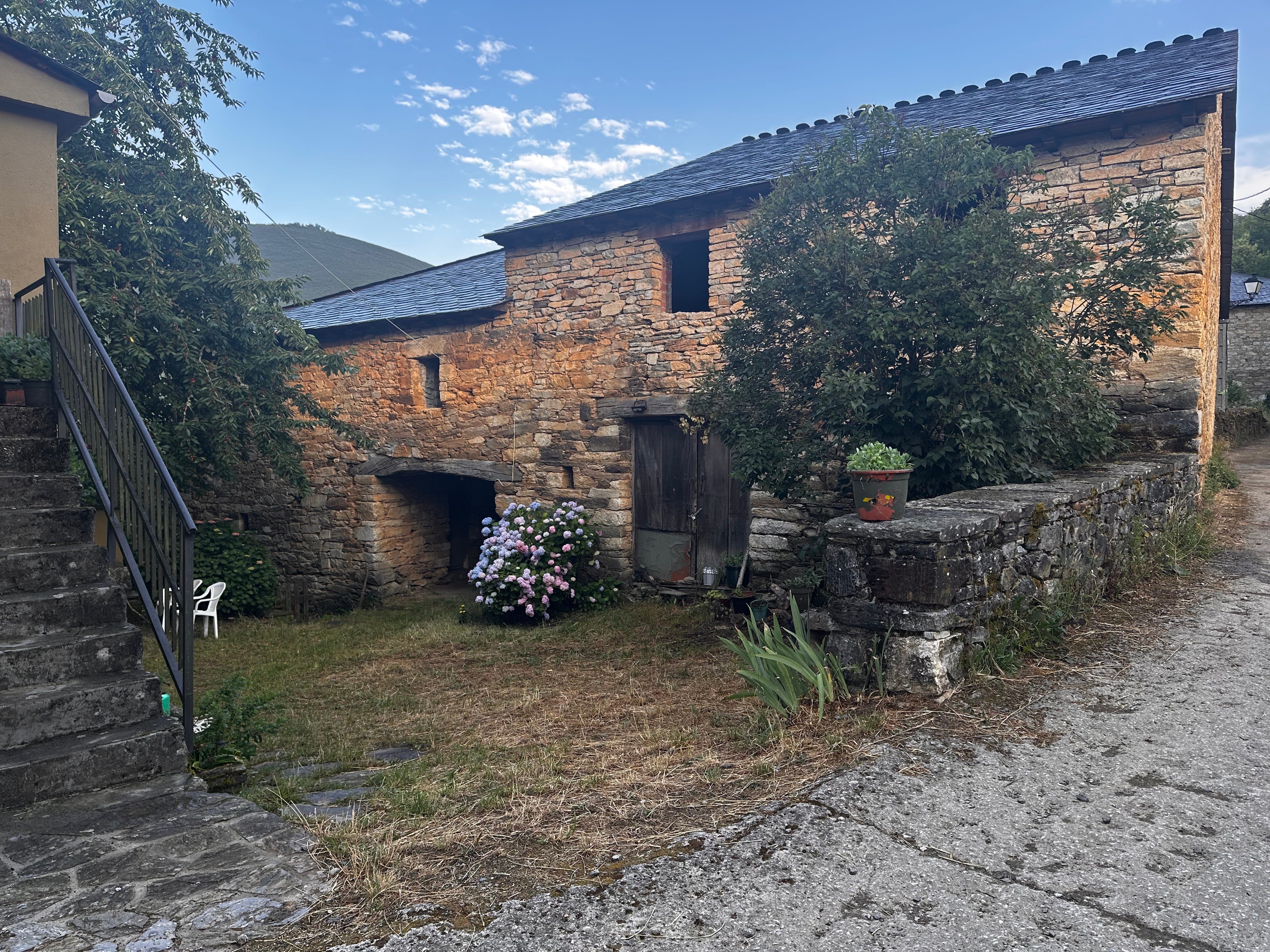
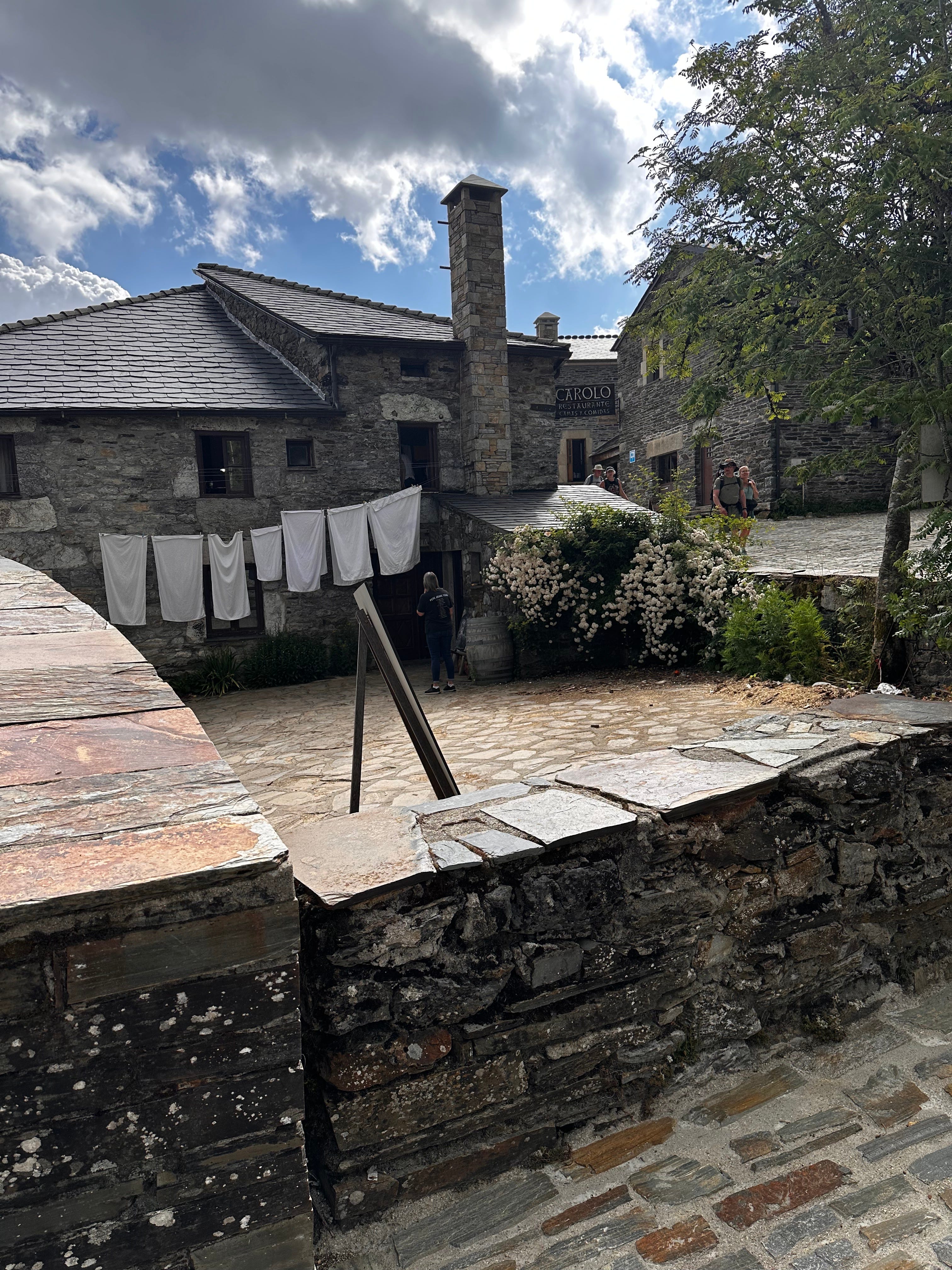
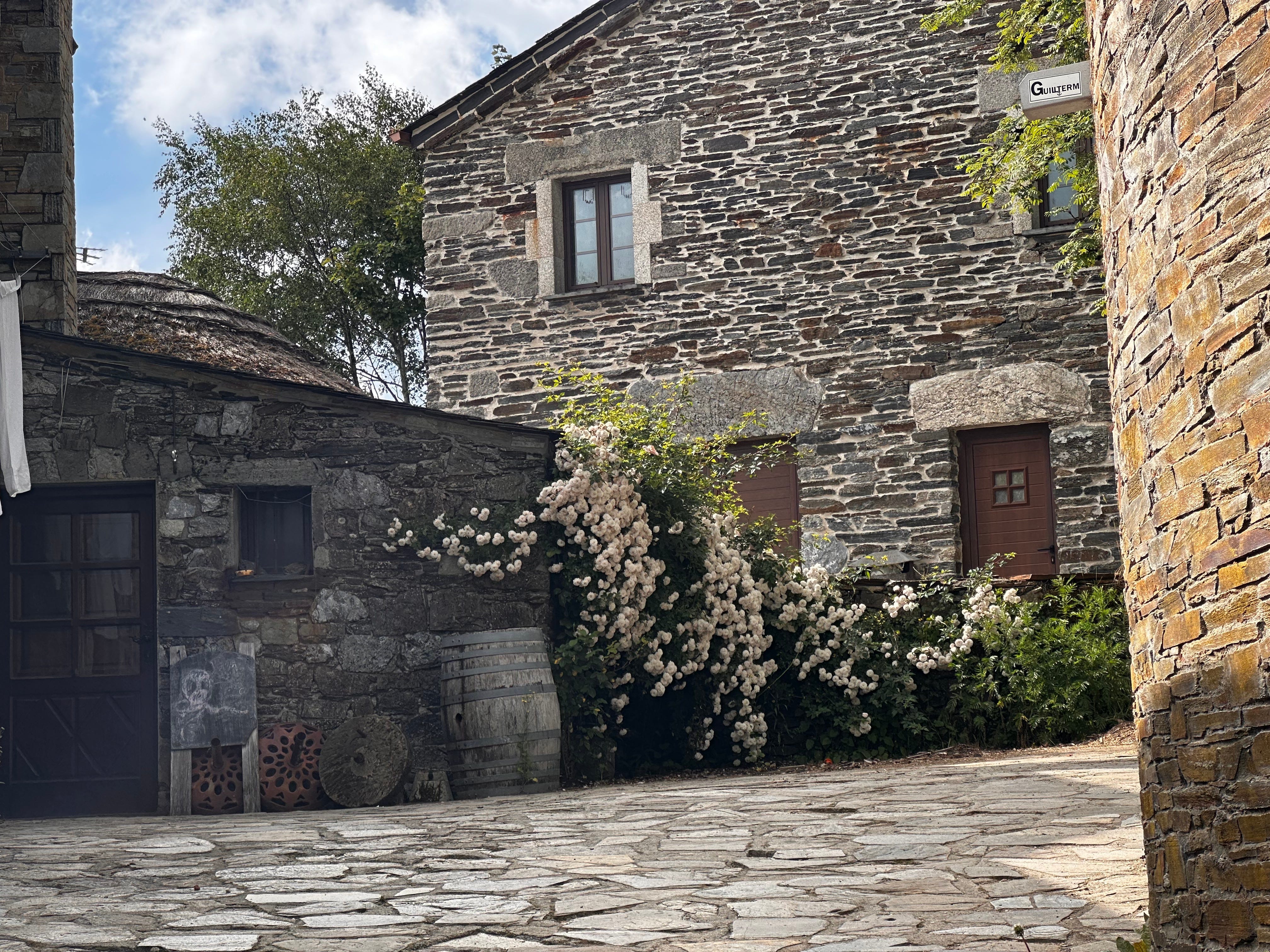
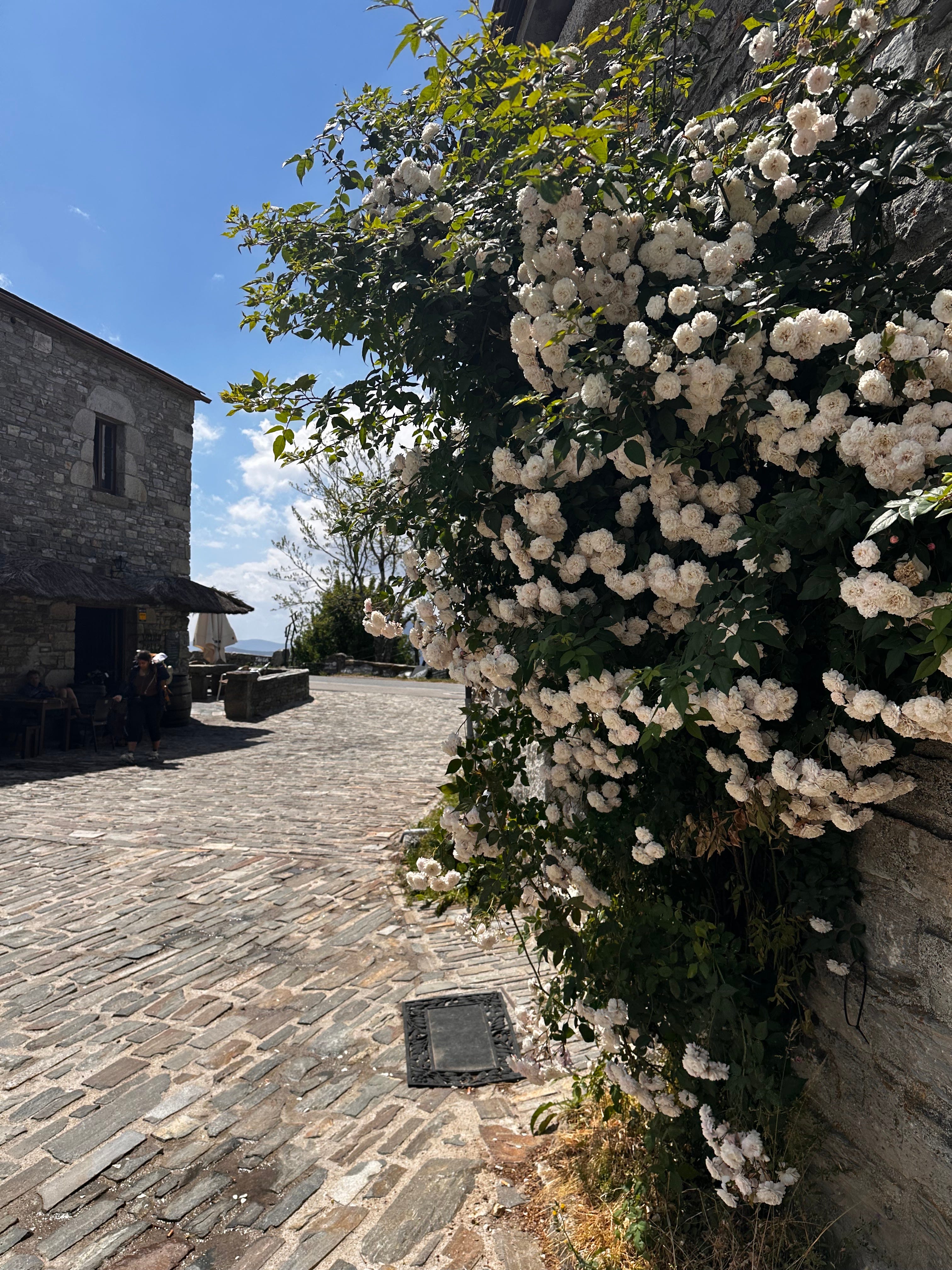
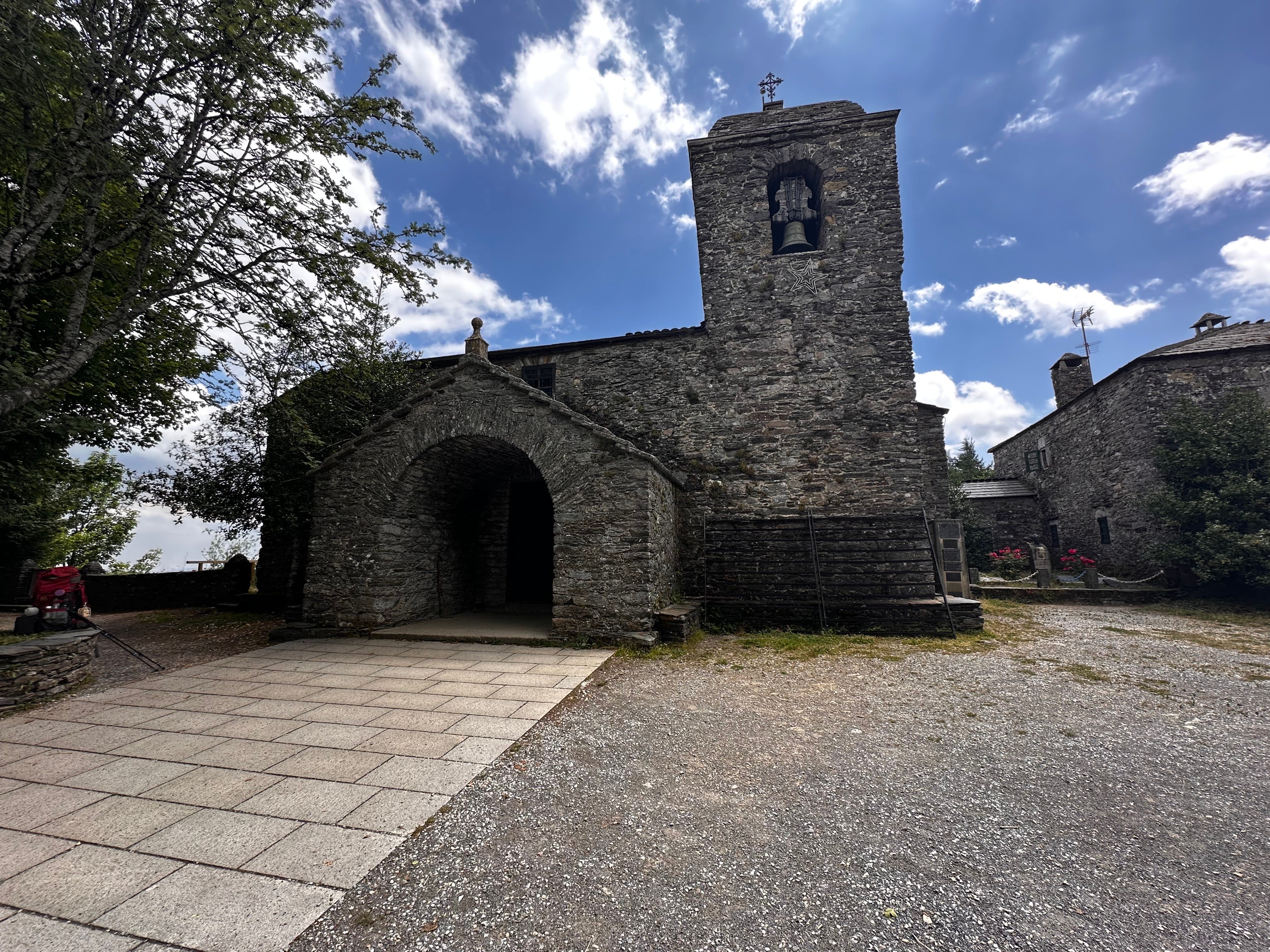
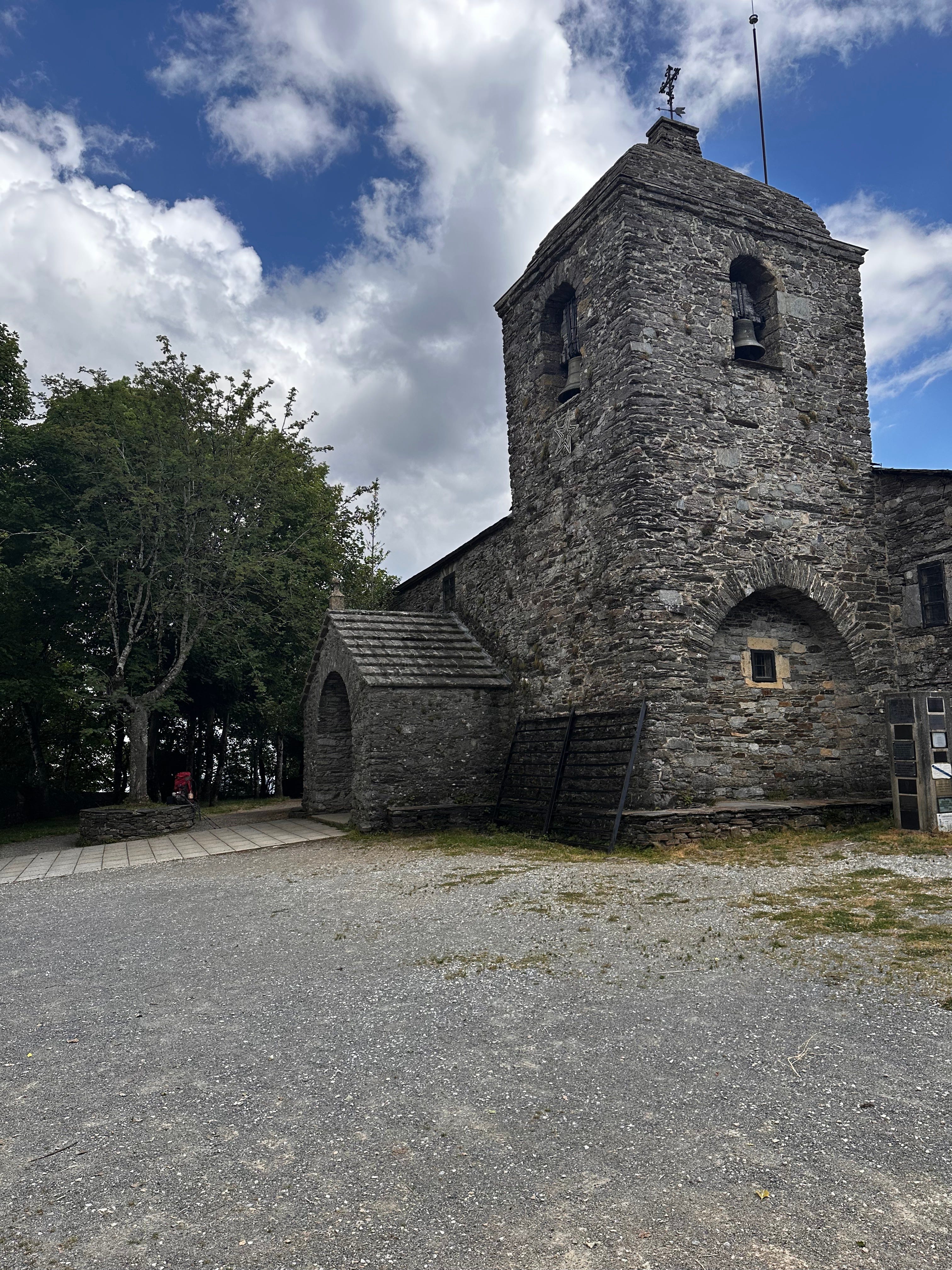
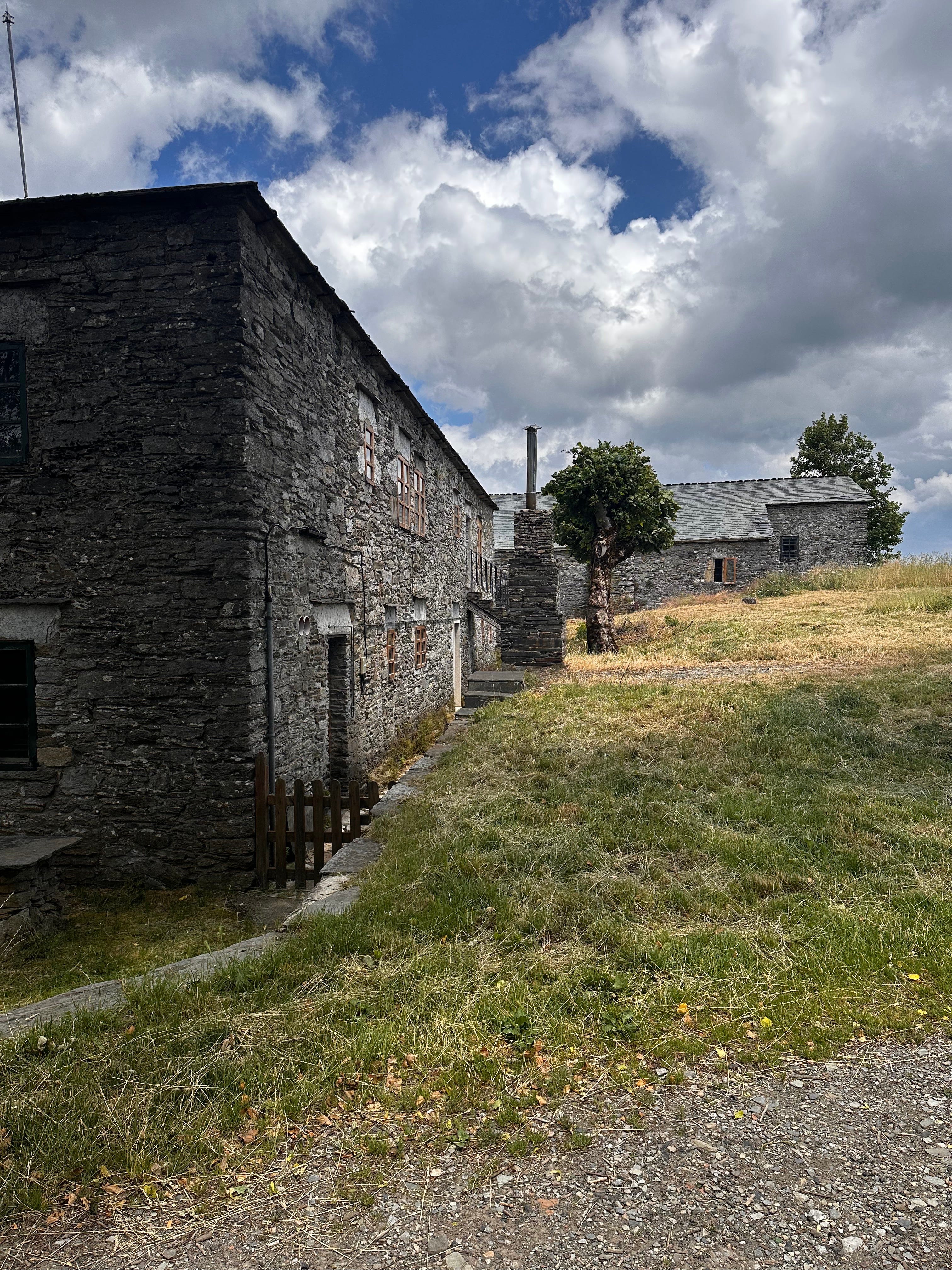
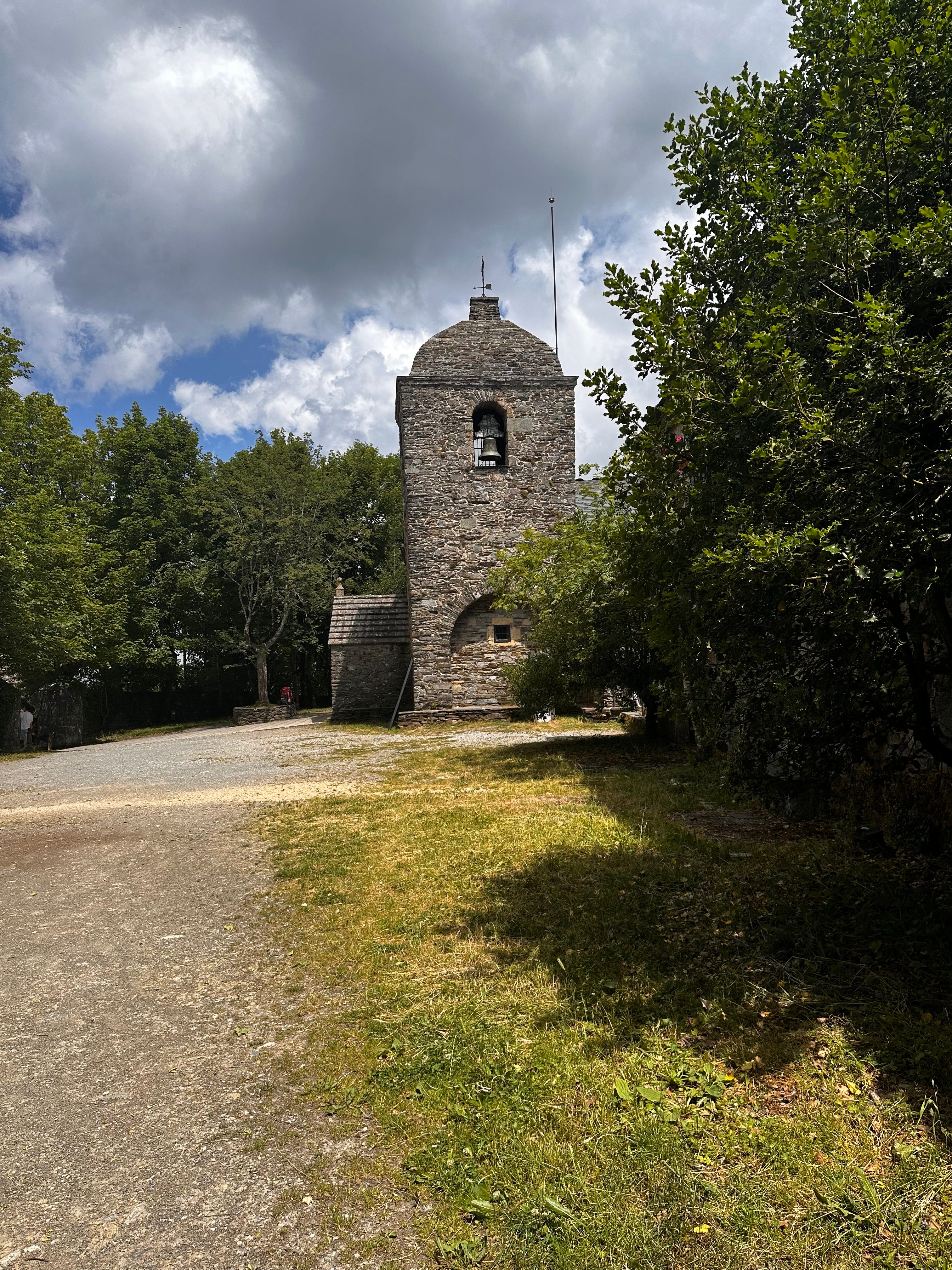
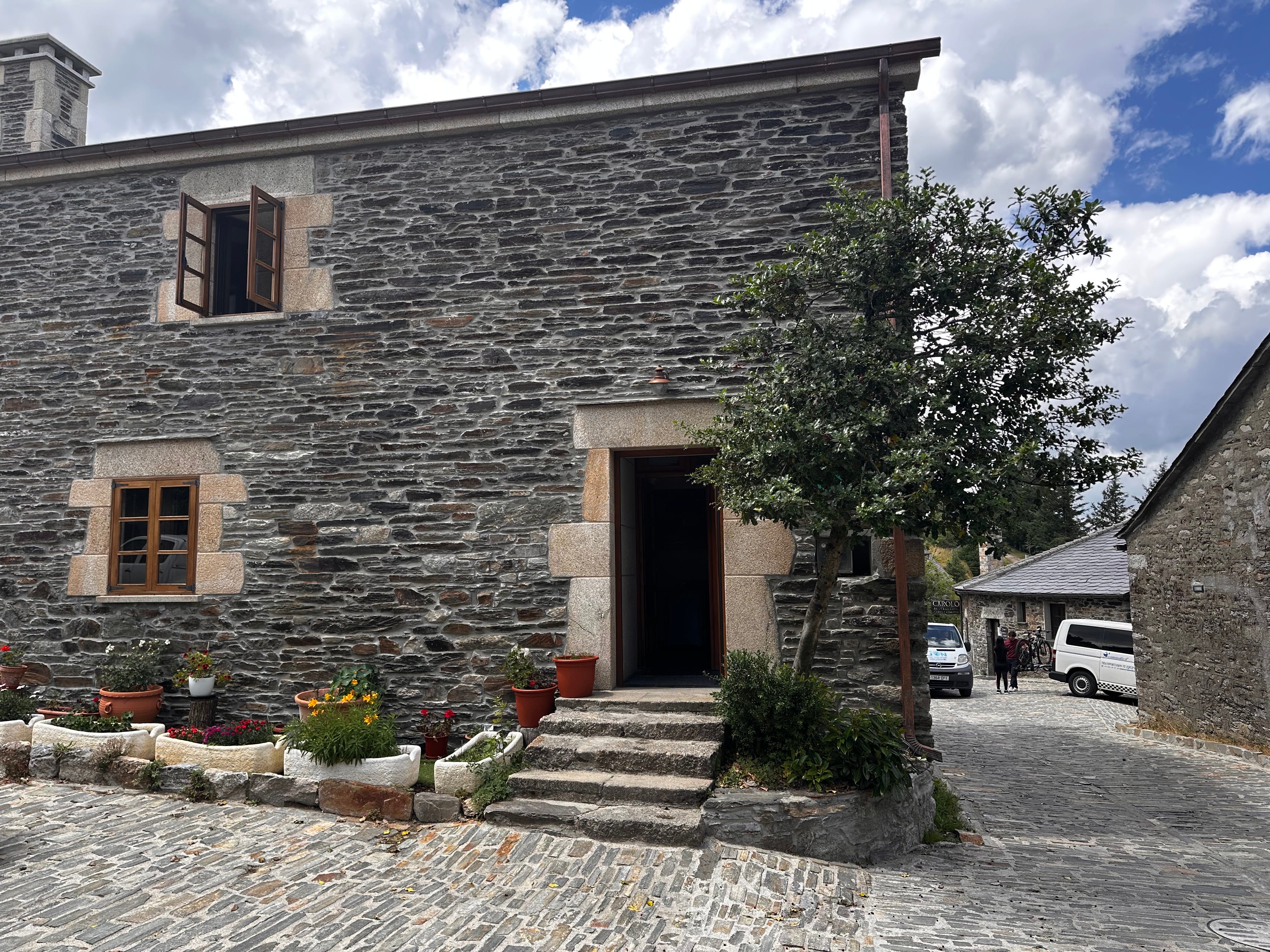
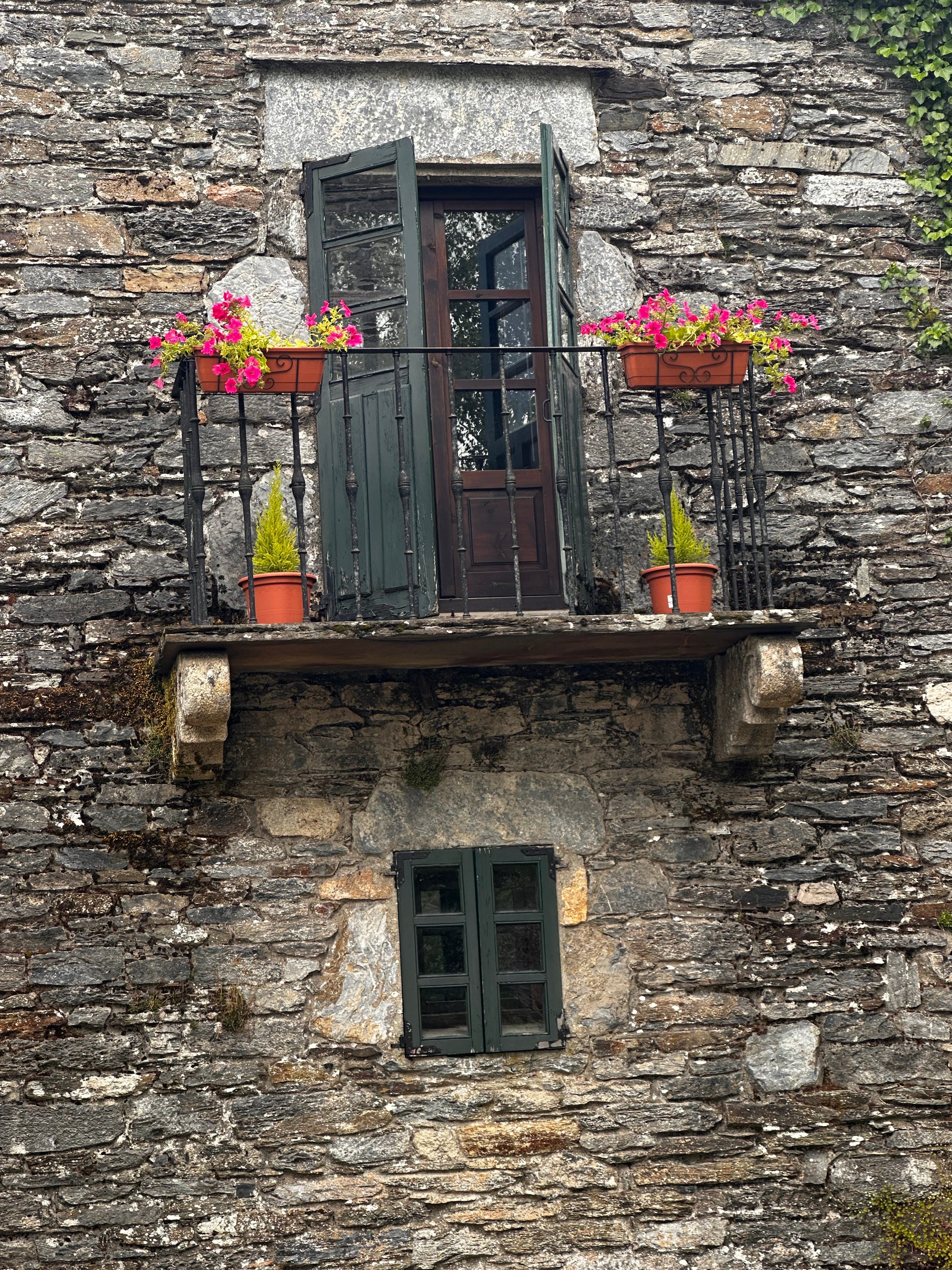
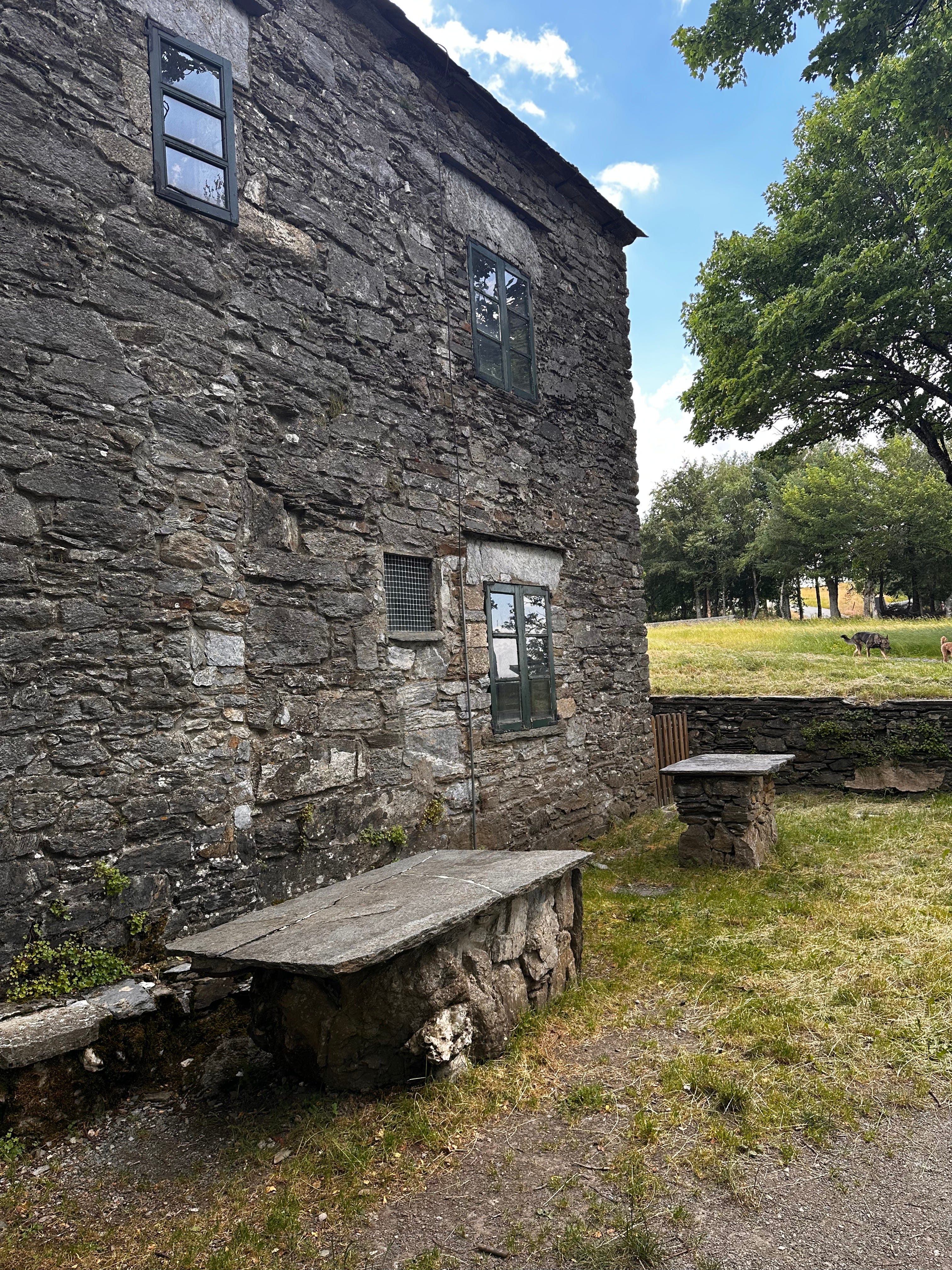
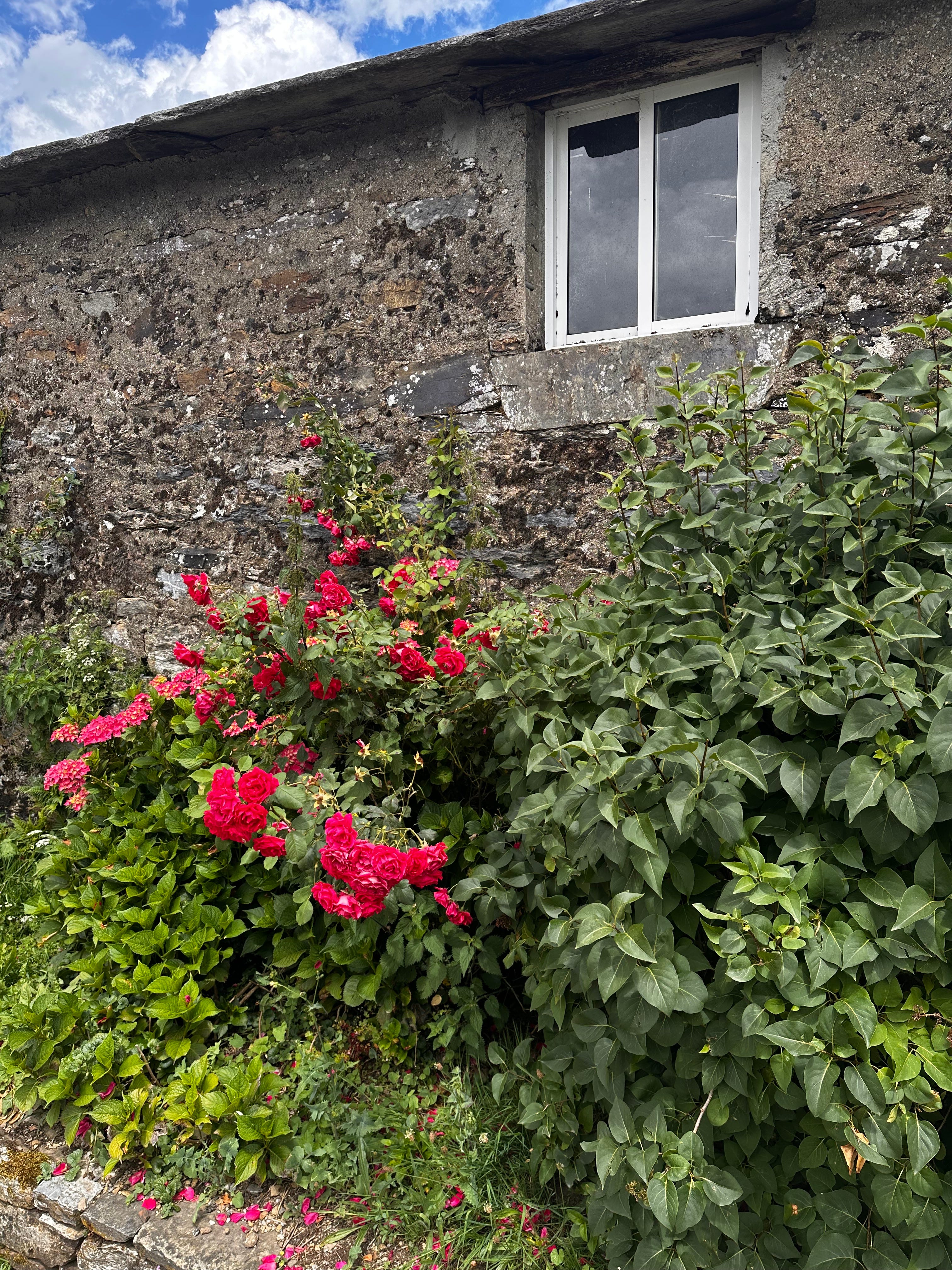
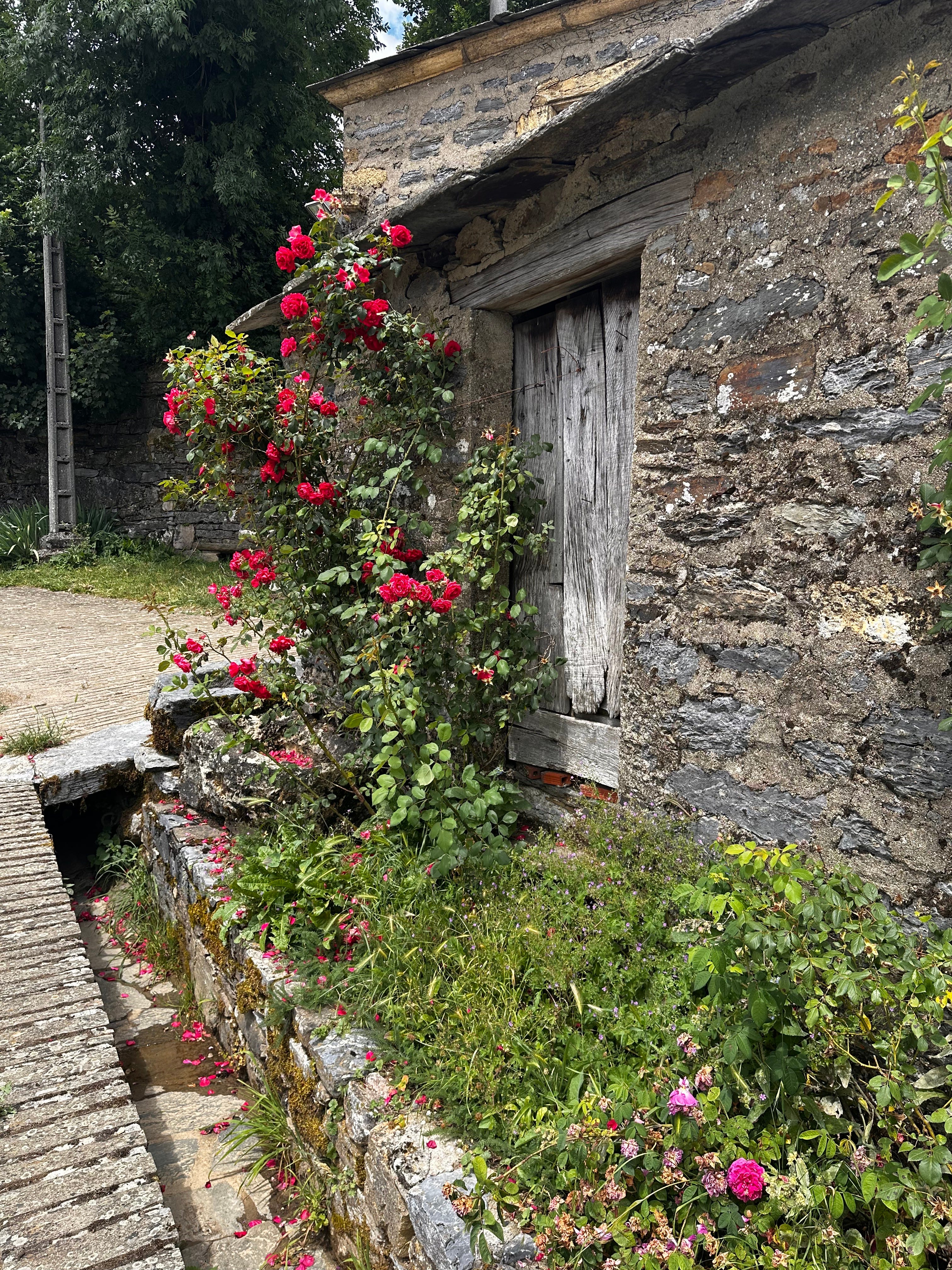
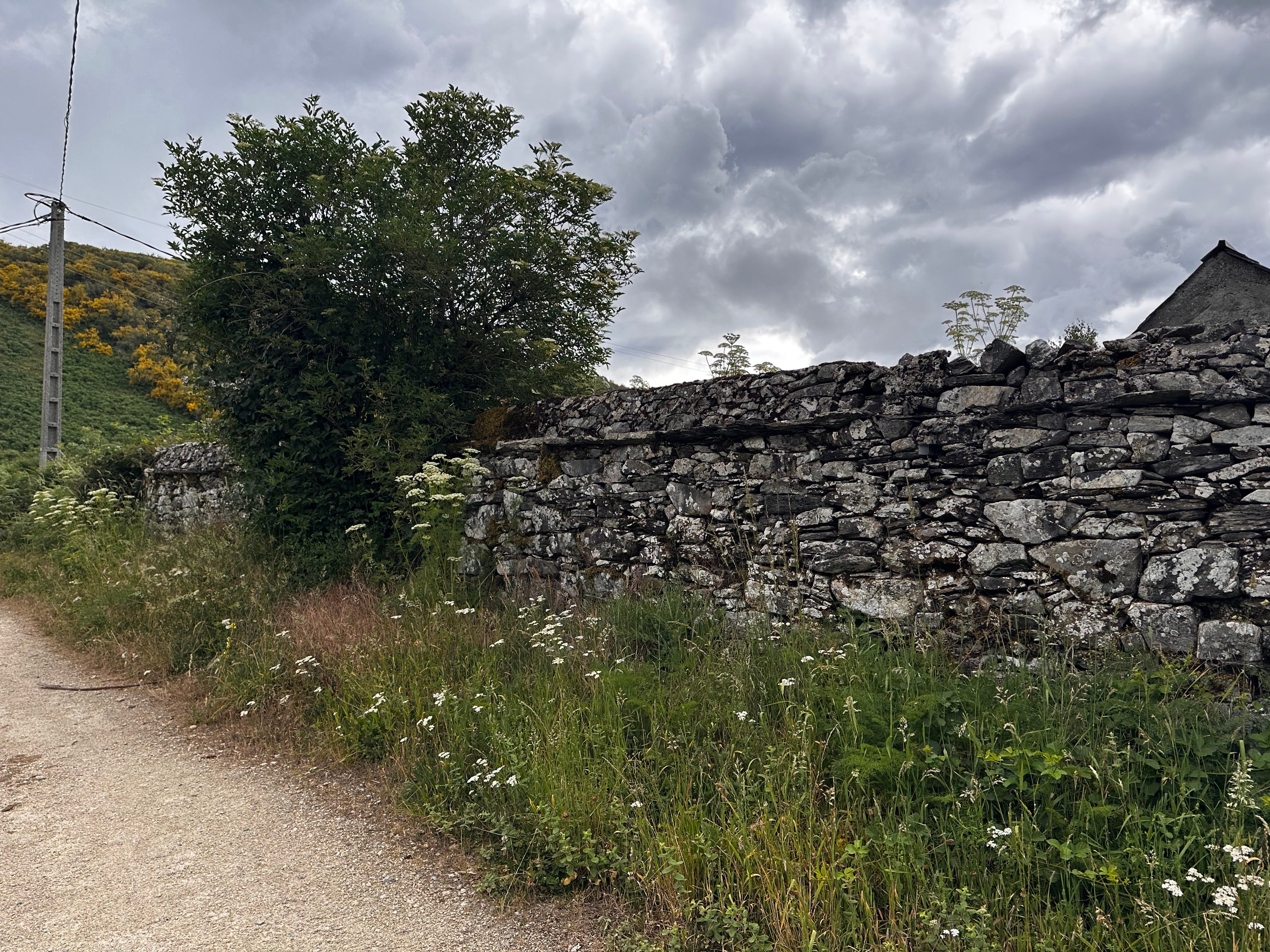
O Cebreiro sat at the top. I had read that it was old. I was not prepared for how old it felt. The round stone houses with the thatched roofs, the pallozas, are pre-Roman, and between the mist and the green and the smell of woodsmoke the whole place felt less like a village than like a place time forgot to modernize. The oldest and strangest and most beautiful corner of the whole route, and we had walked straight up into it. A low stone church, dark and plain. Stone houses crowding around it. Packs leaning against the walls.
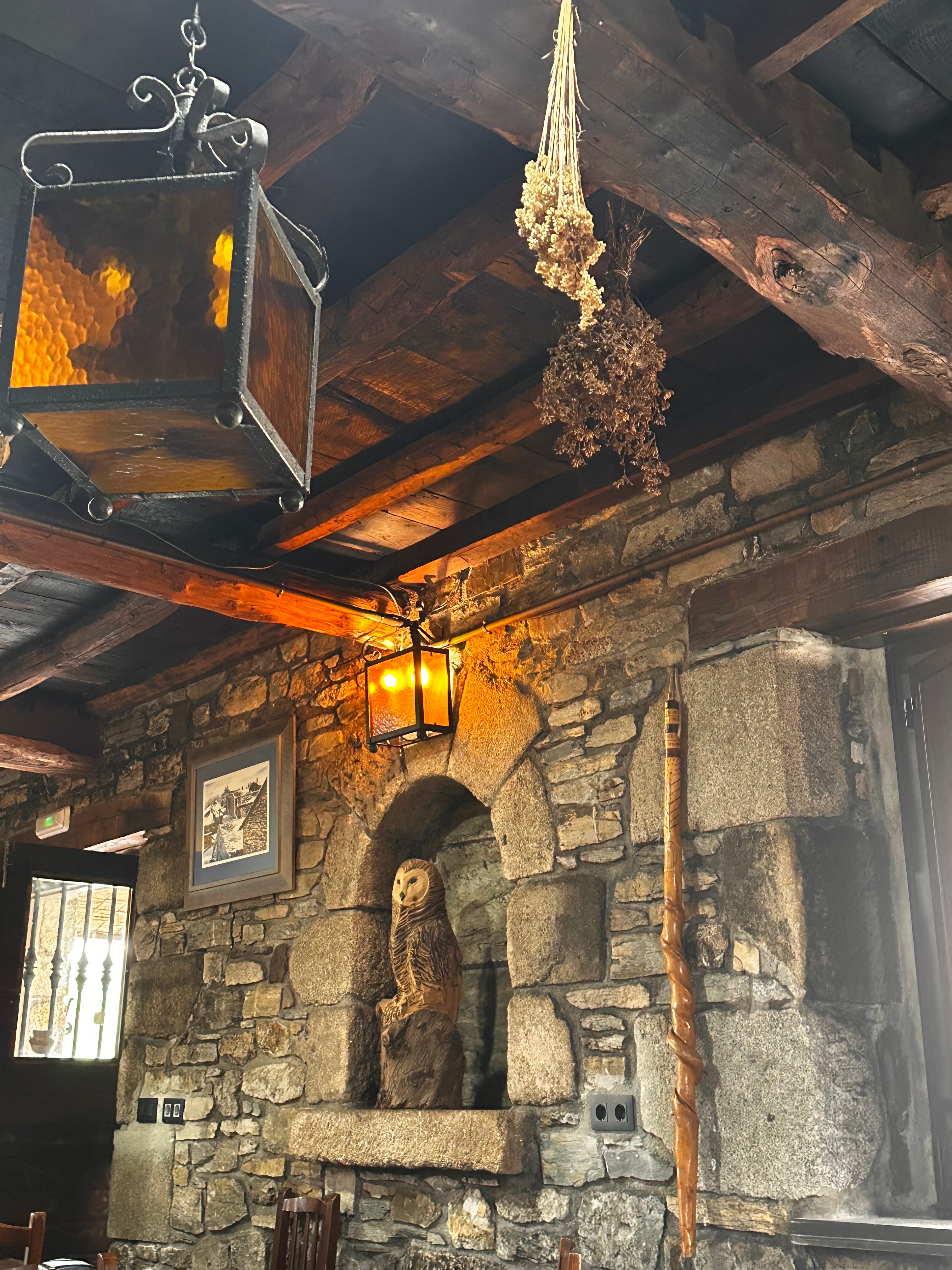
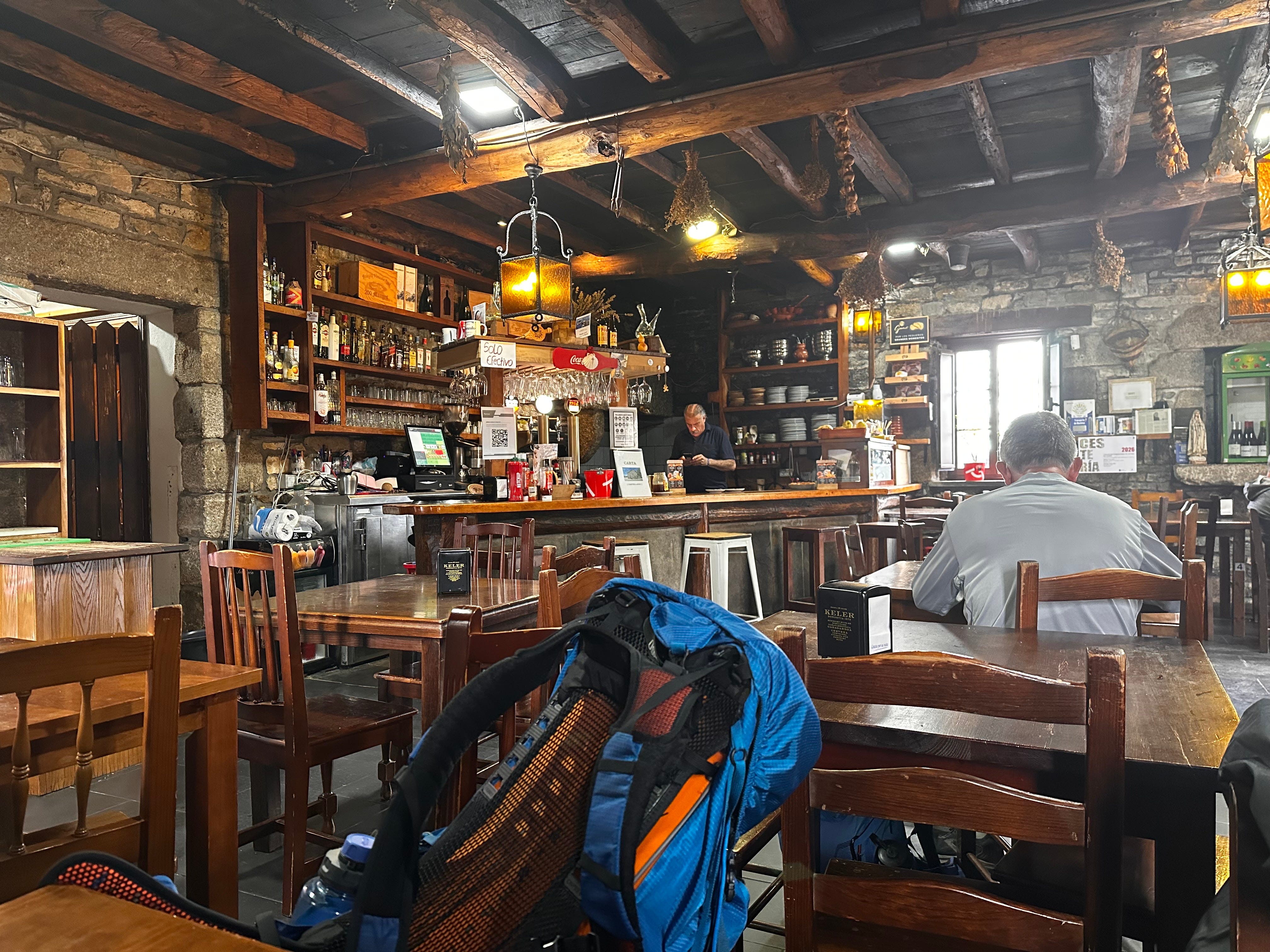
We stopped to eat at Venta Celta. Inside it was all dark beams and stone, a carved owl set into the wall, bundles of dried herbs hanging from the rafters. I tried the cheese the place is known for, the queixo do Cebreiro, soft and white, served with honey. It was like full-fat cottage cheese and then better than that. I could have gone for a second plate. We had a local empanada too, a meat pie we shared to refuel the muscles, which felt like the right first taste of Galicia.
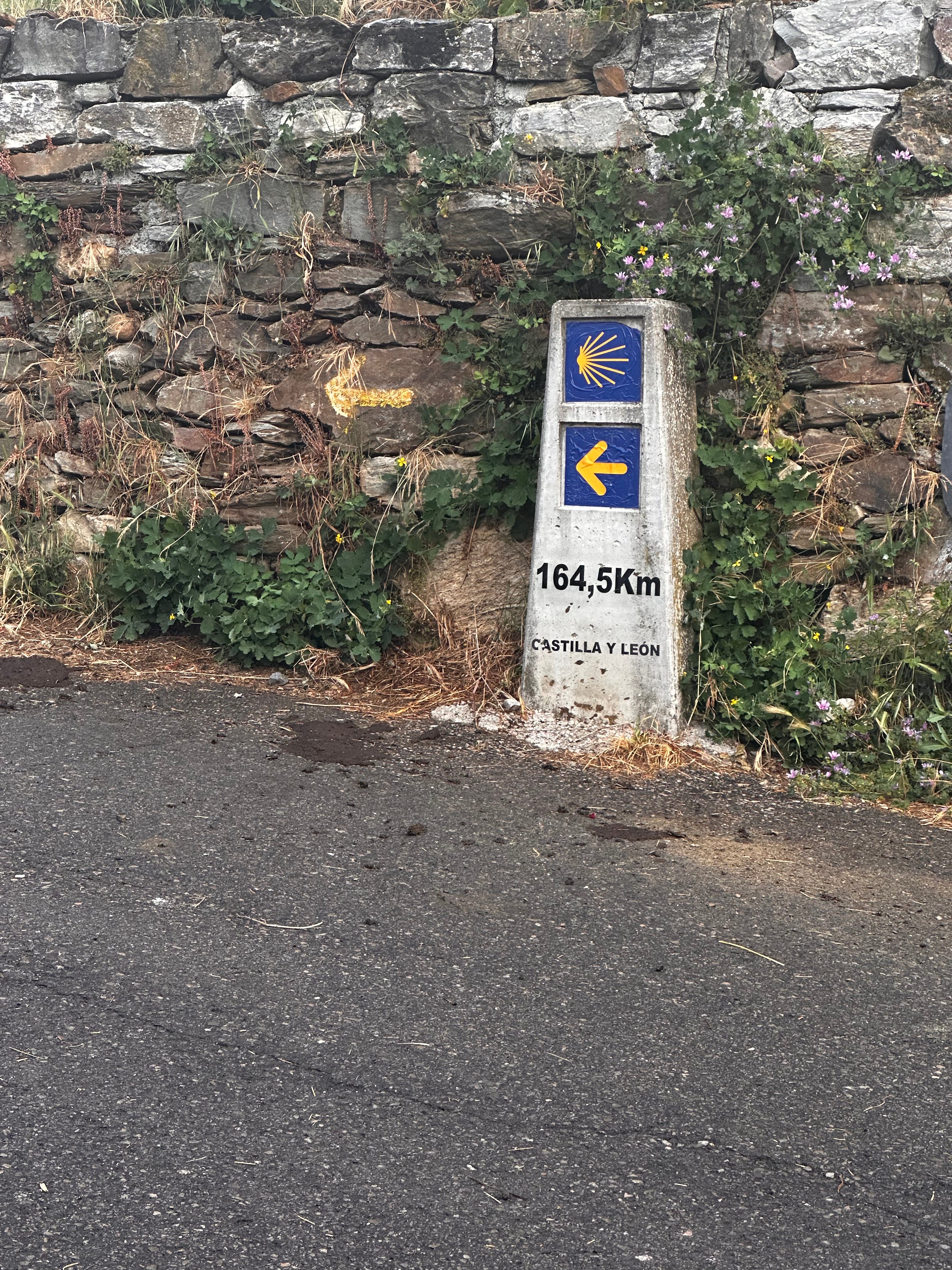
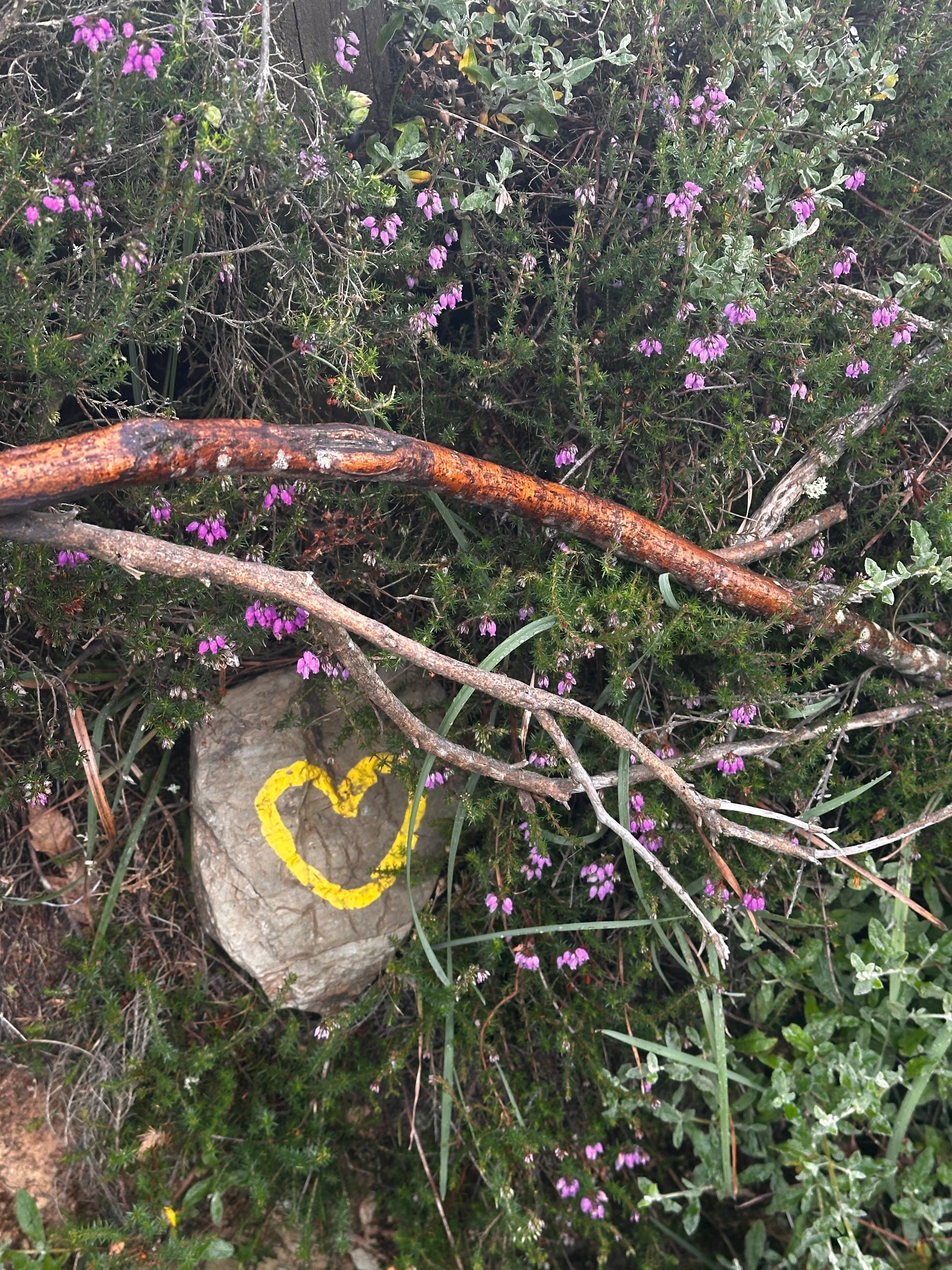
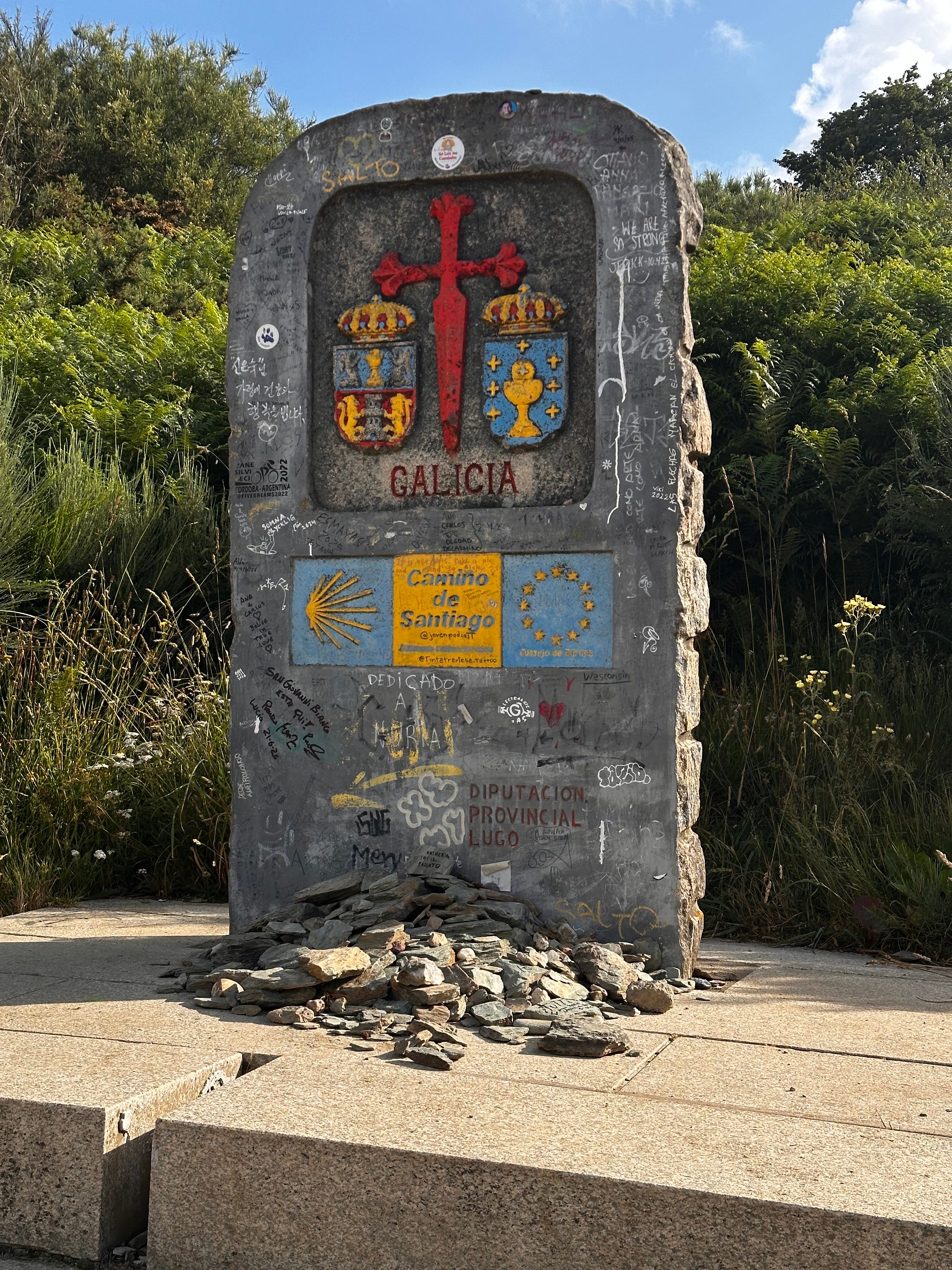
Somewhere on the climb we had crossed the line into Galicia. There is a marker for it, a stone with the region’s arms, but the change had already reached us without it. The hills turned rounder and greener, the mist came down lower, and a man in a black beret and a white shirt stood at the side of the trail playing the gaita, the sound winding out through the trees. Perfectly celtic. It could have been Galicia or some wetter, older country to the north.
They say there are witches up here. Meigas. The Galicians have a line they like, half a joke and half not. Eu non creo nas meigas, mais habelas, hainas. I don’t believe in witches, but that they exist, they do. In that weather, on that mountain, with the owl watching from the wall, I was not in a hurry to tell them otherwise.
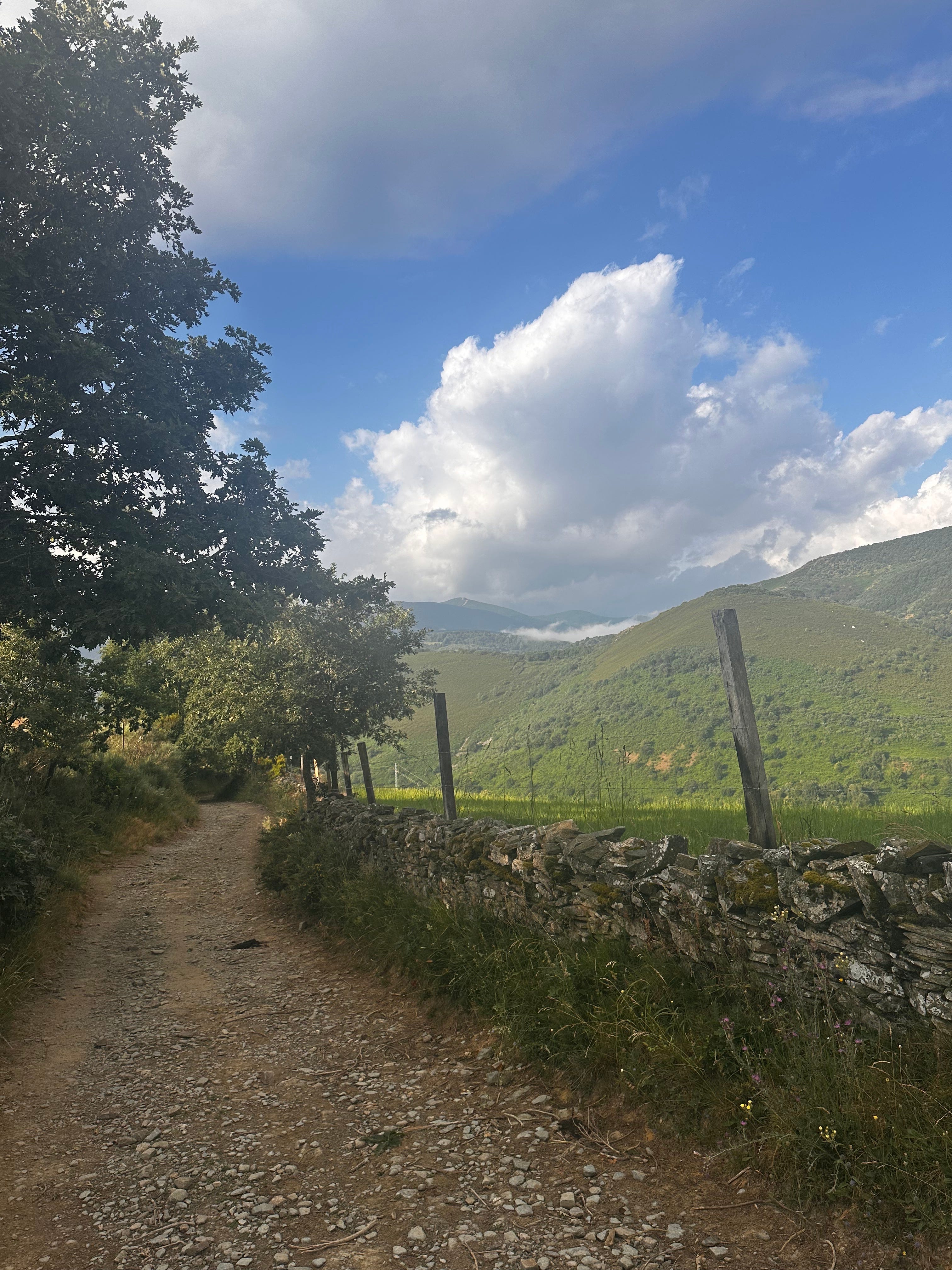
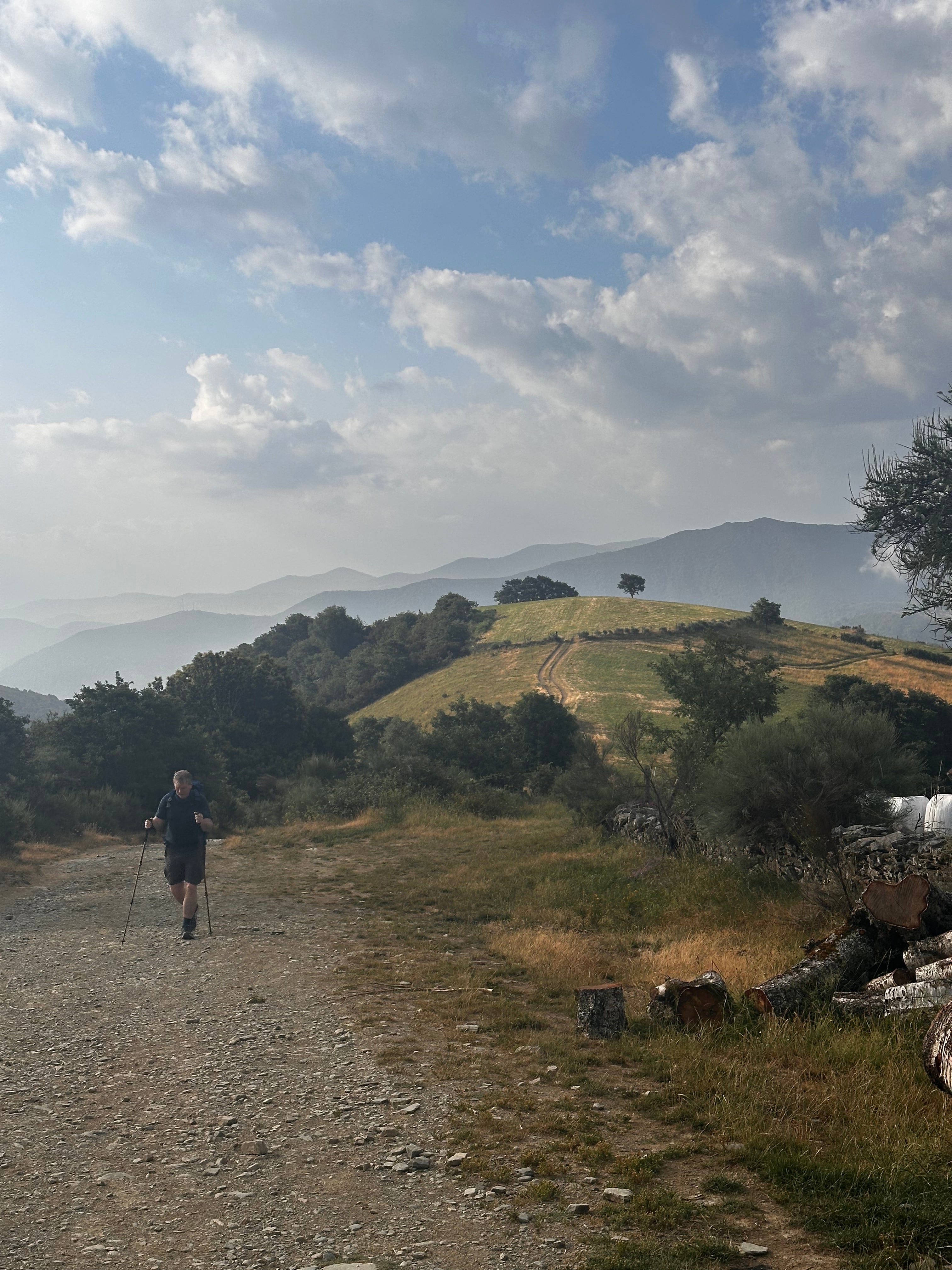
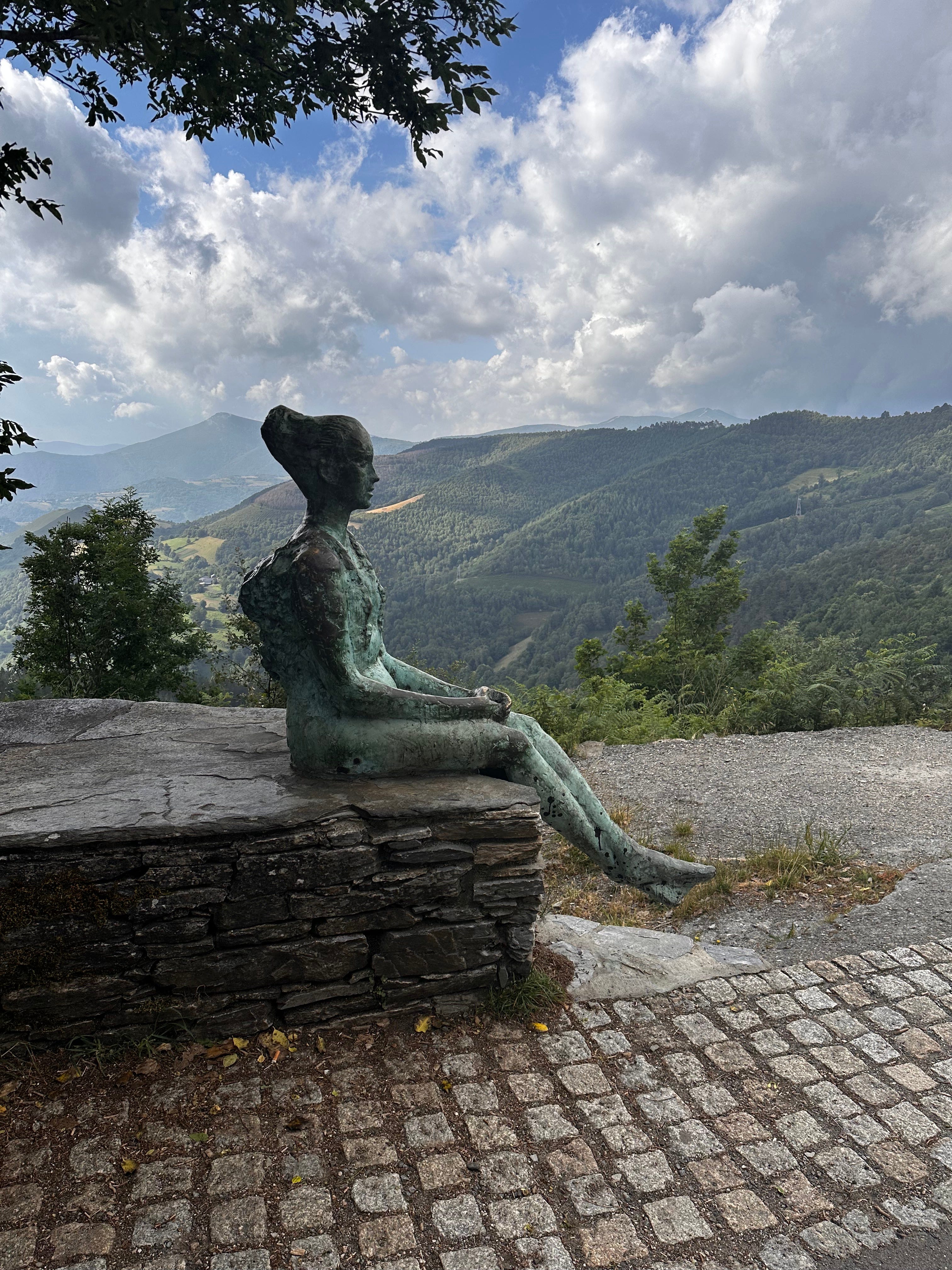
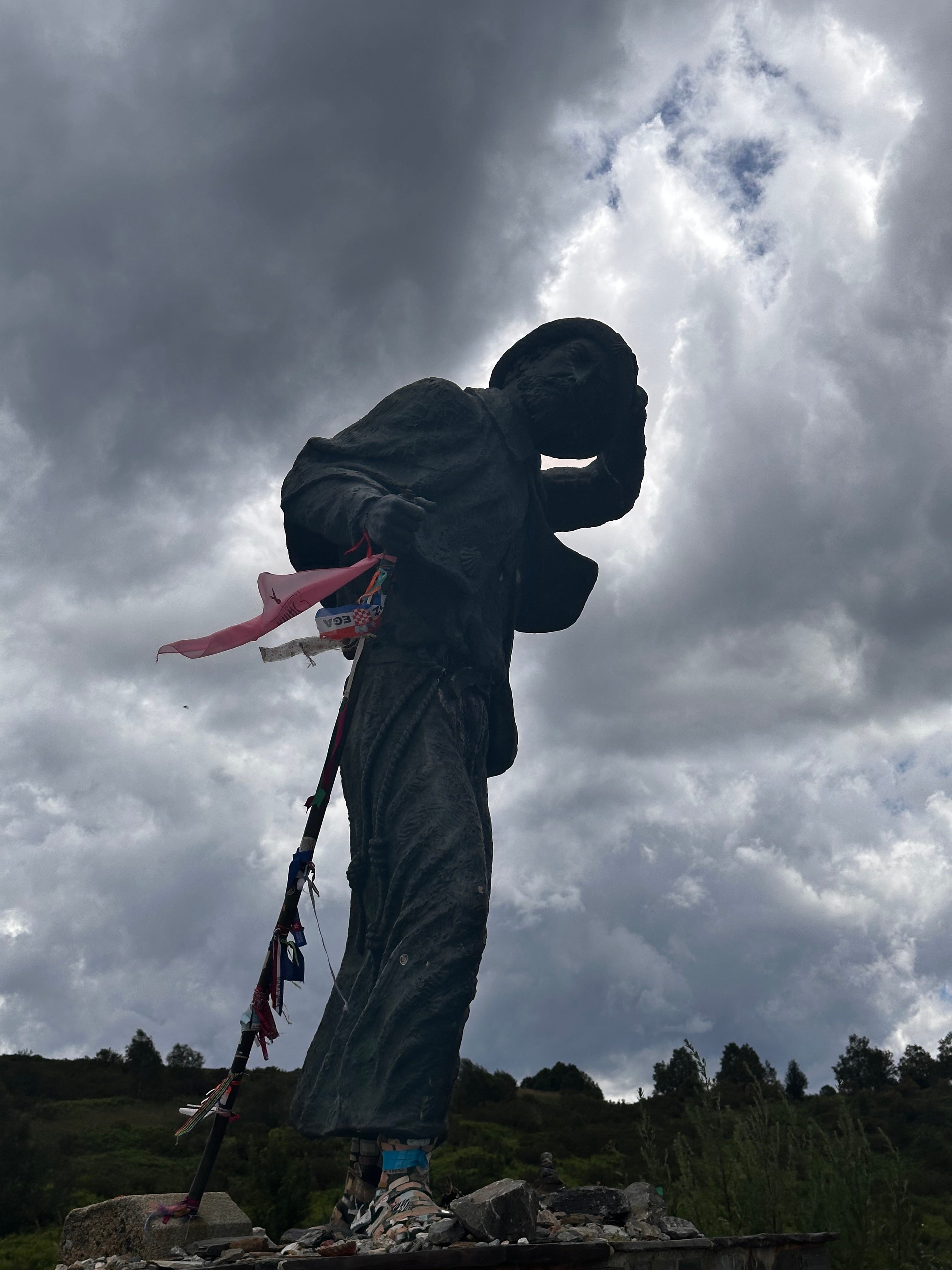
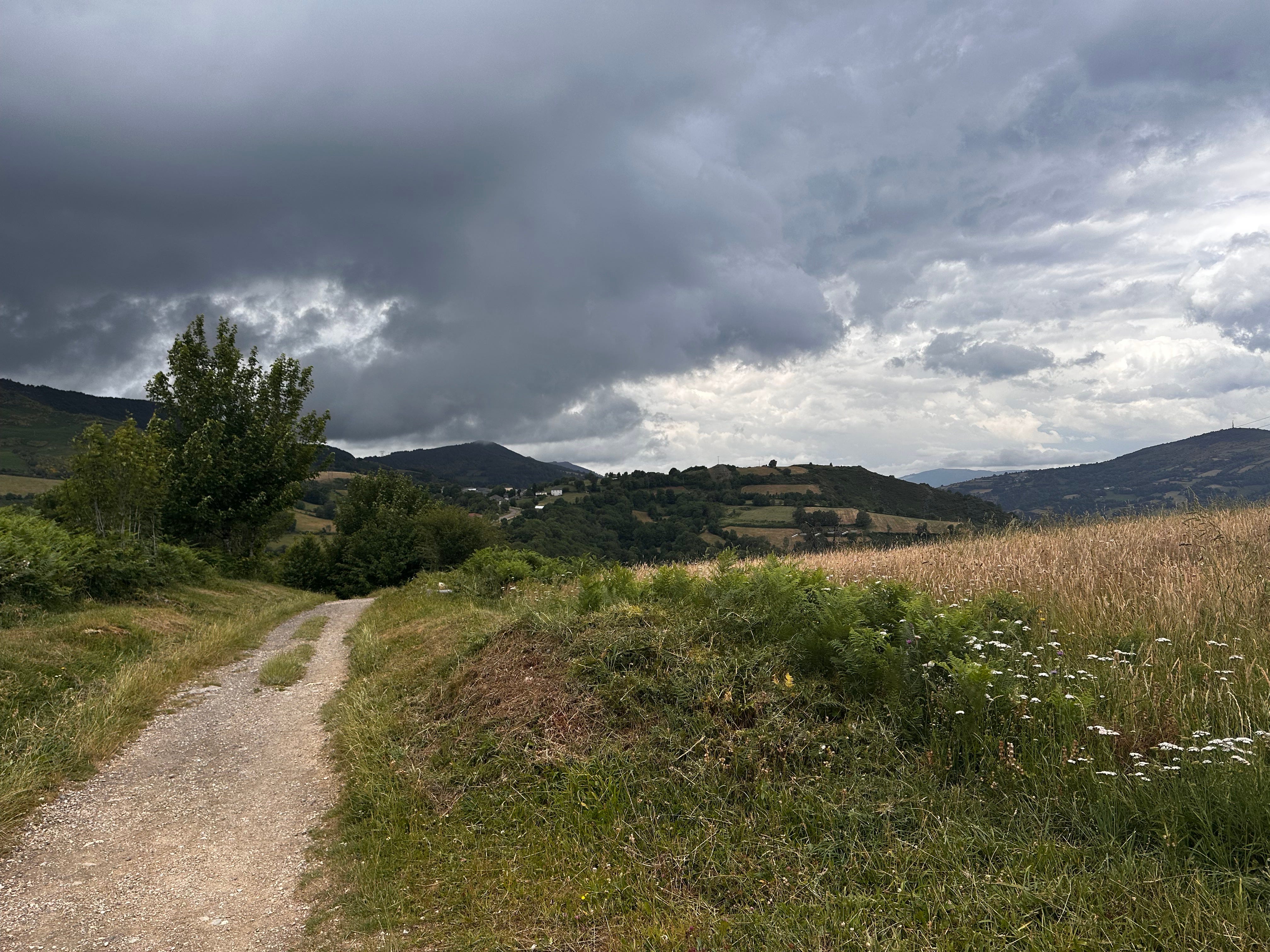
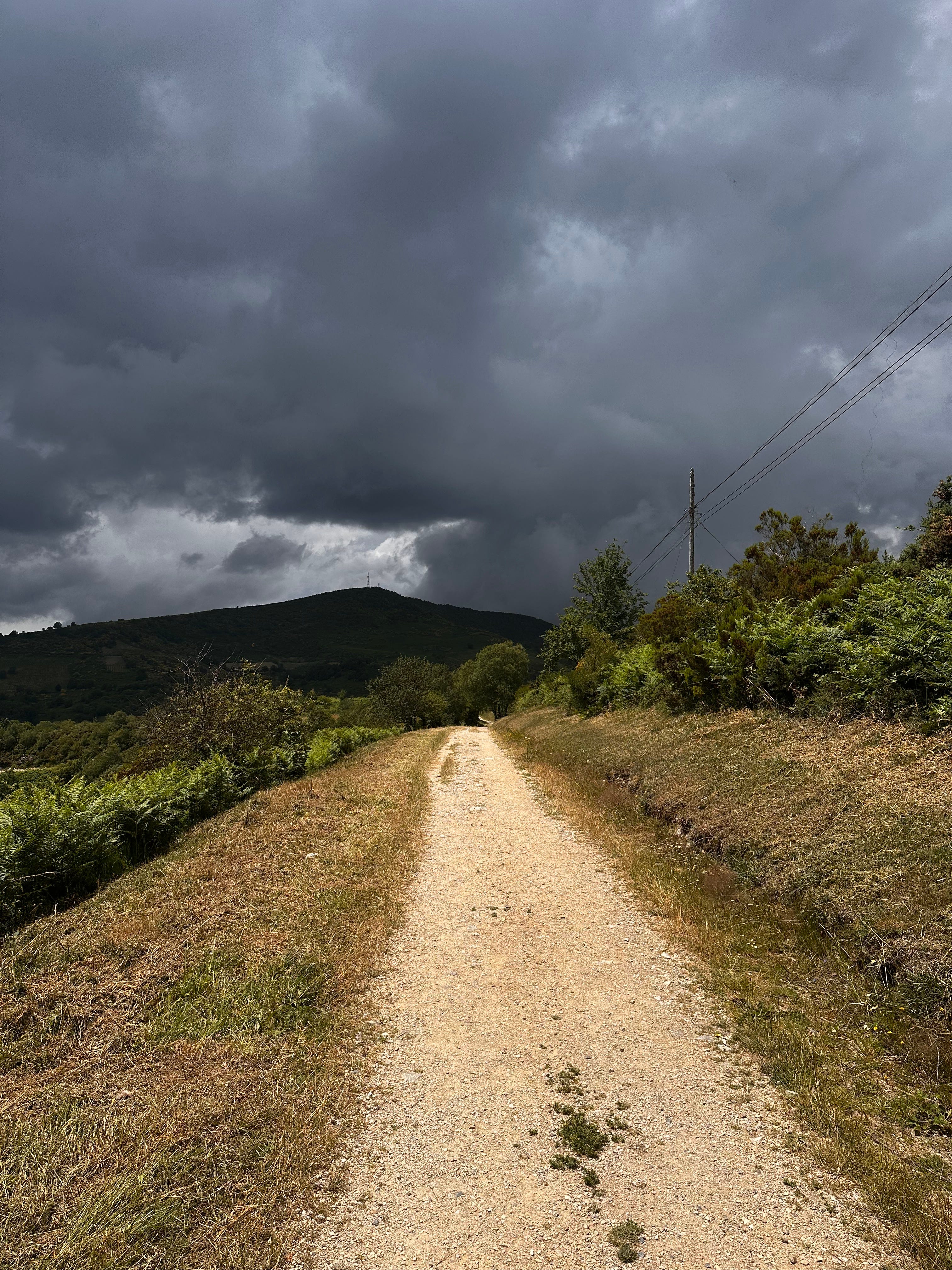
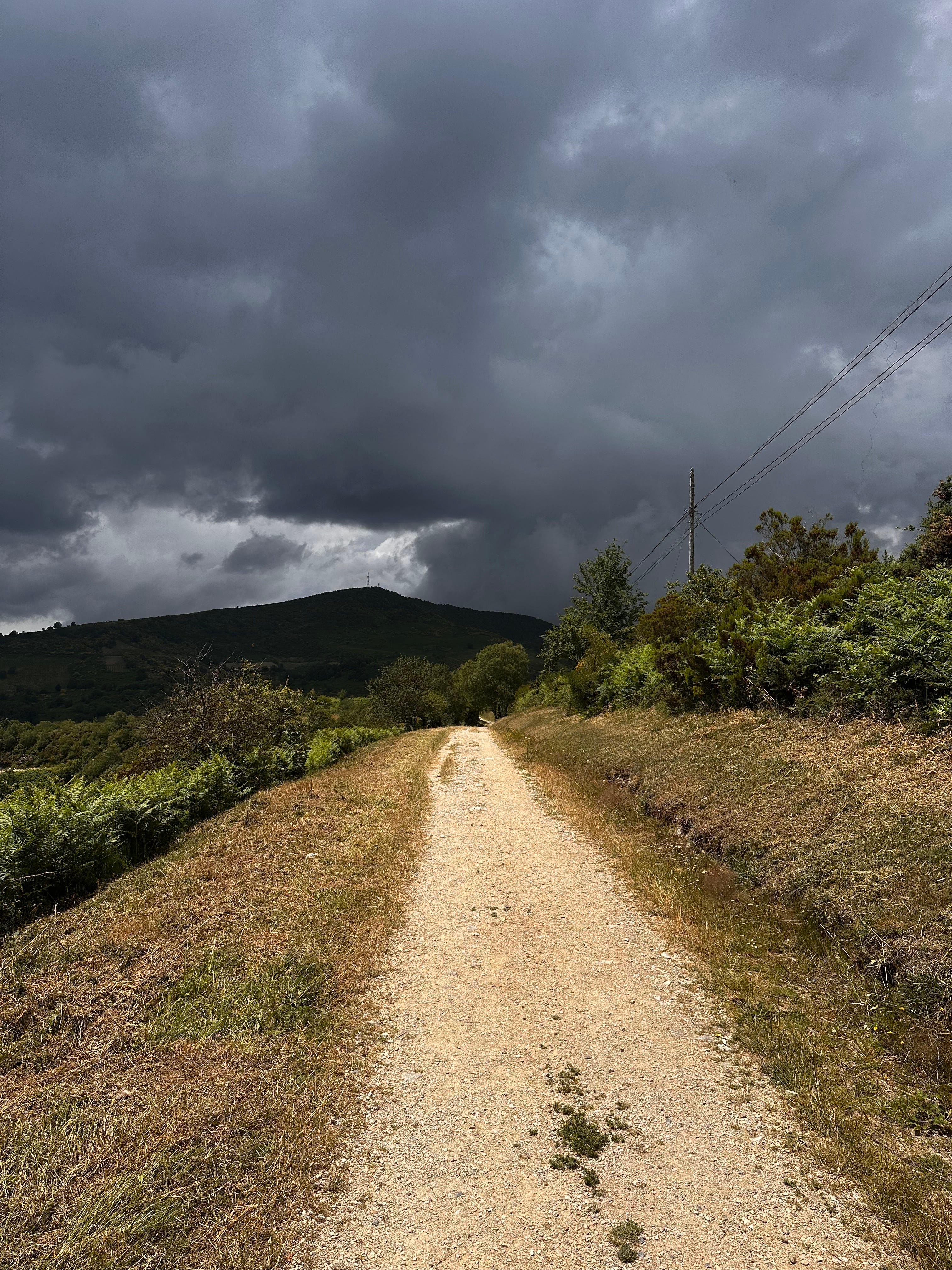
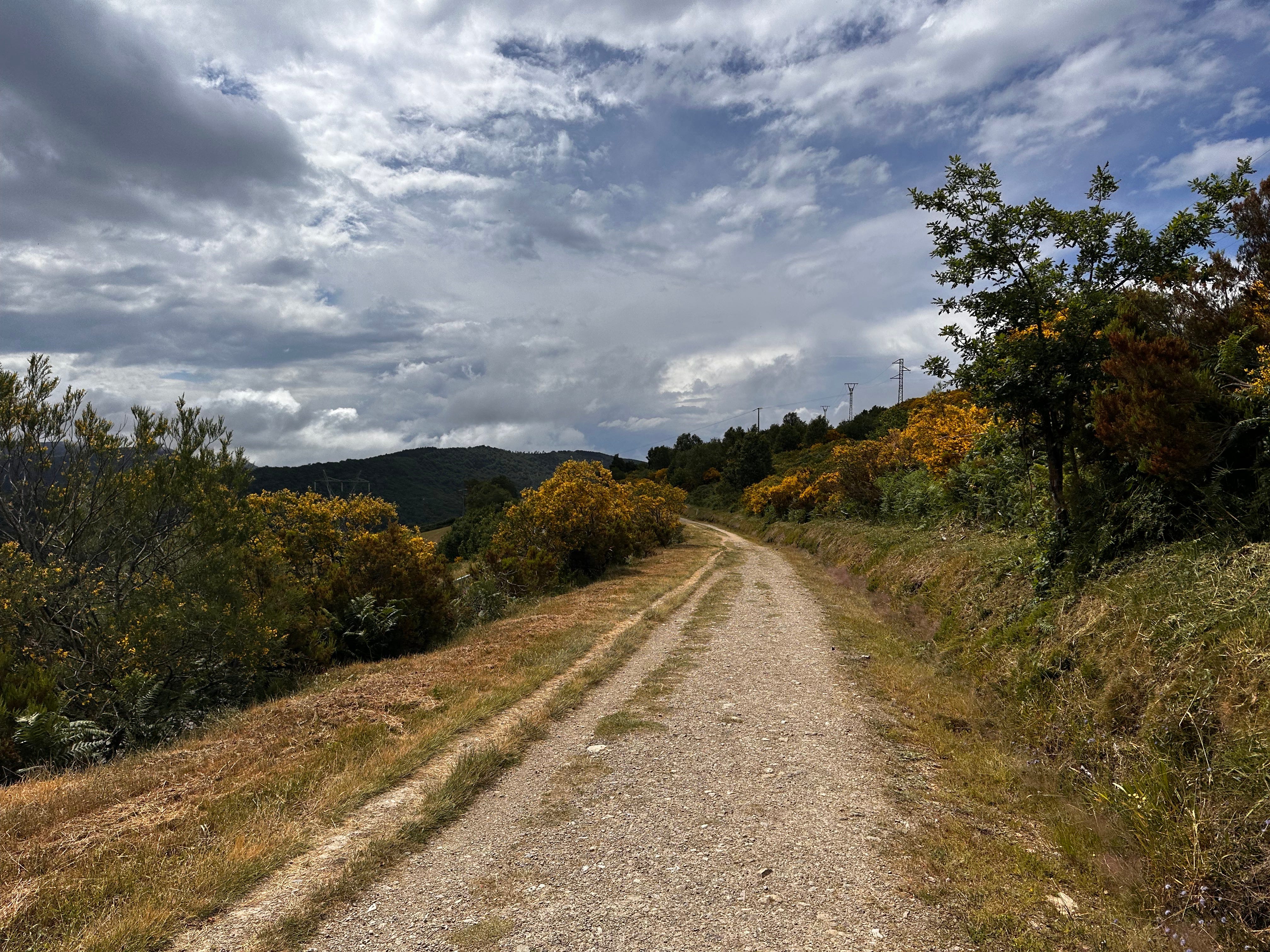
After O Cebreiro the walking turned kind. The high ground rolled gently for a long stretch, past Liñares, past the pilgrim cast in bronze at Alto San Roque, leaning into a wind that today was real. The sky had gone the color of slate. We passed through Hospital da Condesa and Padornelo, small places strung along the ridge, good markers to count yourself along by.
From Padornelo there was one more sharp pull up to Alto do Poio, the high point of the whole section at 1,330 meters, though after the morning it asked very little of us. After that the path tipped downhill and let us coast the rest of the way to Fonfría. The rain found us before the end, the way it had been promising all day. We walked the last of it wet.