

Tell me, what is it you plan to do
with your one wild and precious life?
— Mary Oliver, The Summer Day
_____________________________________
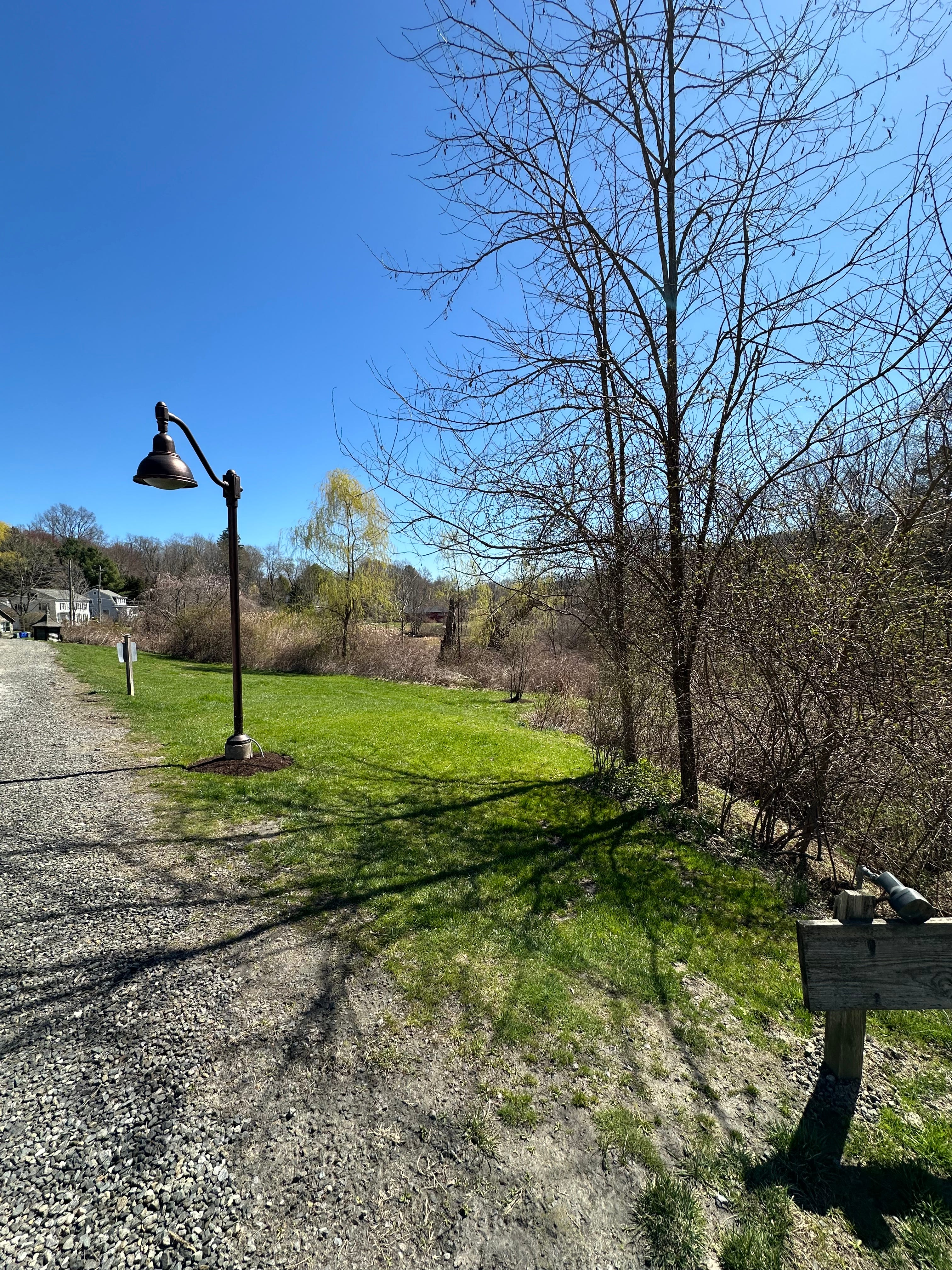
Outside of The Market at Union Hall, North Salem, New York — where the planning begins
It is a Saturday morning in April. The light is doing what spring light does in New York/Connecticut, arriving at a slant, tentative and golden, as if it isn’t quite sure yet it’s allowed to stay. I am sitting outside with a latte and a bag of dark chocolate covered pistachios, which tells you something about me. I am making plans.
On June 18th, I will begin walking a portion of the Camino Francés.
Not the full route. Life has its constraints, and seventeen days is what I have. But more than the minimum. More than the cautious choice. Twelve to eighteen miles a day on foot, through a landscape that has been receiving walkers for over a thousand years. A 25-liter backpack containing everything I need, which, it turns out, is considerably less than I thought.
People have been walking this road since at least the 9th century. Perhaps earlier. Pilgrims, penitents, seekers, wanderers. The stones know the weight of a thousand years of human footfall. There is something about that, the sheer accumulated humanity of it, that stops me every time I think about it. This road is real in a way that very little in modern life is real anymore.
We get very comfortable in our stories. We wake up, we follow the grooves we have worn into our days, and we stop noticing the life that is quietly passing by.
I think this is why I am going.
Not because I am unhappy. Not because I am lost. But because comfort, unchallenged, becomes invisible. We get very comfortable in our stories. We wake up, we follow the grooves we have worn into our days, and we stop noticing the life that is quietly passing by. The practice of doing one thing a day that frightens you is a good practice. The practice of doing one large, defining thing that frightens you is something else entirely. That is a recalibration.
In the modern world, we do not walk. We do not stay in simple spaces alongside strangers. We do not share meals with people whose names we learned an hour ago on a path in the mountains. We have engineered away the friction of human contact, the discomfort of proximity, the particular intimacy of shared difficulty. We have lost something in that engineering. I am not sure we have fully noticed what.
I work in artificial intelligence governance. I spend my days thinking about what technology is doing to us: to our privacy, to our autonomy, to the way power moves through the world. And the longer I sit with those questions, the more certain I become of this: it has never been more important to tend to our humanity. To go back to the root of it. To walk an ancient road with strangers and remember what we are made of.
The Camino does not care about your title, your schedule, your carefully constructed life. It only asks: can you keep walking?
So. I found the Osprey 25-liter pack at REI last week. I held it in my hands and tried it out for a long time before I put anything in it. There is something clarifying about the constraint of it. This is all you carry. Choose carefully. I find myself thinking about that instruction in contexts well beyond backpacking.
On the pack
The Osprey 25L Sportlight, women’s fit, injection-moulded frame sheet. The decision to go small was deliberate. If I can only carry 25 liters, I have to decide what matters. This feels like the right question to be asking right now.
This blog, Escribo Mi Camino, begins here, on this April morning, 68 days before I step onto that road. It will follow me through the preparation: the training walks through Connecticut in spring rain, the research, the packing and repacking, the questions I haven’t thought to ask yet. And then it will follow me onto the Camino itself.
But it was never going to be only about walking. It is about food and beauty and design and the way certain places hold light. It is about the people you meet on the road, the strangers who become, over shared miles and simple meals, something closer to family. The Camino has always been this: a temporary community of people who chose to show up, put one foot in front of the other, and trust that the road would provide what they needed. In an age when we are losing that, losing the instinct for real presence, real conversation, real communion, I find that radical. I find it necessary. It is about the vie publique and the vie privée, the full demanding professional life and the interior life that runs alongside it, quieter, less visible, equally real. It is about what it means to choose a hard, beautiful thing simply because it calls to you.
Qu’importe là où je vais. No matter where I go.
I am writing my path.
Beautifully written. Knowing what you wrote, I say you’re going to have a wonderful Camino with meaning beyond purpose.