

Sarria began with its doors.
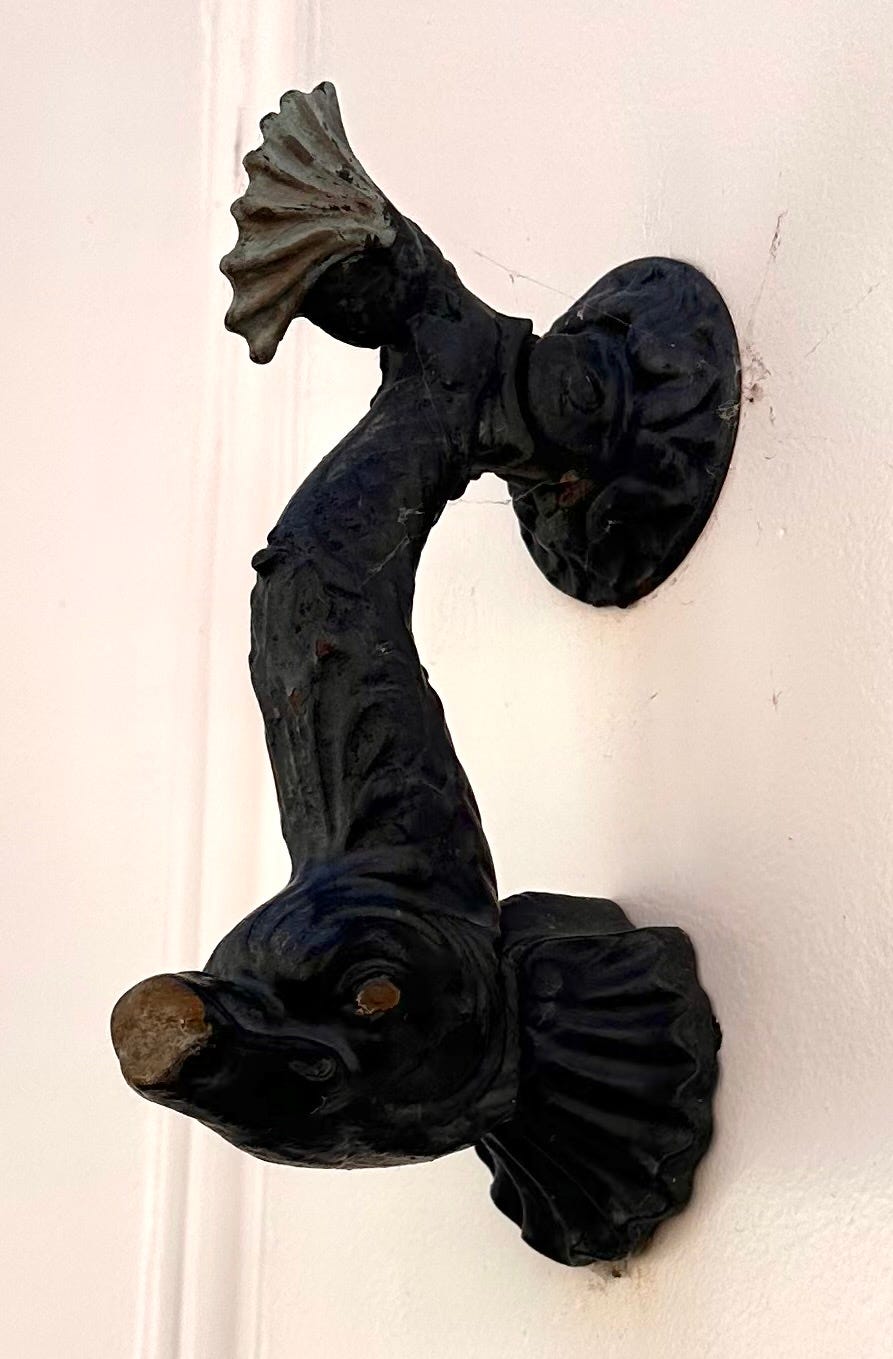
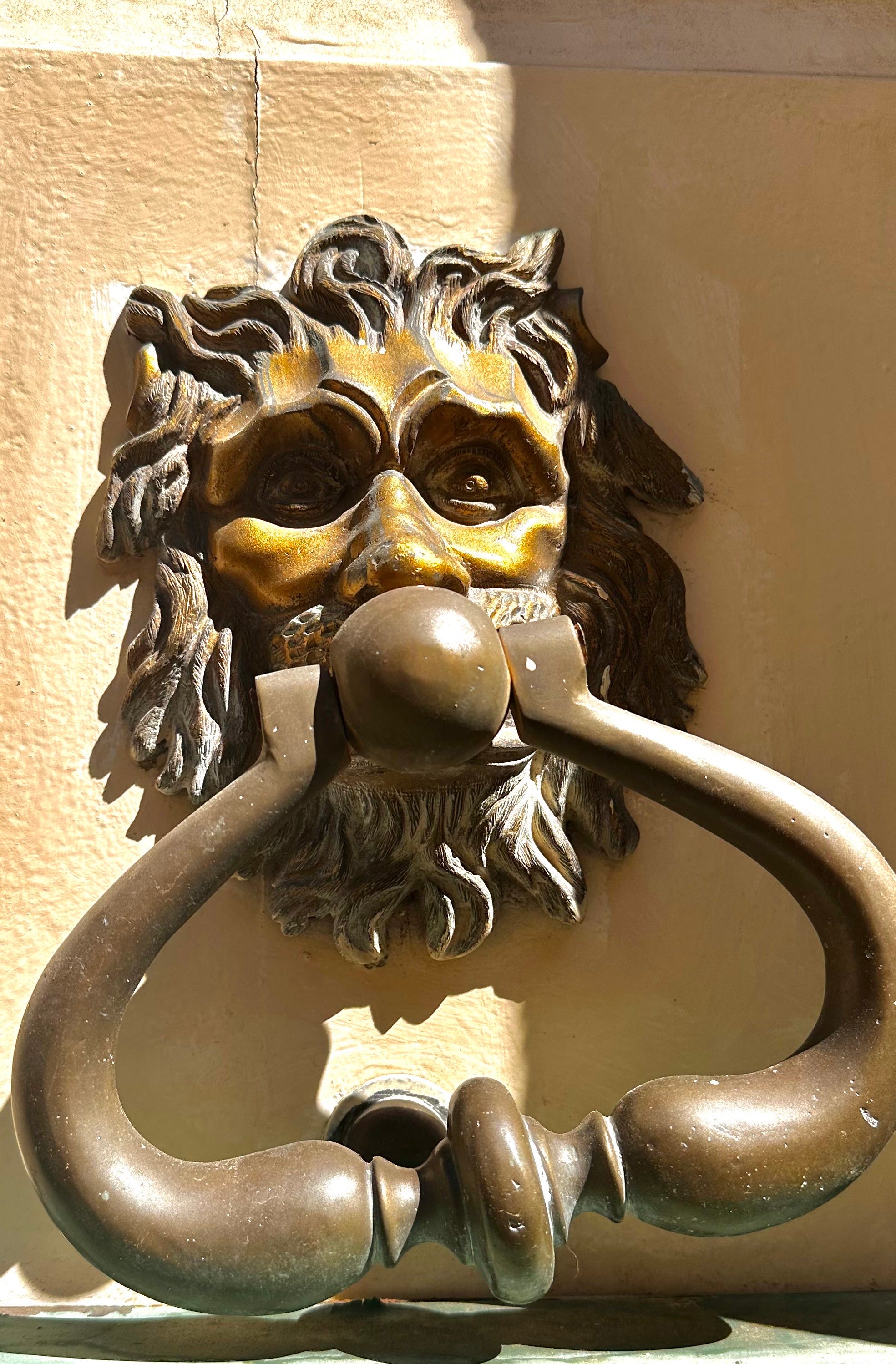
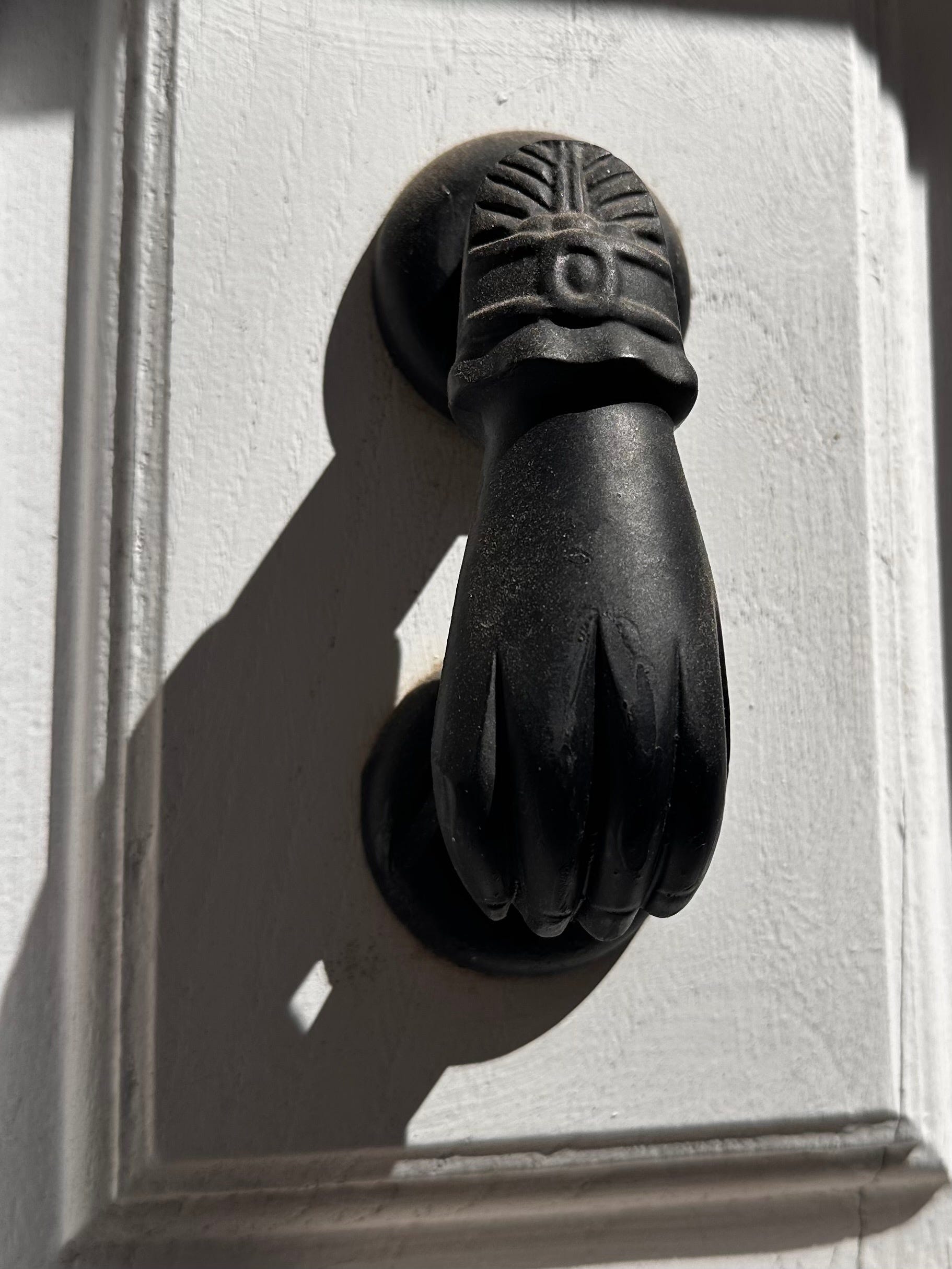
Hands cast in iron, each holding a ball to strike the wood. A bearded face with curling metal hair. One shaped like a fish. Every old door wore something, a small made thing left for whoever came to knock. We climbed the Rúa Maior past them, the street narrow and in shadow, balconies above hung with flowers and one with a banner of the Santiago cross in purple and gold.
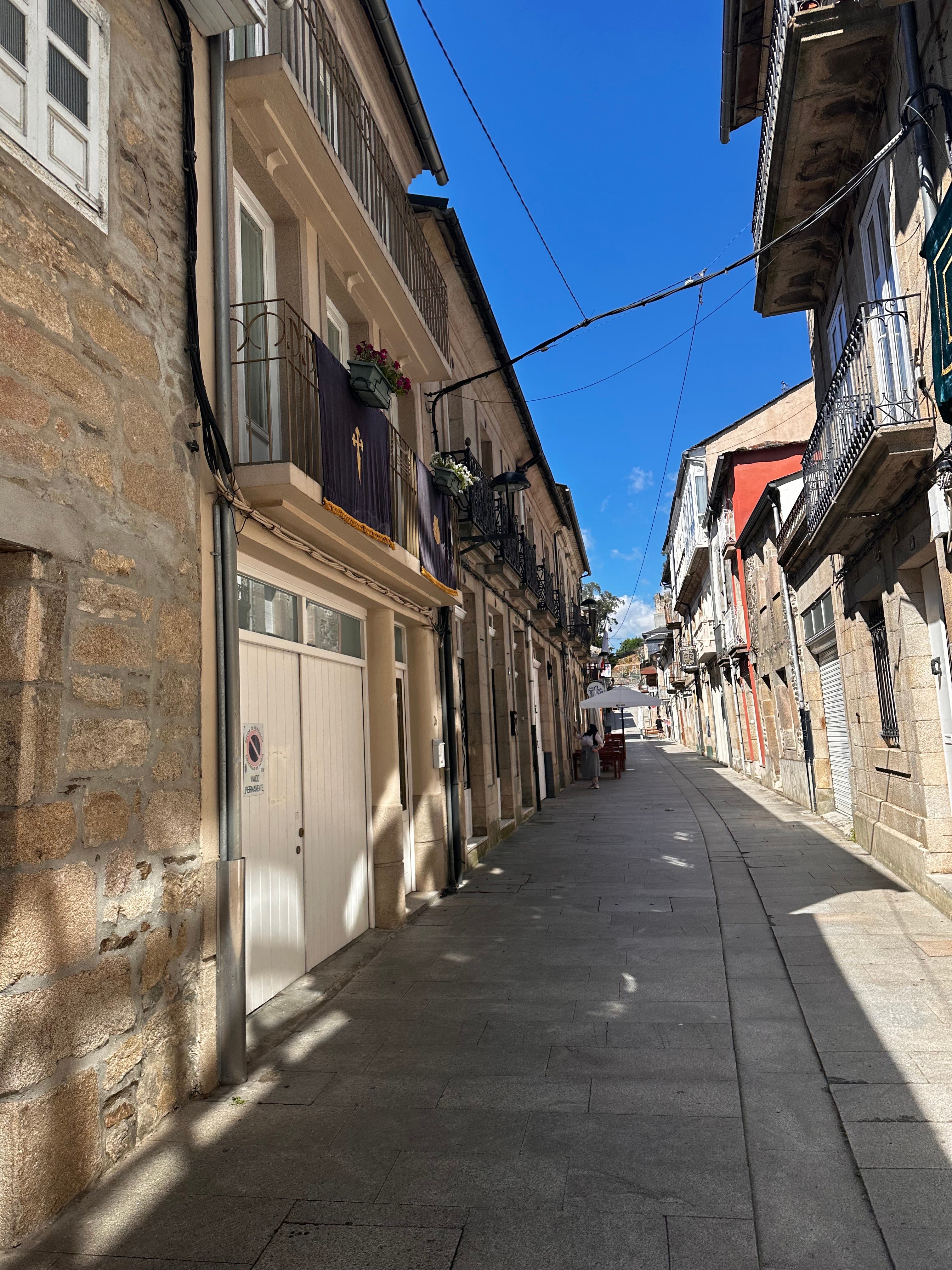
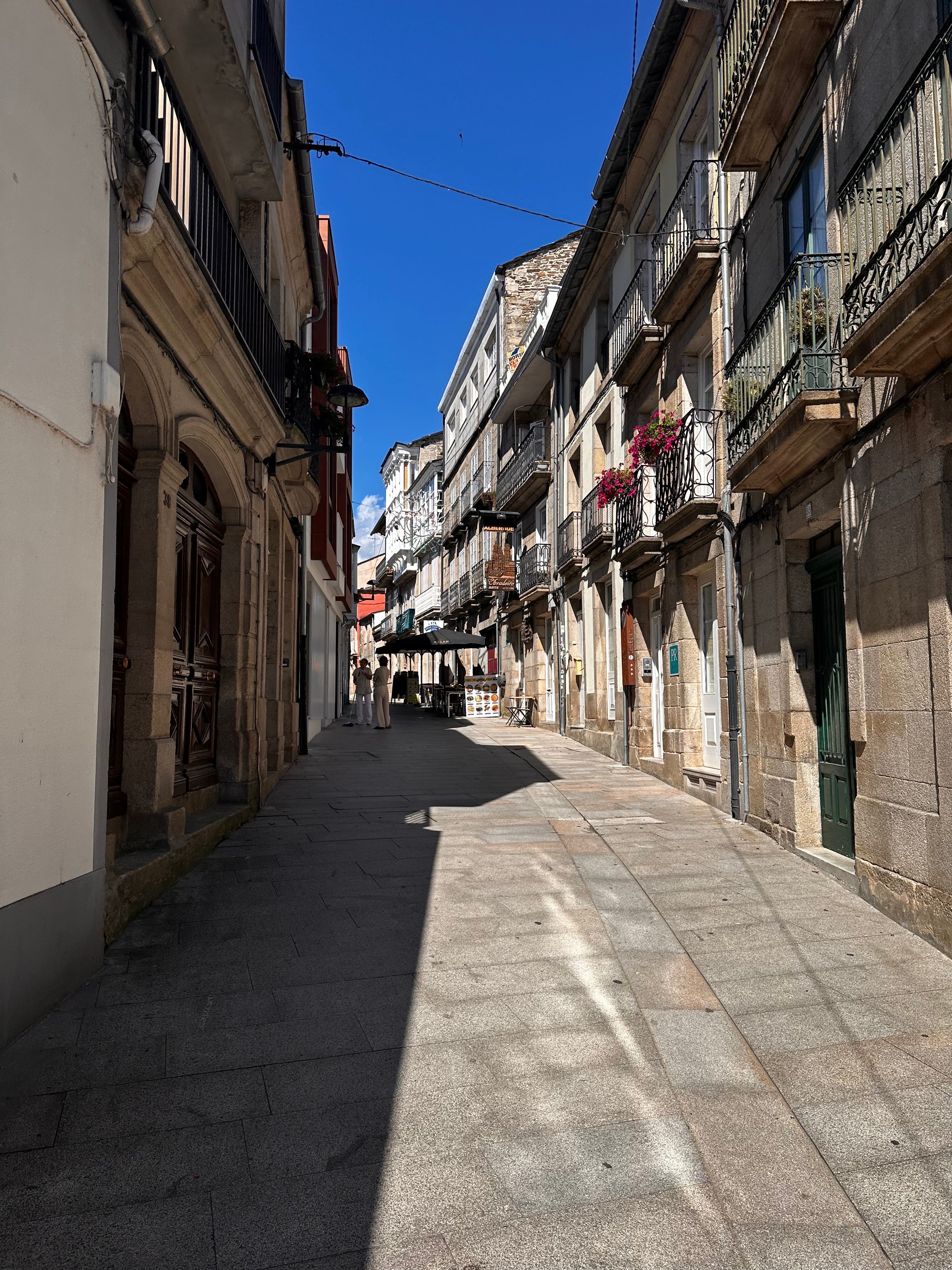
Sarria is where the Camino fills. To be given the Compostela in Santiago a pilgrim has to walk at least the last hundred kilometers, and Sarria is the nearest town past that line, so it is where most of the people walking the shortest way begin. The stone that marks the hundred kilometers comes a little further on. The crowd arrives before the marker does.
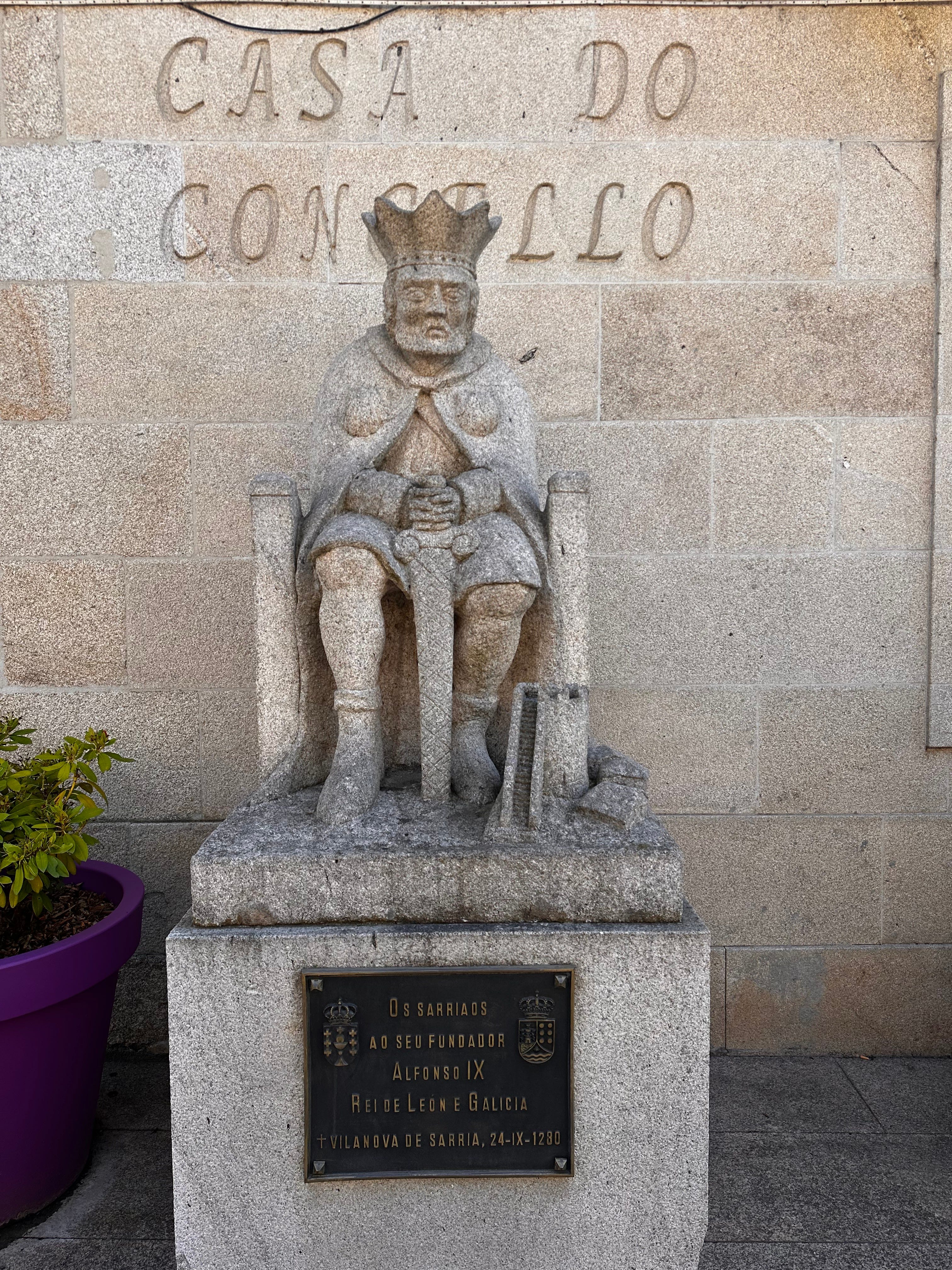
In a small square the town keeps a granite statue of a king, Alfonso the Ninth. Alfonso granted the royal charter to Villanova de Sarria and repopulated it. In 1230, late in his life, he set out on pilgrimage to the tomb of the Apostle at Santiago. He fell ill and died at Sarria before reaching the city. He was carried the rest of the way and buried in the Cathedral of Santiago de Compostela, so in death he completed the journey that illness cut short. His tomb is in the cathedral still. The road he repopulated the town to serve was the road that took him.
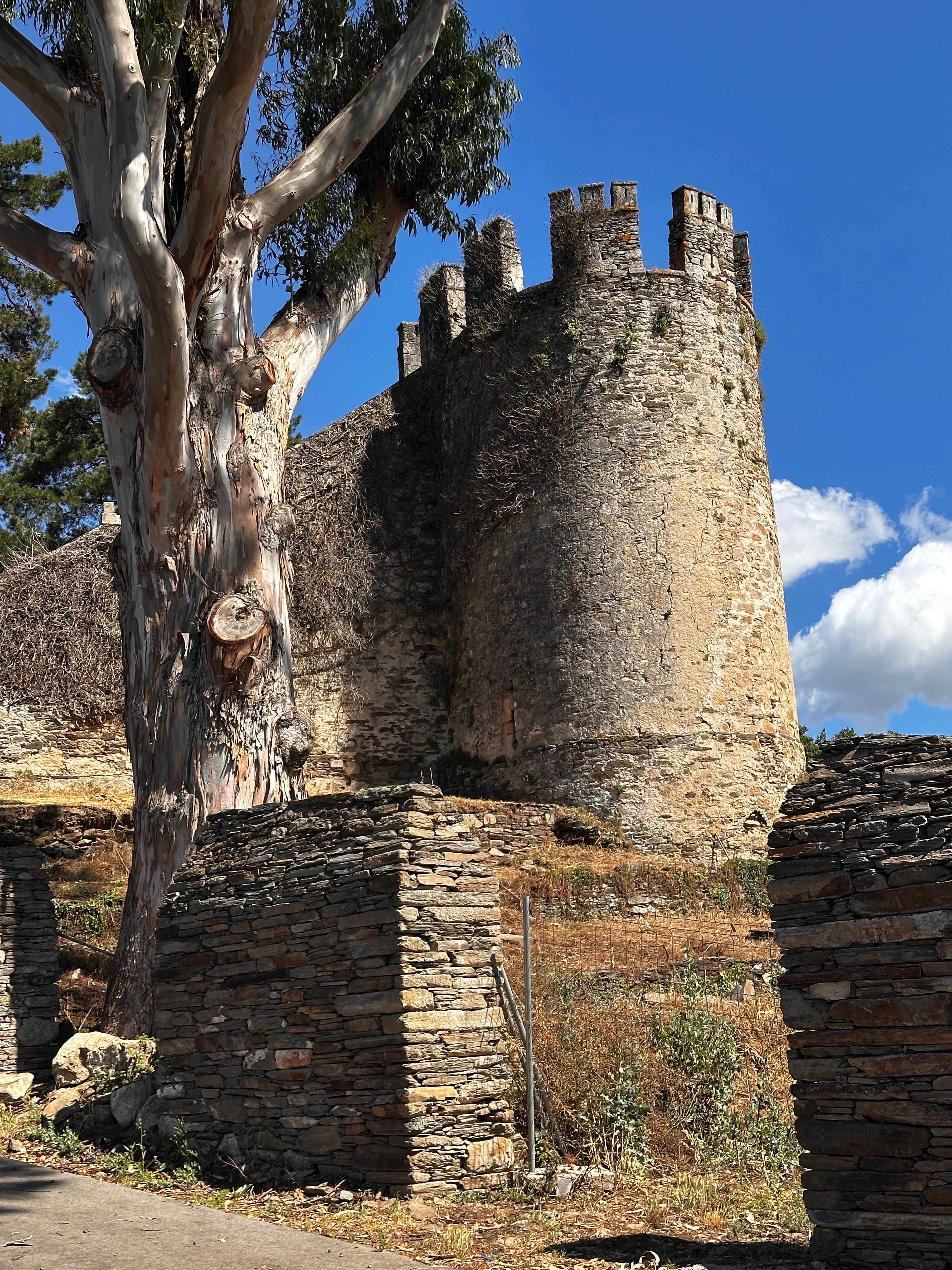
One tower stood above the houses, round and battlemented, the last of four. The others were pulled down centuries ago in the revolts against the lords. A eucalyptus had grown up beside it, bark peeling, taller now than the wall.
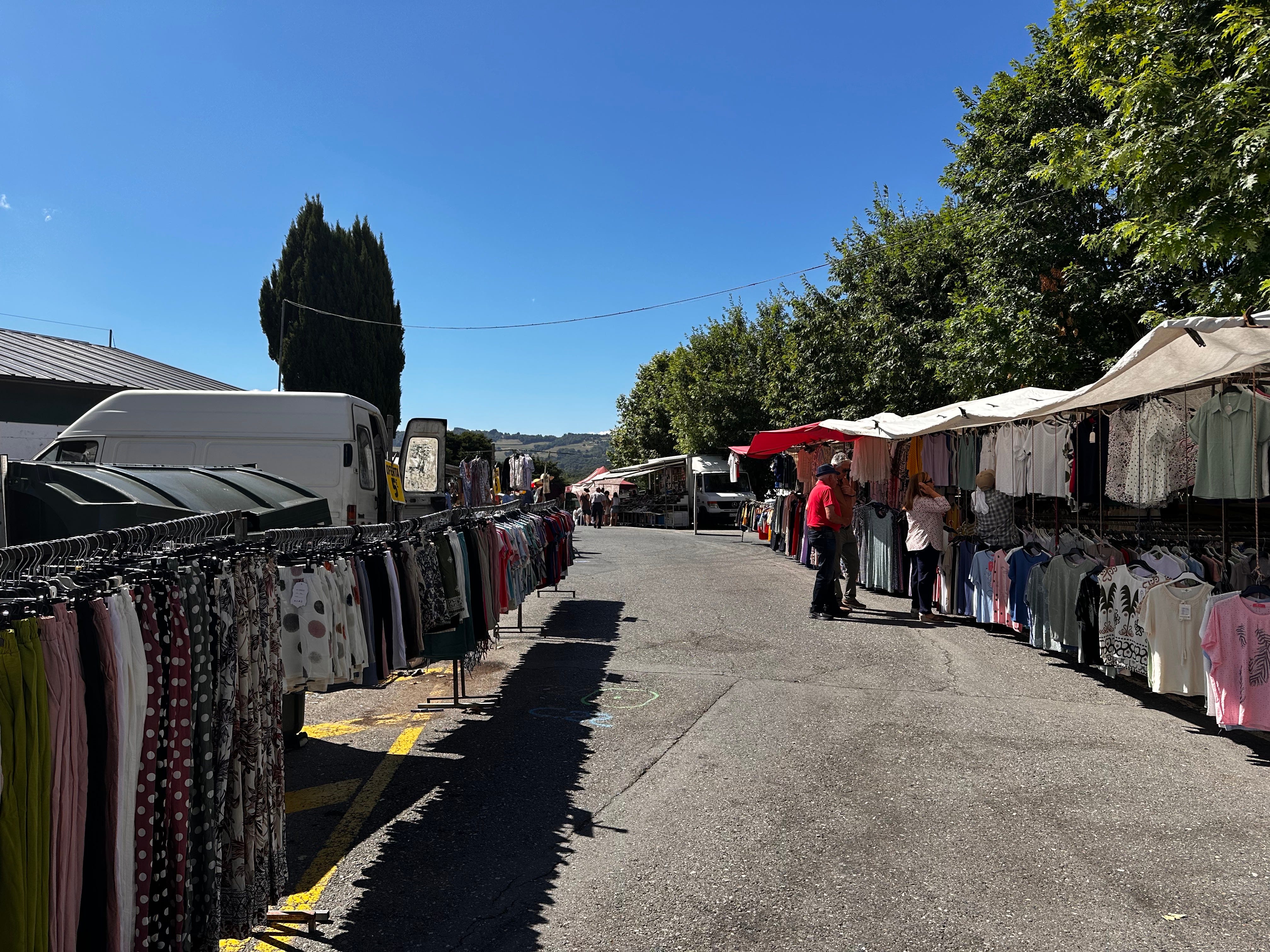
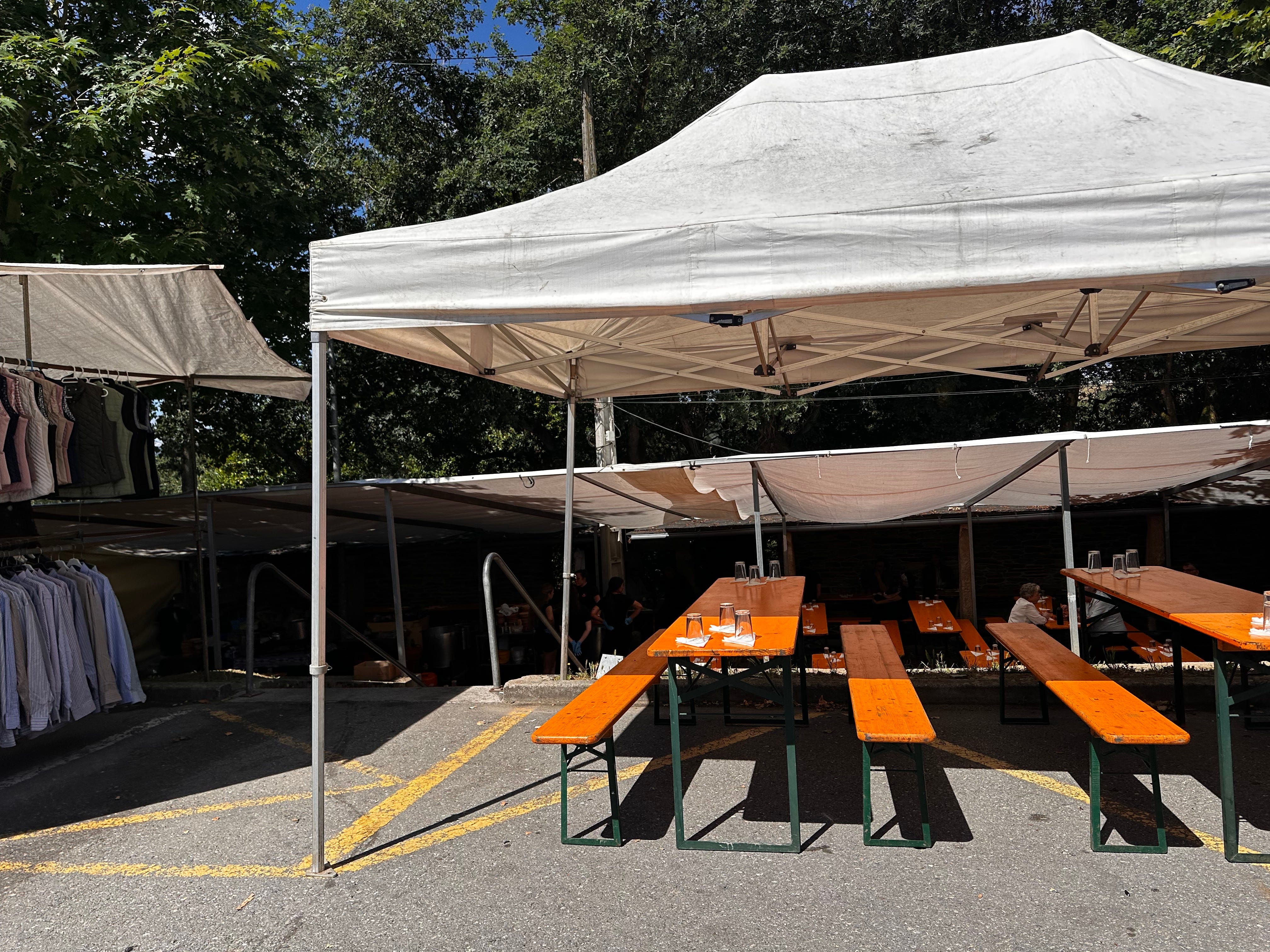
Lower down, the market was open. Racks of clothes along the road, vans with their backs thrown wide, a few people looking at clothing displayed on the hangers or having an afternoon meal.
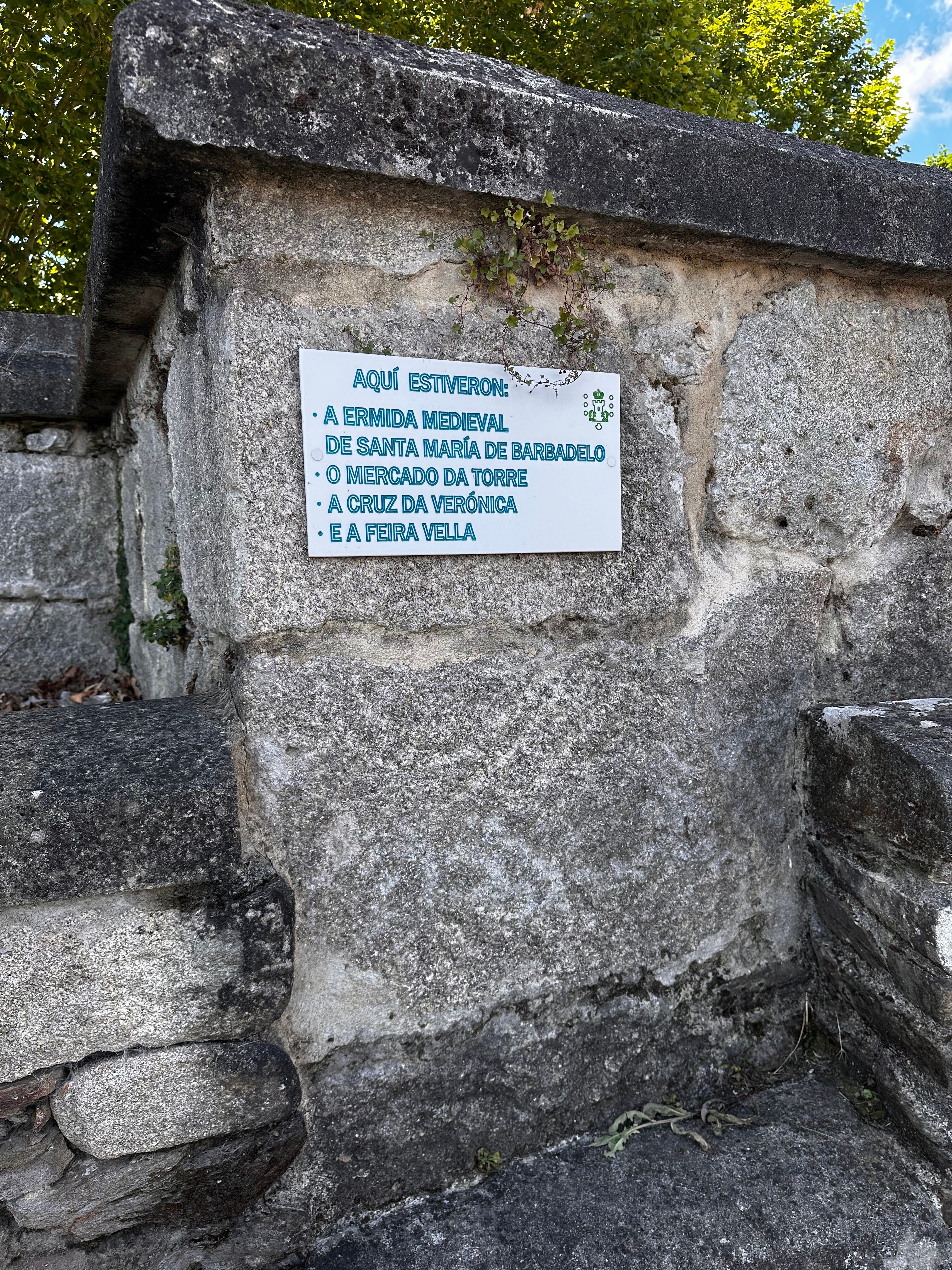
Outside of the market, a low wall held a plaque, and I stopped to read it. Aquí estiveron, it began, in Galician. Here stood. Below it ran a list of things once there and no longer: a hermitage, a market, a wayside cross, an old fair. The wall recorded that they had been there, on this spot,and that they were there no longer, keeping a record of its own subtractions. The fair had stood here because the road brought buyers to it. Then for a few long centuries the road carried fewer of them, and the fair became a line on a wall. The town has made its living off the ones passing through it for eight hundred years. Now the people are back and so is the market.
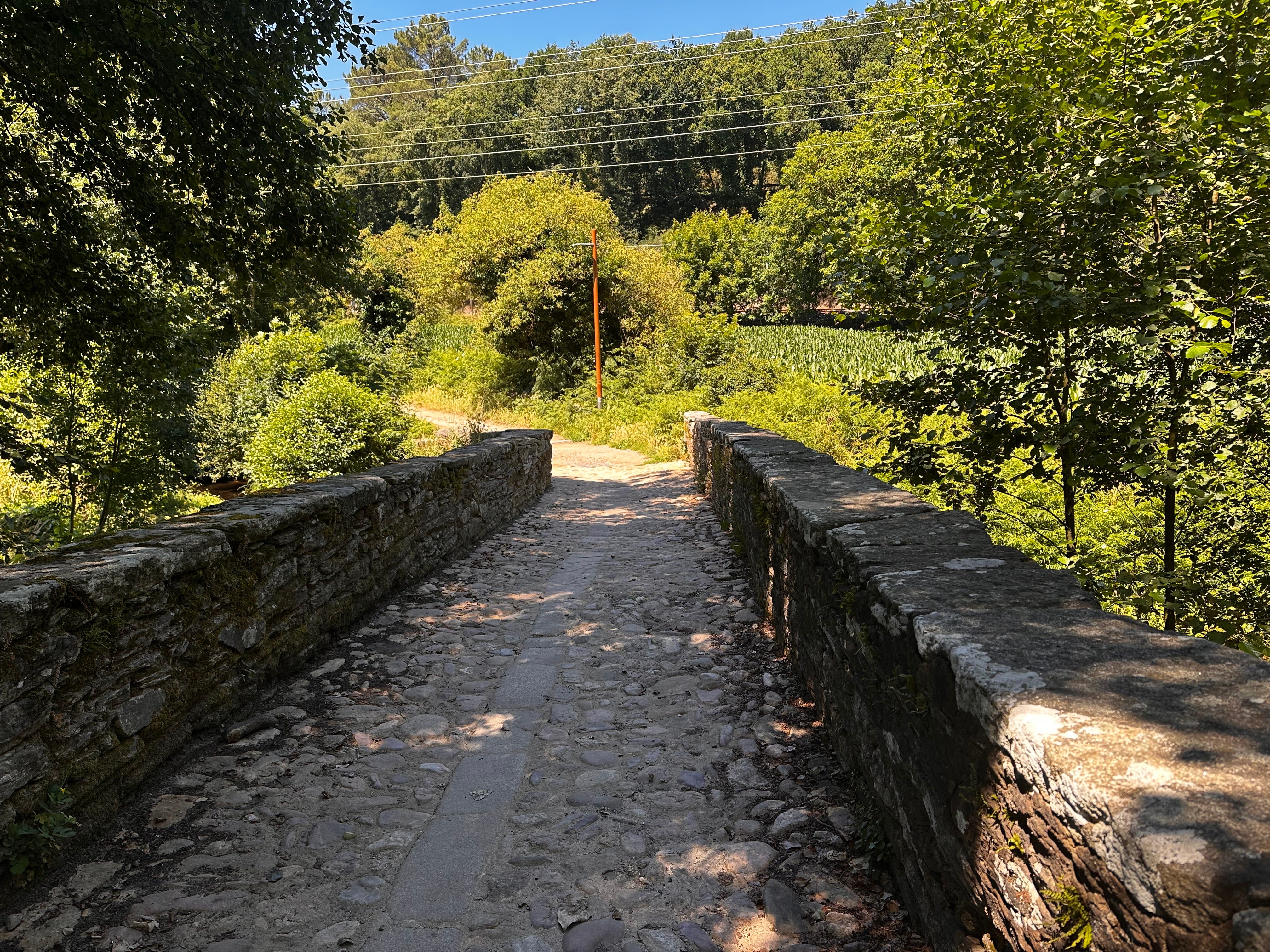
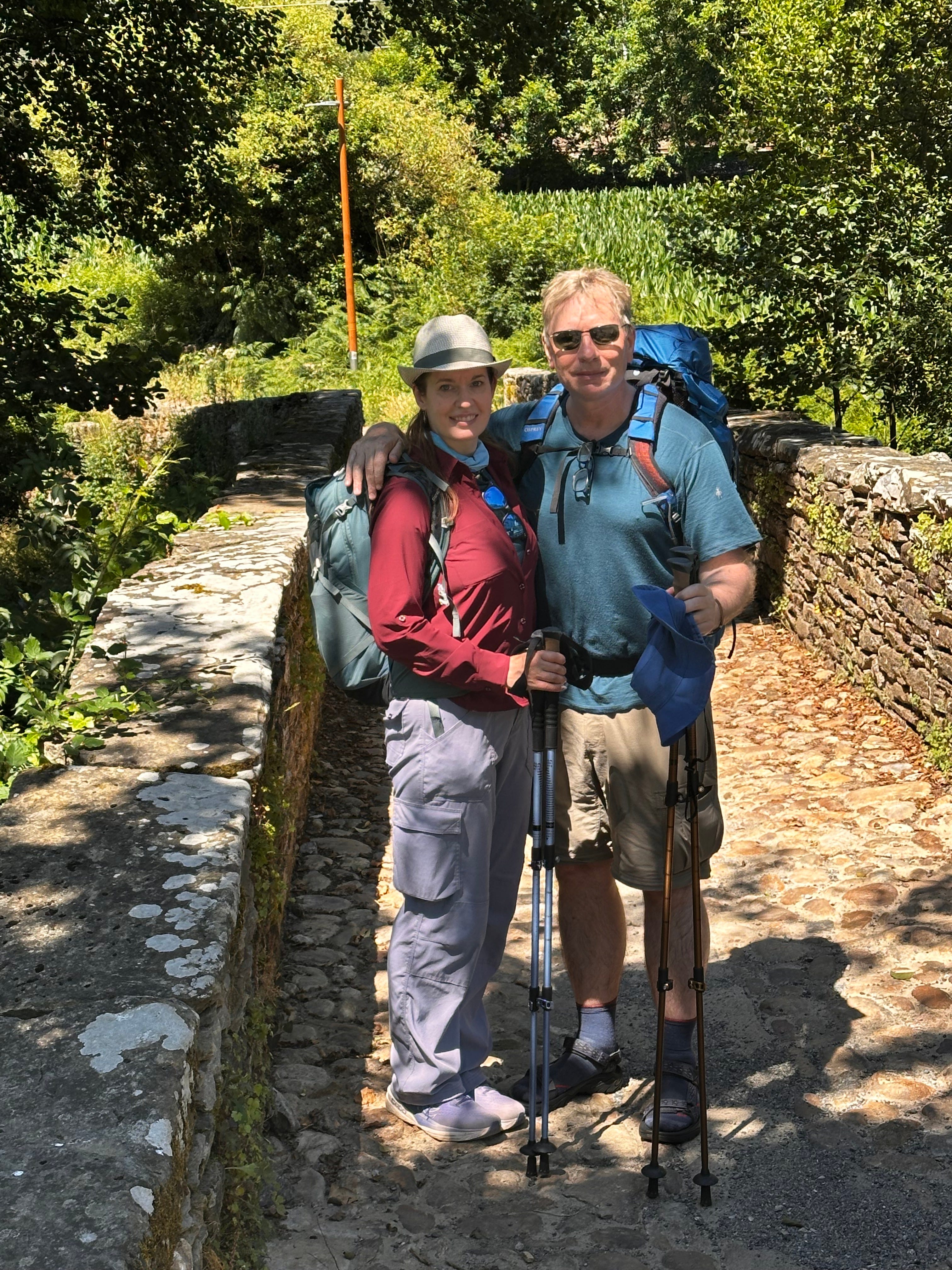
The way out of Sarria went down to a bridge. We crossed it in the late morning, the river low beneath us, a field unfolding just past the bridge. For all the walking still ahead, this was the crossing. On the far side of the bridge began the last hundred kilometers, and we were on them.
Beyond the bridge the country opened, the path running white through dry grass, the hills green and gold out to the mountains.
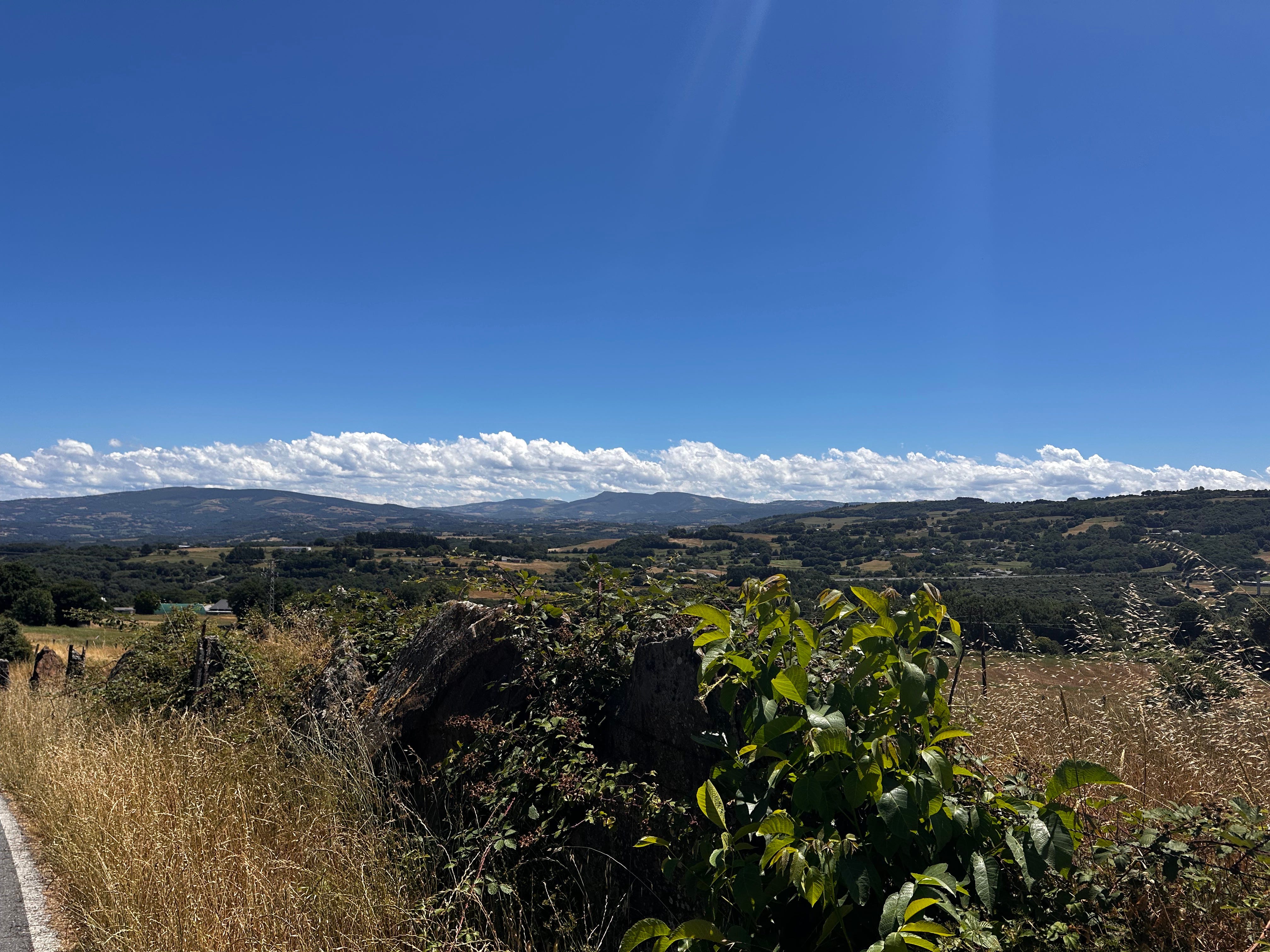
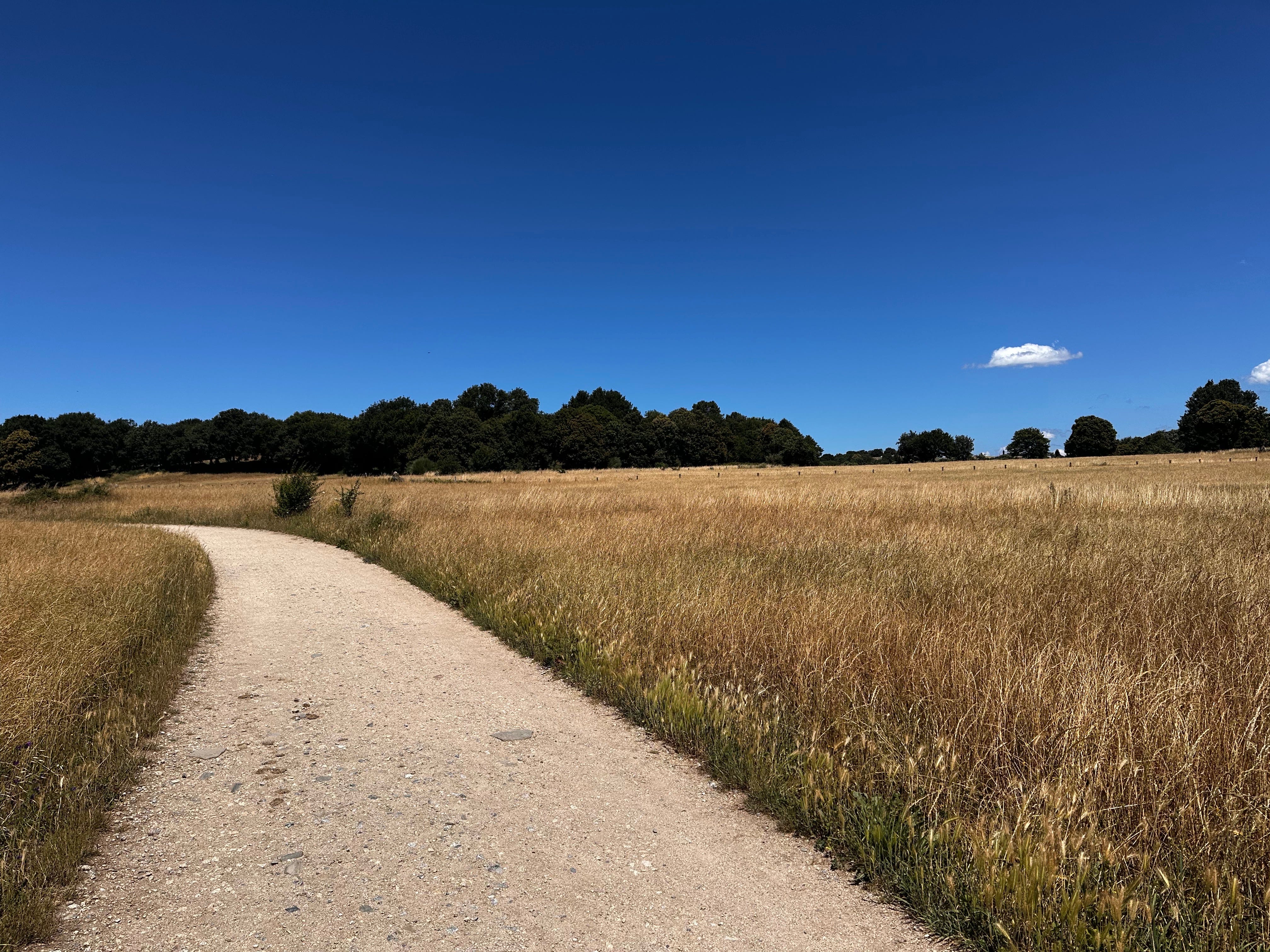
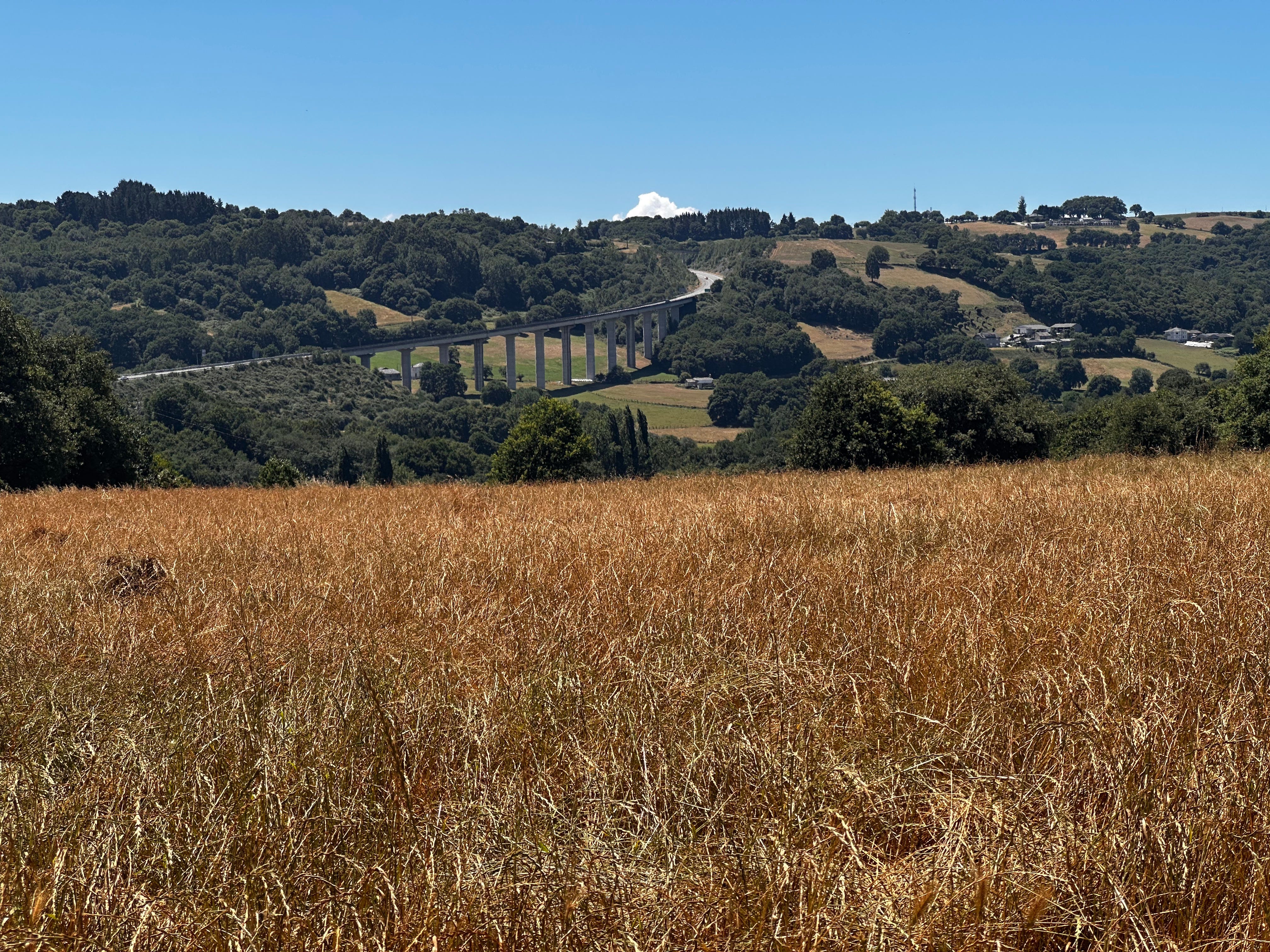
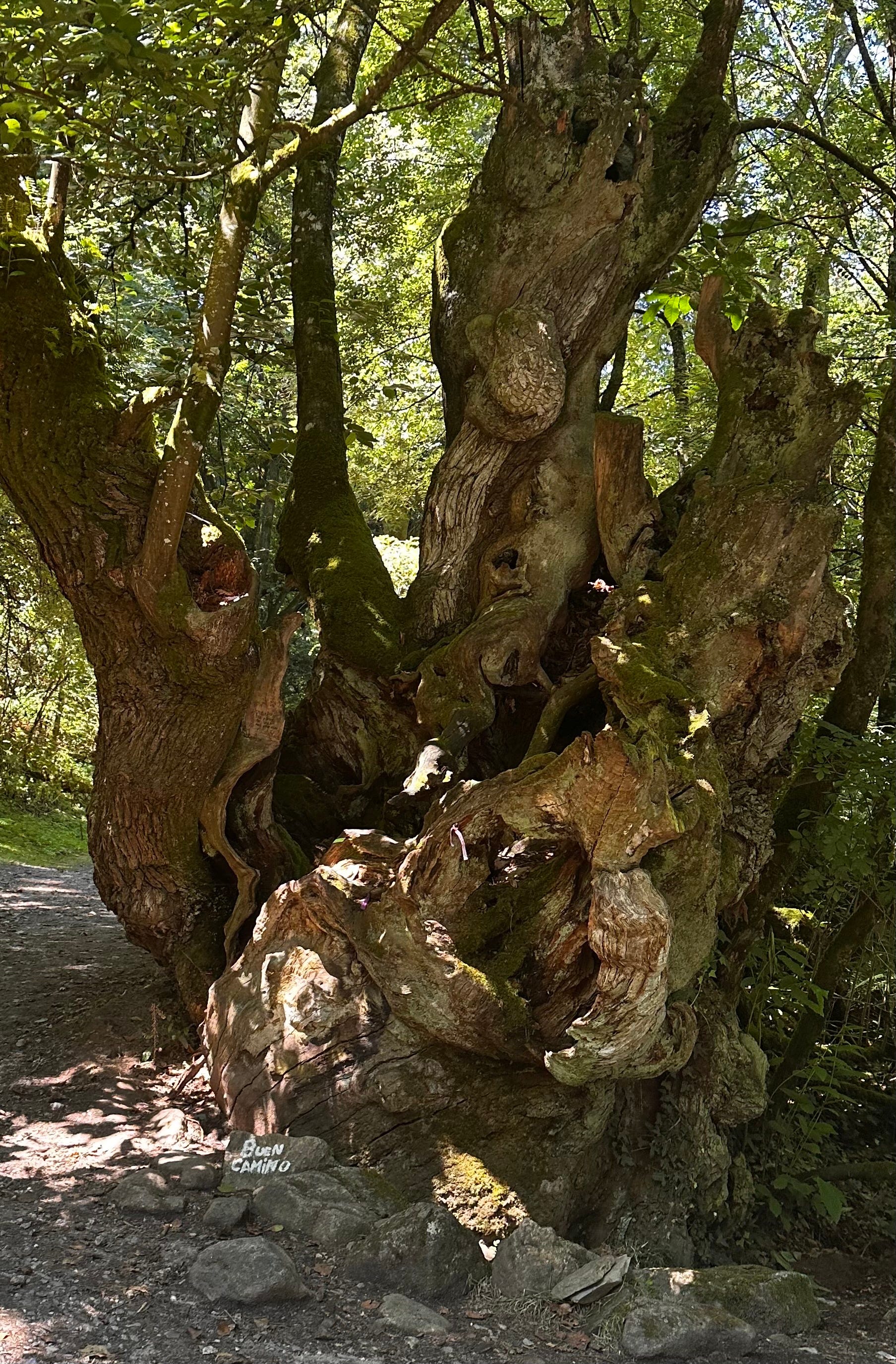
Then the track dropped into trees, and the light went green and close. An old chestnut stood by the path, its trunk split and knotted and still in leaf. Someone had set a stone at its foot, two words painted on it. Buen Camino.
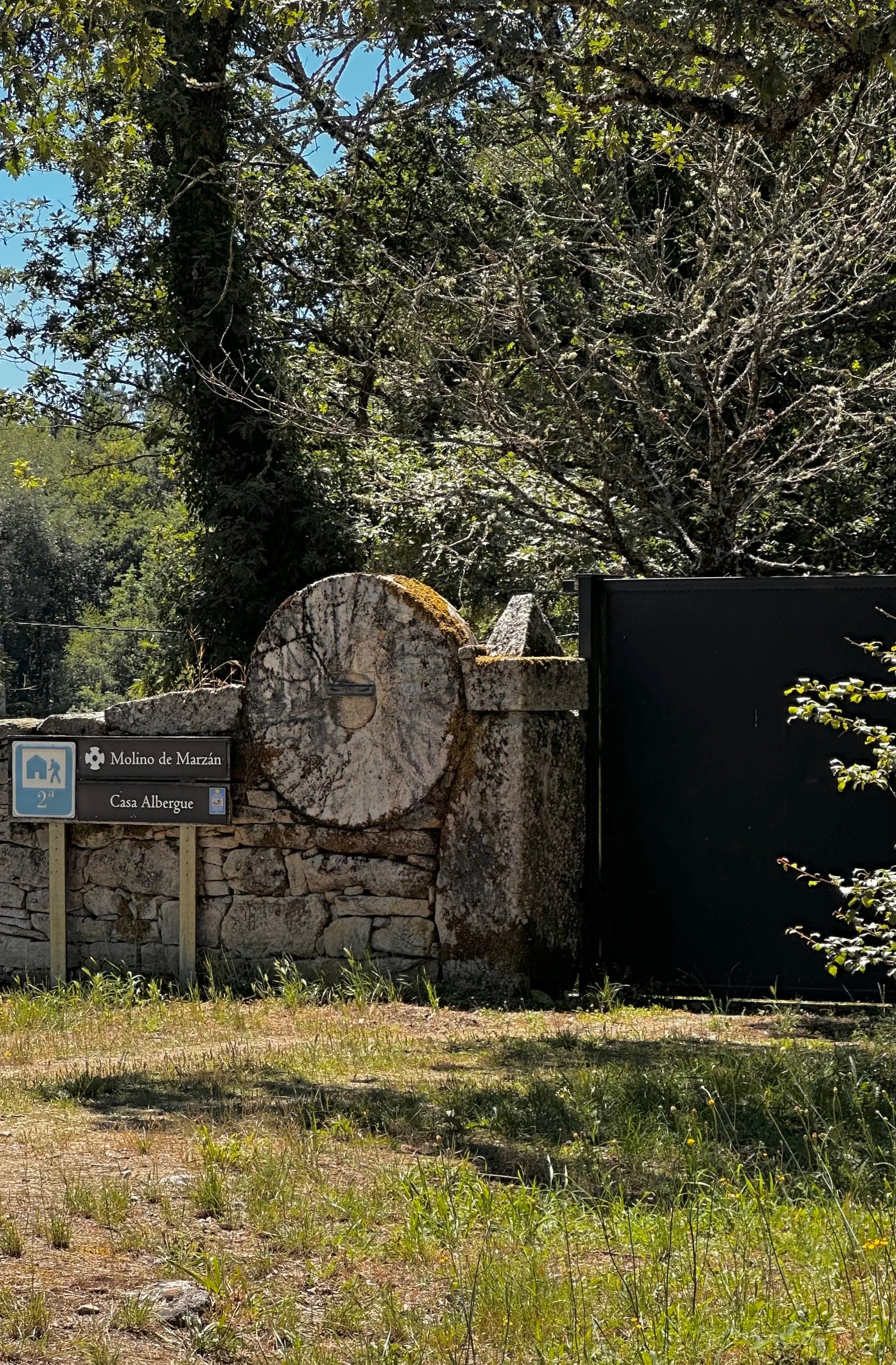
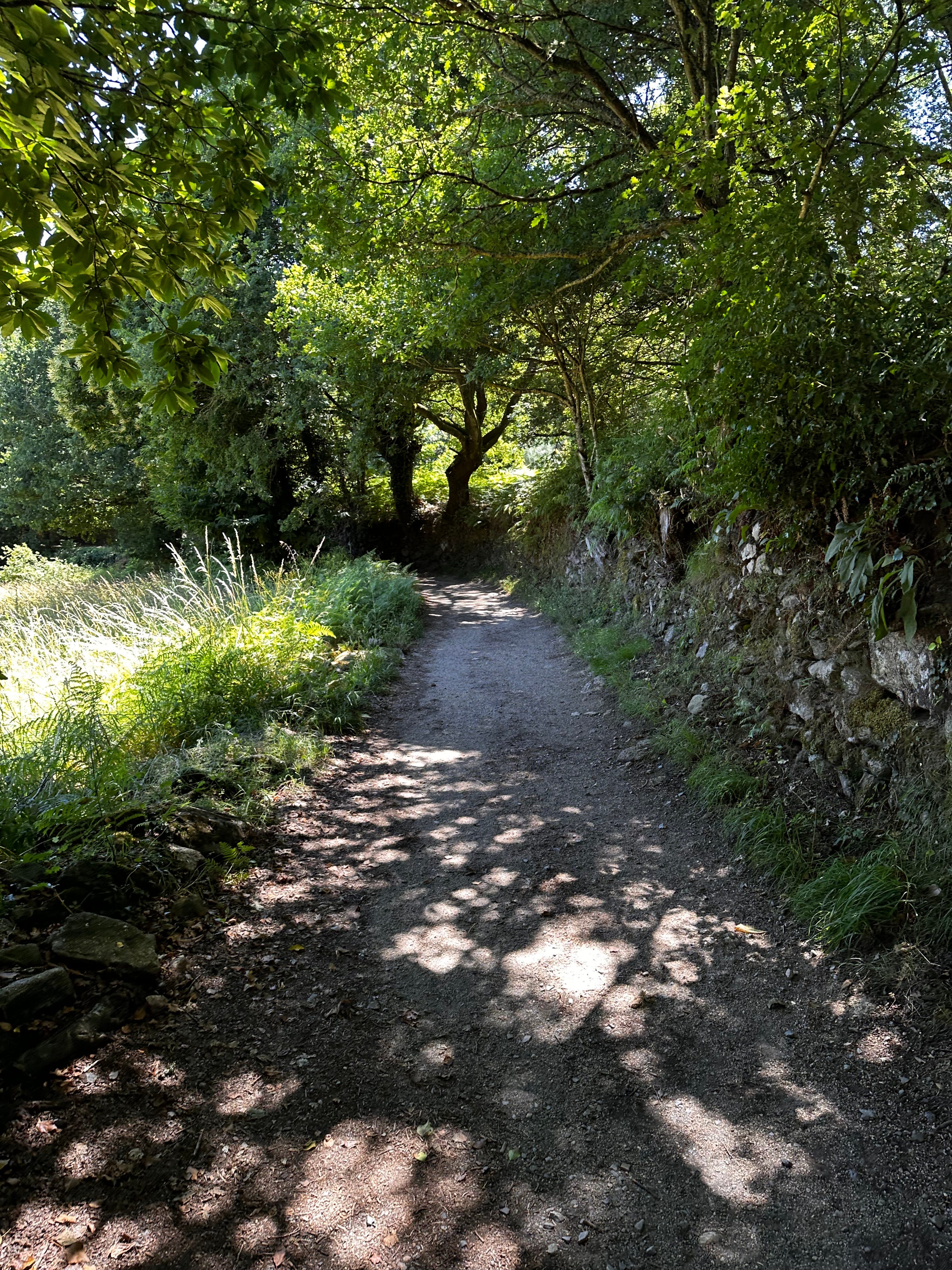
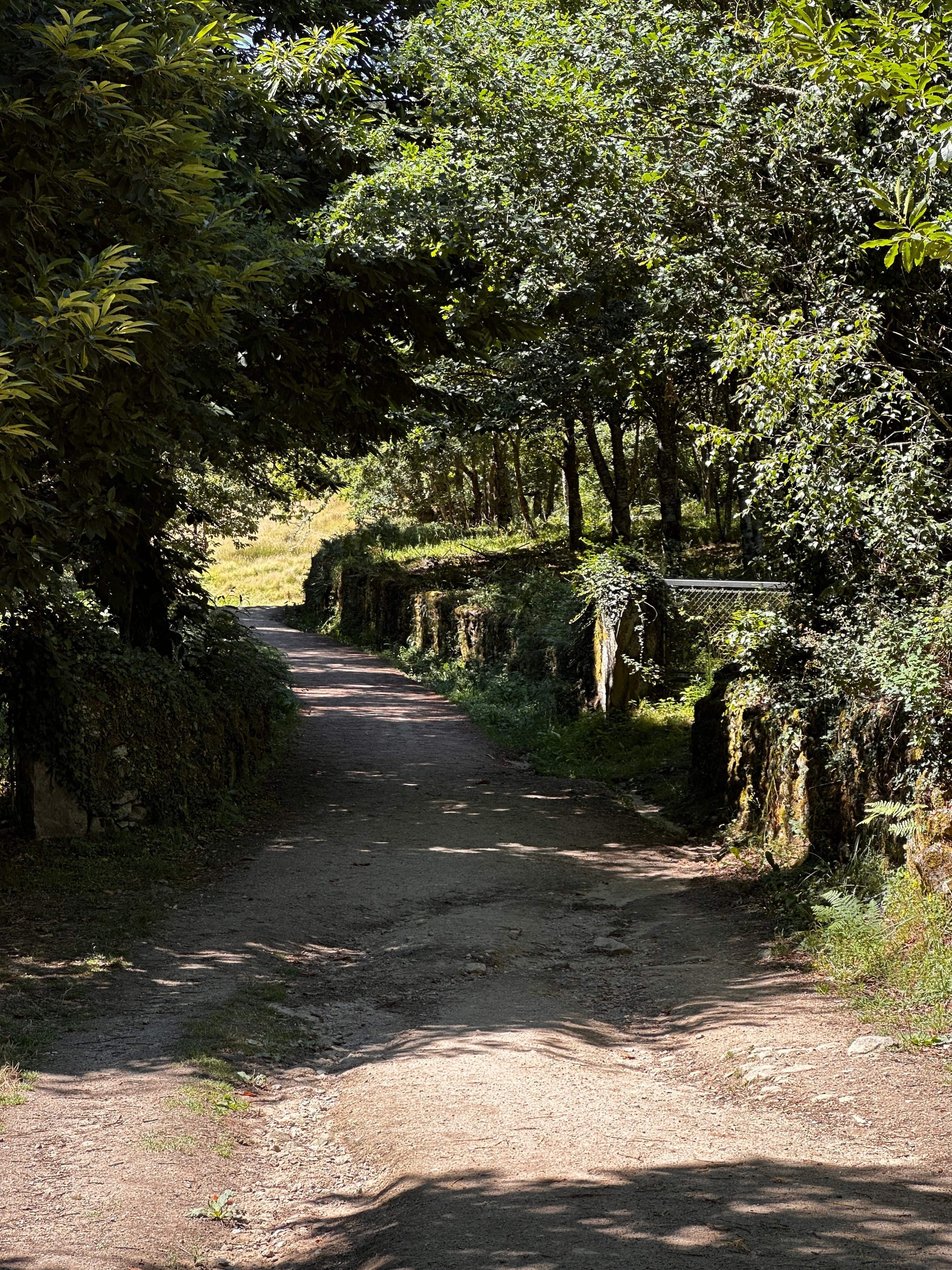
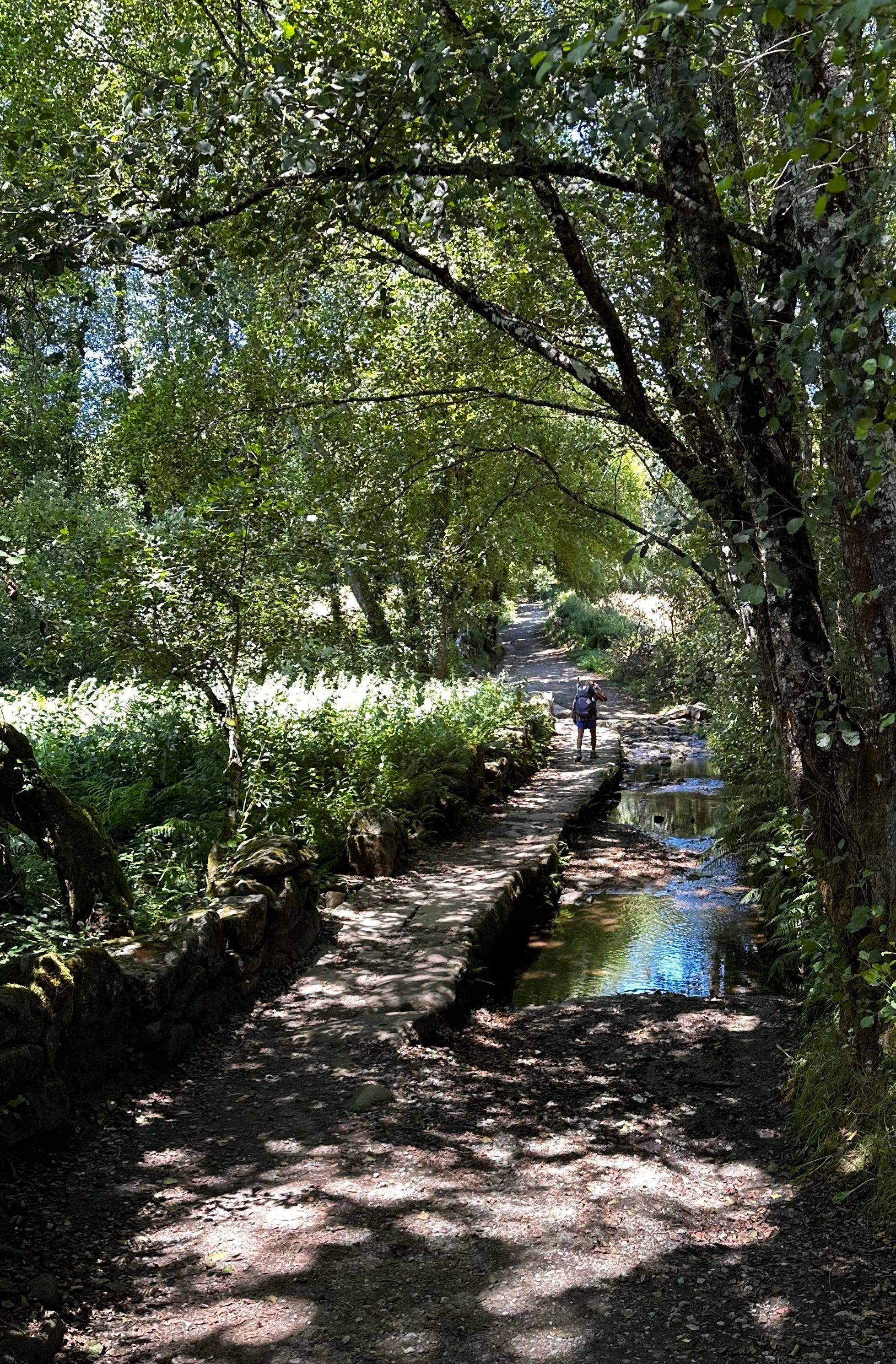
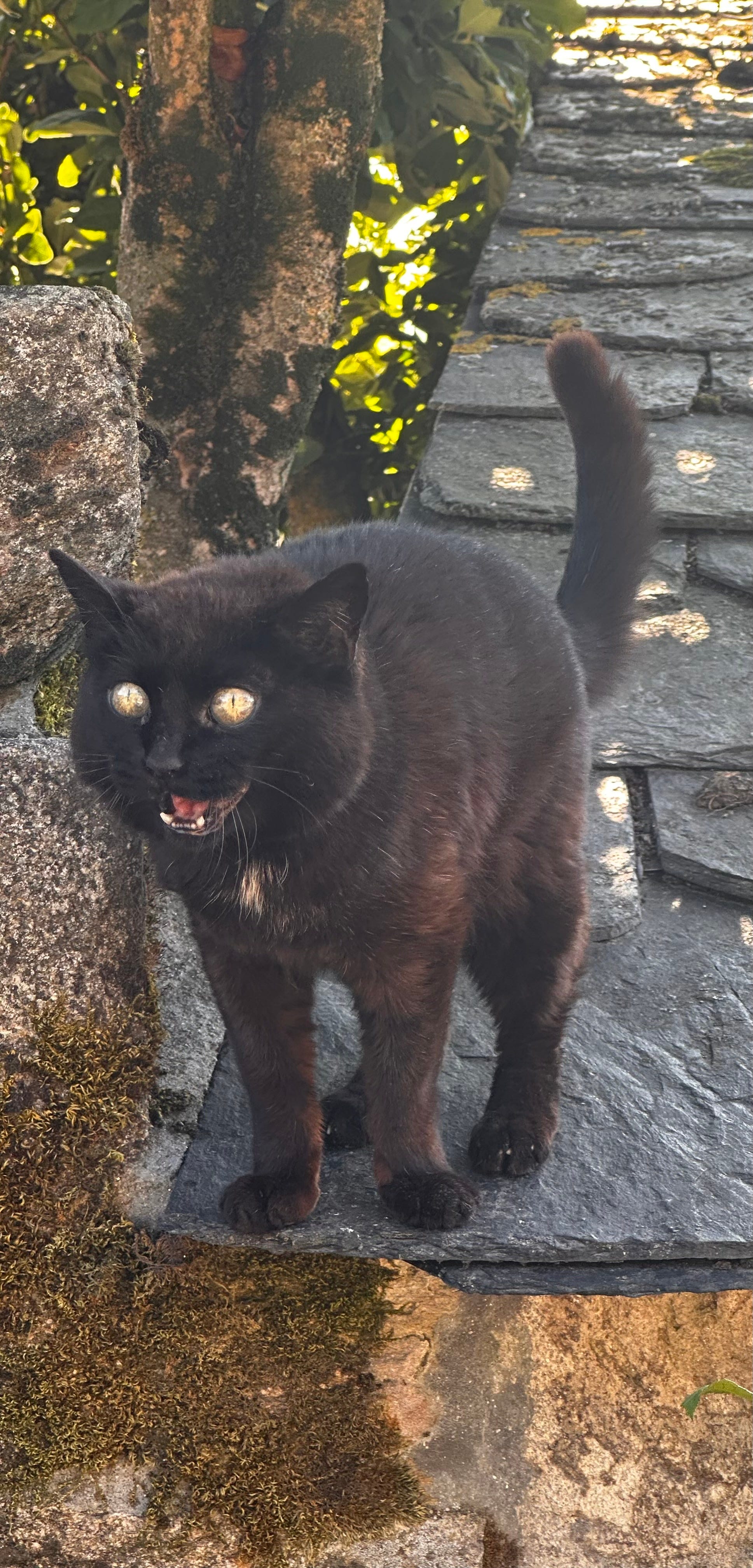
We reached Casa Morgade in the late afternoon. Near a doorway a black cat stood on the slate and told us what it thought, then let us pass. And I was reminded of the Galician saying ,“I don’t believe in witches, but that they exist, they do.” This cat was definitely someone’s familiar.
So exciting to follow this journey!