

In the Byzantine room the most
Beautiful cabochon is the missing one.
— Patricia Lockwood
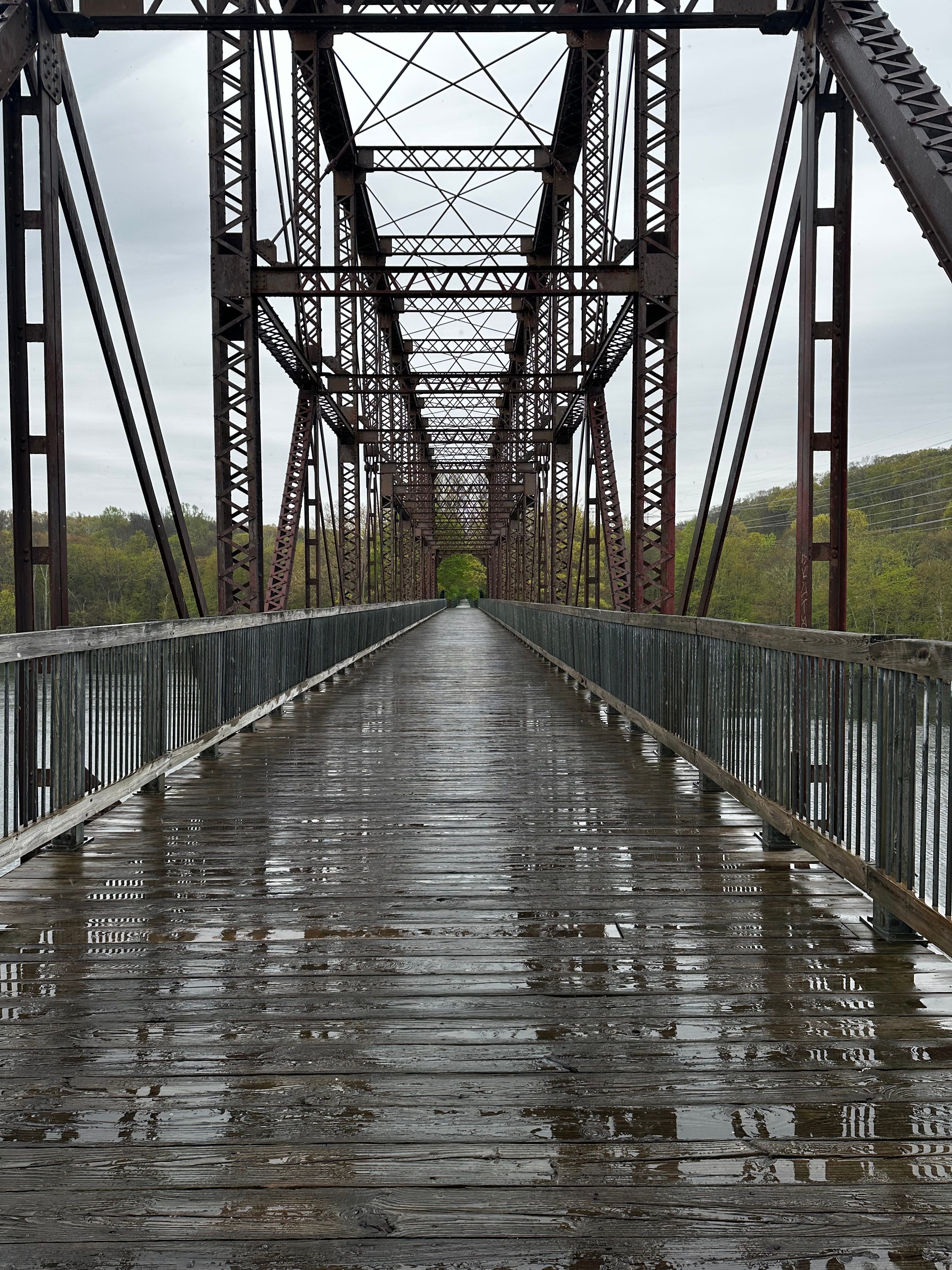
Fourteen and a half miles in the rain today. My longest by far, and I felt wonderful the whole way through.
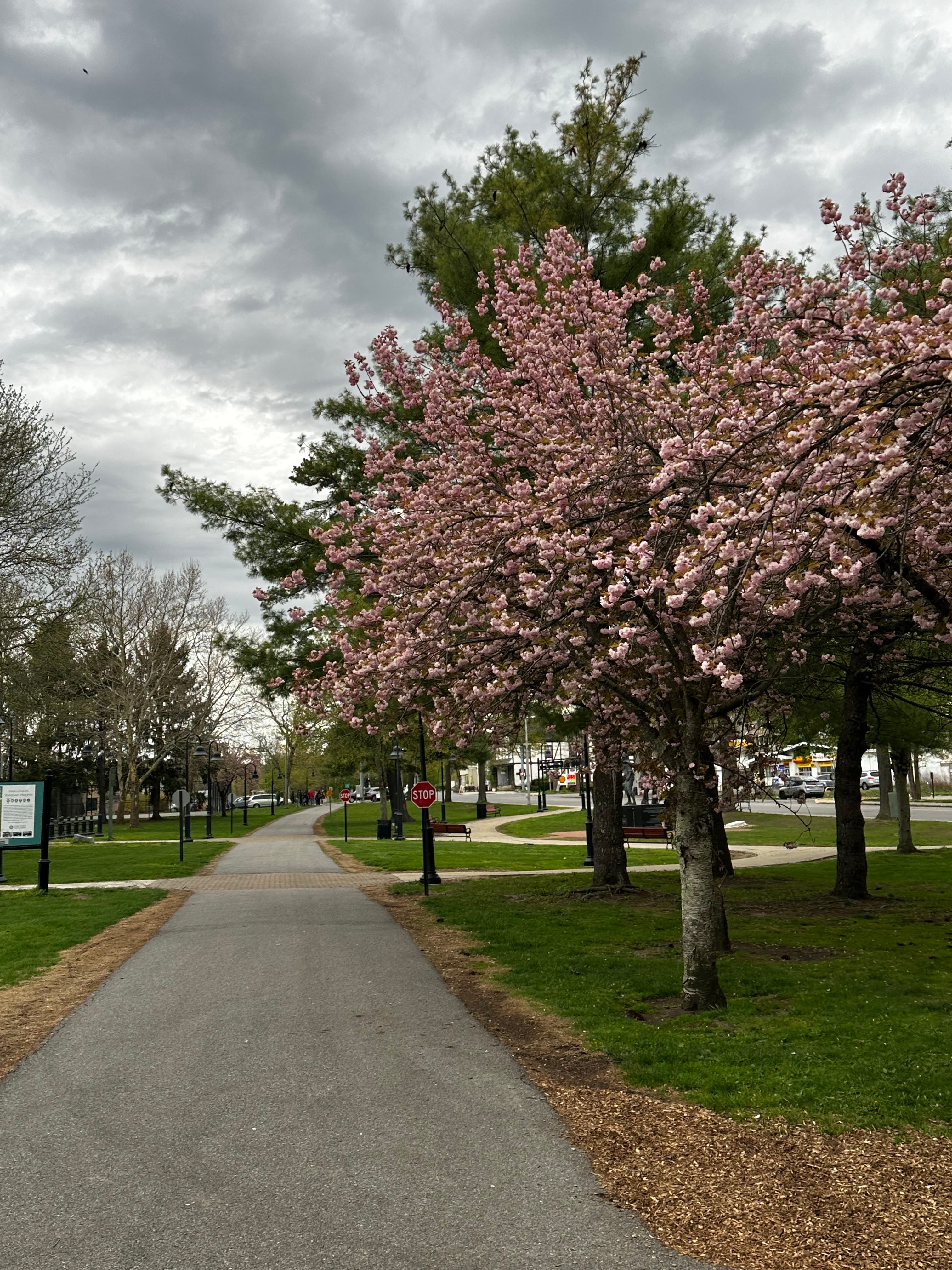
April still in bloom along the trail.
I had been reading Patricia Lockwood’s poem “Byzantine Room” in The Atlantic on the drive over, and the first two lines kept turning in me as I walked. The most beautiful cabochon is the missing one. Of course it is. The mind goes to what isn’t there. I had been telling myself that I prefer to hike in dry weather, that rain is something to plan around, something to wait out. The grass on the other side of the rain was always greener. Then I spent five hours partially soaked through at forty-four degrees and discovered that the rain was not a problem to solve. It was just weather. The system worked. A Lululemon hiking jacket on the inside, the pack over it, and a Patagonia shell pulled over everything, pack and all. My feet were wet and the rest of me was not, and the cold never reached me. I will not think about avoiding the rain again. It turns out the problem had never existed there.
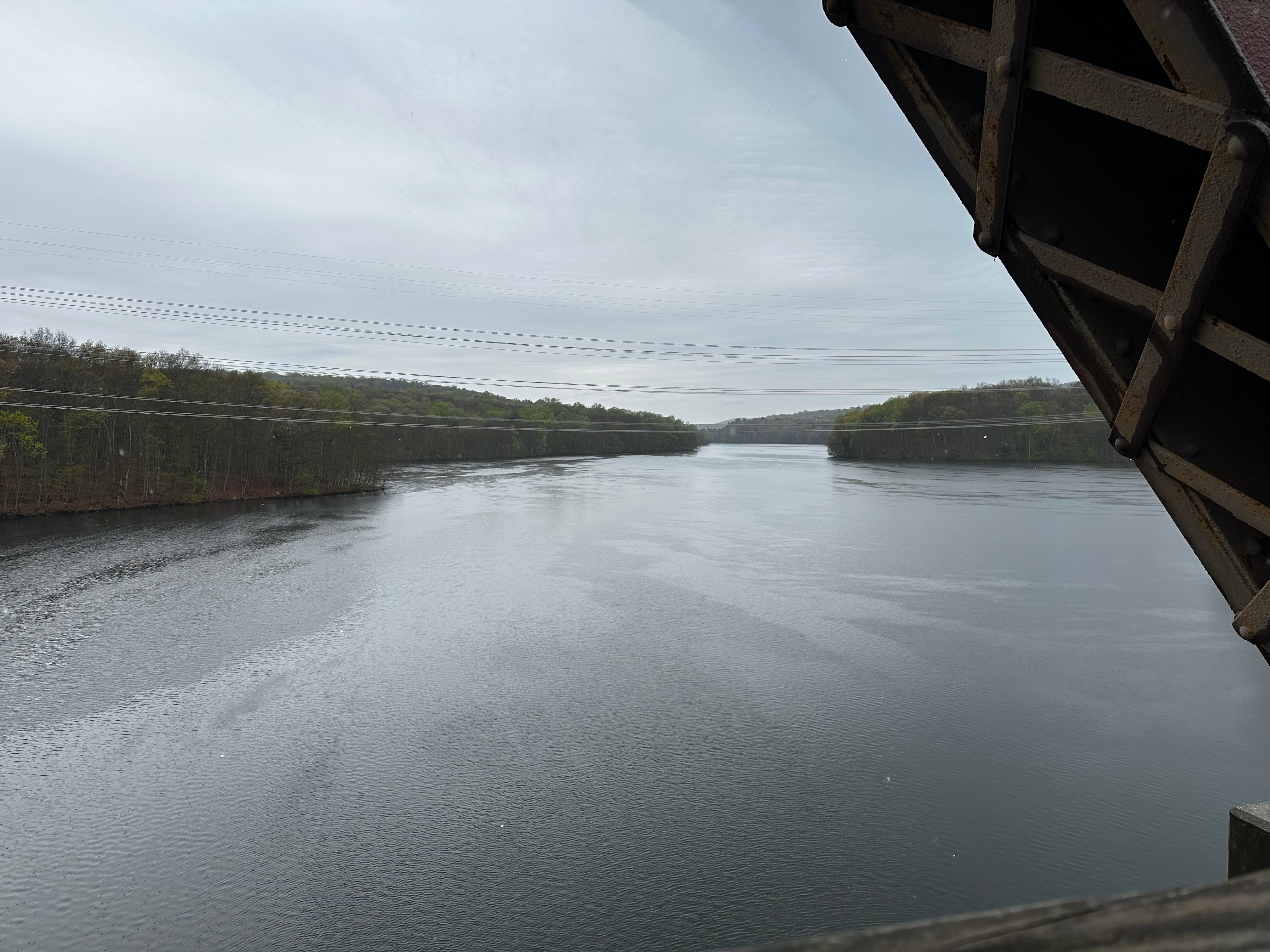
Looking down the New Croton reservoir from the bridge deck
The shoes were Topo Phantom 4s today, swapped in for the Glycerin 21s. My plantar fascia thanked me. Better ground feel, almost no break in needed, less of the dull ache that had been creeping in on long walks before.
Lockwood’s poem stayed with me past the first two lines. She walks through a museum looking at relics, and what she sees is not just the history of civilization or art or religion. She sees what has been looted. The cabochon pried from its setting. Mary Magdalene’s tooth removed from its reliquary, removed to fill some cavity. The praying hands snapped off the statues and stolen. Museums are invisible monuments to what is missing as much as they are houses for what survived. The unbelievers have been pillaging the sacred for centuries, and the sacred keeps teaching the unbelievers something anyway. It is a strange circle and I cannot quite see the shape of it yet.
The donors in the poem catch in my mind too. Two brothers, Pons and Armand, who paid for a Pietà and had themselves carved smiling on either side of the dead Christ, then sequestered the whole sculpture in a private chapel for their personal devotion. Probably they thought of themselves as spiritual people. Probably the people who later pried the rock crystal out of Pons’s stone knee thought of themselves that way too. Possession dressed up as reverence, then reverence stripped back down to looting, then the looter eventually looted in turn. I do not know what to make of it except that the poem will not let go of me.
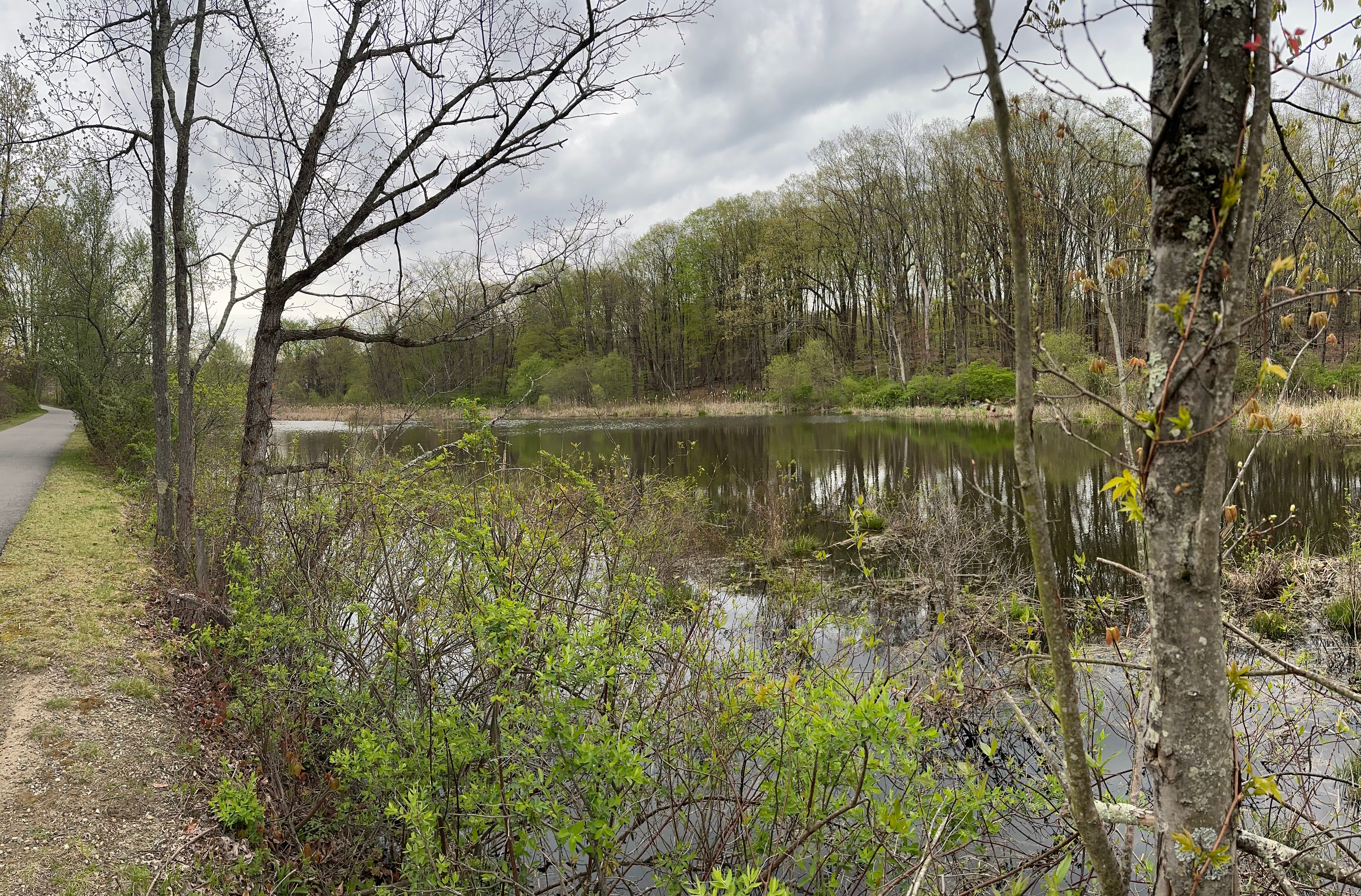
The water beside the path for miles
Along the trail today, so much that was simply present and unstolen. Violets. A goose. A bridge. A bird I did not recognize. Long stretches of walking beside the water.
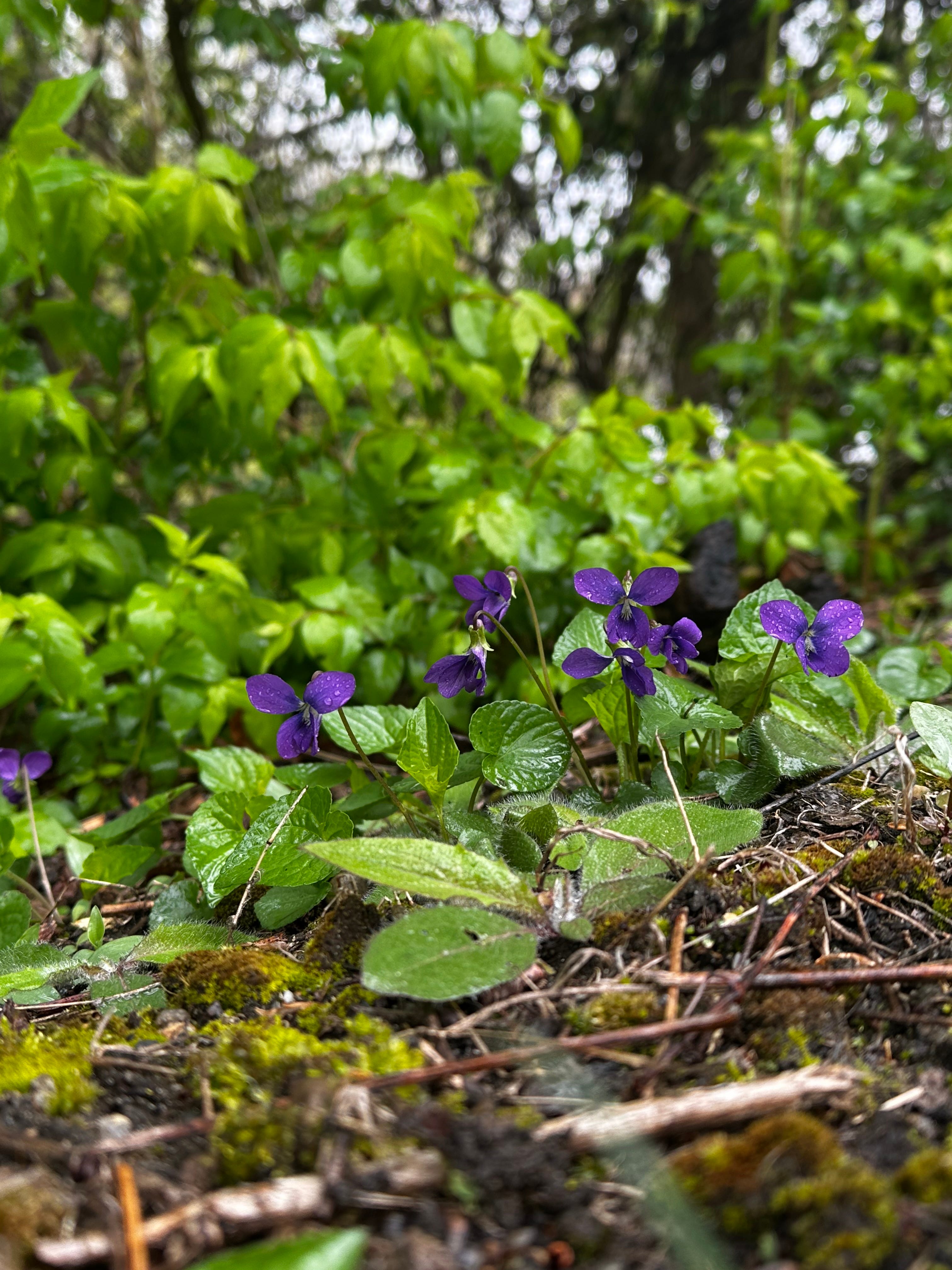
Violets, simply present
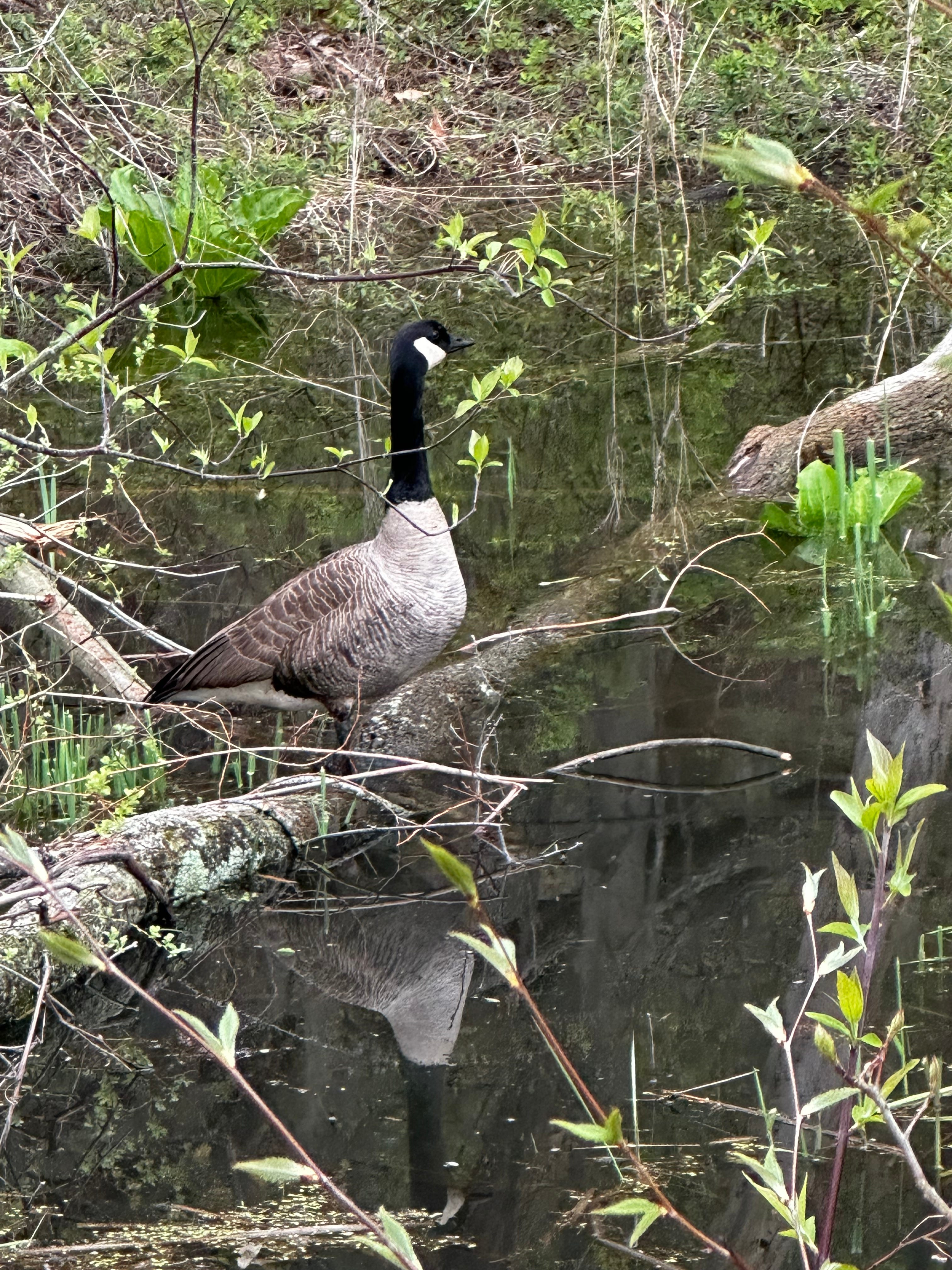
A goose, watchful, unhurried, reflecting
I stopped at Trailside Cafe in Yorktown and had what might be one of the best coffee of the year so far. Warm hands, warm cup, the rain still going outside the window.
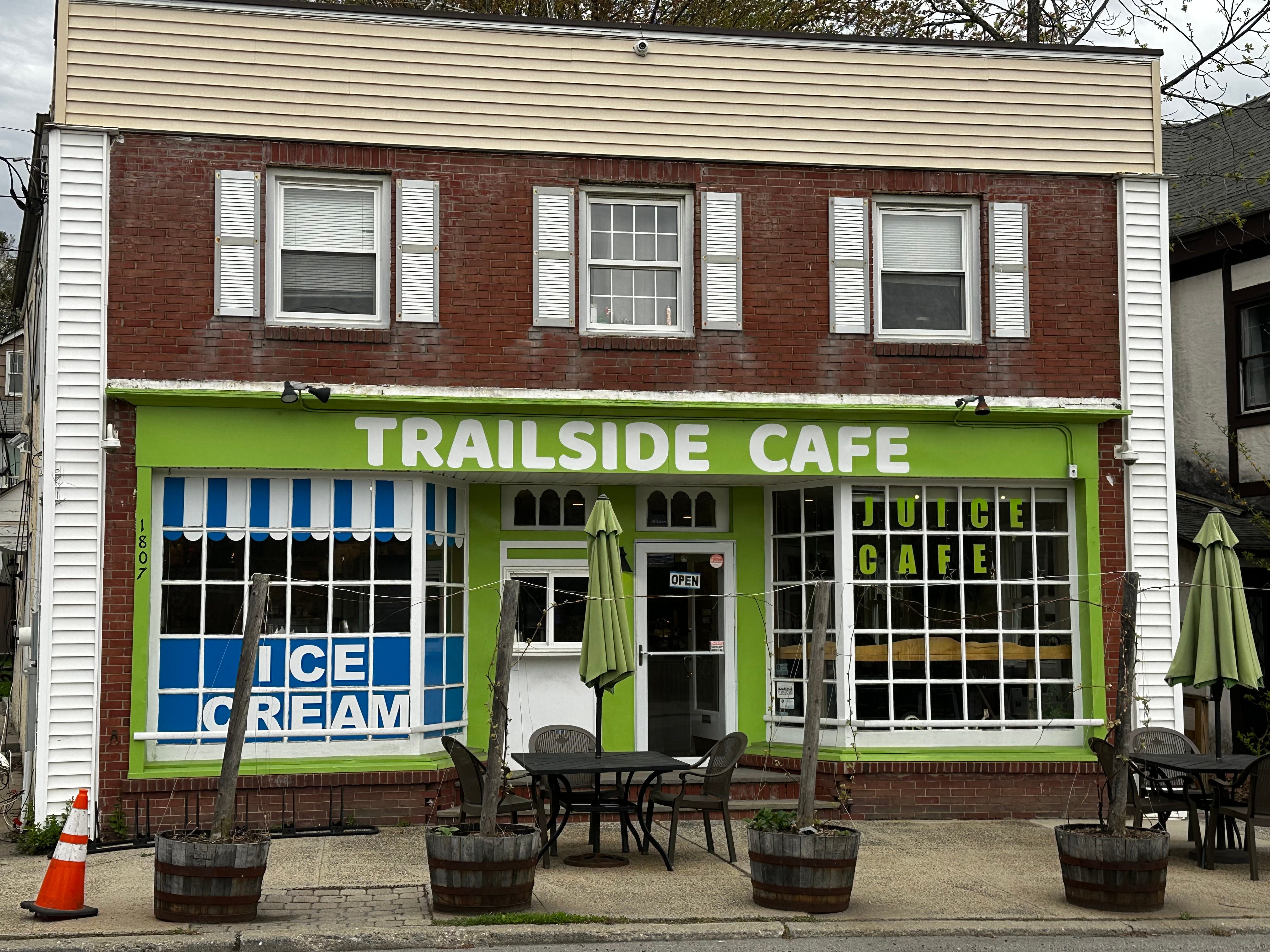
Trailside Cafe, Yorktown
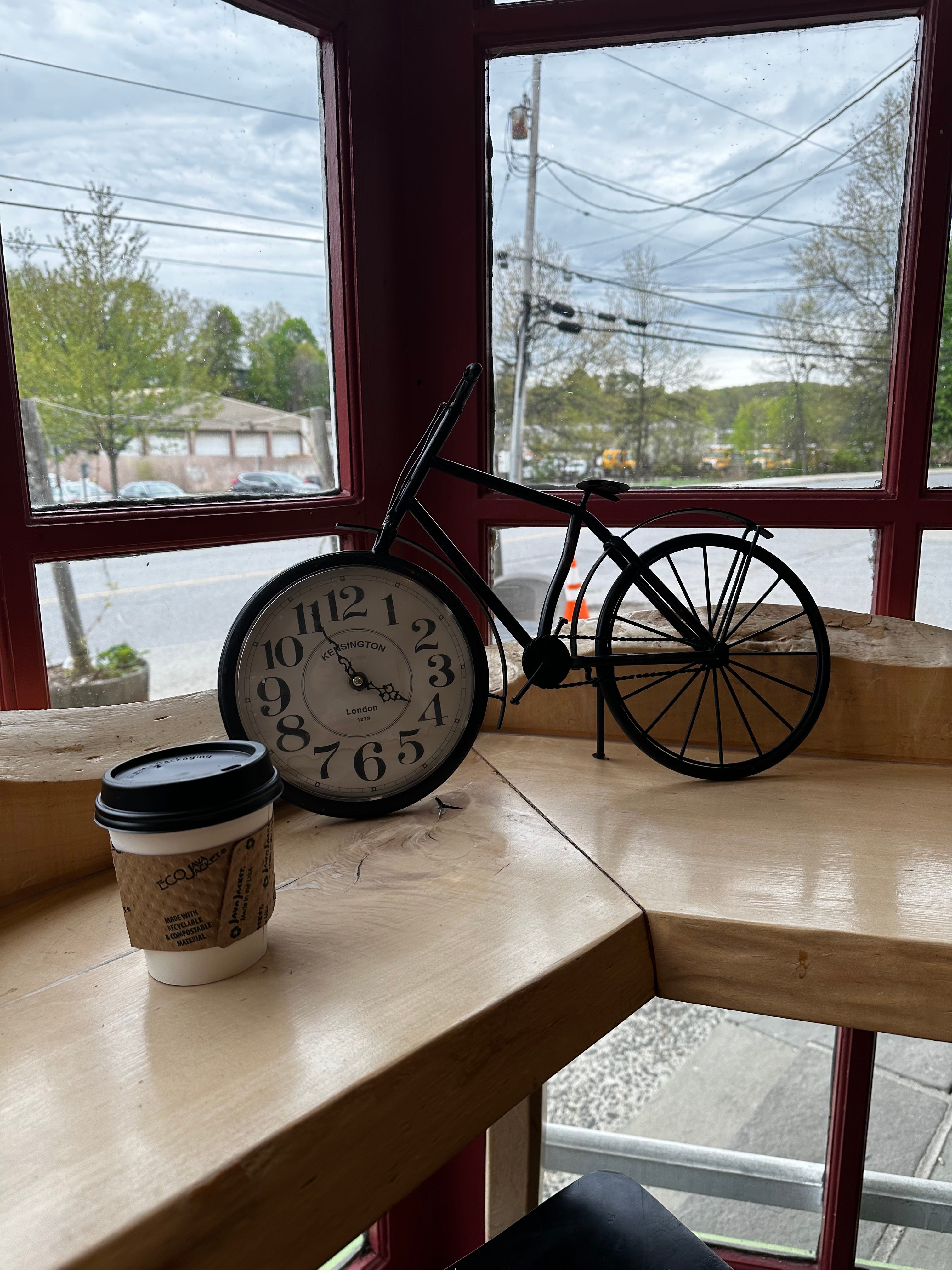
Fenêtre sur pluie
A good day. A long one. The rain belongs in it now.