

“The love that consists in this: that two solitudes protect and touch and greet each other.” — Rainer Maria Rilke, Letters to a Young Poet, 1904
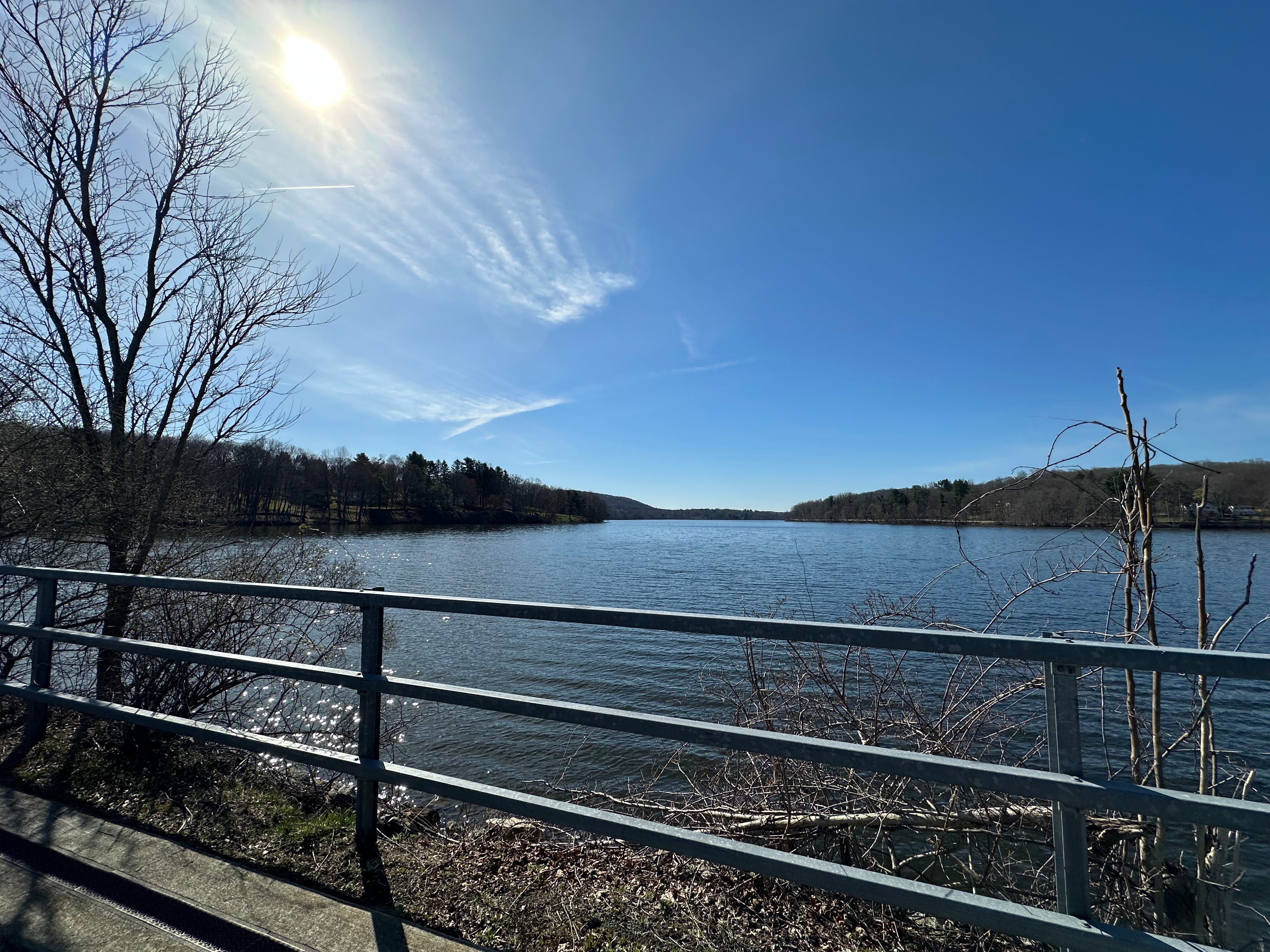
Reservoir in Brewster, New York. Where it begins.
This morning we left one car at the bottom and one at the top of the Putnam Trailway and walked 10.7 miles through the spring that is still debating its arrival, from Brewster to Mahopac, point to point. You can only go forward.
The Putnam Trailway runs on the bones of the old Putnam Division Railroad, the Old Put, which carried passengers between the Bronx and Brewster from 1881 until 1958. Thousands of people made that journey, north and south, day after day, for decades. Now it carries only footsteps and bicycle wheels. There is something quietly moving about walking a path that so many others have walked before you.
We walked for four and a half hours. This is my first day training with a backpack, about five pounds in it to start, which felt entirely manageable, though I reminded myself that on the Camino I will be doing this every day, adding three to five miles more each time. Wore Brooks Glycerin 21s and Darn Tough merino socks. No blisters. These are small things, but on a long trail, small things become the difference between joy and suffering.
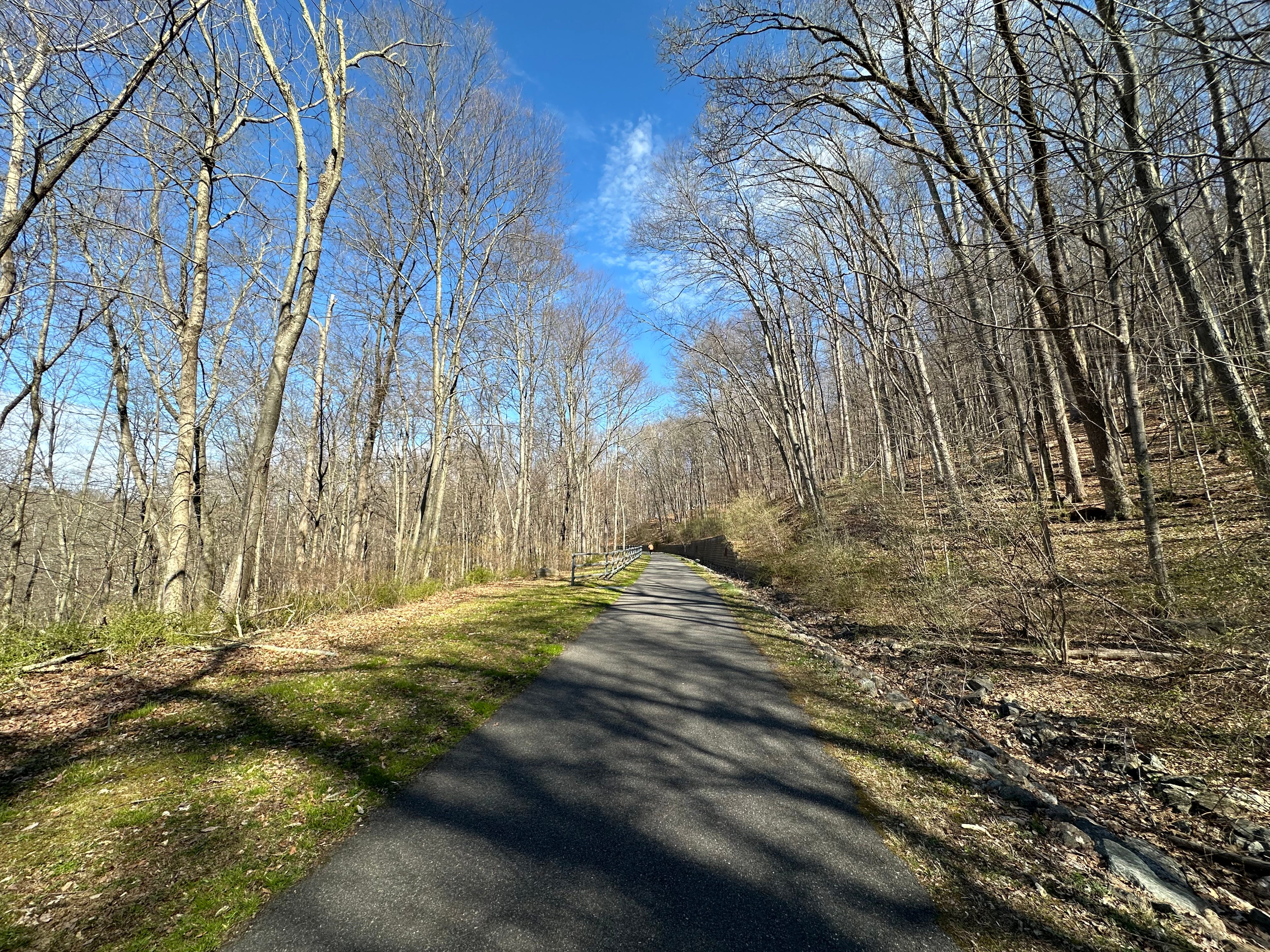
The Putnam Trailway, April. You can only go forward.
At some point in the first hour, the conversation quieted naturally. Not because there was nothing to say. Because there was something better than talking: the particular silence of two people who know each other well enough to share it without explanation. We walked side by side and each of us went somewhere interior, somewhere the other is not meant to follow.
I imagine that this is what Rilke understood. That love, at its highest, is not fusion. It is not two people dissolved into each other, finishing each other’s sentences, unable to exist independently. It is something harder and more beautiful than that. He called it the love that consists in this: that two solitudes protect and touch and greet each other. I am currently reading his Letters to a Young Poet, which he wrote between 1902 and 1908 to a young military student who had written asking for his assessment of his poetry. Rilke gave him something far more valuable: a philosophy of how to live. Love is difficult, he wrote. Perhaps the most difficult of all our tasks. But difficulty is not a reason to turn away. It is a reason to lean in.
I was thinking about all of this on the trail today. About what chosen solitude actually is and why we need it so badly and how rarely we allow ourselves to have it. We have built a world that shuns silence. Every idle moment is an opportunity for a notification, an email, a scroll. We have cancelled boredom without realizing that boredom was never the enemy. Boredom is the catalyst of creativity. It is the condition the mind needs in order to generate anything original, to make the unexpected connections, to hear itself think. We have taken that catalyst away and we wonder why we feel hollow.
Rilke also warned against something else: paying too much attention to the opinions of others. Let them crowd in too far, he suggested, and they will consume your entire inner world, leaving no room for your own voice. Walking a trail for four and a half hours with no content input of any kind feels like the practice of reclaiming that room.
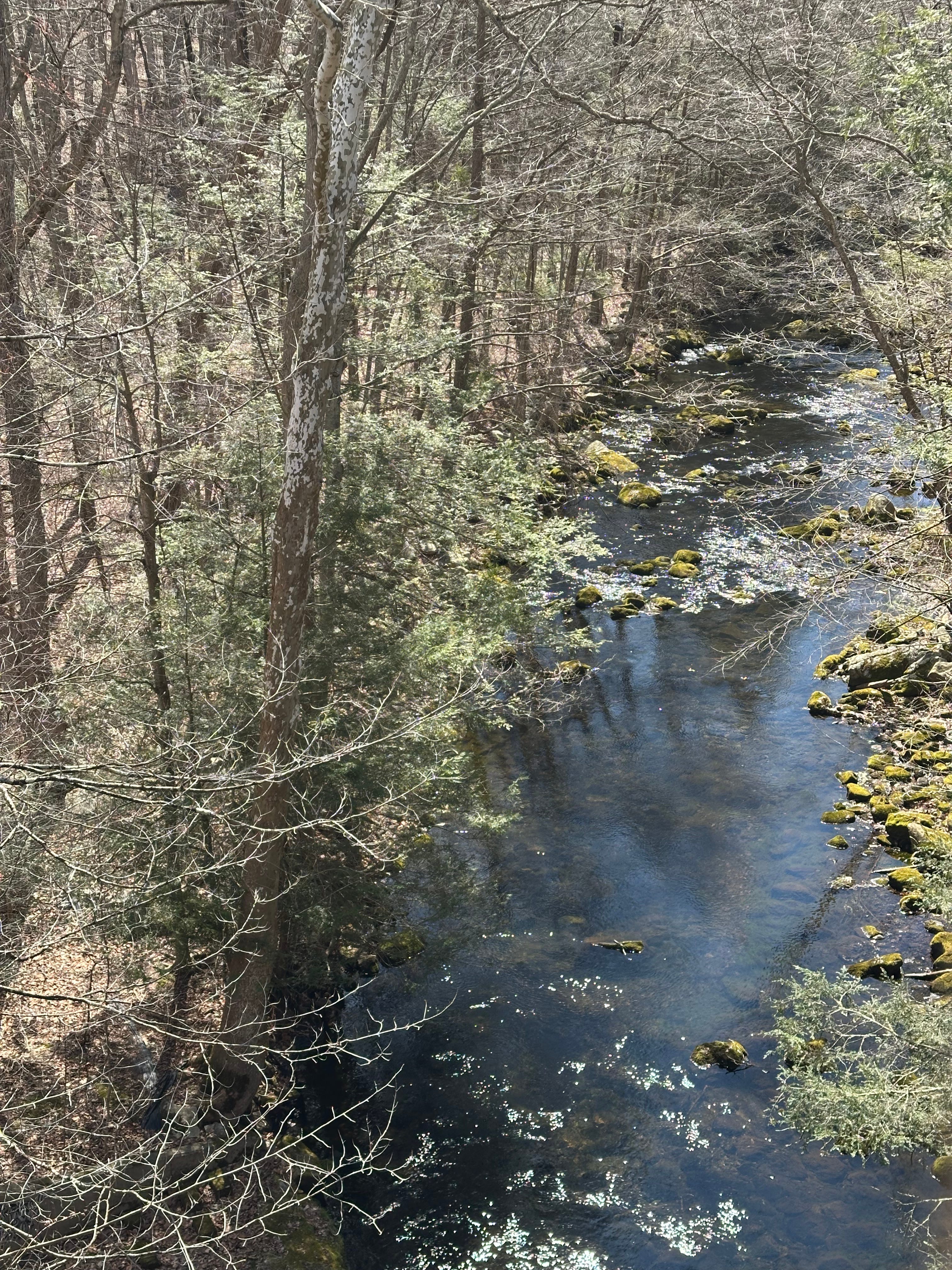
Somewhere between Brewster and Mahopac. Spring arriving quietly.
But there is another kind of solitude I was thinking about. The kind that is not chosen. The kind that arrives not from silence and open sky but from being in the presence of someone who does not see you, does not hear you, has shut you out while remaining physically present. Evelyn Waugh in Vile Bodies paints the portraits of the writer Adam and his on-again-off-again fiancée Nina that exist in a kind of mutual invisibility, circling each other without ever truly meeting. That is not solitude. That is loneliness wearing solitude’s clothes.
Chosen solitude builds the inner world. It is the silence you step into deliberately, the quiet you protect, the space in which you become more fully yourself. Imposed solitude of indifference hollows it out. One is a room you enter by choice. The other is a room you cannot leave.
J’aime, j’aime, j’aime la solitude parfois, Zaz sings. I love, I love, I love solitude sometimes. The solitude one chooses to talk with oneself. The kind that doesn’t hurt and can be quieted. She is not singing about loneliness. She is singing about this, about what I experienced today on a paved trail through bare spring trees in Putnam County, walking beside someone I love, each of us magnificently, peacefully alone.
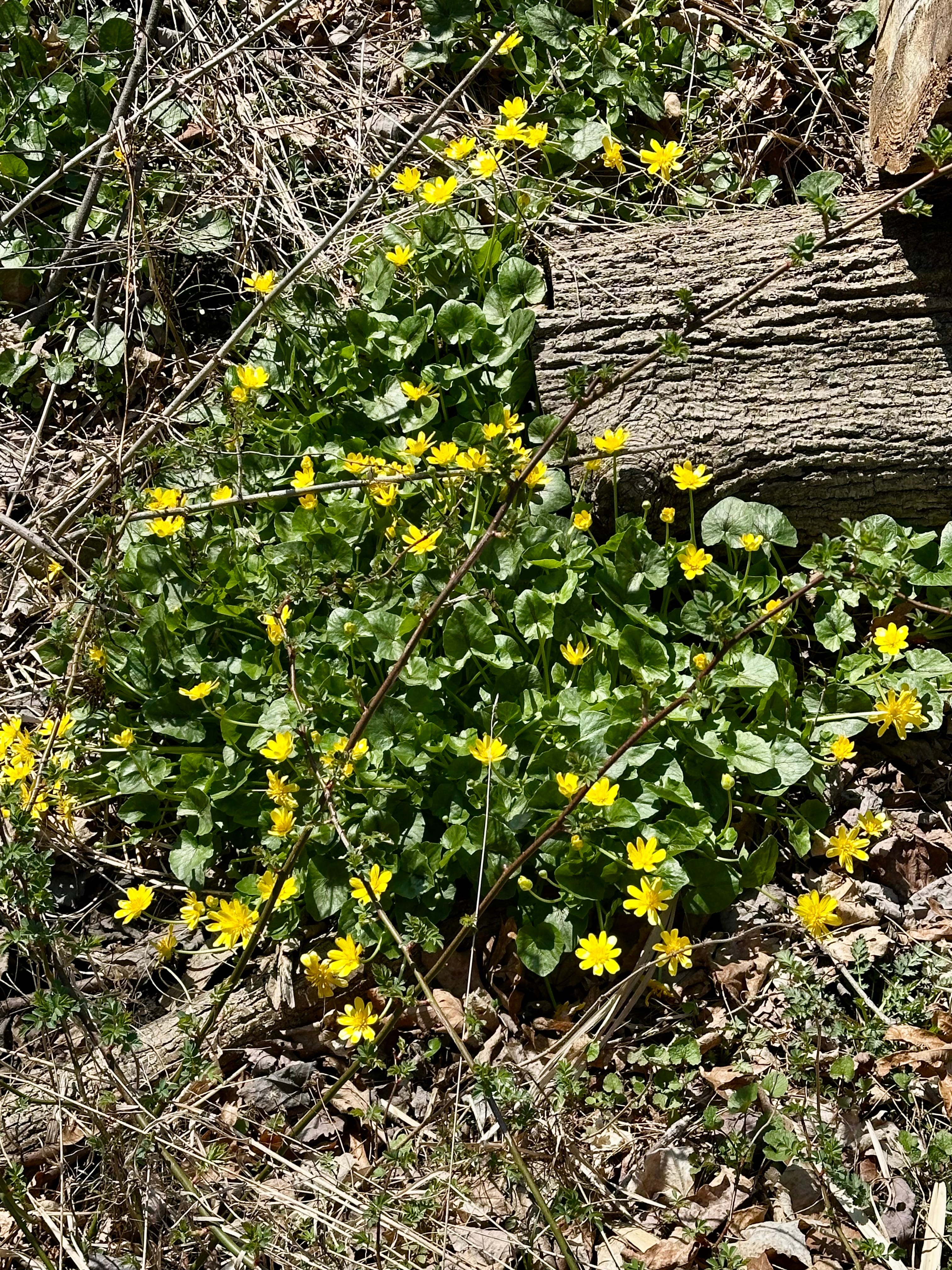
Spring insisting on itself after all. Almost here. Almost daffodils.
Wordsworth knew it too. He wrote about lying on a couch in vacant or in pensive mood, and how the daffodils he had once seen flash upon that inward eye which is the bliss of solitude. The inward eye. The one that only opens when the outer world goes quiet.
I ordered our Pilgrim Credentials this week. The official document that marks you as a walker of the Camino, stamped at each stop along the way, proof that you walked the road. I don’t need proof for anyone else. But there is something about the experience and the process of it that feels right. You are declaring an intention. You are saying: I will show up. I will walk. I will be quiet enough to hear myself.
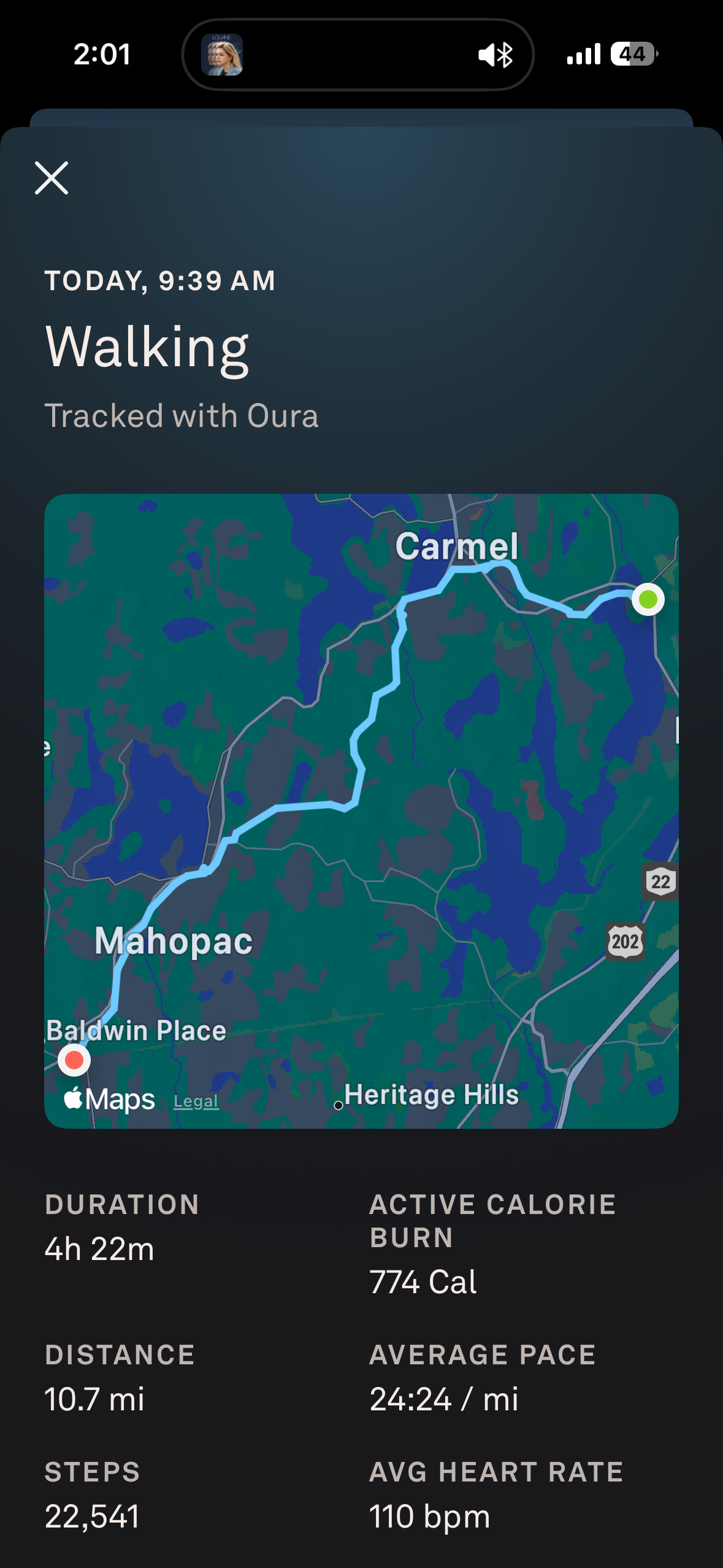
10.7 miles. 4 hours 22 minutes. 22,541 steps.
Ex post facto: I am so glad you are doing Camino and I’m able to read about which you’re thinking in preparation for. Wonderful.